23 questions ISIS asks recruits
Leaked ISIS documents reveal recruits' blood types, obedience levels
Story highlights
- Documents obtained by German intelligence agency, Syrian paper and other news organizations
- They detail personal information about purported recruits from Australia to Uzbekistan
- They include questions such as "level of obedience" and whether recruits are willing to be suicide attackers
(CNN)What's your first and last name? Your education and work experience? Do you have recommendations?And are you willing to be a suicide attacker, or would you prefer to be a fighter for ISIS?Those were among the questions purportedly posed to would-be jihadis on what appears to be a kind of job application for the terror group.Germany's intelligence agency, a Syrian newspaper and other news organizations, including Britain's Sky News, obtained batches of leaked ISIS documents -- which CNN could not authenticate and which seemingly could be replicated easily on many computers.While some responses are mundane, others make it obvious they're not part of just any application profile or database.Take, for instance, one applicant's request to be a suicide attacker. He wants to be dispatched as soon as possible, to take his life and that of others, "as I have a headache because (of) shrapnel in my head."A well-traveled Australian with a computer degree is also willing to go on a suicide mission. But he worries his night vision might be a hurdle. Plus, he doesn't know how to drive manual transmission vehicles.Then there's a French national, born in 1989. Answering which relatives to contact if he's killed, the man said, "If they did not hear from him, they would know that he is dead."Questions include 'level of obedience'
The forms are tied to one of the world's most reviled, barbaric, ruthless terrorist organizations. But they're also a function of bureaucracy.Zaman Al-Wasl, a newspaper supportive of forces fighting against both Syrian President Bashar al-Assad's troops and terror groups such as ISIS, published 122 pages of documents it said came from an ISIS defector. These 122 documents, out of more than 1,700 overall reportedly obtained by the same publication, only pertain to self-identifying suicide attackers.German intelligence officials said they, too, have similar if not identical documents, though they didn't detail how they got them.While they include lines to be filled out later -- such as the site and time of a person's death -- the content mostly consists of questions and answers posed at a border crossing into territory controlled by the so-called Islamic State, according to Zaman Al-Wasl.


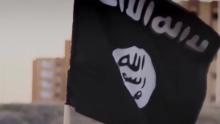
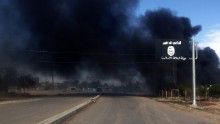
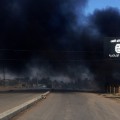
 A black ISIS flag is neatly stamped on the right corner. At the top left corner is the terror group's version of a border entry stamp. The Arabic script is typed up, neatly arranged in rows and columns, with "private" stamped at the bottom.The words include answers to simple questions such as the would-be militant's birth date, blood type, address, marital status and countries visited.Others are slightly more specific and speak to the organization they want to join -- such as the person's religiosity (or "Sharia level"), jihad experience and "level of obedience."
German official: Documents likely 'genuine'
The dates of the border entry stamps suggest the documents published by Zaman Al-Wasl date back to no earlier than 2013.That means the people questioned could have gone into ISIS-controlled territory, have been turned away or perhaps fought for the terror group in Syria and Iraq and then perhaps left. If they aren't in the war zone, one fear is that they may bring their ISIS approach, tactics and mindset elsewhere -- perhaps proving a threat to other countries.The documents suggest the recruits came from many places including Afghanistan, France, Germany, Libya, Spain, Tunisia and Uzbekistan as well as Syria.Markus Koths, a spokesman for the German Federal Criminal Police, said the documents appear to be authentic. "We believe that it is very likely these are genuine documents," Koths said. "We are taking these into consideration of our law enforcement measures and security. "Also addressing the documents, British Home Secretary Theresa May said the "severe threat" posed by ISIS underscores the importance of countries sharing information and taking other steps against the group."We have seen the attacks perpetrated on mainland Europe over the past year," May said, referring to terrorism in Paris and elsewhere. "That is why it is so important for us to work together to counter this threat."
Form has 23 items
The form featuring 23 questions and other items is short and to the point, delving into the recruits' background and way of life. Here's the information asked of each applicant:-- First and last name-- Assumed name-- Mother's name-- Blood type-- Date of birth/ nationality-- Marital status-- Address and place of birth-- Education-- Sharia (or religious) level-- Previous job-- Countries visited-- Point of border entry-- Date of entry-- Who recommended you-- Previous jihad experience-- Fighter or suicide attacker-- Field of specialty-- Current working place-- Personal properties left behind-- The level of obedience-- Address for future communication-- Date of death and place-- Notes
To the best of my ability I write about my experience of the Universe Past, Present and Future
Thursday, March 10, 2016
23 questions ISIS asks recruits
begin quote from:


























No comments:
Post a Comment