begin quote:
Scientists Solve Mystery Behind Snowfall That Dropped 695 Billion Tons of Ice on Antarctica

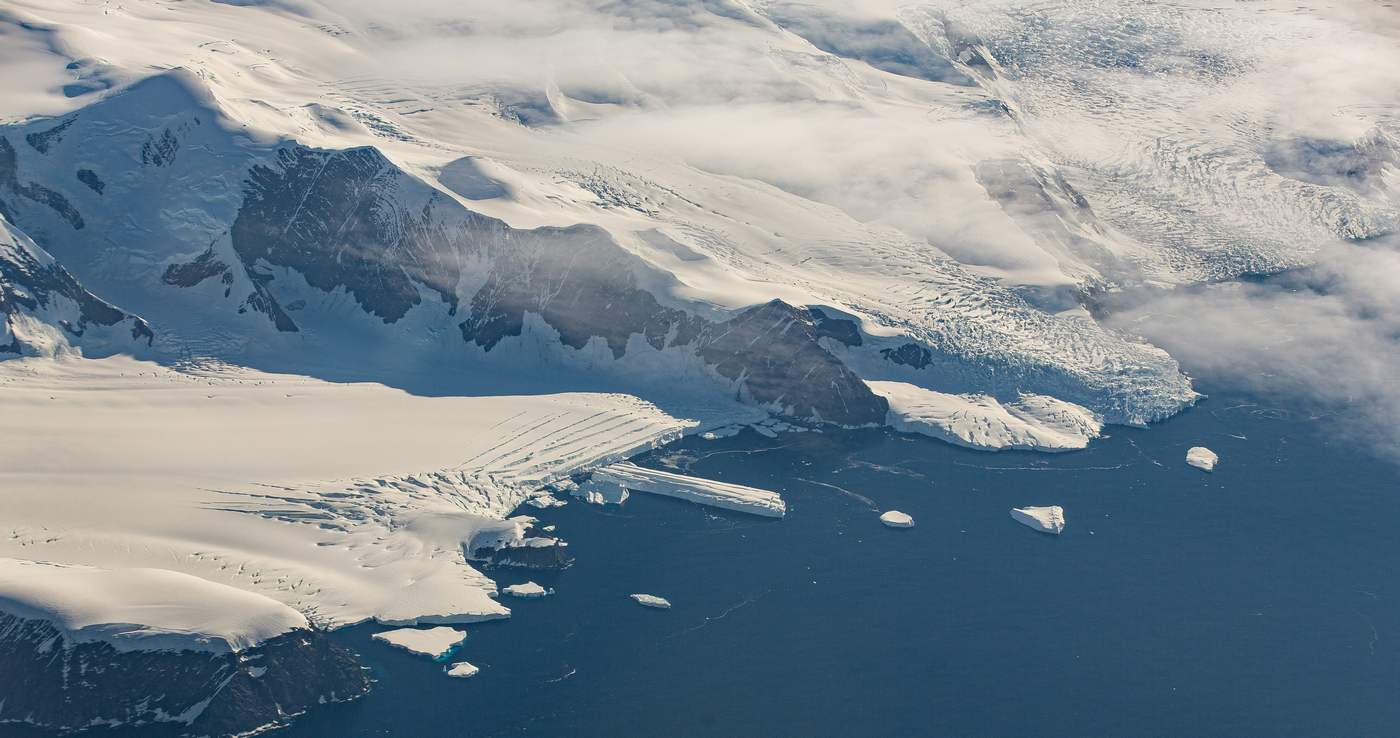
A warming pool of tropical ocean water has been shown to be the cause of immense snowstorms over East Antarctica which contributed to a net gain of 695 billion tons of ice between 2021 and 2023.
To put that tonnage into perspective, it’s about 4 years of annual ice loss according to a 2 decade average, and the largest ice mass-gain event yet recorded by the GRACE satellites which monitor Antarctica.
The study is novel in terms of the mechanism used to explain the gigantic snowfall event, as well as the trigger for the mechanisms not necessarily lying in human-caused changes to the global temperature systems.
Over the same two years, sustained warming was observed in the space where the tropical Pacific Ocean meets the Indian Ocean, known as the tropical warm pool (TWP). The warmer than average water temperatures triggered a weather phenomenon called a Rossby wave train toward East Antarctica’s Queen Mary’s Land and Wilkes Land, reorganized moisture transport, and enhanced regional snowfall, thereby temporarily slowing Antarctic ice-sheet mass loss.
Water-vapor tracking simulations showed that, under the influence of the dipole circulation, moist air from the midlatitude Indian Ocean was transported to East Antarctica, allowing more atmospheric rivers to reach the region. This resulted in persistent heavy snowfall over the Queen Mary Land–Wilkes Land region and increased ice-sheet mass.
Atmospheric rivers are exactly what they sound like: a river of moisture that meanders through the atmosphere, and they are capable of transporting enormous amounts of water vapor over long distances. When they reach cold regions such as Antarctica, that moisture can fall as heavy snow.
Atmospheric circulation model experiments confirmed that warming of the TWP was the direct driver of the circulation and snowfall responses, which is notable for its break from existing theories.
Periodic slowdowns in the loss of Antarctic ice mass like what was seen between 2021 and 2023 “is consistent with the expected long-term precipitation response to global warming,” according to the authors. As warmer air drives both atmospheric moisture and poleward shifts in storm paths, it’s expected that there will be occasional blizzards that contribute enormous amounts of ice even as the continent loses ice decade-by-decade.
That was the theory, but the authors say their results point to a different mechanism.
MORE ANTARCTIC STORIES: Bizarre Deep-Sea Creature – a ‘Death Ball’ Sponge – Discovered in One of the Most Remote Corners of the Planet
“We found that this type of multiyear-TWP warming usually oscillates in the historical record,” associate professor and study co-author Qinghua Ding told GNN in an email, in response to a question as to whether the TWP warming was linked to global warming.
“I believe it is not a CO2 favored pattern because global warming does not normally favor such fluctuations. However, we also cannot rule out the possibility.”
The study claimed that the increase in regional snowfall attributable to anthropogenic influence was equivalent to only 9% of the observed snowfall anomaly, indicating that, like Professor Ding’s assessment of the TWP warming, atmospheric moistening caused by global warming was not the primary cause of the snowfall and ice-mass gain.
NOT ALL BAD: Scientists Have Found Climate-Resistant Coral Reefs Around the World Totaling the Size of Wisconsin
Further observations and simulations showed that similar sustained TWP-warming events occur approximately once every decade, and it could be supposed that it triggers similar snowfall levels when it does—and that both act beyond the influence of CO2-emission-induced warming.
It might be worth keeping eyes open between 2031-33 to see if a similar ‘tropical warm pool–East Antarctic Ice Sheet teleconnection pathway’ manifests again, as the Antarctic Ice Sheet is one of the major sources of uncertainty in future global sea-level rise.
No comments:
Post a Comment