- The Holocene extinction, otherwise referred to as the Sixth extinction or Anthropocene extinction, is a name for the ongoing extinction event of species during the ...
- One of the first great rules of terrestrial biology is that no species is forever. The Earth has gone through five major extinction events before—from the ...
Holocene extinction
From Wikipedia, the free encyclopedia"Sixth extinction" redirects here. For other uses, see Sixth extinction (disambiguation).
It has been suggested that this article be merged with Quaternary extinction event. (Discuss) Proposed since January 2016. The Holocene extinction, otherwise referred to as the Sixth extinction or Anthropocene extinction, is a name for the ongoing extinction event of species during the present Holocene epoch (11,700 years before AD 2000) mainly due to human activity.[1] The large number of extinctions span numerous families of plants and animals including mammals, birds, amphibians, reptiles and arthropods. Although 875 extinctions occurring between 1500 and 2009 have been documented by the International Union for Conservation of Nature and Natural Resources,[2] with widespread degradation of highly biodiverse habitats such as coral reefs and rainforest, as well as other areas, the vast majority are thought to be undocumented. According to the species-area theory and based on upper-bound estimating, the present rate of extinction may be up to 140,000 species per year,[3] making it the greatest loss of biodiversity since the Cretaceous–Paleogene extinction event.
 The quagga became extinct in 1883.
 The passenger pigeon became extinct in 1914.
 The Mexican grizzly bear became extinct in 1964.
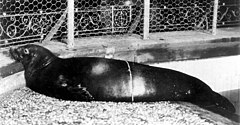 The Caribbean monk seal was officially declared extinct in 2008.
The Holocene extinction includes the disappearance of large land animals known as megafauna, starting between 9,000 and 13,000 years ago, the end of the last Ice Age. Megafauna outside of the African continent, that did not evolve alongside humans, proved highly sensitive to the introduction of new predation, and many died out shortly after early humans began spreading and hunting across the Earth (additionally, many African species have also gone extinct in the Holocene). The extinction of the mammoths allowed grasslands they had maintained through grazing habits to become birch forests.[4] The new forest and the resulting forest fires may have induced climate change.[4] Such disappearances might be the result of the proliferation of modern humans. These extinctions, occurring near the Pleistocene–Holocene boundary, are sometimes referred to as the Quaternary extinction event.
There is no general agreement on where the Holocene, or anthropogenic, extinction begins, and the Quaternary extinction event which includes climate change resulting in the end of the last ice age ends, or if they should be considered separate events at all.[4][5] Some have suggested that anthropogenic extinctions may have begun as early as when the first modern humans spread out of Africa between 100,000 and 200,000 years ago, which is supported by rapid megafaunal extinction following recent human colonisation in Australia, New Zealand and Madagascar,[6] in a similar way that any large, adaptable predator moving into a new ecosystem would. In many cases, it is suggested even minimal hunting pressure was enough to wipe out large fauna, particularly on geographically isolated islands.[7][8] Only during the most recent parts of the extinction have plants also suffered large losses.[9]
The ecology of Homo sapiens has been noted as being that of an unprecedented 'global superpredator' that regularly preys on the adults of other apex predators and has worldwide effects on food webs.[10] Extinctions of species have occurred on every land mass and ocean, with many famous examples within Africa, Asia, Europe, Australia, North and South America, and on smaller islands. Overall, the Holocene extinction can be characterized by the human impact on the environment. The Holocene extinction continues into the 21st century, with overfishing, ocean acidification and the amphibian crisis being a few broader examples of an almost universal, cosmopolitan decline of biodiversity.
It has been suggested human activity has made the period following the mid-20th century different enough from the Holocene to consider it a new geological epoch, known as the Anthropocene,[11] which will be considered for implementation into the timeline of Earth's history by the International Commission on Stratigraphy in 2016.[12]
Contents
Human influence on extinction
Extinction of animals, plants, and other organisms caused by human actions may go as far back as the late Pleistocene, over 12,000 years ago. There is evidence that abrupt climate change has especially played an enormous role in the extinction of larger mammals.[13] However, while previous mass extinctions were due to natural environmental causes, research shows that wherever on Earth humans have migrated, other species have gone extinct, and human population growth, most prominently in the past two centuries, is regarded as one of the underlying causes of extinction.[14] In terms of how humans have contributed, three major factors include the increased global concentration of greenhouse gases, affecting the global climate; oceanic devastation, such as through overfishing and contamination; and the modification and destruction of vast tracts of land and river systems around the world to meet solely human-centered ends (with 13 percent of Earth's ice-free land surface now used as row-crop agricultural sites, 26 percent used as pastures, and 4 percent urban-industrial areas[15]), thus replacing the original local ecosystems.[16][17] Other, related human causes of the extinction event include deforestation, hunting, pollution,[18] the introduction in various regions of non-native species, and the widespread transmission of infectious diseases. At present, the rate of extinction of species is estimated at 100 to 1,000 times higher than the "base" or historically typical rate of extinction (in terms of the natural evolution of the planet)[19] and also the current rate of extinction is, therefore, 10 to 100 times higher than any of the previous mass extinctions in the history of Earth. It is also the only known mass extinction of plants.[citation needed]
The abundance of species extinctions considered anthropogenic, or due to human activity, have sometimes (especially when referring to hypothesized future events) been collectively called the "Anthropocene extinction".[20][21] The Anthropocene is a term introduced in 2000. It is now posited by some that a new geological epoch has begun, characterised by the most abrupt and widespread extinction of species since the Cretaceous–Paleogene extinction event 66 million years ago.[6] In The Future of Life (2002), E.O. Wilson of Harvard calculated that, if the current rate of human disruption of the biosphere continues, one-half of Earth's higher lifeforms will be extinct by 2100. A 1998 poll conducted by the American Museum of Natural History found that seventy percent of biologists believe that we are in the midst of an anthropogenic extinction.[22] Numerous scientific studies—such as a 2004 report published in Nature,[23] and papers authored by the 10,000 scientists who contribute to the IUCN's annual Red List of threatened species—have since reinforced this conviction.
Extinction of the Megafauna in the Late-Pleistocene
The evidence of all previous extinctions is geological in nature, and shorter geological time scale is of the order of several hundred thousand to several million years. Even extinctions caused by instantaneous events such as the impact of the asteroid in Chicxulub, which is currently the best example, extend the equivalent of many human lives, due to complex ecological interactions that were triggered by the event.[citation needed]
Three hypotheses have been proposed to explain the extinction of megafauna in the late Pleistocene. Of these, only two have much scientific credibility. Although Ross McPhee proposed that a hyper-disease may have been the cause of the extinction,[24] a study by Lyons et al., demonstrated conclusively that a hyperdisease was unlikely to have caused the extinction.[25] The two main theories to the extinction are climate change and human hunting. The climate change theory has suggested that a change in climate near the end of the late Pleistocene stressed the megafauna to the point of extinction.[26] Some scientists favor abrupt climate change as the catalyst for the extinction of the mega-fauna at the end of the Pleistocene, but there are many who believe increased hunting from early modern humans also played a part, with others even suggesting that the two interacted.[6][27][28] In the Americas, a controversial explanation for the shift in climate is presented under the Younger Dryas impact hypothesis. The % of megafauna on different land masses over time, with the arrival of humans indicated.
Megafauna was once found on every continent of the world and large islands such as New Zealand and Madagascar, but is now almost exclusively found on the continent of Africa, with notable comparisons on Australia and the islands previously mentioned experiences population crashes and trophic cascades shortly after the earliest human settlers.[7][8] It has been suggested that the African megafauna survived as they evolved alongside humans.[6] The timing of South American megafaunal extinction does not appear to correspond to human arrival, although the possibility of whether human activity at the time may have impacted the global climate enough to cause such an extinction has been suggested.[6]
It has been noted, in the face of such evidence, Homo sapiens is unique in its ecology as an unprecedented 'global superpredator', regularly preying on large numbers of fully grown terrestrial and marine apex predators, and with a great deal of influence over food webs and climatic systems worldwide.[10]
Anthropogenic impact on Climate during the Holocene
In order to constitute the Holocene as an extinction event, scientists must determine exactly when anthropogenic greenhouse gas emissions began to measurably alter natural atmospheric levels at a global scale and when these alterations caused changes to global climate. Employing chemical proxies from Antarctic ice cores, researchers have estimated the fluctuations of carbon dioxide (C02) and methane gases (CH4) in the earth’s atmosphere for the late Pleistocene and Holocene epochs.[29] Based on these studies, general argumentation of when the peak of the Anthropocene occurred pertains to the timeframe within the previous two centuries; typically beginning with the Industrial Revolution, when greenhouse gas levels were recorded by contemporary methods at its highest.[30][31] However, scientists that are employing a variance of archaeological and paleoecological data argue that the processes contributing to substantial human modification of the environment spanned many thousands of years ago on a global scale and thus, not originating as early as the Industrial Revolution. Gaining popularity on his uncommon hypothesis, Palaeoclimatologist William Ruddiman in 2003, stipulated that in the early Holocene 11,000 years ago, atmospheric carbon dioxide and methane levels has fluctuated at a different pattern than the Pleistocene epoch before it.[29][32][33] He argued that the patterns of the significant decline of CO2 levels during the last ice age of the Pleistocene inversely correlates to the Holocene where there has been dramatic increases of CO2 around 8000 years ago and CH4 levels 3000 years after that.[33] The correlation between the downfall of CO2 in the Pleistocene and the uprising of it during the Holocene implies that the causation of this spark of greenhouse gases into the atmosphere are due to the growth of human agriculture during the Holocene such as the anthropogenic expansion of land and irrigation.[29][33]
Recent extinctions described are well-documented, but the nomenclature used varies.[13] The term Anthropocene is a term that is used by few scientists, and some commentators may refer to the current and projected future extinctions as part of a longer Holocene extinction.[13][34] The Holocene–Anthropocene boundary is contested, with some commentators asserting significant human influence on climate for much of what is normally regarded as the Holocene Epoch.[35] Other commentators place the Holocene–Anthropocene boundary at the industrial revolution while also saying that "Formal adoption of this term in the near future will largely depend on its utility, particularly to earth scientists working on late Holocene successions."[13]
Agriculture
Human civilization flourished in accordance to the efficiency and intensification of prevailing subsistence systems.[36] Local communities that acquire more subsistence strategies increased in number to combat competitive pressures of land utilization.[29][36] Therefore, the Holocene developed competition on the basis of agriculture. The growth of agriculture has then introduced newer means of climate change and pollution.
Recent investigations about hunter-gatherer landscape burning has a major implication for the current debate about the timing of the Anthropocene and the role that humans may have played in the production of greenhouse gases prior to the Industrial Revolution.[36] Studies on early hunter-gatherers raises questions about the current use of population size or density as a proxy for the amount of land clearance and anthropogenic burning that took place in preindustrial times.[32][37] Scientists have questioned the correlation between population size and early territorial alterations.[37] Ruddiman and Ellis' research paper in 2009 makes the case that early farmers involved in systems of agriculture used more land per capita than growers more later in the Holocene, who intensified their labor to produce more food per unit of area; arguing that agricultural involvement in rice production implemented thousands of years ago by relatively small populations have created significant environmental impacts through large-scale means of deforestation.[36]
While a number of human-derived factors are recognized as potentially contributing to rising atmospheric concentrations of CH4 and CO2, deforestation and territorial clearance practices associated with agricultural development may be contributing most to these concentrations globally.[30][33][36]
Climate
Climate change in the Early Holocene was distinguished prior to the last glacial maximum 15,000 years ago which then started the current period of the glacial retreat where climate started to increase significantly 11,000 years ago.[38] The Holocene Epoch contained a vast number of temperature fluctuations that can be dated from the warm period of the Holocene Climatic Optimum in 5000 to 3000 BC that consisted of temperatures that were 1-2 degrees Celsius warmer than today to the more recent emergence of the Industrial Revolution.[32][39][40] During this period, came the development of ancient civilizations of the earliest Homo sapiens and the growth of agriculture due to the increase of tropical regions. Deepening the understanding of the anthropogenic impact in the early Holocene is a vital factor for analyzing interglacial climate instability due to their involvement in producing of atmospheric carbon dioxide.
Methodologies of the Holocene Climatic Optimum
To undermine the present and future human-induced climatic changes, climatologists and paleontologists have correlated the increases of temperatures with the variations of solar radiation exposed to certain latitudinal earth bands during the Early Holocene.[41] Thus, believing that the Holocene warming was solar in origin where only certain parts of the world experienced warmer climates during seasons such as summer. Moreover, scientists have conducted numerous oceanic sediments that can be dated back to the Holocene Climatic Optimum, and discovered drastic increases of sea-levels and their sea-level highstands.[42] This evidence of drastic increases of sea levels indicates that the deterioration of ice cores is crucial to understanding how the Holocene Climatic Optimum began and how it played as one of the major transgressions during the Holocene Maximum.[43] As speculations of how the Holocene Climatic Optimum began remain scientifically unclear, impurities in gaseous chemistry inside these ice cores have been conducted as a valuable method of obtaining evidence of abnormal temperature fluctuations.[44] The Nile River showed to have a greater volume and much larger in the Holocene than what it is today and the Sahara to have been more fertile.[45][46] This in turn, led many anthropogenic hypotheses to claim that more tropical territories encouraged agricultural processes.[29] However, there is greater complexity as to whether such changes are heavily caused by anthropogenic effects on climate because of limited methods that can directly identify an empirical correlation.
Prehistoric extinctions (60,000 BCE-3500 BCE)

This section needs additional citations for verification. (October 2012) (Learn how and when to remove this template message) See also: Megafaunal mass extinctions and Quaternary extinction eventAlthough significant debate exists as to how much human predation and indirect effects contributed to prehistoric extinctions, certain population crashes have been directly correlated with human arrival.[5][6]
Australia
Main articles: Australian megafauna, List of extinct animals of Australia, and List of extinct flora of AustraliaAustralia was once home to a large assemblage of megafauna, with many parallels to those found on the African continent today. Australia's fauna is characterised by primarily marsupial mammals, and many reptiles and birds, all existing as giant forms until recently. Humans arrived on the continent very early, about 50,000 years ago.[6] The extent human arrival contributed is controversial; climatic drying of Australia 40,000-60,000 years ago was an unlikely cause, as it was less severe in speed or magnitude than previous regional climate change which failed to kill off megafauna.
Due to the older timeframe and the soil chemistry on the continent, very little subfossil preservation evidence exists relative to elsewhere.[47] However, continent-wide extinction of all genera weighing over 100 kilograms, and six of seven genera weighing between 45 and 100 kilograms occurred around 46,400 years ago (4,000 years after human arrival)[48] and the fact that megafauna survived until a later date on the island of Tasmania following the establishment of a land bridge[49] suggest direct hunting or anthropogenic ecosystem disruption such as fire-stick farming as likely causes. The first evidence of direct human predation leading to extinction in Australia was published in 2016.[50]
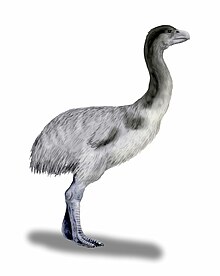 Genyornis newtoni, a 7 foot tall flightless bird. Evidence of egg cooking in this species is the first evidence of megafaunal hunting by humans on Australia.[50]
- Dromornithidae, an entire family of giant birds. Though around the size of emus, they are actually more related to ducks and other waterfowl. Analysis of burned eggshells in Genyornis newtoni, which stood around 7 feet tall, suggested human consumption.[50] As of yet, this is the most reliable direct evidence of human predation on Australian megafauna.[47]
- Diprotodon, giant relatives of wombats
- Zygomaturus, a marsupial superficially resembling a rhinoceros
- Hulitherium, a large marsupial herbivore
- Phascolonus, a giant wombat
- Palorchestes azael, a marsupial "tapir"
- A highly diverse assemblage of kangaroos. These include giant species from several genus, including Macropus titan, Simosthenurus, Sthenurus and Protemnodon. Other unique kangaroo radiations include Procoptodon goliah, a hoof-toed giant short-faced kangaroo, and Propleopus oscillans, an omnivorous kangaroo
- Wonambi, a five-to-six-metre-long Australian constrictor snake
- Thylacoleo carnifex, a lioness-sized marsupial carnivore
- Varanus priscus, a giant predatory monitor lizard
- Zaglossus hacketti, a giant species of echidna
- Quinkana, a five-to-six metre-long predatory terrestrial crocodile
North and South America
Main articles: List of North American animals extinct in the Holocene and List of South American animals extinct in the Holocene There has been a debate as to the extent to which the disappearance of megafauna at the end of the last glacial period can be attributed to human activities by hunting, or even by slaughter[51] of prey populations. Discoveries at Monte Verde in South America and at Meadowcroft Rock Shelter in Pennsylvania have caused a controversy[52] regarding the Clovis culture. There likely would have been human settlements prior to the Clovis Culture, and the history of humans in the Americas may extend back many thousands of years before the Clovis culture.[52] The amount of correlation between human arrival and megafauna extinction is still being debated: for example, in Wrangel Island in Siberia the extinction of dwarf woolly mammoths (approximately 2000 BCE)[53] did not coincide with the arrival of humans, nor did megafaunal mass extinction on the South American continent, although it has been suggested climate changes induced by anthropogenic effects elsewhere in the world may have contributed.[6]Reconstructed woolly mammoth bone hut, based on finds in Mezhyrich.
Comparisons are sometimes made between recent extinctions (approximately since the industrial revolution) and the Pleistocene extinction near the end of the last glacial period. The latter is exemplified by the extinction of large herbivores such as the woolly mammoth and the carnivores that preyed on them. We know that humans of this era actively hunted the mammoth and the mastodon[54] but it is not known if this hunting was the cause of the subsequent massive ecological changes, widespread extinctions and climate changes.[4][5]
The ecosystems encountered by the first Americans had not been exposed to human interaction, and may have been far less resilient to human made changes than the ecosystems encountered by industrial era humans. Therefore, the actions of the Clovis people, despite seeming insignificant by today's standards could indeed have had a profound effect on the ecosystems and wild life which was entirely unused to human influence.[6]
The following species, among many others, became extinct in this period.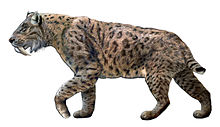
- Doedicurus, a giant armadillo
- American cheetah
- American lion
- Holochilus primigenus
- Pygmy mammoth, woolly mammoth and the local Columbian mammoth
- Mastodons
- Eremotherium
- Smilodon, sabre toothed cats
- Teratorns, a group of birds that include some of the largest flying animals of all time
Caribbean
Human arrival around 6,000 years ago is correlated with the extinction of many species.[55] Examples include:
- Many different genera of ground and arboreal sloths across all islands. These sloths were generally smaller than those found on the South American continent. Megalocnus were the largest genus at up to 90 kg, Acratocnus were medium-sized relatives of modern two-toed sloths endemic to Cuba, Imagocnus also of Cuba, Neocnus and many others.
- Giant hutias
- Cuban coney
- Brotomys
- Cuban giant owl
Pacific islands
Main article: List of extinct animals of OceaniaRecent research, based on archaeological and paleontological digs on 70 different islands, has shown that numerous species became extinct as people moved across the Pacific, starting 30,000 years ago in the Bismarck Archipelago and Solomon Islands.[56] It is currently estimated that among the bird species of the Pacific some 2000 species have gone extinct since the arrival of humans, representing a 20% drop in the biodiversity of birds worldwide.[57] Among the extinctions were:
- Sylviornis, a giant galliform bird from New Caledonia
- Mekosuchine crocodiles from New Caledonia, Fiji and Samoa.
- Meiolaniid turtles on Lord Howe Island and New Caledonia
- "Gavialis" papuensis, a marine crocodilian from the Solomon Islands.
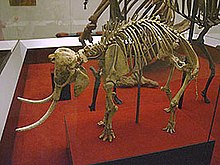 Mammuthus creticus,a dwarf elephant once endemic to Crete. It was one of many species of small elephants found on islands in the Mediterranean.
Mediterranean Islands
- Pygmy hippos of Cyprus (Phanourios minutus), Crete (Hippopotamus creutzburgi), Malta (H. melitensis) and Sicily (H. pentlandi)
- Balearic Islands cave goat (Myotragus balearicus) of Majorca and Minorca
- A diverse assemblage of dwarf elephants of several islands, including Cyprus (Elephas cypriotes), Sicily, Malta (E. falconeri) and Crete (Mammuthus creticus)
- Giant swan (Cygnus falconeri) of Malta
- Giant dormice: Minorcan giant dormouse, Majorcan giant dormouse
- Sardinian pika of Sardinia and Corsica
Extinctions into the Common Era (3500 BCE-1500 CE)
More recent settlement of isolated land masses where megafauna continued to survive almost immediately resulted in their extinction. Calculations suggest this occurred even if only a small number of animals were hunted. It has been suggested this contemporary evidence supports the theory that humans were capable of causing or at least contributing to the extinctions of the Quaternary extinction event.[6]
Afro-Eurasian mainland
See also: List of African animals extinct in the Holocene, List of Asian animals extinct in the Holocene, and List of extinct animals of Europe- Atlas wild ass (Equus africanus atlanticus)
- North African aurochs (Bos primigenius africanus)
- Indian aurochs (Bos primigenius namadicus)
- North African elephant (Loxodonta africana pharaoensis)
Hawaiian islands
Main article: List of extinct animals of the Hawaiian IslandsSee also: Endemism in the Hawaiian Islands, Invasive species in Hawaii, and Environmental issues in HawaiiThe first settlers are thought to have arrived in the islands between 300 and 800 CE, with European arrival in the 16th century. Hawaii is notable for its endemism of plants, birds, insects, mollusks and fish; 30% of its organisms are endemic. Many of its species are endangered or have gone extinct, primarily due to accidentally introduced species and livestock grazing. Over 40% of its bird species have gone extinct, and it is the location of 75% of extinctions in the United States.[58]
Extinction has increased in Hawaii over the last 200 years and is relatively well documented, with extinctions among native snails used as estimates for global extinction rates.[59]
- The moa-nalos, grazing ducks from Hawaii.
- The nēnē-nui, or woodwalking goose, a large species of goose that once inhabited the island of Maui.
- Kauaʻi finch, a large finch
- Synemporion keana, a vesper bat
Indian Ocean Islands
Starting circa 1500 years ago, a number of species became extinct upon human settlement of the islands, including:
- Several species of giant tortoise on the Seychelles and Mascarene Islands, including Cylindraspis and Meiolania platyceps
- Aldabrachampsus, a Crocodyliform found on the Aldabra Atoll
Madagascar
Further information: Wildlife of Madagascar and Subfossil lemur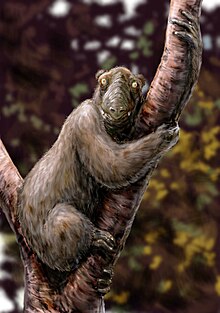 Megaladapis edwardsi, a large arboreal lemur, being one of many of the diverse assemblage of megafauna recently wiped out by human activity on Madagascar.
 Within 500 years of the arrival of humans between 2,500-2,000 years ago, nearly all of Madagascar's distinct, endemic and geographically isolated megafauna became extinct.[60] The largest animals, of more than 150 kg, were extincted very shortly after the first human arrival, with large and medium-sized species dying out after prolonged hunting pressure from an expanding human population moving into more remote regions of the island around 1000 years ago. Smaller fauna experienced initial increases due to decreased competition, and then subsequent declines over the last 500 years.[8] All fauna weighing over 10 kg died out. The primary reasons for this are human hunting and habitat loss from early aridification, both of which persist and threaten Madagascar's remaining taxa today.Radiocarbon dating of multiple subfossil specimens shows that now extinct giant lemurs were present in Madagascar until after human arrival.
- Eight or more species of elephant birds, giant flightless ratites in the genera Aepyornis and Mullerornis.
- 17 species of lemur, known as giant, subfossil lemurs. Some of these lemurs typically weighed over 150 kg, and fossils have provided evidence of human butchery on many species.[61]
- Giant aye-aye (Daubentonia robusta)
- Sloth lemurs, including chimpanzee-sized Palaeopropithecus and gorilla-sized Archaeoindris
- Koala lemurs (Megaladapis), a koala-like, orangutan-sized arboreal lemur
- Monkey lemurs, most terrestrial of lemurs, often compared to baboons or macaques.
- Pachylemur, a larger, more robust genus of ruffed lemurs
- Giant fossa
- Voay, a terrestrial giant dwarf crocodile
- Plesiorycteropus, a genus containing two species of superficially Aardvark-like digging mammal unlike anything alive today
- Three species of Malagasy hippopotamus
- Malagasy crowned eagle (Stephanoaetus mahery), a giant bird of prey
- Local giant tortoises of genus Geochelone, including Aldabrachelys abrupta and Aldabrachelys grandidieri. The latter were important seed dispersers for endemic baobab trees.[62]
Recent extinctions - 1500 onwards
One scientist estimates the current extinction rate may be 10,000 times the background extinction rate. Nevertheless, most scientists predict a much lower extinction rate than this outlying estimate.[63] Stuart Pimm stated "the current rate of species extinction is about 100 times the natural rate" for plants.[64] Mass extinctions are characterized by the loss of at least 75% of species within a geologically short period of time.[65][66][67]
In a pair of studies published in 2015, extrapolation from observed extinction of Hawaiian snails led to the conclusion that 7% of all species on Earth may have been lost already.[59]
Megafaunal extinctions continue into the 21st century. Modern extinctions are more directly attributable to human influences. Extinction rates are minimized in the popular imagination by the survival of captive populations of animals that are extinct in the wild (such as the Père David's deer, Hawaiian crow) and by marginal survivals of highly publicized megafauna that are ecologically extinct (such as the giant panda, Sumatran rhinoceros, North American black-footed ferret). However, the Holocene can also be characterisied by widespread extinctions among arthropods, widespread local extinctions of populations of species that still exist elsewhere (such as the extinction of gray whales in the Atlantic and of the leatherback sea turtle in Malaysia) and by universal declines in range and population of various animal and plant species throughout all of the world.
The IUCN characterises 'recent' extinction as those that have occurred past the cut-off point of 1500. The extinct species listed below are not comprehensive, but are some of the most famous examples.
New Zealand
Main article: List of extinct animals of New ZealandSee also: Biodiversity of New Zealand, Timeline of the New Zealand environment, and Invasive species in New Zealand New Zealand is characterised by its geographic isolation and island biogeography, and had been isolated from mainland Australia for 80 million years. It was the last large land mass to be colonised by humans. The arrival of Polynesian settlers circa 12th century resulted in the extinction of all of the islands' megafaunal birds within several hundred years. The Polynesians also introduced the Polynesian rat. This may have put some pressure on other birds but at the time of early European contact (18th Century) and colonisation (19th Century) the bird life was prolific. With them, the Europeans brought ship rats, possums, cats and mustelids which decimated native bird life, some of which had adapted flightlessness and ground nesting habits and others had no defensive behavior as a result of having no extant endemic mammalian predators. The kakapo, the world's biggest parrot, which is flightless, now only exists in managed breeding sanctuaries and NZ's national emblem, the kiwi, is on the endangered bird list.[68]A size comparison between 4 recently extinct New Zealand moa species and a human. 1. Dinornis novaezealandiae 2. Emeus crassus 3. Anomalopteryx didiformis 4. Dinornis robustus
Extinctions include, among many others:
- Eleven species of moa, giant flightless ratites. The last moa became extinct within 200 years of the arrival of human settlers.[7]
- The giant Haast's eagle, Harpagornis
- Two species of giant flightless predatory adzebills.
- Finsch's duck, a large, flightless duck
Other notable recent extinctions
Mammals
Main article: List of recently extinct mammals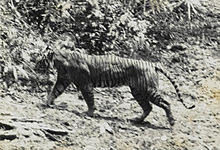 Some examples of modern extinctions of "charismatic" mammal fauna include:Javan tiger pictured 1938.
- Eurasian aurochs (1627), a wild cow that was domesticated to form modern cattle.
- Steller's sea cow (1768), a large sirenian driven to extinction across its prehistoric range across the North Pacific by hunting. The last populations, reduced to the Commander Islands, were driven to extinction 27 years after their discovery by Europeans in 1741 (where they may have numbered at 2000) after heavy hunting.[69]
- Sardinian pika (1774) primitive lagomorph native to the Mediterranean islands of Sardinia and Corsica
- Bluebuck, a species of antelope. Despite already being uncommon by the time of European discovery, habitat conversion for agriculture and hunting resulted in its extinction by 1800.
- Atlas bear (1870s)
- Falkland Islands wolf (1876)
- Quagga (1883), zebra subspecies, Southeast Africa. Recent attempts have been made by the Quagga Project to selectively breed Burchell's zebras to superficially resemble quaggas.
- Tarpan, a European wild horse. Although extinct in the wild by 1890, the last captive animal died in 1909.
- Thylacine (1936) or Tasmanian tiger, Thylacinus cynocephalus, a marsupial carnivore persecuted by farmers and the government for preying on livestock.
- Caribbean monk seal (1950s)
- Japanese sea lion (1970s)
- Pyrenean ibex (2000). Attempts were made to clone the species shortly after its extinction, and despite brief success the only surviving foetus died after 7 minutes.
- Yangtze dolphin, extinct 2006
- The closely related Bali tiger (1937) and Javan tiger (1970s)
- Eastern cougar (2011)[70] a subspecies of North American cougar
- Western black rhinoceros (2011), a subspecies
Birds
Main article: List of recently extinct birds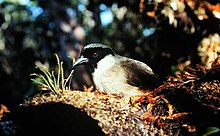 Many birds have become extinct as a result of human activity, especially birds endemic to islands, including many flightless birds (see a more complete list under extinct birds). Notable extinct birds include:The Poʻouli, a species of Hawaiian honeycreeper, and the only member of its genus. After severe habitat loss and predation from invasive species such as the small Asian mongoose and feral pigs and rats, the last individual died in 2004 after unsuccessful attempts at captive breeding.
- Many species of birds on the Mascarene Islands, including the giant flightless pigeons known as the dodo of Mauritius (1662) and the Rodrigues solitaire (1778) and the unrelated Réunion solitaire, which was a flightless ibis (early 1800s)
- Giant owls such as Tyto pollens
- Great auk (1852) once highly abundant flightless auk around the North Atlantic
- Passenger pigeons (1914) of North America, once so abundant that accounts suggest their flocks took days to pass
- The Carolina parakeet (1918) of the American southeast
- Ivory-billed woodpecker (2000)
- The entire Mohoidae songbird family, including four species of ʻōʻō such as the Hawaiʻi and Kauaʻi ʻōʻōs and the kioea
- All members of the group Nukupu‘u. Two species became extinct in the 1990s.
- All members of the finch genus Akialoa.
- Kāmaʻo
- Poʻouli, a single species of Hawaiian honeycreeper within its own genus.
Plants
![[icon]](https://upload.wikimedia.org/wikipedia/commons/thumb/1/1c/Wiki_letter_w_cropped.svg/20px-Wiki_letter_w_cropped.svg.png)
This section requires expansion. (February 2016) Main article: List of extinct plants The golden toad of Costa Rica, extinct since around 1989. Its disappearance has been attributed to a confluence of several factors, including El Niño warming, fungus, and the introduction of invasive species.
Contemporary crises
See also: IUCN Red List extinct in the wild species, List of endangered species, and List of critically endangered speciesPeter Raven, past president of the American Association for the Advancement of Science (AAAS), states in the foreword to their publication AAAS Atlas of Population and Environment:[71] "We have driven the rate of biological extinction, the permanent loss of species, up several hundred times beyond its historical levels, and are threatened with the loss of a majority of all species by the end of the 21st century."[72]
189 countries which are signatory to the Convention on Biological Diversity (Rio Accord) have committed to preparing a Biodiversity Action Plan, a first step at identifying specific endangered species and habitats, country by country.
Various species are predicted to become extinct in the near future.[73][74][75][76]
Amphibian crisis
Main article: Decline in amphibian populationsThe decline of amphibian populations has also been identified as an indicator of environmental degradation. As well as habitat loss, introduced predators and pollution, Chytridiomycosis, a fungal infection thought to have been accidentally spread by human travel,[6] has caused severe population drops of several species of frogs, including (among many others) the extinction of the golden toad in Costa Rica and the Gastric-brooding frog in Australia. Many other amphibian species now face extinction, including the reduction of Rabb's fringe-limbed treefrog to an endling, and the extinction of the Panamanian golden frog in the wild. Chytrid fungus has spread across Australia, New Zealand, Central America and Africa, including countries with high amphibian diversity such as cloud forests in Honduras and Madagascar. Batrachochytrium salamandrivorans is a similar infection currently threatening salamanders. Amphibians are now the most endangered vertebrate group, having existed for more than 300 million years through three other mass extinctions.
Mass bat deaths
Main article: White nose syndromeMillions of bats in the US have been dying off since 2012 due to a fungal infection spread from European bats, which appear to be immune. Population drops have been as great as 90% within five years, and extinction of at least one bat species is predicted. There is currently no form of treatment, and such declines have been described as "unprecedented" in bat evolutionary history by Alan Hicks of the New York State Department of Environmental Conservation.
Global warming
Main articles: Extinction risk from global warming and Ocean acidificationGlobal warming is widely accepted as being a contributor to extinction worldwide, in a similar way that previous extinction events have generally included a rapid change in global climate and meteorology. It is also expected to disrupt sex ratios in many reptiles which have temperature-dependent sex determination.
Degradation of marine habitats
 Rising levels of carbon dioxide are resulting in influx of this gas into the ocean, increasing its acidity. Marine organisms which possess Calcium Carbonate shells or exoskeletons experience physiological pressure as the carbonate reacts with acid. This is already resulting in coral bleaching on various coral reefs worldwide, which provide valuable habitat for very high biodiversity. Marine gastropods, bivalves and other invertebrates are also affected, as are any organisms that feed on them.The collapse of Atlantic cod off the coast of Newfoundland in 1992 as a result of overfishing. The population never recovered, completely altering the ecosystem and rendering the species locally extinct.
Fishing has had a devastating effect on marine organism populations for several centuries even before the explosion of destructive and highly effective fishing practices like trawling.[77] Humans are unique among predators in that they regularly predate on other adult apex predators, particularly in marine environments;[10] bluefin tuna and various sharks in particular are particularly vulnerable to predation pressure from human fishing.
Pollinator decline
Main articles: Pollinator decline and Colony collapse disorderThe term pollinator decline refers to the reduction in abundance of insect and other animal pollinators in many ecosystems worldwide beginning at the end of the twentieth century, and continuing into the present day.[78]
Lists of affected species
See also
- Biodiversity
- Ecocriticism
- Effects of global warming
- Extinction risk from global warming
- Human overpopulation
- List of extinct animals
- List of extinct plants
- Late Quaternary prehistoric birds
- Timeline of extinctions
- Decline in amphibian populations
- The Sixth Extinction: An Unnatural History (nonfiction book)
- Racing Extinction (2015 documentary film)
References
- Dawson, Ashley (2016). Extinction: A Radical History. OR Books. ISBN 978-1944869014.


![[icon]](https://en.wikipedia.org/wiki/File:Wiki_letter_w_cropped.svg)


- Kluser, S. and Peduzzi, P. (2007) "Global pollinator decline: a literature review" UNEP/GRID - Europe.
Further reading
- Dawson, Ashley (2016). Extinction: A Radical History. OR Books. ISBN 978-1944869014.
- deBuys, William (March 2015). "The Politics of Extinction - A Global War on Nature". Tom Dispatch.
Uncounted species -- not just tigers, gibbons, rhinos, and saola, but vast numbers of smaller mammals, amphibians, birds, and reptiles -- are being pressed to the brink. We’ve hardly met them and yet, within the vastness of the universe, they and the rest of Earth’s biota are our only known companions. Without them, our loneliness would stretch to infinity.
- Firestone RB, West A, Kennett JP, et al. (October 2007). "Evidence
for an extraterrestrial impact 12,900 years ago that contributed to the
megafaunal extinctions and the Younger Dryas cooling". Proceedings of the National Academy of Sciences of the United States of America. 104 (41): 16016–21. Bibcode:2007PNAS..10416016F. doi:10.1073/pnas.0706977104. PMC 1994902
 . PMID 17901202.
 - Kolbert, Elizabeth (May 25, 2009). "The Sixth Extinction? There have been five great die-offs in history. This time, the cataclysm is us.". The New Yorker. Retrieved May 2012. Check date values in:
|access-date=(help) - Kolbert, Elizabeth (2014). The Sixth Extinction: An Unnatural History. Henry Holt and Company. ISBN 978-0805092998.
- McCallum\Malcolm L. (2015). "Vertebrate biodiversity losses point to sixth mass extinction.". Biodiversity and Conservation. 24 (10): 2497–2519. doi:10.1007/s10531-015-0940-6.
- Leakey, Richard; Lewin, Roger (1996). The Sixth Extinction: Patterns of Life and the Future of Humankind. New York: Anchor Books. ISBN 0-385-46809-1.
- Loarie, Scott R.; Duffy, Philip B.; Hamilton, Healy; Asner, Gregory P.; Field, Christopher B.; Ackerly, David D. (2009). "The velocity of climate change". Nature. 462 (7276): 1052–1055. Bibcode:2009Natur.462.1052L. doi:10.1038/nature08649. PMID 20033047.
- Martin, P. S.; Wright, H. E. Jr. (eds.) (1967). Pleistocene Extinctions: The Search for a Cause. New Haven: Yale University Press. ISBN 0-300-00755-8. Cite uses deprecated parameter
|coauthors=(help) - Marsh, Bill (1 June 2012). "Are We in the Midst Of a Sixth Mass Extinction?". The New York Times Sunday Review: Opinion Page. Retrieved 18 October 2012.
- Nihjuis, Michelle (23 July 2012). "Conservationists Use Triage to Determine Which Species to Save and Not". Scientific American.
- Ted Oakes (2003). Land of Lost Monsters: Man Against Beast – The Prehistoric Battle for the Planet. Hylas Publishing. ISBN 1-59258-005-X.
- Steadman, D. W. (1995). "Prehistoric extinctions of Pacific island birds: biodiversity meets zooarchaeology". Science. 267 (5201): 1123–1131. Bibcode:1995Sci...267.1123S. doi:10.1126/science.267.5201.1123.
- Steadman, D. W.; Martin, P. S. (2003). "The late Quaternary extinction and future resurrection of birds on Pacific islands". Earth Science Reviews. 61 (1–2): 133–147. Bibcode:2003ESRv...61..133S. doi:10.1016/S0012-8252(02)00116-2.
External links
- World facing 'extinction crisis'[dead link] October 27, 2010 Postmedia News
- Species Selection Maintains Self-Incompatibility Goldberg et al. Science 22 October 2010: 493–49
- The extinction risk for birds, mammals and amphibian 2010 The Christian Science Monitor
- 2010 may be the worst year ever for coral death in the Caribbean, Science 22 October 2010:Vol. 330. no. 6003, p. 437
- Early Warning for Endangered Species? 8 September 2010 Science (journal)
- Climate Change Causing Lizards to 'Wink Out of Existence' by Michael Price on 13 May 2010 Science
- "National Survey Reveals Biodiversity Crisis – Scientific Experts Believe We Are In MidstT Of Fastest Mass Extinction In Earth's History". American Museum of Natural History. Retrieved 2008-08-03.
- "An Interview with Dr. Peter Raven, director of the Missouri Botanical Garden". Retrieved 2008-08-03.
- "the current mass extinction". Retrieved 18 October 2012.
- The Sixth Great Extinction Is Underway—and We’re to Blame. Time. July 25, 2014
- A third of birds in North America threatened with extinction. CBC News. May 18, 2016.
| [hide]Extinction events |
|---|
|
Minor events
Major events
│
−600
│
−550
│
−500
│
−450
│
−400
│
−350
│
−300
│
−250
│
−200
│
−150
│
−100
│
−50
│
0
Millions of years before present
|
|coauthors= (help). PMID 18695220.. PMID 18719103.. PMID 26823193.http://www.pnas.org/content/112/25/7761
|coauthors= (help)

No comments:
Post a Comment