begin quote from:
How did AI do at forecasting this year's hurricane season?
The National Hurricane Center tested Google DeepMinds' capabilities.

Can AI help forecasters better predict destructive hurricanes?
The National Hurricane Center tested Google DeepMinds' capabilities.
AI-assisted weather models were put to the test this past hurricane season, with some experts saying they will become a staple for future hurricane forecasting.
At the beginning of the 2025 Atlantic hurricane season, the National Hurricane Center (NHC) announced a partnership with Google DeepMind, Google's artificial intelligence research lab, to test its newest AI weather model as part of the center's forecasting workflow for tropical cyclones.
"This collaboration between NOAA and Google will ensure that NOAA's National Hurricane Center is able to quickly evaluate new tropical cyclone forecasting technology as it arises," said Michael Brennan, current director of the National Hurricane Center, in a NOAA press release.
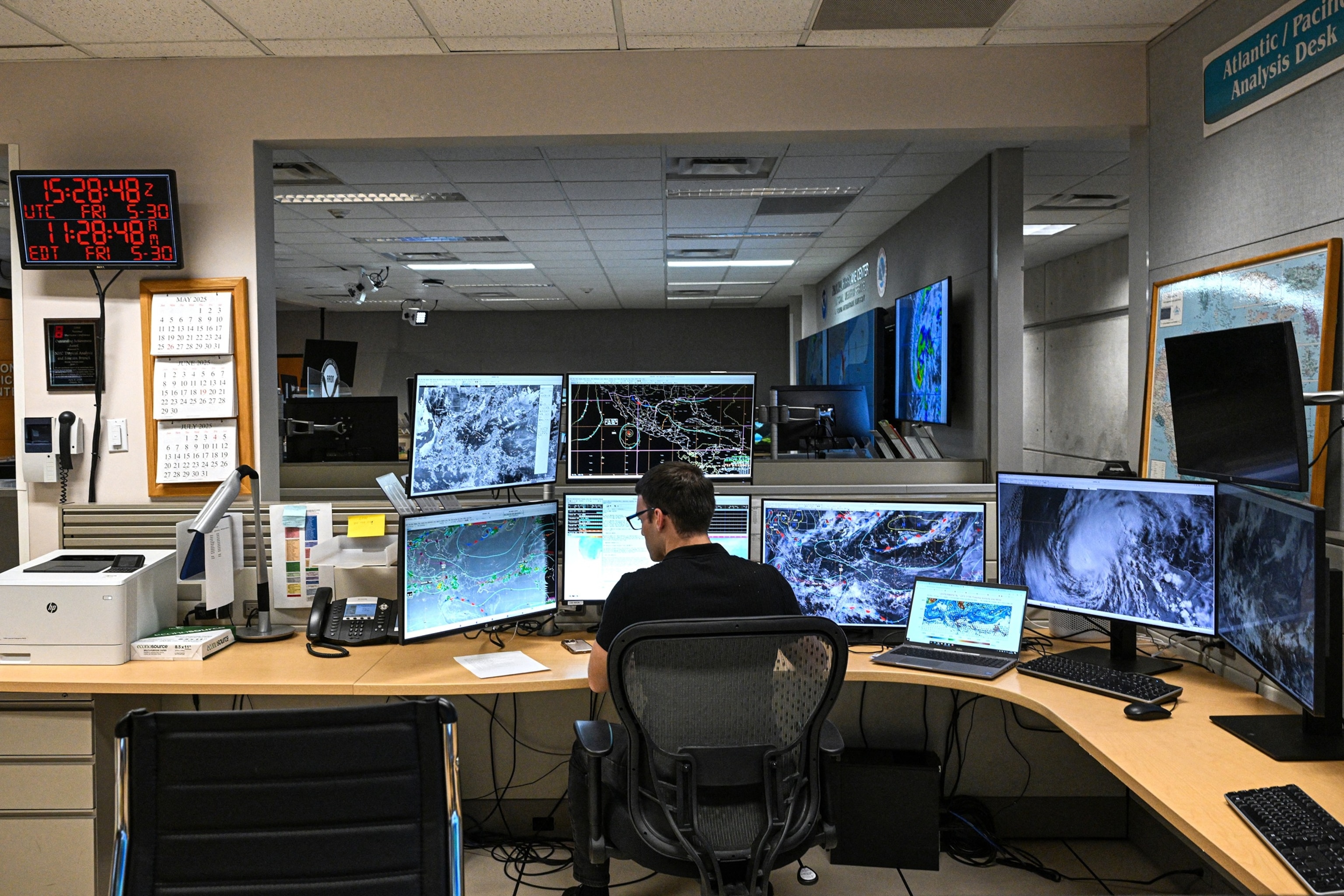
According to NOAA, after DeepMind's model was added to forecasters' expansive toolkits, it performed better than its traditional, bulky counterparts in some cases.
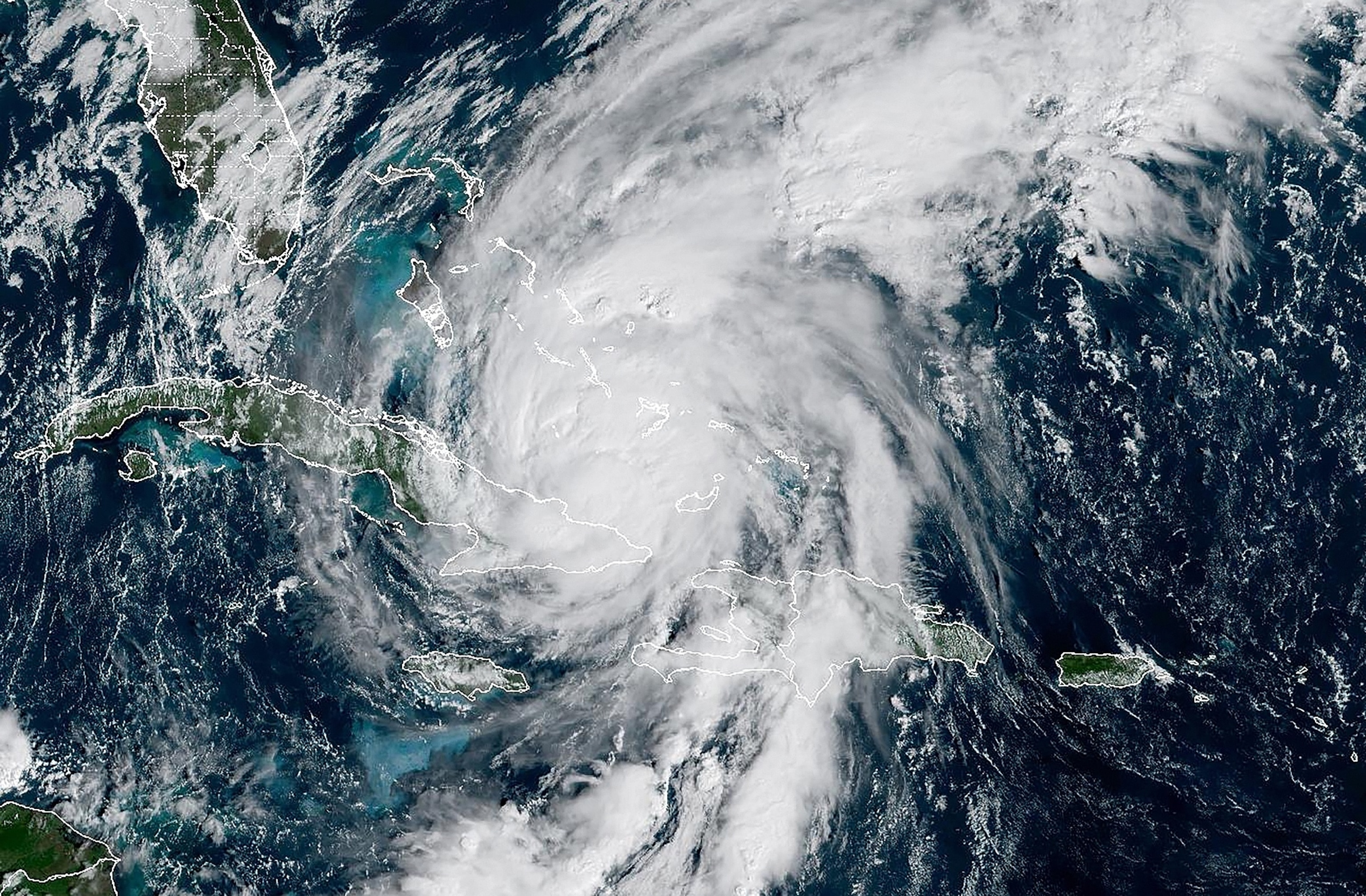
The agency cited the forecast for Hurricane Melissa as a notable example.
DeepMind's model, as well as the European model's AI cousin, provided forecasters at the NHC with an unusually high degree of confidence that Hurricane Melissa would rapidly intensify into a major Category 5 hurricane before dealing a devastating blow to Jamaica.
"I was really impressed with [the DeepMind model's] ability to handle rapid intensification, as that has been a thorny issue with a lot of these types of models," said Matt Lanza, managing editor of The Eyewall blog. "The work it did during Melissa was unquestionably critical in terms of sounding the alarm on very high-end risk," added Lanza.
Overall, NOAA reports that DeepMind's model was the most accurate model for storm track and intensity, with the only forecast to surpass it in accuracy being the NHC's official forecasts.

James Franklin, a former branch chief at the NHC, took to social media to analyze the results and called it a "banner year" for the Google DeepMind model.
A spokesperson from the Google DeepMind team said that while this was a strong showing for the model's weather prediction capabilities, they advise against representing the model's performance based on a single storm or measure.
How does it work?


Traditional weather models -- like the European Model and the American Global Forecast system that the NHC regularly uses -- rely on complex simulations that use atmospheric and physics-based equations, which require significant time and computing power to run.
AI weather models, like DeepMind's, require less computing power and are faster. They learn to forecast by looking at historical weather data and identifying patterns and relationships from past storms, which help them complete their forecasts in seconds.
"AI/Machine Learning models use information from past weather fields, typically 40+ years of how the atmosphere looks at 6-hour intervals, to 'learn' how the atmosphere evolves with time," said Ryan Torn, a professor and researcher at the University of Albany who specializes in weather modeling.
"Once the AI/Machine Learning model learns the atmosphere, you can give it information about what the atmosphere looks like at the current time to create a forecast," Torn added.
In the case of the DeepMind AI model, Google says it generates hundreds of different weather scenarios from a single starting point in mere minutes, whereas traditional models would take hours to complete the same task.
Despite the benefits of using AI during the 2025 hurricane season, more research and testing need to be done before AI-powered models dominate forecasting.
Lanza said models like DeepMind still need to prove themselves with Gulf storms, as this hurricane season was abnormally quiet.
"When you think about extreme weather and climate change, you need to also think that events outside the bounds of what's expected will occur, and AI modeling may not capture that risk," said Lanza. "That's where traditional physics-based modeling may remain essential," Lanza added.
Torn also stressed the importance of the traditional models as AI models try to reduce errors caused by sharp changes in the weather or gaps in weather data by smoothing out the differences.
"Spreading out the differences over a larger area is not physically meaningful and will hurt the forecast later on," said Torn. "Our fully physics models tend to do much better at this because we have incorporated the physical laws into the models."
A spokesperson from the Google DeepMind team said that while AI weather models don't crunch complex physical and atmospheric equations like their traditional counterparts, AI models compliment them by using the traditional models for training and starting conditions -- combining speed and precision to improve predictions.


No comments:
Post a Comment