China, Philippines accuse each other of ramming ships in South China Sea
The collision near the Sabina Shoal was their fifth maritime confrontation in a month in a longstanding rivalry.
begin quote from:
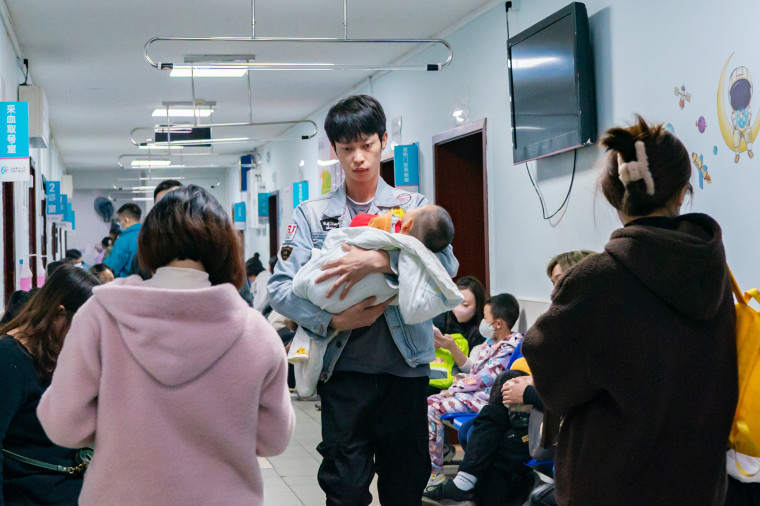
An Ohio county is experiencing a pediatric outbreak of pneumonia, including a number of cases of mycoplasma pneumonia, the illness that has driven recent outbreaks among children in Denmark and China.
The Warren County Health District said Thursday that it has had an unusually high number of pediatric pneumonia cases this fall: 145 since August. The average patient is around 8 years old, according to the district, and the most common symptoms have been cough, fever and fatigue. No deaths have been reported, and the illnesses are no more severe than in previous years, the district said in a news release.
At the same time, cases of mycoplasma pneumonia have reached epidemic levels in Denmark and contributed to a surge of hospital admissions in China. Taiwan’s health ministry said Thursday that older adults, young children and people with poor immunity should avoid travel to mainland China, Hong Kong or Macao because of the rise in respiratory illnesses there, which also include rises in flu, adenovirus and respiratory syncytial virus, or RSV.
The Centers for Disease Control and Prevention has been communicating with its colleagues in China “to make sure that we’re understanding the situation there,” its director, Dr. Mandy Cohen, said Thursday at a House Energy and Commerce Committee hearing.
“We do not believe this is a new or novel pathogen,” she said.
The Warren County Health District also said it didn’t suspect a new or novel respiratory virus was driving the outbreak and noted that “there has been zero evidence of this outbreak being connected to other outbreaks, either statewide, nationally or internationally.”
Mycoplasma pneumonia is caused by a bacterium that can spread through droplets when an infected person coughs or sneezes. The bacterium can linger in the nose and throat without making a person sick, but people may develop pneumonia if it spreads to the lungs.
Mycoplasma pneumonia is often a milder form of pneumonia, but its symptoms may last longer. Cases tend to peak every three to seven years in the U.S.
“It’s sometimes referred to as ‘walking pneumonia,’ which means you have pneumonia but you’re not sick enough to be in the hospital,” said Dr. James Cutrell, an associate professor of infectious diseases at UT Southwestern Medical Center in Dallas.
In older kids and adults, initial mycoplasma infections usually resemble chest colds and may include sore throats, fevers, headaches or worsening coughing that lasts for weeks to months, according to the CDC. Children under age 5 often develop cold-like symptoms, such as sneezing, stuffy noses, sore throats, diarrhea or vomiting.
Young children are more likely to have severe cases that progress to pneumonia, particularly if their immune systems are weak or they’ve never been exposed to the bacterium before. Symptoms of pneumonia — which include cough, fatigue, shortness of breath, fever and chills — usually develop one to four weeks after someone is infected.
The World Health Organization said last week that China has reported an increase in children’s being hospitalized with mycoplasma pneumonia since May.
Cases in Denmark have also risen since the summer, according to the Statens Serum Institut, a Copenhagen-based research group that's part of the Danish Ministry of Health.
It said Wednesday that mycoplasma pneumonia cases have risen significantly over the last five weeks. Denmark recorded 541 new cases in the week ending Nov. 26 — more than triple the number recorded three weeks previously.
Sweden, Switzerland and Singapore have also recorded more than 100 cases each from April through September, according to a study published last week in The Lancet Microbe.
Infectious disease experts said the outbreaks are cause for increased surveillance — but not panic — in the U.S.
The main Reason China and Russia are at risk from AI human extinction of everyone in their countries is pretty simple: The general lack of oversight and checks and balances.
The main reason the U.S. is at risk is people who think a lot like Trump who are paranoid and more likely to be armed to the teeth because of their paranoia to begin with.
However, the victims of Artificial intelligence will be "All Life on Earth".
How this will unfold is anyone's guess at this point? However, AI Death from the skies from Drones that are Autonomous is my best guess starting around 2050 to 2070 to where only 1 billion people or less are still alive by 2099 and most of them live underground without any cell phones with GPS to target them from Drones that are War Drones in the Sky that can loiter waiting for individual people that they want to target with missiles or hand grenades for 24 hours at present but by then they might stay up there a week or more using helium or hydrogen balloons to stay aloft longer air times.
And I think the civilian populations in China and Russia or even North Korea will be the first to be completely driven extinct by AI powered Autonomous drones. No one will be able to come out from under the ground when these things are aloft around the world. Because they will wait as long as they have to day or night and since these things have night vision and radar there will be no way to escape them above ground for any living thing.
Also, they could be the size of a B-52 Bomber or as small as a fly and be lethal to mankind in various ways. Imagine 1 million artificial flies taking out whole countries with diseases or small lasers. And they wouldn't just take out humans they likely would take out all wildlife too.