begin quote:
Israel strikes Iran's nuclear and military sites in unprecedented attacks


Israel strikes Iran nuclear sites and military leadership as Middle East braces for retaliation
What's happening now
• Israel attacks Iran: Israel has launched unprecedented strikes on Iran, targeting its nuclear program and military leaders in an attack that Prime Minister Benjamin Netanyahu said will last many days. Israel’s military says it used 200 fighter jets. In retaliation, Iran has launched over 100 drones toward Israeli territory, Israel’s military said.
• Military leaders killed: General Hossein Salami, the commander-in-chief of Iran’s Revolutionary Guard, was killed in the attack. He was among the country’s most powerful figures. The attack also killed Major General Mohammad Bagheri, Iran’s highest-ranking military officer.
• Nuclear targets: Netanyahu said “Operation Rising Lion” struck Iran’s main enrichment facility in Natanz, nuclear scientists, and what he called “the heart of Iran’s ballistic missiles program.” Six nuclear scientists were killed, Iranian state-affiliated Tasnim news agency reported.
• US position: Secretary of State Marco Rubio said there was no US involvement or assistance in the strikes. Before the attack, President Donald Trump said he did not want Israel to target Iran as US negotiations on a nuclear deal continue.
Analysis: Why Israel’s attack on Iran could spiral into a regional war — and drag in the US
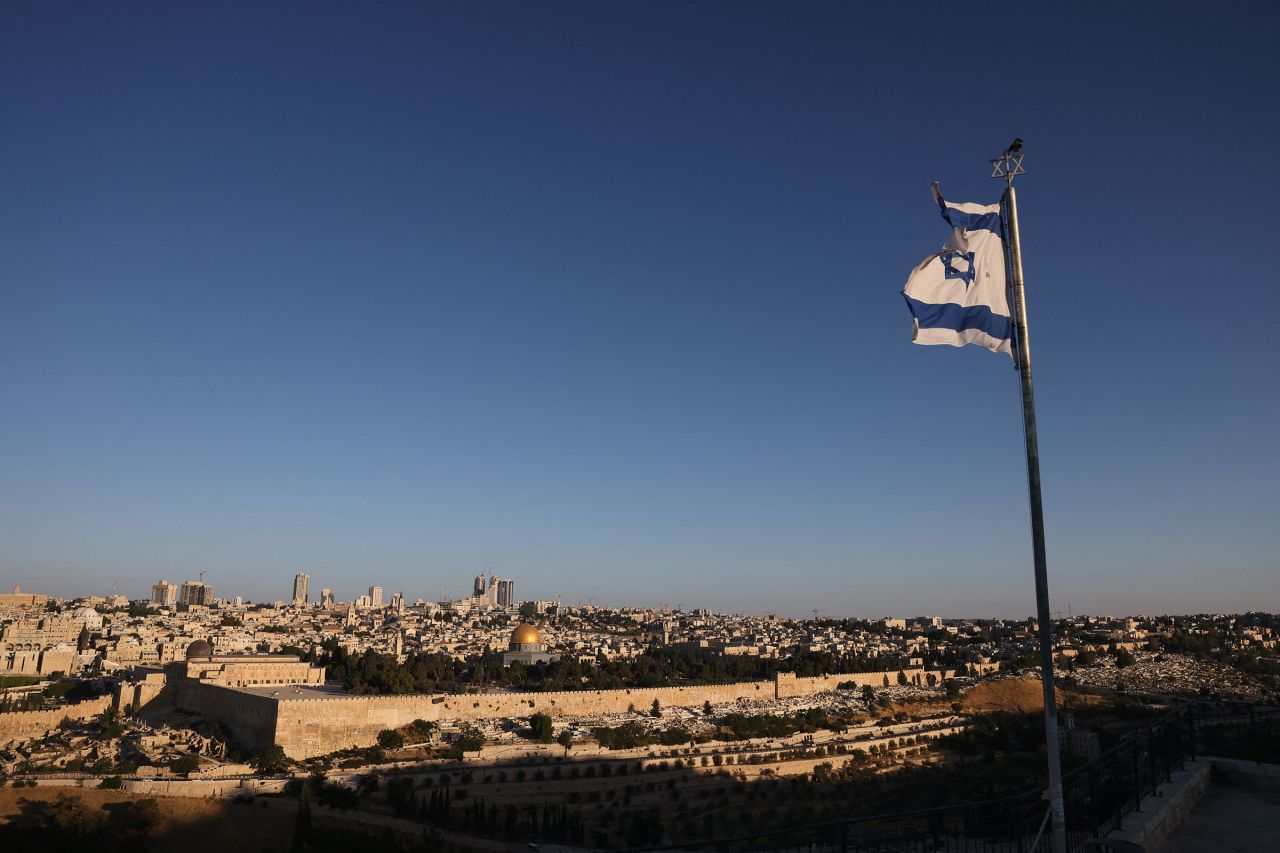
Israeli strikes on Iran’s nuclear capabilities could trigger a massive Iranian retaliation and threaten to tip the region into a full-scale war, analysts and experts have long warned.
And if Israel and Iran become entangled in wider conflict, it could risk drawing in the US into the fray. That is because the US has long been Israel’s closest ally and biggest weapons supplier.
Indications of that risk emerged earlier this week as the US ordered the departure of non-essential personnel from locations around the Middle East as intelligence warnings increased that an Israeli strike on Iran was imminent.
Israeli officials said Friday they were bracing for Iran’s retaliation, declaring a state of emergency.
There will be widespread fear among those living in Israel and across the Middle East as Israel’s strikes throw the region into uncharted territory.
Iran’s regional reach: Iran oversees a so-called “Axis of Resistance” across the region that includes loyal proxies such as Hezbollah in Lebanon, the Houthis in Yemen as well as various militia groups in Iraq and Syria.
Experts say an Israeli attack on Iranian nuclear facilities would also likely spell the end of its negotiations with the US.
Last year Israel and Iran’s years-long proxy war erupted into the open with a series of direct missile strikes on each other.
At the time, the US warned Israel not to strike Iran’s energy or nuclear infrastructure. And Iran rushed to downplay the strikes, responding with visually powerful but carefully calibrated retaliation that caused limited damage.
New territory: Friday’s attack by Israel goes much further, striking at the heart of Iran’s nuclear and military complex. Israel hit Iran’s main enrichment facility in Natanz and killed General Hossein Salami, commander-in-chief of Iran’s Islamic Revolutionary Guard Corps, as well as Major General Mohammad Bagheri, Iran’s highest-ranking military officer.
CNN’s security analyst Beth Sanner said that removing Salami is akin to taking out the US chairman of the joint chiefs of staff: “You can imagine what Americans would do,” she said.
Iran is now “under existential threat” and as such, the Israelis will be expecting “a massive, much bigger retaliation than what they saw last time,” Sanner said.
Iran requests UN Security council emergency session
Iran has requested an emergency session of the United Nations Security Council to discuss Israel’s unprecedented strikes on the country, the Iranian Mission to the UN told CNN.
The request comes amid growing international calls for calm, after Israel warned its military operation against Iran would continue for days and Iran vowed retaliation.
Global airlines suspend flights to Middle East
Several major airlines have suspended flights to and from locations in the Middle East following Israel’s strikes on Iran Friday.
Qatar Airways has “temporarily cancelled flights to Iran and Iraq due to current situation in the region,” the airline said in a statement. Three major airports in Iran, including in the capital Tehran, and five airports in Iraq, including its capital Baghdad, have been affected, the airline said.
Emirates, one of the United Arab Emirates’ flagship carriers, has canceled flights to and from Iraq, Jordan, Lebanon and Iran on both Friday and Saturday, the airline said.
Air India, the country’s flagship carrier, said on X that more than a dozen of its flights had been diverted, or were returning to their origin, “due to the emerging situation in Iran, the subsequent closure of its airspace and in view of the safety of our passengers.” Flights affected include routes from New York, London, Vancouver and Washington.
German carrier Lufthansa said flights to Tehran had been suspended until further notice, and its pilots would avoid Iranian, Iraqi and Israeli airspace for the time being, Reuters reported.
Global oil prices see largest single-day percentage increases in years
Global oil prices have had their largest single-day percentage increases in years, reflecting fears that a wider conflict in the Middle East could lead to serious energy supply disruptions.
Brent crude, the global benchmark, was last up 4.3% at $72.4 a barrel. West Texas Intermediate, the US benchmark, jumped 5% to $71.4 a barrel.
According to Reuters, they are the biggest intraday gains for each benchmark since March 2022, a month after Russia launched a full-scale invasion of Ukraine.
Investors are concerned about how a retaliation by Iran may play out, whether the US may be targeted and whether a critical oil transport route may be disrupted.
In the equities market, US stock futures fell, sending investors retreating to traditional safe haven investments like gold. Dow futures dropped 1.3%, or over 540 points. S&P 500 futures and Nasdaq Composite futures were down even more, by 1.4% and 1.6%, respectively.
Gold rose about 1% to $3,413.6 per troy ounce.
Jordan intercepted missiles and drones that entered its airspace, state media says
Jordanian Air Force jets and air defense systems shot down several missiles and drones that entered Jordan’s airspace on Friday morning, the country’s state news agency Petra reported.
Israel, which neighbors Jordan, launched unprecedented strikes on Iran on Friday.
Royal Jordanian Air Force aircraft are “operating at a high level of readiness” to protect the airspace and ensure the safety and security of the country and its citizens, Petra reported, citing a military source in the General Command of the Jordanian Armed Forces.
The source added that the interception operation was based on military assessments indicating the likelihood of missiles and drones falling within Jordanian territory, including populated areas, which could have resulted in casualties, according to Petra.
The Jordanian Armed Forces said it would not allow any violation of the country’s airspace, under any circumstances, Petra reported.
Pictures and video from Israeli military show US-made warplanes used to strike Iran
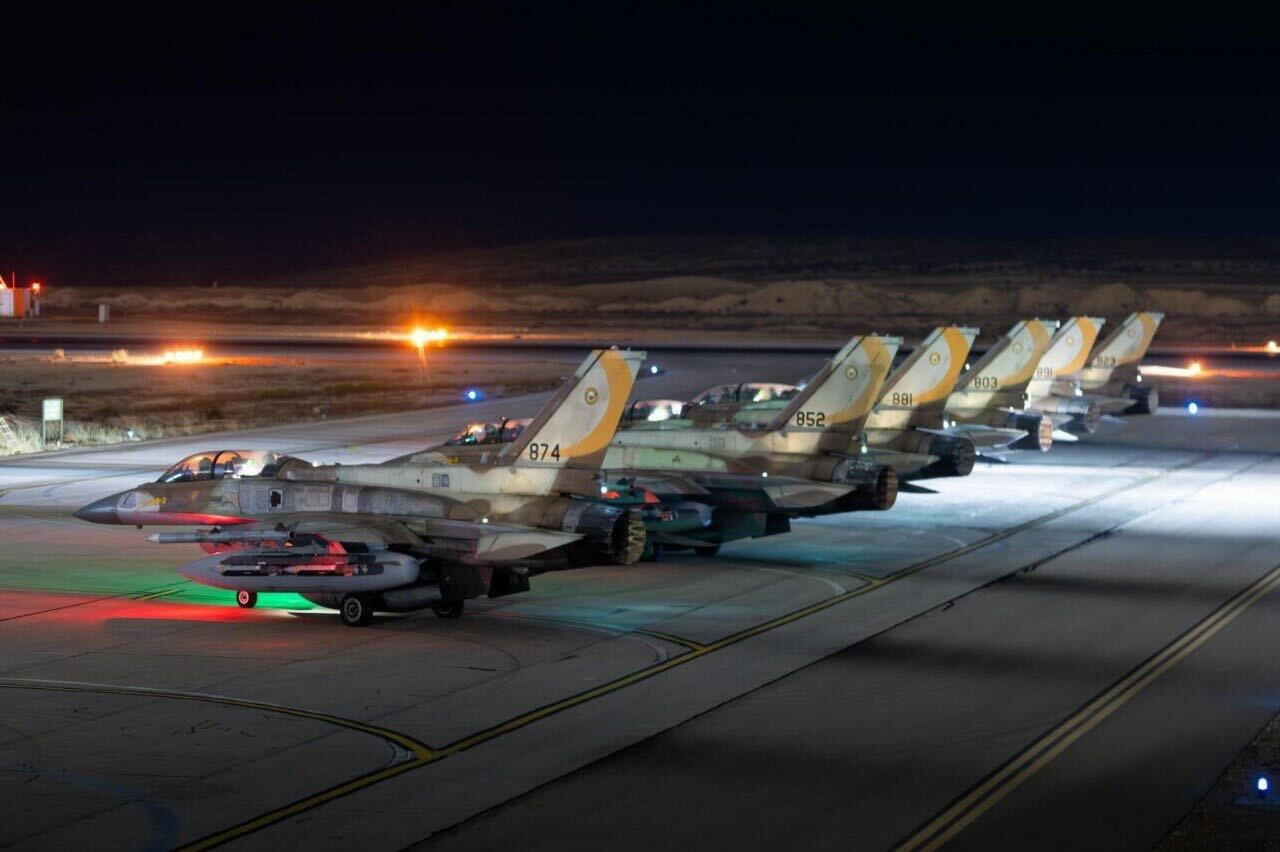
Imagery released by the Israeli military on Friday showed American-made F-35, F-15 and F-16 fighter jets were involved in the airstrikes on Iran.
Israel said 200 fighter aircraft participated in the strikes on Iran’s nuclear sites, military sites and military leadership, using 330 munitions.
The 200 Israeli warplanes used make up almost 60% of the country’s combat-capable aircraft, according to statistics in the “Military Balance 2025,” published by the International Institute for Strategic Studies (IISS).
The US has long been Israel’s primary weapons supplier. The warplanes represent the breadth of US firepower, and all are in service with US forces as well as Israel’s.
The stealthy fifth-generation F-35 jets, made by Lockheed Martin, are the most modern in Israel’s fleet, and it operates 39 of them, according to the IISS statistics.
Israel has 75 of various models of the twin-jet F-15s, first made by McDonnell Douglas (now part of Boeing) in its inventory, and almost 200 units of a range of F-16 models, originally made by General Dynamics and now Lockheed Martin, according to the IISS.
Countries around the world respond to Israel’s strikes on Iran
Countries around the world are reacting to Israel’s strikes on Iran, with several voicing alarm and others criticizing the move.
US Secretary of State Marco Rubio has said the US was not involved in Israel’s strikes, adding in a statement that “our top priority is protecting American forces in the region.”
Saudi Arabia’s Foreign Ministry said the “blatant Israeli aggression” undermines Iran’s “sovereignty and security and constitute a clear violation of international laws and norms.”
Lebanon’s President Joseph Aoun said Israel’s attacks “targeted all ongoing efforts and initiatives towards stability in the region.” Prime Minister Nawaf Salam called the attack a “flagrant violation of international law and Iranian sovereignty.”
India’s Ministry of External Affairs spokesperson said the country was “closely monitoring the evolving situation, including reports related to attacks on nuclear sites,” and urged both sides to avoid escalation. He said India had “close and friendly” relations with both Israel and Iran.
Oman’s sultanate called the attack “a dangerous escalation and a blatant violation of the United Nations Charter and the principles of international law.”
Britain’s Prime Minister Keir Starmer said “Stability in the Middle East must be the priority and we are engaging partners to de-escalate.”
Pakistan’s Foreign Ministry said it condemned Israel’s attacks, which “clearly contravene the UN Charter and fundamental principles of international law.” The ministry said: “Pakistan stands in resolute solidarity with the people of Iran.”
Qatar’s Ministry of Foreign Affairs called the strikes a “dangerous escalation” and called on the international community to “put an end to these Israeli violations.”
The United Arab Emirates’ Foreign Ministry called on the UN Security Council to “take urgent and necessary measures to achieve a ceasefire.”
China’s embassy in Iran called the situation in Iran “severe and complex,” urging Chinese citizens in the country to step up their own security precautions.
New Zealand Prime Minister Christopher Luxon warned that “the risk of miscalculation is high.”
Australia’s Foreign Minister Penny Wong said that Canberra was “alarmed” by the escalation. She urged all parties to prioritize dialogue and diplomacy, saying: “This risks further destabilizing a region that is already volatile.”
Ahead of Israel's attack on Iran, the US withdrew some diplomats and military families from the Middle East

The US State and Defense departments on Wednesday made efforts to arrange the departure of non-essential personnel from locations around the Middle East.
At the time, a defense official said US Central Command was monitoring “developing tension in the Middle East.”
“They are being moved out because it could be a dangerous place, and we’ll see what happens,” President Donald Trump told reporters Wednesday.
Secretary of Defense Pete Hegseth authorized the voluntary departure of military dependents from locations across the Middle East.
That same day, the State Department prepared to order the departure of non-essential personnel from the US embassies across the region, according to a separate US official and another source familiar with the matter.
Later on Wednesday the department updated its travel advisory to add that the departure of non-emergency US government personnel “due to heightened regional tensions” had been ordered.
Six of Iran’s nuclear scientists killed in Israel’s attack, Iranian state-affiliated media reports
Six of Iran’s nuclear scientists were killed in Israel’s strikes, Iranian state-affiliated Tasnim news agency said Friday.
Among the scientists killed were Fereydoun Abbasi, the former head of Iran’s Atomic Energy Organization and Mohammad Mehdi Tehranchi, a physicist who also served as president of Islamic Azad University, the news agency said.
Earlier on Friday, Iran’s Supreme Leader Ayatollah Ali Khamenei confirmed a number of military commanders and scientists had been killed in the strikes.
Israel says it is “intercepting” Iranian drones outside of its territory

Israel’s military has begun to shoot down drones from Iran, according to a military official.
Earlier IDF spokesperson Effie Defrin said Iran has launched more than 100 drones toward Israeli territory in the first signs of retaliation to Israel’s unprecedented strikes on Iran.
Why Iran’s hardened nuclear facilities are so difficult to destroy
Iran has spent years strengthening its nuclear structures against the threat of military strikes, which will make it difficult to comprehensively destroy them, military experts have told CNN.
“The type of concrete that (the Iranians) use is actually a very specialized, hardened concrete,” CNN military analyst Cedric Leighton said. It’s unclear whether Israel’s bombs can penetrate that type of concrete, he said.
Some facilities are buried underground to put them out of reach of Israel’s weapons.
Trita Parsi, executive vice president of the Quincy Institute in Washington, DC, said, for example, Iran’s Fordow nuclear site is buried half a mile deep.
Alex Plitsas, senior fellow at Atlantic Council, said Tehran’s underground nuclear facilities were connected to tunnels with 90-degree turns, adding another layer of complexity.
“Cruise missiles can’t do a 90-degree turn … so the options are limited,” he said.
Here are the latest developments in Israel’s attack on Iran
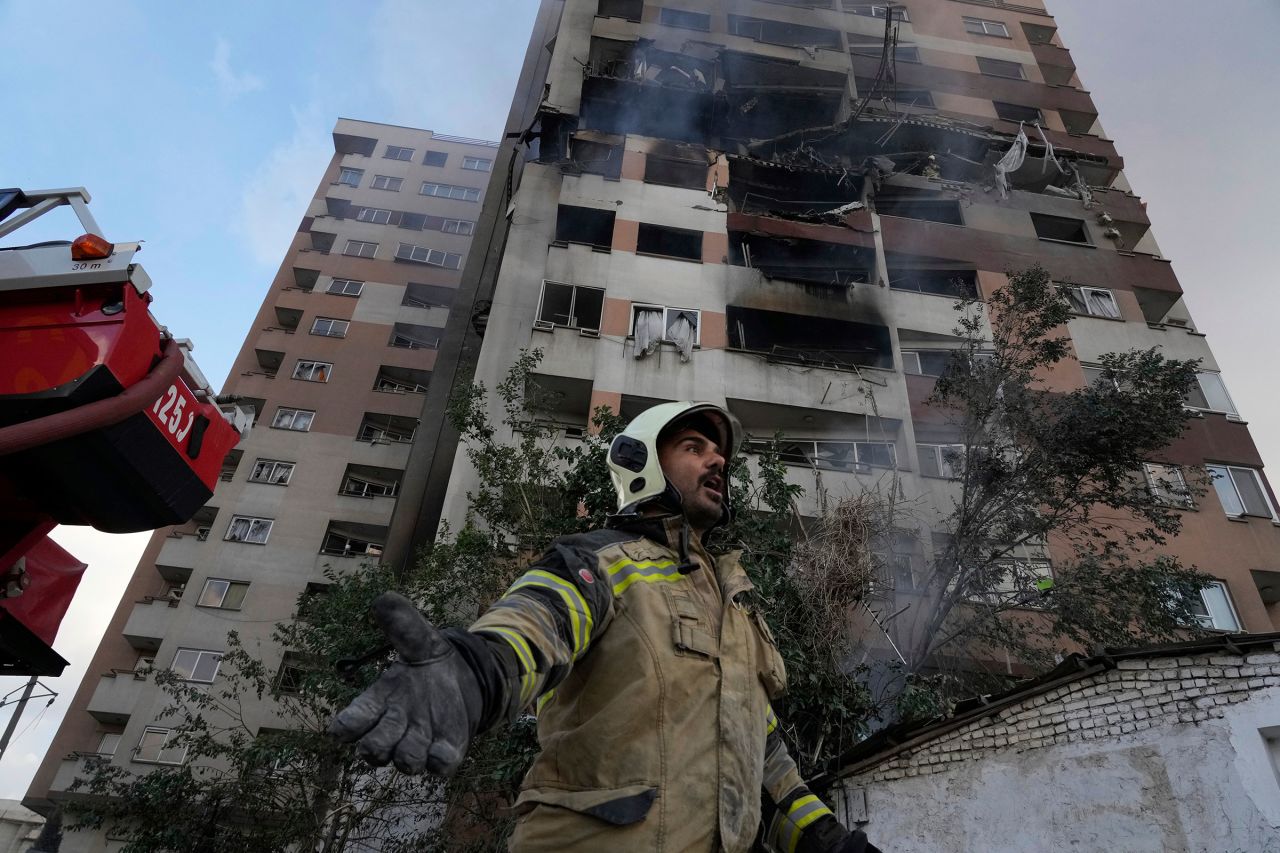
Israel launched an unprecedented attack on Iran early Friday morning, targeting the heart of nation’s nuclear program and senior military leaders.
Iran began its retaliation soon after, raising fears once again of a wider conflict in the Middle East, as countries around the world urge both sides to de-escalate.
Here’s what we know:
- The attack: Israel used 200 fighter jets in its attack, dropping more than 330 “various munitions” and striking more than 100 targets across Iran, according to the Israel Defense Forces. The attack is ongoing, the IDF said – with a military source telling CNN earlier, “This is not a one-day attack.”
- Their targets: The attack targeted Iran’s top military leaders as well as senior nuclear scientists, according to an Israeli security source. Iran’s largest uranium enrichment facility, the Natanz nuclear facility, was hit – but there hasn’t been any rise in radiation levels detected, according to the UN nuclear watchdog.
- Commanders killed: Several top Iranian commanders were killed in the strikes. These include General Hossein Salami, the powerful commander-in-chief of Iran’s Islamic Revolutionary Guard Corps; Major General Mohammad Bagheri, Iran’s highest-ranking military officer; and Iran’s former national security chief Ali Shamkhani.
- Iran retaliates: Tehran responded by firing more than 100 drones toward Israeli territory, according to the IDF. The IDF said Israeli defenses were working to intercept the drones.
- US position: Secretary of State Marco Rubio said there was no US involvement or assistance in the strikes. Before the attack, President Donald Trump said he did not want Israel to target Iran as US negotiations on a nuclear deal continue.
- State of emergency: Israel has declared a state of emergency, closing schools, banning social gatherings and advising against non-essential work. Israeli hospitals have been ordered to halt outpatient and non-urgent activities and move to protected areas, and the Israeli military is calling up “tens of thousands” of soldiers to prepare for what comes next.
- Airspaces closed: Israel, Iran and Jordan have all closed their airspaces. The Ben Gurion Airport, the main airport in Tel Aviv, is closed for all departures and landings.
- Global reactions: Countries around the world, including Oman, the UAE, Saudi Arabia, Britain, Australia and New Zealand have voiced alarm – with some criticizing Israel’s strikes as escalatory. Most are urging the two countries to de-escalate and maintain stability in the region.
- US security alert: The US has issued a security alert directing all government employees in Israel and their families to shelter in place, and advised US citizens in the country to take precautions and know the location of their nearest shelter in case of potential attacks.
Ali Shamkhani was a former national security chief and close Khamenei aide
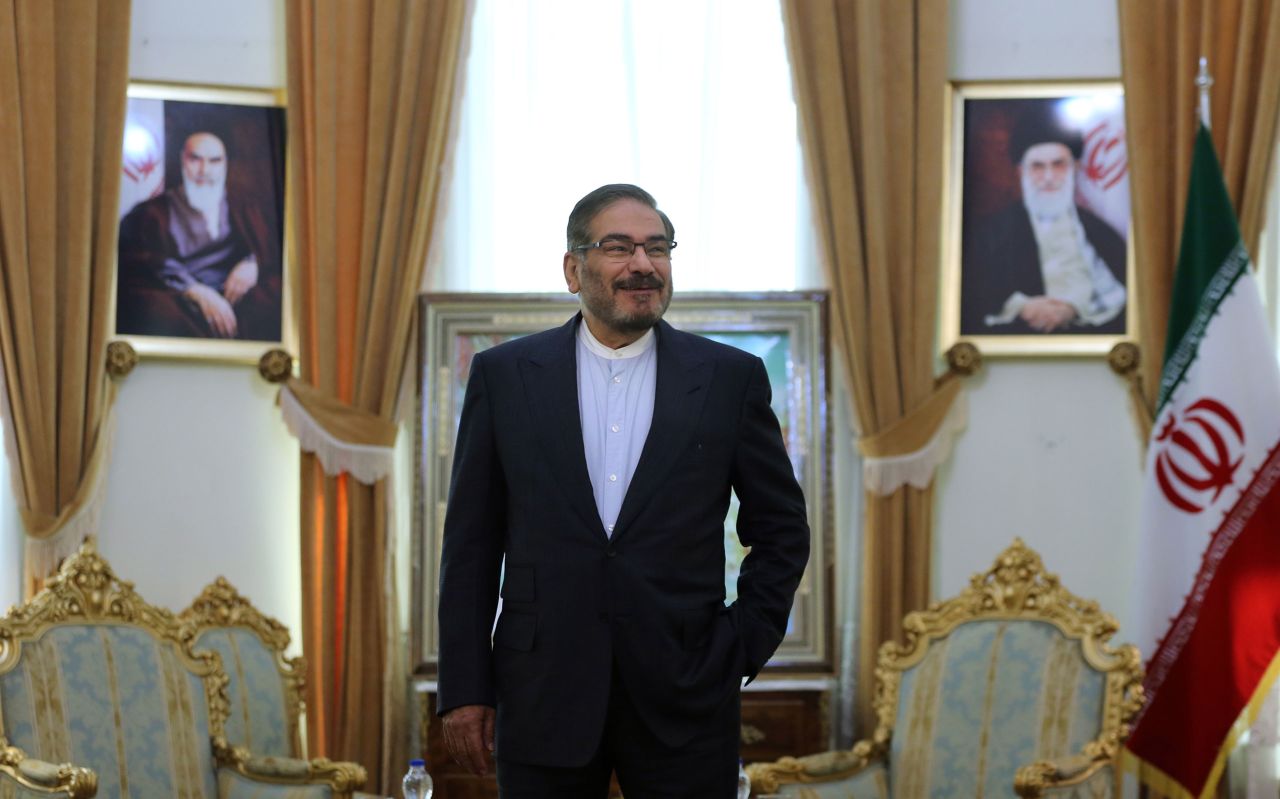
Iran’s former national security chief, Ali Shamkhani, was killed in Israel’s strikes on Iran, according to Iranian state media.
Ali Shamkhani was a close aide to Iran’s Supreme Leader Ayatollah Ali Khamenei and represented Tehran at talks which sealed a landmark agreement to restore diplomatic ties with foe Saudi Arabia.
Iranian state TV network IRINN confirmed his death following Israel’s unprecedented strikes on Friday.
Shamkhani served as the country’s top national security official for a decade from 2013, and before that served in a number of important roles, including in the Islamic Revolutionary Guard Corps (IRGC) and the ministry of defense.
He had been a rising star of Iranian diplomacy, well known in foreign-policy circles in Washington and Europe.
Shamkhani represented Iran in China-brokered talks with Saudi officials that led to the two countries agreeing to re-establish diplomatic ties after years of hostility.
But he was abruptly replaced in mid-2023.
The former national security chief was ambitious, experts say, and had an extensive portfolio. He ran for president in 2001 to held key posts in the IRGC and the defense ministry. Some analysts suggested at the time that Khamenei may have thought him too ambitious.
Still, he remained a close aide to the supreme leader, and gave advice as Iran re-entered nuclear talks with the administration of US President Donald Trump.
In April, days before talks with the US, he warned Tehran could expel UN nuclear inspectors and cease cooperation with the International Atomic Energy Agency (IAEA) if it feels under threat.
Videos and images show targets hit in Tehran and other parts of Iran
Multiple videos and images geolocated by CNN paint a picture of Israel’s overnight attack on Iran, with targets hit in Tehran and other parts of the country.
In the capital, multiple videos taken in the early hours of Friday local time showed flames and smoke billowing from buildings across the city. In one video, a man can be heard saying, “The time is 3:37 a.m.,” before adding, “An apartment complex has been struck.”
As daylight broke, other videos geolocated by CNN showed first responders sifting through the rubble of collapsed buildings, looking for survivors in northern Tehran.
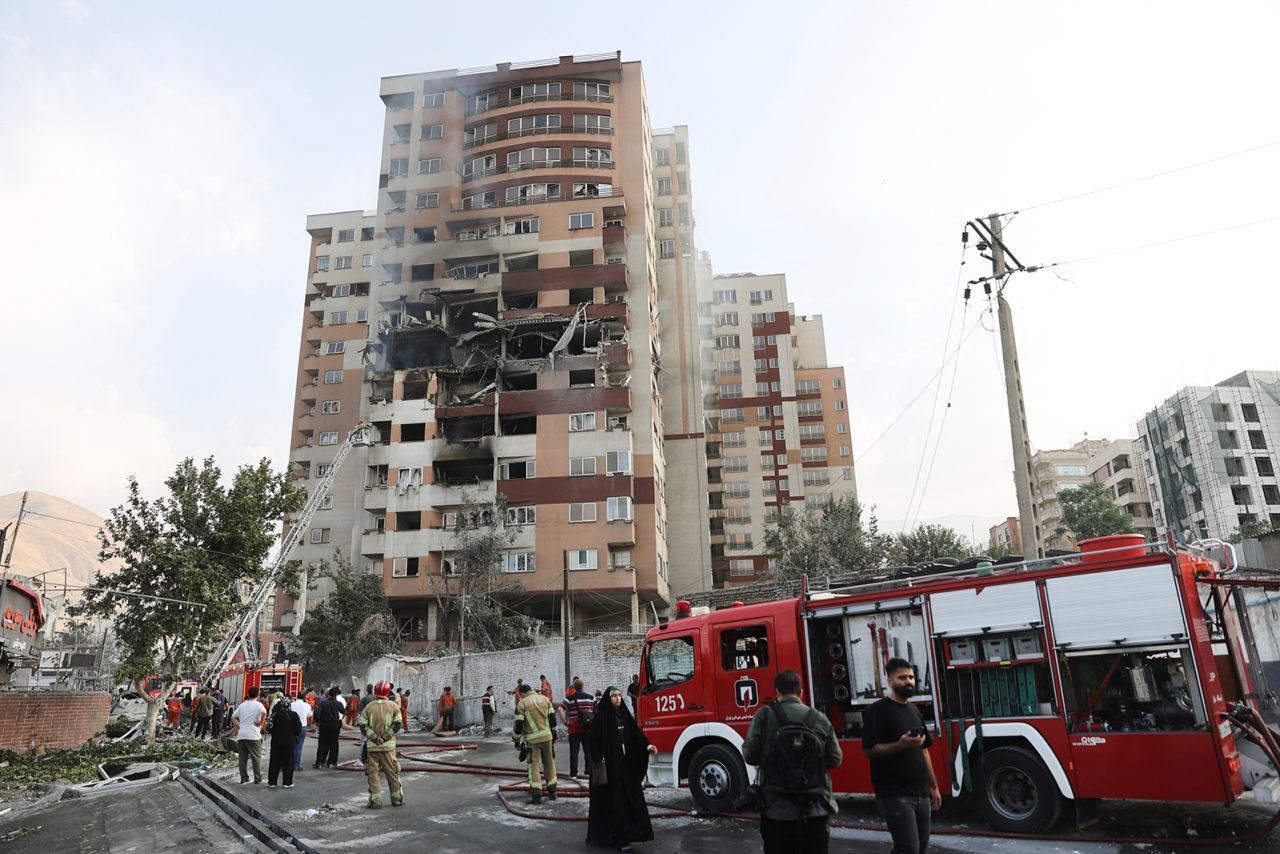
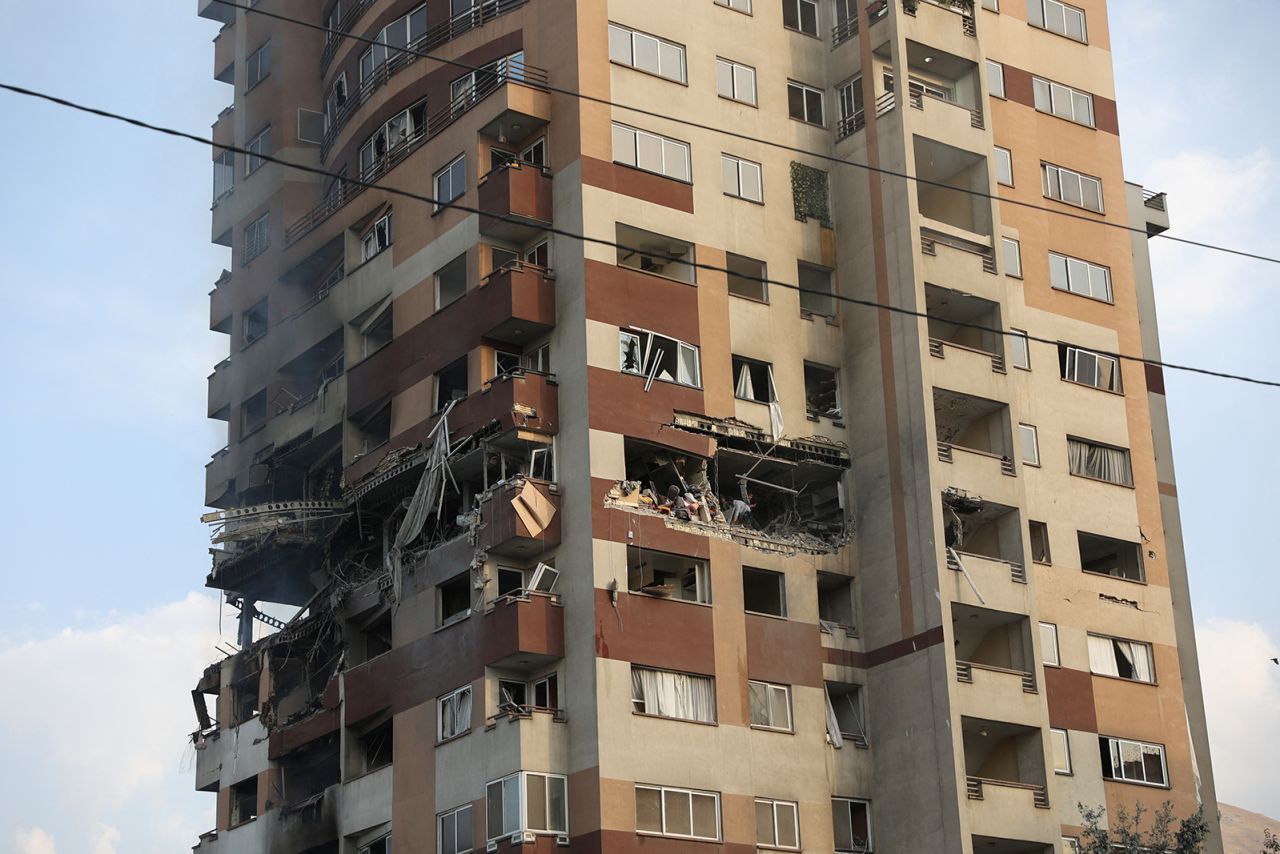
One image appeared to show the aftermath of a blast on the upper floor of an apartment building in an upscale neighborhood in eastern Tehran.
The full impact of Israel’s attacks is still being determined as Iran weighs up the scale of its promised retaliation.
IAEA says Iran's Bushehr nuclear plant not targeted
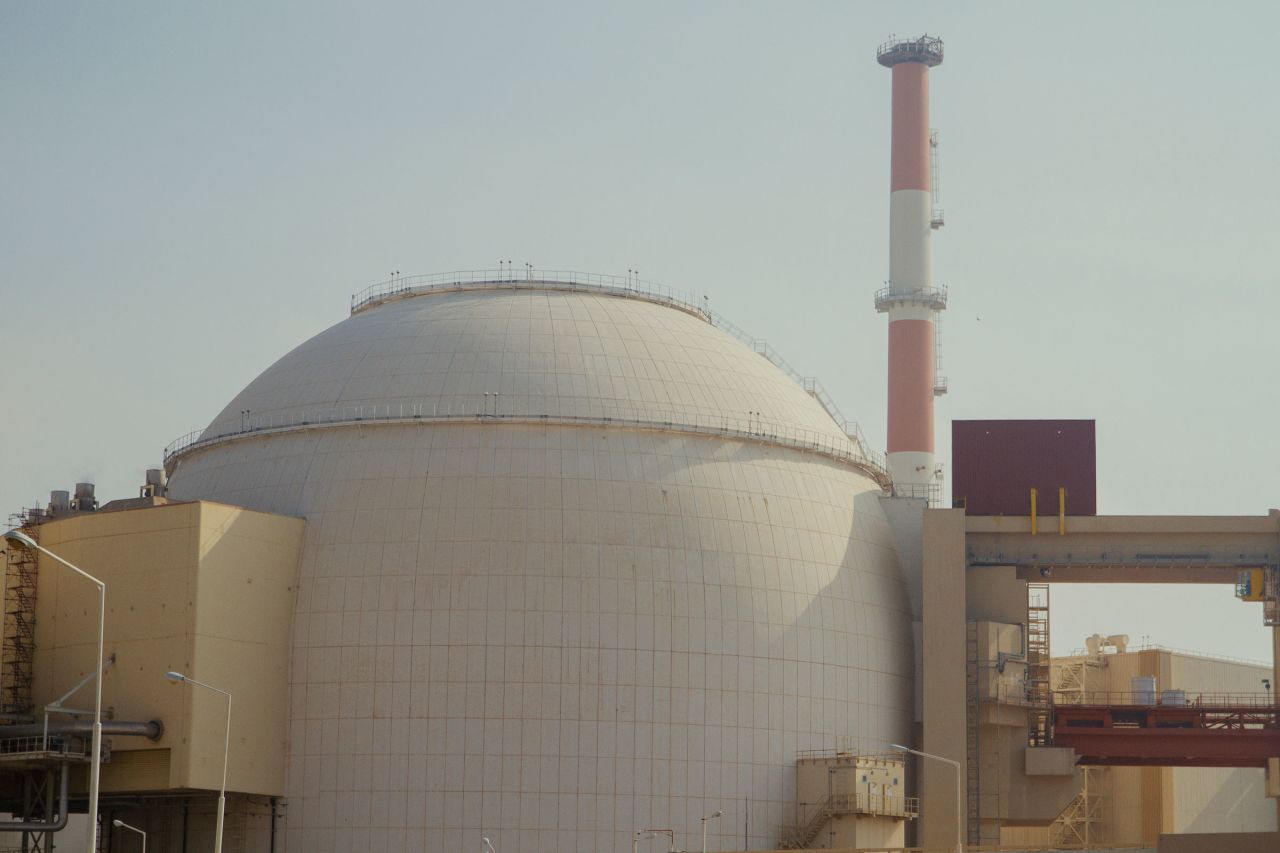
The UN’s nuclear watchdog, the International Atomic Energy Agency (IAEA), says Iran’s Bushehr nuclear plant was not targeted in Israel’s airstrikes, citing information from Iranian authorities.
The facility is the country’s first nuclear energy plant.
The IAEA also said no increase in radiation levels had been observed at the Natanz nuclear site, Iran’s largest uranium enrichment facility, citing officials.
Israel, IAEA and Iranian state media had all confirmed earlier that the airstrikes hit the Natanz facility, located about 150 miles south of the capital Tehran.
The site houses the country’s advanced nuclear program. Analysts say the site is used to develop and assemble centrifuges for uranium enrichment, a key technology that turns uranium into nuclear fuel. Images and video from the ground showed large plumes of smoke rising up from the Natanz site.
200 Israeli fighter jets used in strikes on Iran
Israel’s military says 200 fighter jets have been used in its ongoing strikes on Iran.
“More than 100 targets have been struck across Iran,” IDF spokesperson Effie Defrin said during a live briefing, adding that “over 330 various munitions” have already been dropped.
Defrin said Israel’s strikes were “part of a precise and synchronized operation” and that its pilots were “still striking military targets and targets from the nuclear program across different areas in Iran.”
US issues security alert for US government employees in Israel
The US has issued a security alert for US government employees in Israel and their families, as the country braces for potential retaliation from Iran after Friday morning’s strikes.
It added that US citizens should have a “continued need for caution and increased personal security awareness,” and should know the location of their nearest shelter in case of emergency incidents like mortar, rocket or missile fire.
“The security environment is complex and can change quickly,” the advisory read.
What are Iran's nuclear ambitions and why are they so controversial?

At the heart of Israel’s strikes on Iran is Tehran’s controversial nuclear program.
Tehran says it wants to master nuclear technology for peaceful purposes and has denied accusations by Western powers that it is seeking to develop nuclear weapons.
The UN’s nuclear watchdog, the International Atomic Energy Agency (IAEA), has long accused Iran of violating its non-proliferation obligations.
On Thursday – for the first time in almost 20 years – the IAEA passed a resolution declaring Iran in breach of those obligations.
The original deal: US intelligence agencies and the IAEA believe Iran had a secret, coordinated nuclear weapons program that it halted in 2003. Iran denies ever having had one.
Under a 2015 nuclear deal, Iran was allowed to enrich uranium only up to 3.67% purity, could maintain a stockpile of uranium of 300kg and was permitted to use only very basic IR-1 centrifuges – machines that spin uranium gas at high speed for enrichment purposes.
A year after US President Donald Trump withdrew the US from the deal, Iran gradually abandoned all limits it put on the program and began enriching uranium to up to 60% purity – a short, technical step away from weapons-grade levels of 90%.
US sanctions have dealt a heavy blow to Iran’s economy but have not destroyed it. Israel’s assassinations in recent years of top Iranian officials – including a pre-eminent nuclear scientist – have also failed to curb Iran’s uranium enrichment.
Iran has said its right to enrich uranium is non-negotiable.
Recent report: An IAEA report in May, seen by Reuters, found that Iran carried out secret nuclear activities with material not declared to the nuclear watchdog at three locations that have long been under investigation.
A separate IAEA report sent to member states in late May said Iran’s stock of 60% purity enriched uranium had grown to 408kg. That is enough, if enriched further, for nine nuclear weapons, according to an IAEA yardstick.
Iranian people in shock after attack, political analyst says
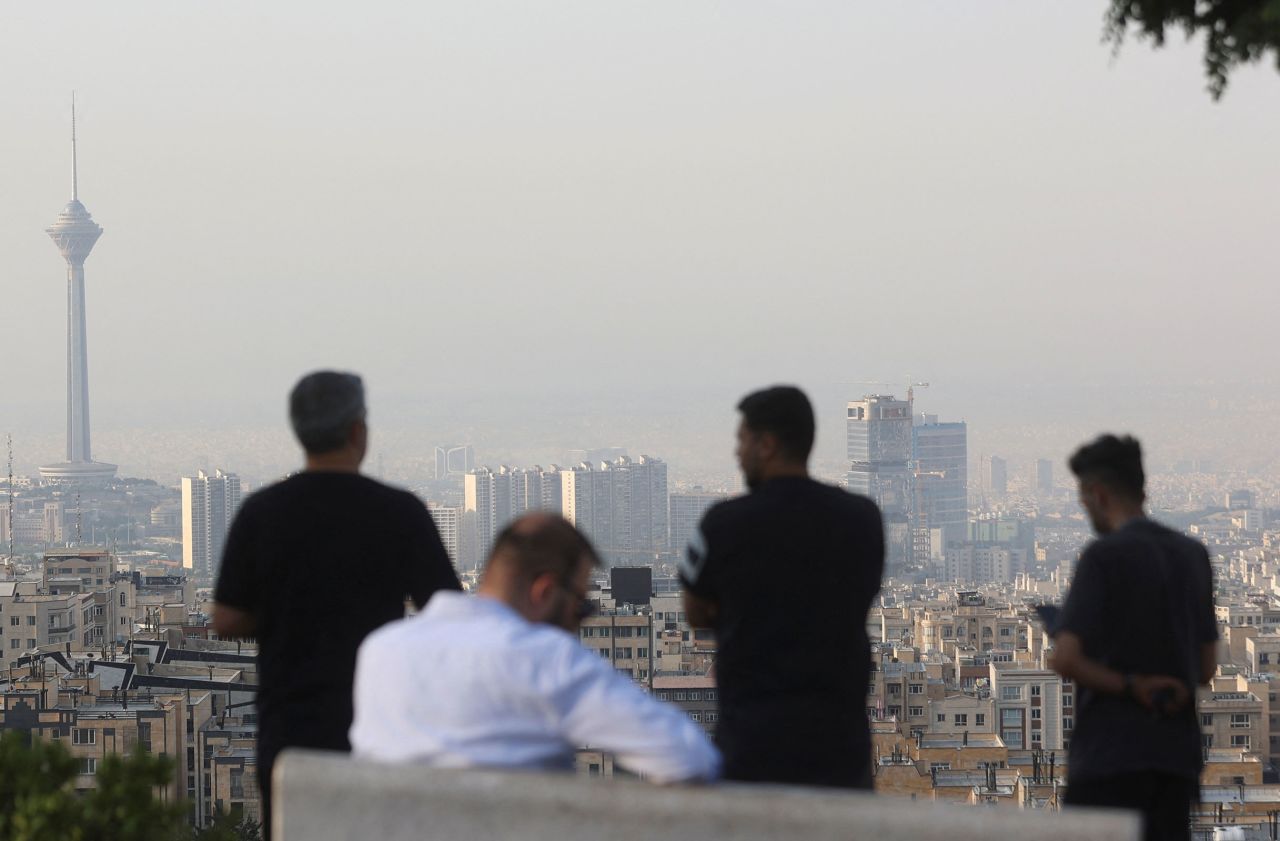
Ordinary people in Iran have been devastated by the attack, Negar Mortazavi, senior fellow at Center for International Policy, told CNN.
The political analyst said she has been in touch with her family, friends and sources in Iran where they spoke of a long and terrifying night.
“It seems like people have been devastated and shocked at this attack,” she added, saying that detailed impacts and casualties will only be known during the day.
BREAKING: Retaliation from Iran is underway, Israel’s military says
Iran has launched more than 100 drones toward Israeli territory, Israel’s military said Friday.
“All [aerial] defense arrays have been operating to intercept the threats,” IDF spokesperson Effie Defrin said.
Jordan temporarily closes airspace after Israel’s strikes on Iran
Jordan is temporarily closing its airspace as a precautionary measure, after Israel’s strikes on Iran early Friday morning.
CARC Chief Commissioner Haitham Misto said the decision was in line with the international civil aviation standards and flight safety obligations, and that the temporary closure would be continuously assessed and reviewed.
Both Israel and Iran have temporarily closed their airspaces. The flight-tracking website Flightradar24 shows the skies over both countries were virtually empty early Friday local time.
Saudi Arabia condemns Israeli strikes on Iran
Saudi Arabia expressed its “strong condemnation and denunciation” to Israel’s strikes on Iran’s nuclear program and senior military leaders.
The Saudi Foreign Ministry said the “blatant Israeli aggression” undermines Iran’s “sovereignty and security and constitute a clear violation of international laws and norms.”
For background: Iran and Saudi Arabia have shared a rivalry for decades as two regional powerhouses divided on religious lines. They have significantly improved their relations recently.
Iran’s former national security chief Ali Shamkhani killed in Israeli strikes, state media reports
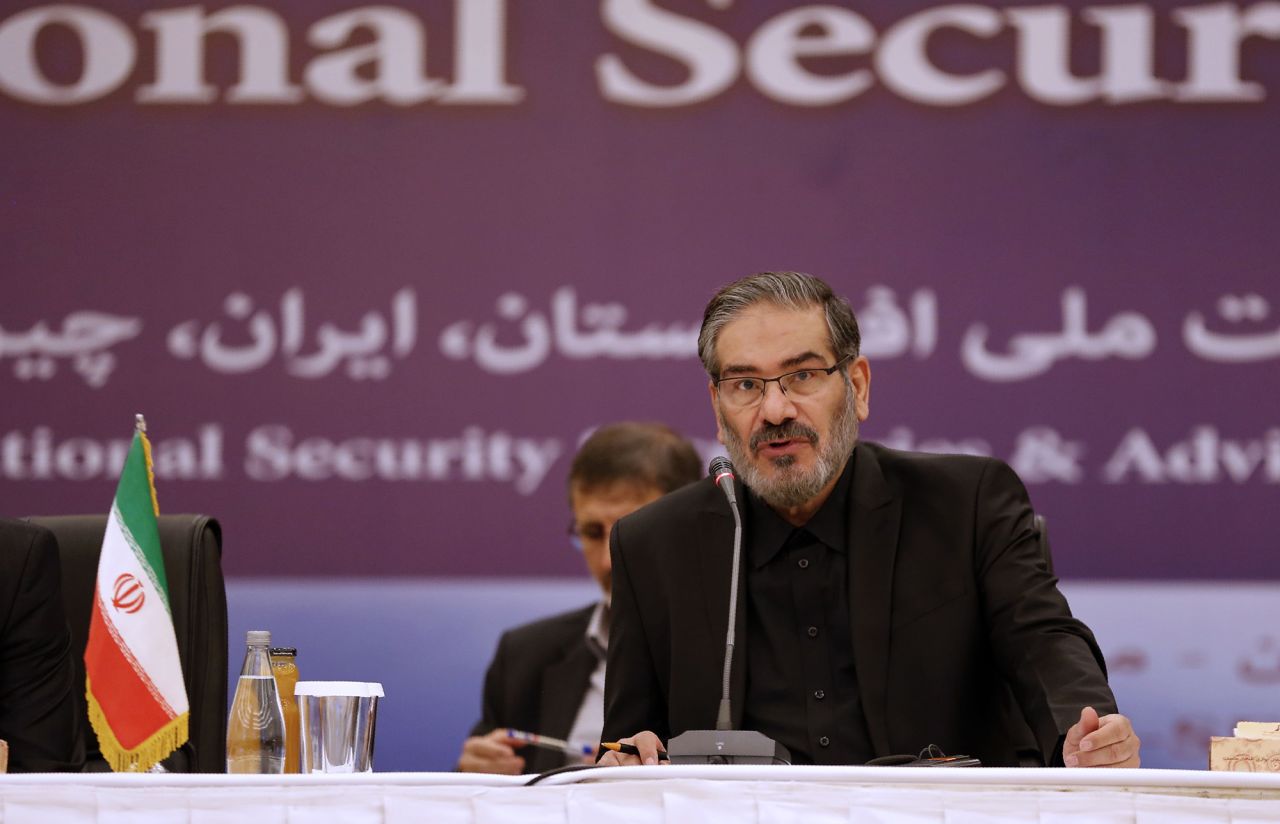
Iran’s former national security chief Ali Shamkhani has been killed in Israel’s strikes on Iran, according to Iranian state media.
“The assassination of Ali Shamkhani was also confirmed,” Iranian state news network IRINN said on Friday.
Shamkhani was a key adviser to Iran’s Supreme Leader Ayatollah Khamenei and served as secretary of the nation’s National Security Council for almost a decade.
Shamkhani had been a rising star of Iranian diplomacy and well known in diplomatic circles in Washington and Europe. But he was abrupted replaced in mid 2023, with analysts suggesting at the time he may have been viewed as too ambitious by Khamenei.
Jordan says it will not allow its airspace to become battlefield
Jordan has said it will not tolerate any violation of its airspace, insisting that the kingdom will not be a battleground for any conflict, hours after Israel struck nuclear and military targets in Iran.
The country’s national security is a red line, and it will not allow any attempt to threaten its security and the safety of its citizens, government spokesperson Mohammad Momani said in a statement reported by Petra, the state news agency. He did not specify further details.
The statement is an echo of government comments made in April 2024, after Jordan intercepted Iranian drones and missiles headed for Israel. The small kingdom sits between Israel and the West Bank on one side, and Iran’s neighbor Iraq on the other.
The April 2024 attack was retaliation to a suspected Israeli assault on Iran’s diplomatic building in Damascus, Syria.
Jordan’s interceptions were widely criticized at home. The government later said they were intended to “protect citizens and residential areas.”
Some context: Jordan became the second Arab country to sign a peace deal with Israel, in 1994. In the eyes of Israel’s Western allies, it has been vital to regional security. It has close intelligence and security cooperation with Israel, hosts American troops and is reliant on United States military aid.
Iran accuses the US of aiding Israel
Iran has the right to retaliate against Israel, its foreign ministry said Friday, accusing Washington of aiding the overnight attack, despite US claims otherwise.
Iran “will not hesitate to defend the nation,” the ministry said.
The ministry said Israel’s strikes could not have taken place without assistance from the US, which it said was responsible for the consequences of Israel’s actions.
Iran has called on member states of the United Nations to “urgently and collectively condemn” Israel’s strikes.
US position: The US was not involved in Israel’s strikes, according to Secretary of State Marco Rubio.
Iran’s Revolutionary Guard confirms death of Major General Hossein Salami
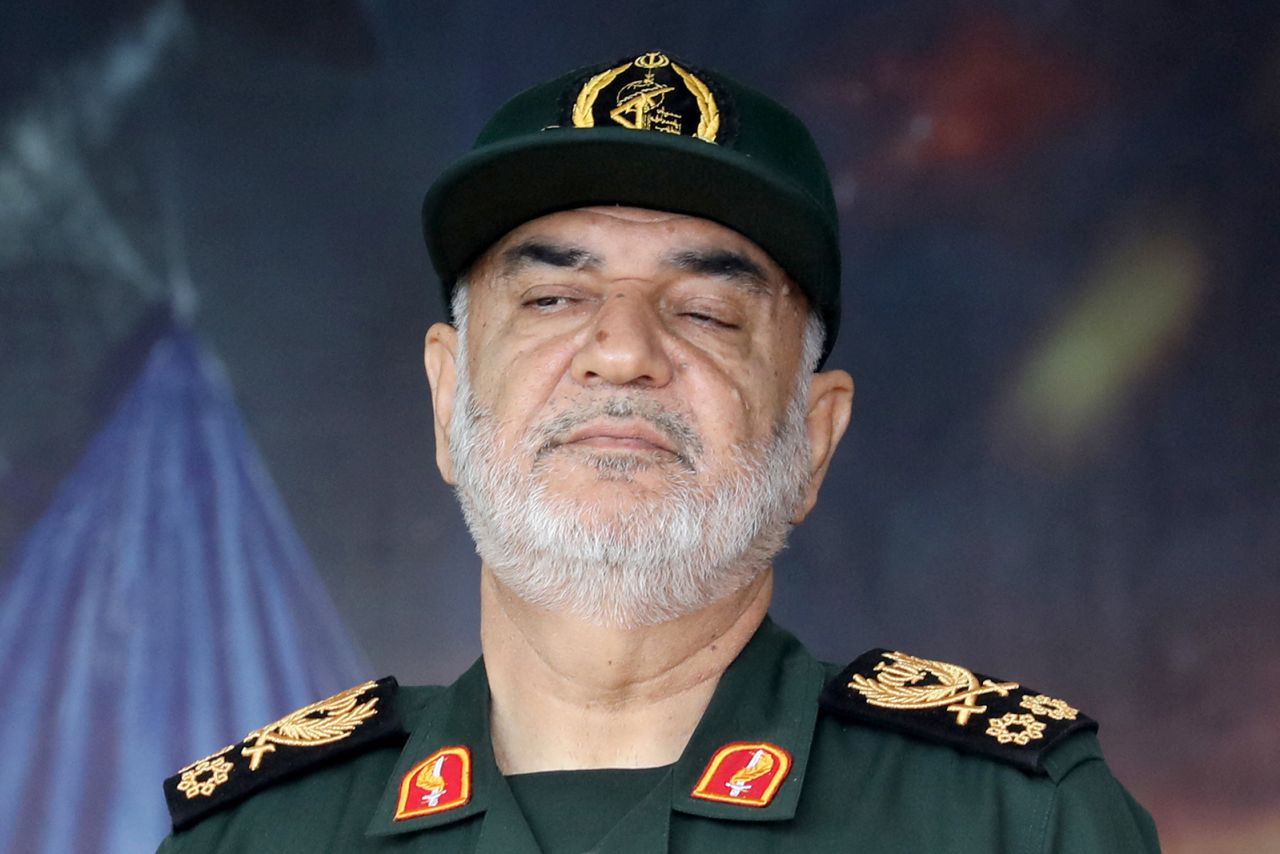
Iran’s revolutionary guard has confirmed the death Hossein Salami, one of the country‘s most powerful and influential military commanders, in Israel’s strikes on Friday.
“Without a doubt, Major General Salami was one of the most distinguished commanders of the Islamic Revolution — present on all fronts of scientific, cultural, security, and military jihad,” the Islamic Revolutionary Guard Corps (IRGC) said Friday.
The IRGC said its command structure and other branches of the military were “fully prepared to deliver a decisive and harsh response.”
Some context: The IRGC is an elite wing of the Iranian military that was established in the aftermath of the country’s revolution in 1979.
The unit, which includes ground forces, naval and air forces, as well as intelligence and special forces has been at the forefront of Iran’s military operations in the region. Their primary role is internal security but experts say that the group – considered Iran’s dominant military force – assist Iran’s regular army with external defense and the key laison with Iran-loyal proxy militias in the region.
BREAKING: Chief of staff of Iranian Armed Forces Mohammad Bagheri killed by Israeli attack, state TV reports
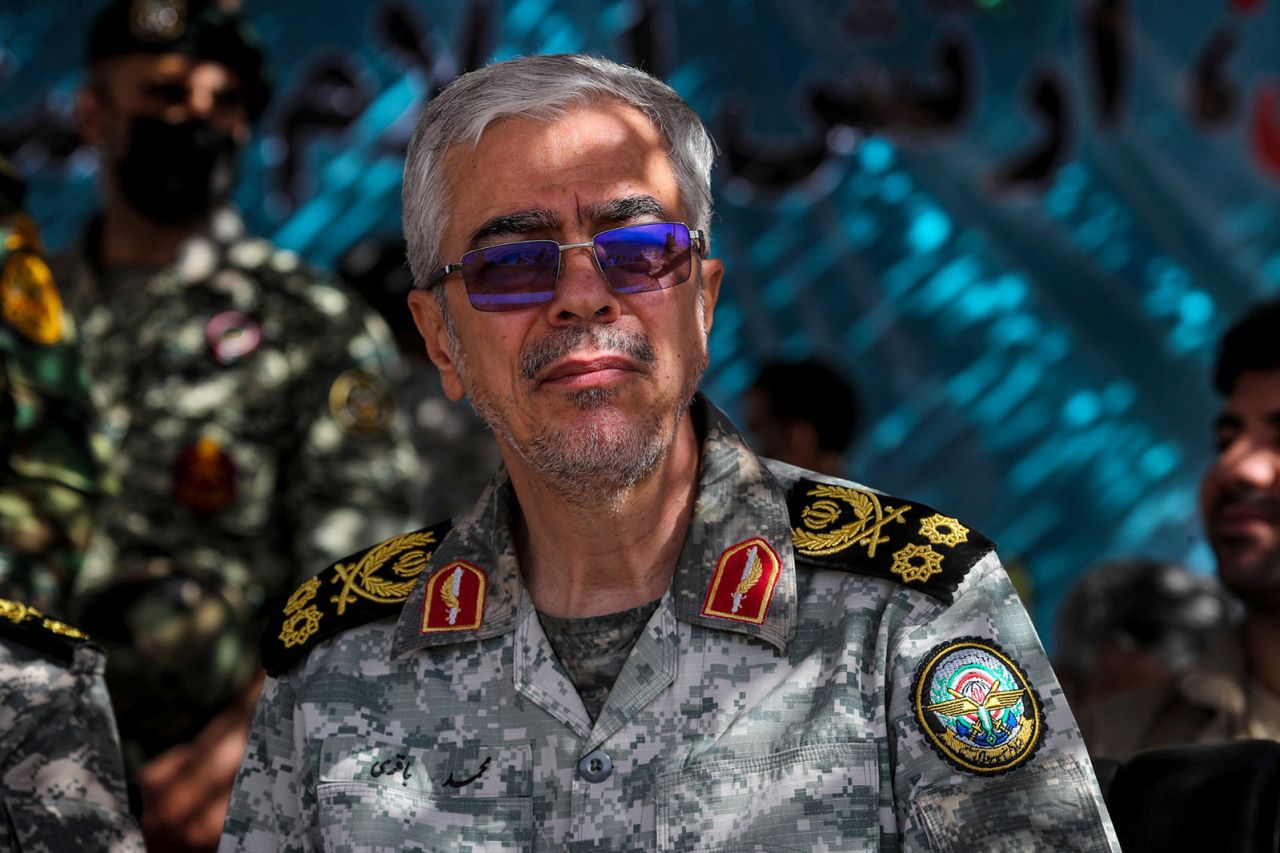
Major General Mohammad Bagheri, the chief of staff of Iran’s armed forces, was killed by Israeli strikes, Iran’s state TV IRINN reported.
Bagheri, Iran’s highest-ranking military officer, is the second senior figure known to have been killed by Israel’s unprecedented attack on Iran in the early hours of Friday.
Multiple Iranian state media outlets reported earlier on Friday that General Hossein Salami, the commander-in-chief of Iran’s Islamic Revolutionary Guard Corps, was killed in Israel’s overnight strikes.
Israel’s operation “premature” with US diplomatic efforts still underway, former US State Department official says
Israel’s strike on Iran was “premature” as the Trump administration had been engaging in diplomatic efforts with Iran over the past several months, former US State Department spokesperson Ned Price told CNN.
Price said that window was due to close in September, when the matter would be referred to the United Nations Security Council.
Israeli source tells CNN that Israel undertook "deception operation" to surprise Iran
Israel carried out what it called a “deception operation” in the days leading up to its unprecedented strikes aimed at making the Iranian leadership and the Israeli public believe there would be no attack, an Israeli official has told CNN.
The official said the operation included the “deception” of media and political commentators and “thus managed to surprise Iran.”
They said the plan had only “a few secret partners” and that Israeli Prime Minister Benjamin Netanyahu’s office had distributed announcements and briefings aimed at influencing discourse in Iran and Israel.
Despite the apparent campaign, US intelligence warnings that an Israeli strike was imminent began to be reported by US media on Thursday, following comments from President Donald Trump and a US State Department decision to move non-essential staff from embassies in Iraq and around the Middle East.
What does Iran have in its arsenal to retaliate with?
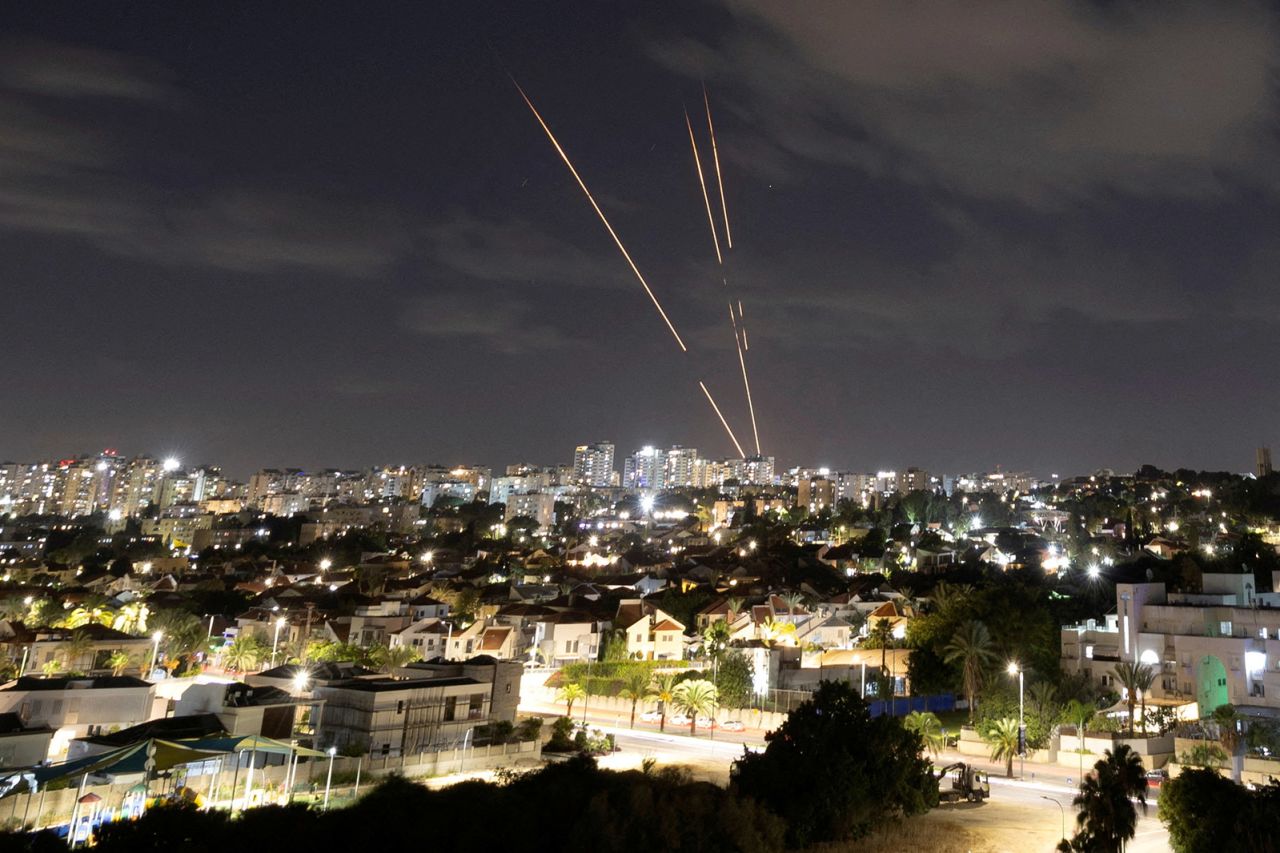
Iran’s ability to retaliate against Israel for Friday’s attacks largely depends on its ballistic missile force.
The Islamic Revolutionary Guard Corps Aerospace Force has more than 100 medium-range ballistic missile launchers able to send projectiles with a range of more than 1,000 kilometers, enough to strike Israel, according to the “Military Balance 2025” report from the International Institute for Strategic Studies (IISS).
Iran’s missile force has solid-fueled missiles and liquid-fueled ballistic missiles.
The liquid-fueled missiles carry the heavier high-explosive warheads – of 1,200 kilograms or more – compared with about 500 kilograms in the liquid-fueled missiles, according to fact sheets from the Missile Threat Project at the Center for Strategic and International Studies.
But the advantage of solid-fueled missiles is that they can be launched almost immediately, while fueling a liquid-fueled missile can take hours.
Ballistic missiles fired from Iran can reach Israel in about 15 minutes.
Iran also has a range of drones and cruise missiles that can reach Israel, but they can take a few hours or more to reach a target at that distance, carry smaller warheads and are more vulnerable to Israeli air defenses.
Last October, Iran launched about 200 ballistic missiles and drones against Israel, but most were shot down by Israeli defenses and US and partner countries which helped protect Israel during the attacks.
Israel reported only minor damage from the Iranian missiles and drones that made it past the Israeli defenses.
The Iranian Air Force has 265 combat-capable aircraft, according to the “Military Balance” report. But most of those are aging, Cold War-era, US-made fighter jets that would require air-to-air refueling to reach Israel, and Iran has fewer than five refueling planes, according to the IISS publication.
Iran’s Armed Forces says Israel and US will both "pay dearly"
Iran’s Armed Forces spokesperson Brigadier General Abolfazl Shekarchi warned that Tehran would retaliate after Israel’s strikes – saying that the US and Israel would both “pay dearly,” despite Washington’s assertions that it had not been involved.
He said residential areas had been hit in the strikes, and that armed forces are on the ground at full readiness.
On Wednesday ahead of the strikes, the US withdrew many non-essential personnel and their families from locations around the Middle East. Officials did not say what specifically prompted the move, but a defense official said US Central Command was monitoring “developing tension in the Middle East.”
President Donald Trump and senior White House officials were expecting the Israeli strikes on Iran Thursday night, two sources familiar with the matter told CNN. After the strikes, Secretary of State Marco Rubio said there was no US involvement or assistance in the attack.
Death of Iranian military leaders could hamper retaliatory strikes, CNN analyst says

CNN global affairs analyst Brett McGurk, who served as Middle East coordinator in the Biden White House, said any Iranian response to Israel’s attack could be set back by the death of its Islamic Revolutionary Guard Corps’ commander-in-chief, Gen. Hossein Salami, and other top military leadership.
Asked by CNN’s Kaitlan Collins if Iran could strike back quickly, McGurk said Iran is capable of massive retaliation.
He pointed out that last October 1, Iran fired 200 ballistic missiles at Israel, though most were intercepted by Israeli, US and partner air defenses.
The Iranian missiles take about 13 minutes to reach Israel, he said, and because of ballistic missile trajectories, there is only a small window where they are vulnerable to interception, he said.
How US lawmakers are responding to Israel's strikes against Iran
Here’s how some US lawmakers are reacting to Israel’s strikes on Iran.
Senate Majority Leader John Thune said “the United States Senate stands ready to work with President Trump and with our allies in Israel to restore peace in the region,” and warned that Iran should “should heavily consider the consequences before considering any action against Americans in the region.”
House Speaker Mike Johnson, a Louisiana Republican, said: “Israel IS right—and has a right—to defend itself!”
House Democratic Leader Hakeem Jeffries said an interview on MSNBC, “We certainly believe that Iran should never be allowed to become nuclear capable. They are an enemy, not just to Israel, but to the United States and to the free world.”
Oregon Sen. Jeff Merkley, a Democrat, told CNN’s Kaitlan Collins that he does not support Israel’s strikes against Iran, insisting that Iran’s nuclear program would still be under “severe restrictions,” if the Trump administration hadn’t withdrawn from the Iran nuclear deal, also known as the Joint Comprehensive Plan of Action, in 2018.
Idaho Sen. Jim Risch, a Republican who chairs the Senate Armed Services Committee, voiced support for Israel and warned Iran against attacking the US.
Rhode Island Sen. Jack Reed, the ranking Democrat on the Senate Armed Services Committee, called Israel’s attack on Iran a “reckless escalation.”
Illinois Sen. Tammy Duckworth, an Iraq war veteran who sits on the Senate Armed Services Committee, said she was closely monitoring the “developing conflict.”
Arkansas Sen. Tom Cotton, a Republican who chairs the Senate Intelligence Committee, touted his support for Israel, saying Iran “is rushing to build not only nuclear weapons, but also missiles that can strike the United States.”
Connecticut Sen. Chris Murphy, a Democrat on the Senate Foreign Relations Committee, blamed President Donald Trump and Israeli Prime Minister Benjamin Netanyahu for the escalating crisis with Iran.
Washington Rep. Adam Smith, the top Democrat on the House Armed Services Committee, cautioned against escalating violence in the Middle East in the wake of Israel’s attack on Iran.
“We are in historic moments:” Israel’s far-right ministers hail strikes on Iran
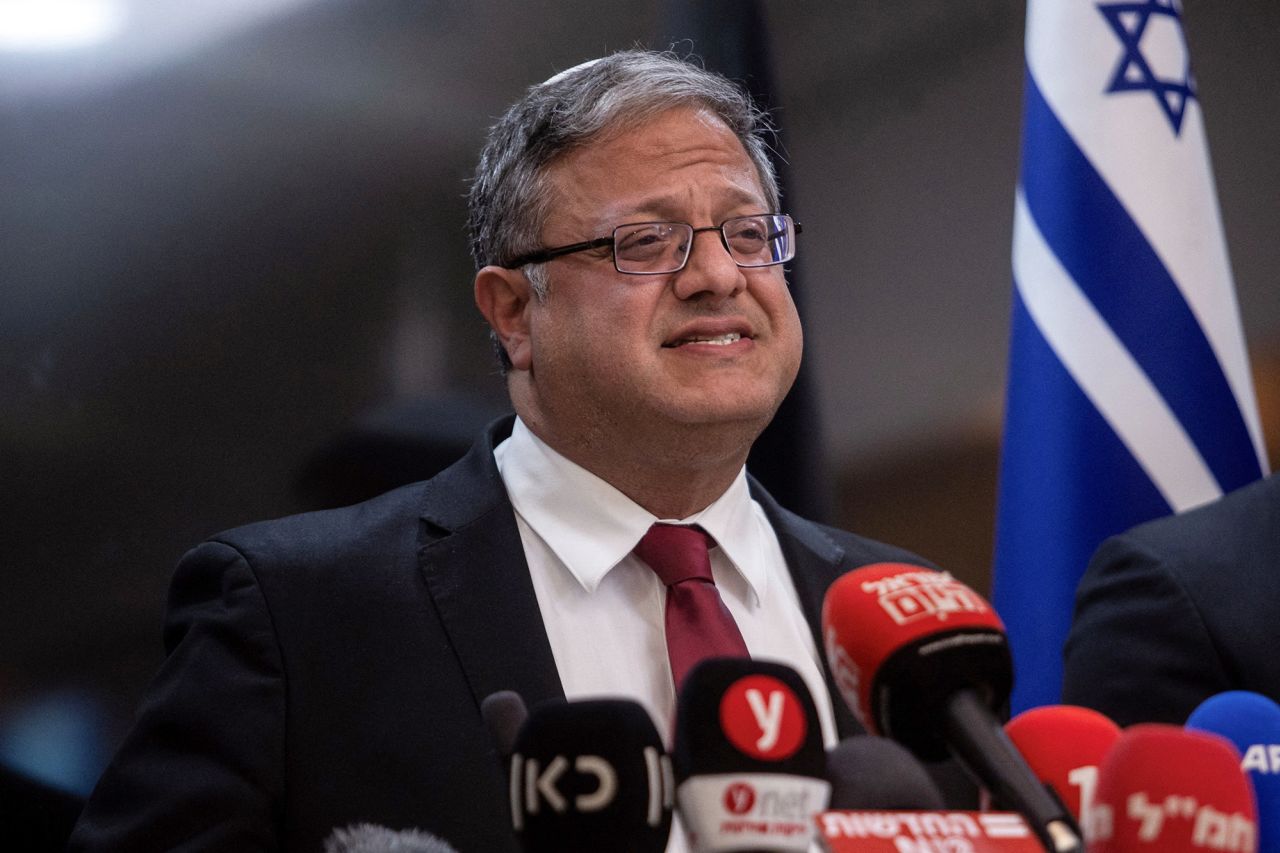
Two of Israel’s most hardline ministers have hailed their country’s unprecedented strikes on Iran that have plunged the wider Middle East region into dangerous new territory.
National Security Minister Itamar Ben-Gvir and Finance Minister Bezalel Smotrich, both far-right members of Prime Minister Benjamin Netanyahu’s cabinet, were sanctioned this week by the United Kingdom, Canada and other allies for repeatedly “inciting violence against Palestinians” in Israel’s war on Gaza.
On Friday, they voiced strong support for the IDF attack, which targeted Iran’s nuclear facilities, ballistic missile centers and killed the commander-in-chief of Iran’s Islamic Revolutionary Guard.
“The entire people of Israel stand united in this just campaign against a cruel enemy, who seeks to destroy us.”
Smotrich, the finance minister, said Israel is working to remove “an existential threat” posed by Iran.
He called on Israeli citizens to be “determined and patient” in the coming days and strictly obey the Home Command’s instructions, calling them “life-saving.”
The Israel Defense Forces earlier announced changes to the country’s Home Front Command Defensive Guidelines, shifting all areas of the country from “full activity” to “essential activity” at 3:00am local time. The guidelines prohibit educational activities, gatherings and workplaces, except for essential sectors.
What we know about Israel’s strikes on Iran
Israel has launched unprecedented attack on Iran, targeting the heart of nation’s nuclear program and senior military leaders – plunging the Middle East into fresh uncertainty.
Here’s what we know:
- The strikes: The attack hit dozens of locations across Iran, targeting its nuclear program and long-range missile capabilities, according to an Israeli military official and an Israeli military source. “This is not a one-day attack,” the military source told CNN.
- Scientists targeted: An Israeli security source briefed reporters that Iran’s top military leaders, as well as senior nuclear scientists, were targeted in the opening strikes and that “chances are increasing” that they were eliminated.
- Major commander killed: General Hossein Salami, the commander-in-chief of Iran’s Islamic Revolutionary Guard Corps (IRGC), was killed in the attacks, multiple Iranian state media outlets have reported.
- Damage on the ground: Photos and videos from Iranian state media show what appear to be apartment buildings on fire, and large plumes of smoke billowing from Iran’s Natanz Nuclear Facility. Large crowds are seen gathered in the street outside buildings as firefighters race to put out blazes.
- Bracing for retaliation: Israel has declared a state of emergency as it braces for Iran’s potential retaliation, closing schools, banning social gatherings, and advising against non-essential work. Israeli hospitals have been ordered to halt outpatient and non-urgent activities and move to protected areas, and the Israeli military is calling up “tens of thousands” of soldiers to prepare for what comes next.
- What the US said: President Donald Trump and senior White House officials were expecting the Israeli strikes, two sources familiar with the matter told CNN. There was no US involvement or US assistance in the strikes, Secretary of State Marco Rubio said on Thursday.
- Nuclear talks: The US and Iran were in nuclear negotiations, with their sixth round of talks scheduled for Sunday in Oman. It’s not clear if they will still take place.
UN nuclear watchdog “closely monitoring” situation in Iran

The International Atomic Energy Agency (IAEA) is “closely monitoring the deeply concerning situation in Iran,” it said Friday.
“The IAEA … can confirm Natanz site among targets. The Agency is in contact with Iranian authorities regarding radiation levels. We are also in contact with our inspectors in the country,” Director-General Rafael Grossi said.
More context: Israel Prime Minister Benjamin Netanyahu said earlier “Operation Rising Lion” had struck Iran’s main enrichment facility in the city of Natanz, nuclear scientists, and what he called “the heart of Iran’s ballistic missiles program.”
The nuclear complex in Natanz, a city about 250 kilometers (150 miles) south of the capital Tehran, is considered Iran’s largest uranium enrichment facility and houses the country’s advanced nuclear program. Analysts say the site is used to develop and assemble centrifuges for uranium enrichment, a key technology that turns uranium into nuclear fuel.
US Jewish community security experts urge vigilance following strike on Iran
Following Israel’s strikes on Iran, US Jewish community security experts are urging vigilance against possible retaliatory threats in a new bulletin to community leaders obtained by CNN.
“As observed during the Gaza conflict, the U.S. Jewish community may be unfairly blamed or targeted for the actions of the Israeli military by anti-Israel elements operating within the United States,” said the Secure Community Network, a Jewish community safety and training organization that provides threat intelligence information to hundreds of synagogues across North America.
As CNN reported, the Secure Community Network has tracked numerous bomb threats and fake swatting calls against US Jewish institutions since the October 7, 2023, Hamas attack on Israel.
In its bulletin to Jewish community members Thursday evening, the group said:
Correction: This post has been updated to correct the date of Hamas’ attack
Iran “blatantly violating international agreements,” says Israeli ambassador to UN

Iran is “blatantly violating international agreements,” Israel’s ambassador to the United Nations Danny Danon said, as he called on Security Council members to “stand by Israel.”
“The Iranian regime is blatantly violating international agreements, advancing towards nuclear weapons, and operating a regional terror network. When the world is silent — Israel is acting.”
Danon called on the UN Secretary-General and the members of the Security Council to “stand by Israel.”
“This is a moment to make moral decisions,” he said.
More context: Israel’s Foreign Ministry earlier said Foreign Minister Gideon Sa’ar was “holding a marathon of calls” with his counterparts around the world.
Iran’s supreme leader says Israel must expect “severe punishment”
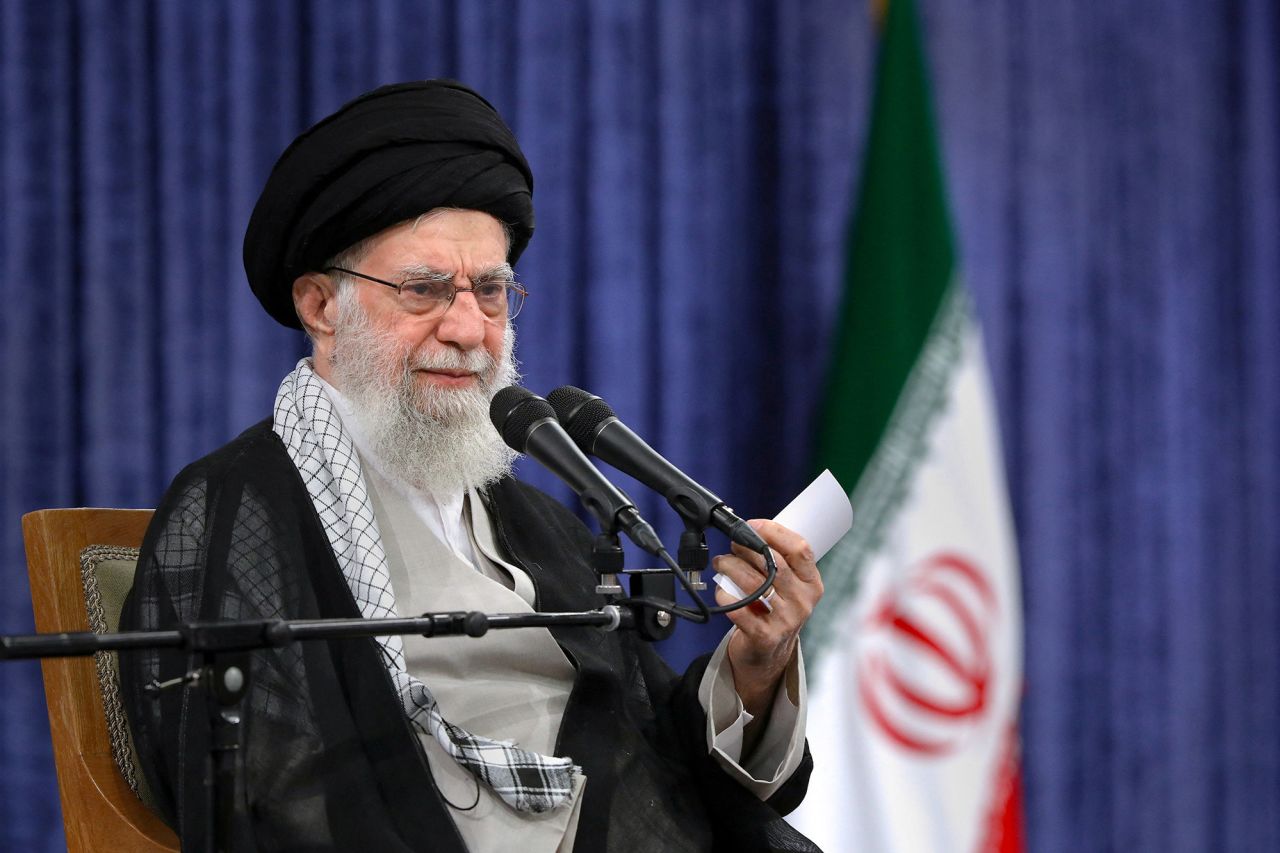
Iran’s Supreme Leader Ayatollah Ali Khamenei has warned Israel will face “severe punishment “ for its attacks on Friday.
Khamenei confirmed a number of commanders and scientists had been killed in the strikes, which Israel said hit nuclear targets, in a statement released by the Iranian state media agency, IRNA.
Khamenei said Israel had committed a “crime at dawn” and claimed it had struck residential areas.
“In the enemy’s attacks, a number of commanders and scientists were martyred. Their successors and colleagues will, God willing, immediately continue their duties without pause,” he said.
Iran’s main uranium enrichment facility engulfed by flames
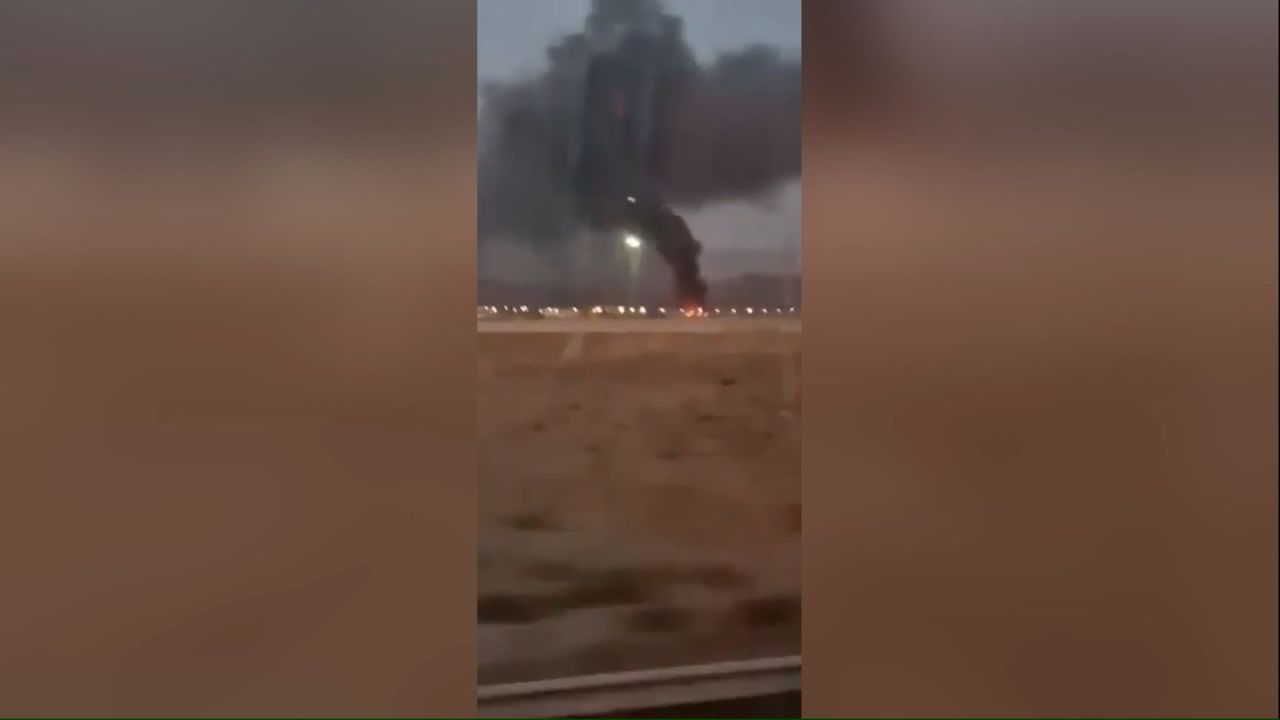
The facility at the heart of Iran’s nuclear ambitions was engulfed in flames on Friday, according to social media images geolocated by CNN and Iranian state television.
The nuclear complex in Natanz, a city about 250 kilometers (150 miles) south of the capital Tehran, is considered Iran’s largest uranium enrichment facility and houses the country’s advanced nuclear program. Analysts say the site is used to develop and assemble centrifuges for uranium enrichment, a key technology that turns uranium into nuclear fuel.
Social media video geolocated by CNN shows smoke rising from the direction of the facility. Video from Press TV shows large plumes of smoke billowing high into the sky from the complex. Data from NASA’s Fire Information for Resource Management System showed a fire at the facility starting after 2 a.m. local time (7 p.m. ET).
The Iranian government has not commented publicly on the Israeli attacks. In July 2020, a fire tore through the Natanz facility, causing major damage to the site, which Tehran had struggled to explain the origins of.
The fire was one of several unusual incidents that occurred across the country around that time.
The series of incidents came about a year after Iran announced it would start enriching uranium at higher levels and in greater quantities than agreed to in a landmark 2015 nuclear deal, part of Tehran’s response to the Trump administration’s decision to withdraw from the accord, effectively killing it.
Flight-tracking data shows dramatic change in skies over Israel and Iran
The skies over Israel and Iran were virtually empty early Friday local time, according to flight-tracking website Flightradar24, in a dramatic change from just a day before.
The view at the same hour on Thursday showed much busier air traffic, according to a CNN analysis of Flightradar24 data.
Iran launched strikes against Iran early Friday, targeting the nuclear program and its long-range missile capabilities. Both countries have temporarily closed their airspaces.
Israel urges citizens to take shelter after launching strikes against Iran
Israeli has warned its citizens to take shelter “in the best way possible” in anticipation of an Iranian response to strikes launched early Friday.
“During this campaign we anticipate widespread alerts,” said IDF Commander of the Home Front Maj. Gen. Rafi Milo.
Major General Hossein Salami was one of Iran’s most powerful men
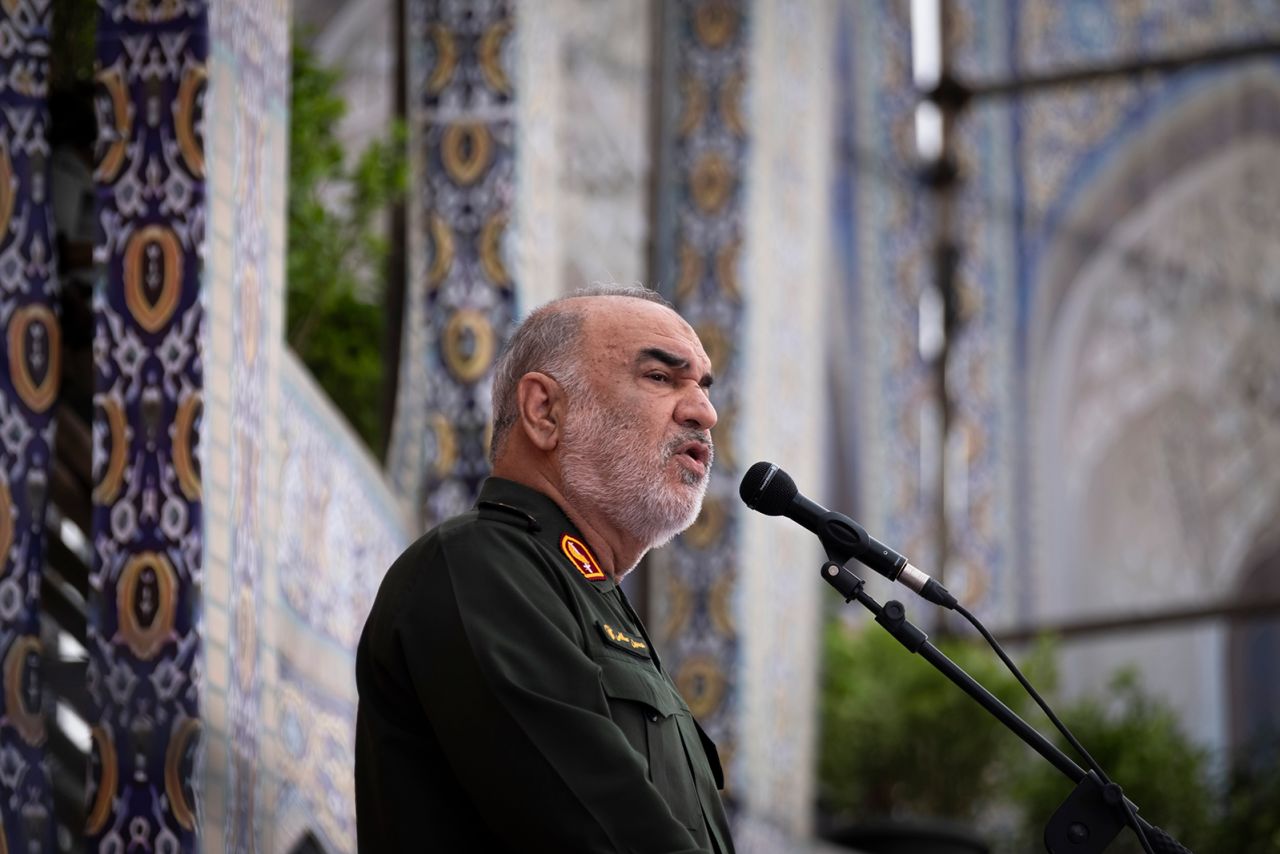
Multiple Iranian state media outlets have confirmed that Major General Hossein Salami, the head of the country’s elite Islamic Revolutionary Guard Corps (IRGC), was killed Friday morning during Israeli strikes.
The IRGC is one of the most powerful tools wielded by the Iranian state, overseeing its ballistic missile development, crushing dissent at home and projecting Iranian and military power in the Middle East region.
Born in 1960, according to a United States sanctions docket, Salami had headed the secretive agency since 2019.
As head of the IRGC, he reported directly to Iran’s Supreme Leader Ayatollah Ali Khamenei and was among the country’s most powerful and influential figures.
He was at the helm of the IRGC when Iran launched hundreds of drones and missiles at Israel in April and October last year, in the first direct strikes by Iran on Israeli territory.
Last January he appeared on IRGC-affiliated media touring an underground missile facility that had been part of Iran’s operations against Israel in April and October.
The site was manufacturing “new special missiles,” semi-official Iranian media outlet Mehr News reported.
More about the IRGC: The IRGC is an elite wing of the Iranian military that was established in the aftermath of the country’s revolution in 1979. Analysts say it supports proxies in Yemen, Syria, Lebanon and Iraq. The IRGC is not only Iran’s most powerful military institution, but it also holds deep influence over domestic politics and the economy, with interests extending to and beyond the construction, telecommunications, auto and energy industries
Analysis: Trump faces a major crisis following a series of foreign policy failures

Israel’s strikes on Iran have presented President Donald Trump with the first genuine foreign policy crisis of his second term.
It comes with his signature global initiatives – his bid to end the war in Ukraine, his almost forgotten effort to forge peace in Gaza and his trade war with China – all failing to deliver.
The president’s first mission is to protect Israel from likely Iranian reprisal attacks, potentially using missiles and drones. The Biden administration faced a similar challenge last year after the first direct Iranian attack on Israel. With the help of several allies, the US repelled a barrage with almost total success.
The president, who this week warned of the possibility of a “massive” war in the Middle East, will be desperate to ensure Israel’s strike doesn’t drag the United States into the kind of prolonged Middle East war he’s vowed to avoid. His “America First” foreign policy is premised on staying out conflicts like those that soured Americans on foreign entanglements and led to political conditions that eased his political ascent.
The Israeli strikes also threaten another Trump goal – a nuclear agreement with Iran that he predicted a few weeks ago was within reach. But once again, the president’s “Art of the Deal” skills have been found wanting in complex geopolitical negotiations. And Israel’s decision to strike Iran – whether it was approved in advance by the US or not – could further strain Trump’s once cordial but now tense relationship with Netanyahu.
The crisis comes amid turmoil at home. His already fragile trust with a majority of Americans is under severe strain following his decision to send National Guard troops and US Marines to California.
Now he’s almost certainly going to have to put troops in harm’s way in a war zone, while rationalizing their deployment potentially against Americans in the homeland.
Why are US nuclear talks relevant to the strike?
US officials had previously told CNN that Israeli strikes on Iran would be a brazen break with President Donald Trump’s approach on the Middle East. Washington is pushing for a nuclear deal with Tehran and engaging in indirect talks with Hamas over a ceasefire in Gaza.
Experts had previously said whether and how Israel strikes would depend on what it thinks of America’s nuclear negotiations with Tehran, which began after Trump returned to office earlier this year.
An Israeli source told CNN last month that Israel would be prepared to carry out military action against Tehran on its own, if the US were to negotiate a deal with Iran that Israel cannot accept.
US-Tehran negotiations: Despite several rounds of talks between Iran and the US to thrash out a new nuclear deal, major sticking points remain, with Iran insisting on its right to nuclear enrichment.
Trump has said he’s grown less confident of being able to strike a deal, saying in an interview Wednesdaythat Tehran could be “delaying” an agreement.
Trump has publicly threatened military action against Iran if his administration’s efforts to negotiate a deal to limit or eliminate Tehran’s nuclear program fail.
A sixth round of indirect nuclear talks between Iran and Washington is scheduled to take place in Oman on Sunday, but it’s not clear whether those are going ahead after Friday’s strikes.
Iran shuts its entire airspace until further notice
Iran’s airspace will be closed until further notice, its civil aviation authority said, warning Iranians to avoid visiting airports in person.
Earlier the country said it temporarily closed its airspace over the capital Tehran, according to a NOTAM issued by Iran.
Why did Israel strike Iran?

US intelligence agencies had been warning since February that Israel was likely to attempt to strike facilities key to Iran’s nuclear program this year.
Israeli Prime Minister Benjamin Netanyahu has repeatedly pushed for a military option to stop Iran’s nuclear program.
Recent US intelligence reports say that Israel is seeking to capitalize on the destruction inflicted after it bombed Iran’s missile production facilities and air defenses in October.
And overall, Israel is also still pursuing the broader goal of causing regime change in Iran, one such intelligence report said.
Israel sees Iran as an existential threat: For years, Israel has said it has the most to lose if Iran, which refuses to recognize Israel’s right to exist, develops a nuclear bomb.
Israel and Iran have been fighting a shadow war through proxies and covert actions for decades. Tehran has supported regional armed groups that have engaged in direct conflict with Israel, such as Hezbollah in Lebanon, Hamas in Gaza, and the Houthis in Yemen.
Since Israel’s war in Gaza began, attacks by Iran-backed proxy groups have escalated in solidarity with the Palestinians.
Netanyahu is in hot water domestically: Opposition to a new military conscription bill has sparked political deadlock, and Israel’s parliament, the Knesset, had met for talks about dissolving itself – which could have ultimately led to early elections that polls show Netanyahu would lose.
Parliament rejected a vote on dissolution Wednesday, giving Netanyahu more time to resolve the crisis.
Why now: The United Nations’ nuclear watchdog passed a resolution on Thursday declaring Iran to be in breach of its nuclear non-proliferation obligations.
Tehran retaliated by announcing it would ramp up its nuclear activities, warning it had “no option but to respond.”
Uranium is a nuclear fuel that, when highly enriched, can be used to make a bomb. Iran maintains that its nuclear program is for peaceful purposes.
Trump and top advisers discussed getting Iran deal without escalation at Camp David, source says
President Donald Trump and his top foreign policy advisers discussed how to get an Iran nuclear deal done without an escalation while at Camp David last Sunday and Monday, a source familiar with the matter told CNN.
This source stressed that Iran was one of a number of foreign policy topics and sessions held during the retreat.
Administration officials had appeared determined to use diplomatic means to reach a deal before the strikes. Just after 5 p.m. Thursday in the US, Trump said on Truth Social, “We remain committed to a Diplomatic Resolution to the Iran Nuclear Issue! My entire Administration has been directed to negotiate with Iran. They could be a Great Country, but they first must completely give up hopes of obtaining a Nuclear Weapon. Thank you for your attention to this matter!”
As of Thursday morning, Middle East Envoy Steve Witkoff was still expected to travel to Oman for the 6th round of talks with Iran, though US officials cast doubt they would continue given the strikes.
Israel’s defense minister calls strikes on Iran "a defining moment" in history
Israel’s Defense Minister Israel Katz has described his country’s latest strikes on Iran as “a defining moment” in the history of Israel and the Jewish people.
Speaking to members of the General Staff Forum before Israel launched “Operation Rising Lion” against Iran in the early hours on Friday, Katz said the attack is aimed at thwarting Iran’s capabilities and remove the threat of destruction from Israel.
“We have dealt with Iran’s proxies over the past year and a half, but now we are dealing with the head of the snake itself.”
In pictures: Scenes from Tehran after the strikes
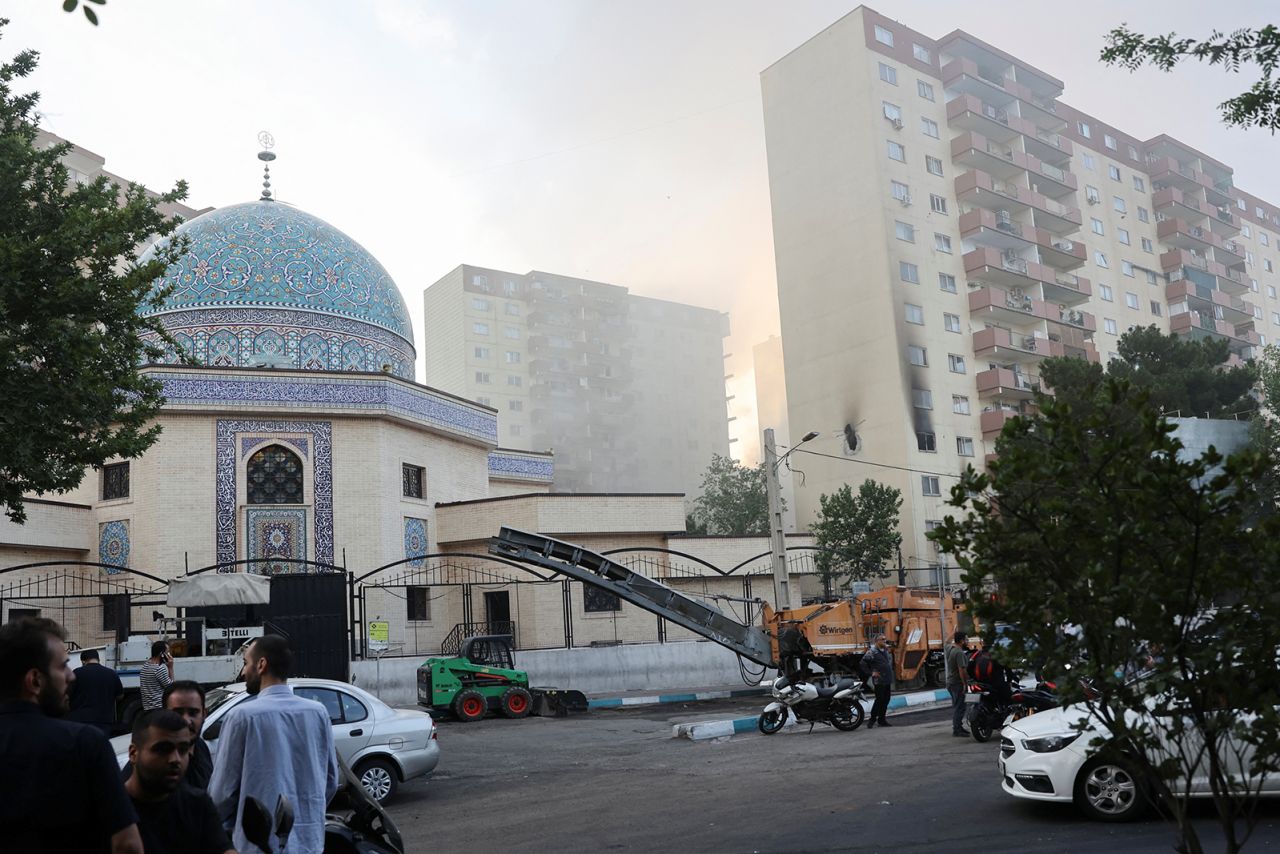
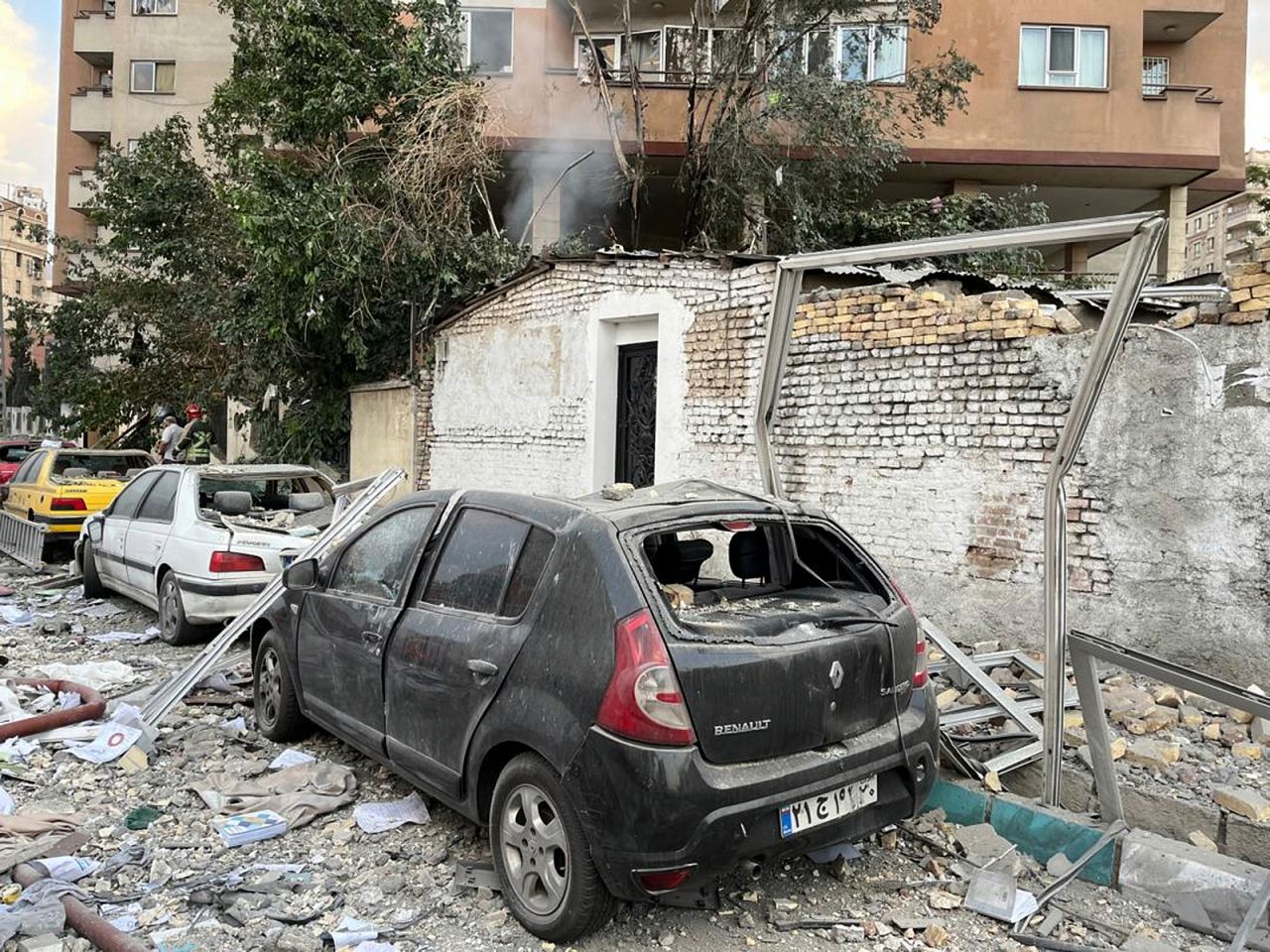
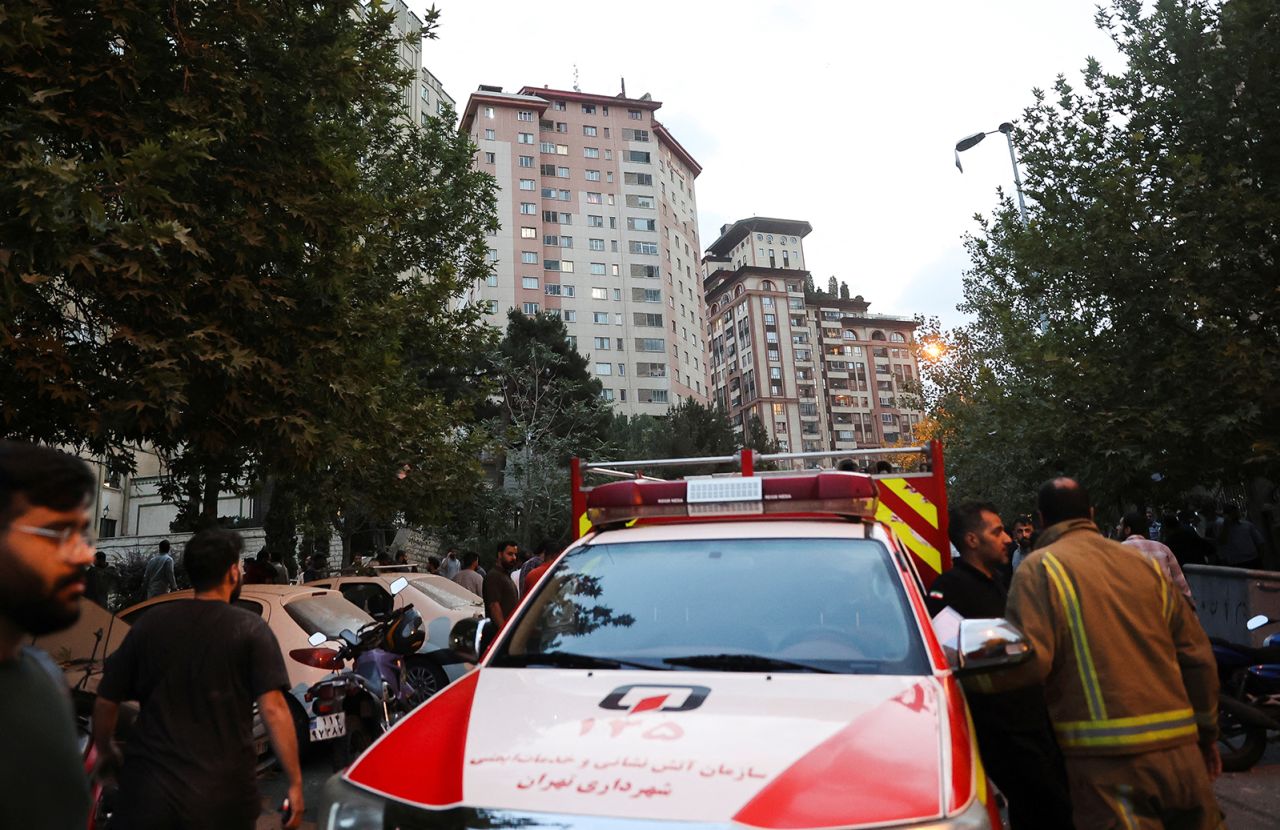
Israel calling up “tens of thousands of soldiers,” IDF chief of staff says
Israel is calling up “tens of thousands” of soldiers to prepare for what’s next, IDF Chief of Staff Lt. Gen. Eyal Zamir said in a statement after Israel launched strikes against Iran.
“We have begun this operation because the time has come, we are at the point of no return. We cannot afford to wait for another time to operate, we have no other choice,” the statement said.
“Recent and past events of history have taught us that when the enemy is attempting to destroy us, we must not turn a blind eye. We need to fight for our existence, freedom was given to those willing to fight for it.”
He added that Israel is “calling up tens of thousands of soldiers and prepared across all borders.”
Some context: Prime Minister Benjamin Netanyahu has said its operation against Iran will continue for a number of days. After striking what it says were “nuclear targets” in Iran on Friday, Israel declared a state of emergency - closing schools, prohibiting gatherings and saying workplaces should close - as the country braces for retaliation.
Israel’s attack an “act of self-defense,” ambassador to the UN says
Israel launched its “preemptive strike” against Iran to “defend ourselves,” its ambassador to the United Nations Danny Danon told CNN.
The strike targeted Iran’s nuclear facilities and ballistic missile centers, he said, declining to provide further details on the result of the attack.
“We decided not to wait for Iran to attack us with nuclear capabilities. We knew that they were plotting to do that… what we did was an act of self-defense,” he told CNN’s Kaitlan Collins.
Danon said the attack Israel launched on Friday did not involve the US, although the country has been in ongoing dialogue with the US.
“This decision was a decision of the Israeli leadership,” he said.
Despite the likely retaliation from Iran, he said, Israel is “determined” to take preemptive actions, especially after the October 7 attack on Israel in 2023.
US oil prices spike 8%, on track for biggest gain in at least 3 years
US oil prices extended sharp gains Thursday night as Israel carries out strikes on Iran targeting the country’s nuclear sites and military.
As of 9:18 pm ET, oil was up by 8.3% to $73.75 a barrel.
That leaves crude on track for its biggest one-day percentage increase since March 2022 during Russia’s invasion of Ukraine.
If the conflict eliminates Iranian oil from the market, oil prices could spike by about $7.50 a barrel, according to Andy Lipow, president of Lipow Oil Associates.
The bigger fear is an even broader war that impacts the flow of oil from the Strait of Hormuz, the most critical chokepoint for oil supplies on the planet.
Bob McNally, president of Rapidan Energy Group, told CNN that the oil market had been “complacent about the risk of geopolitical disruptions” from the region.
“With Israel having commenced attacks against Iran, we expect significantly more risk premium to come into the price of crude in the coming days,” McNally said.
Iran’s retaliation could be “massive,” CNN’s security analyst says
Israel is at “full-up war” with Iran and will be expecting a “massive” retaliation, said CNN’s security analyst Beth Sanner.
Israel has been targeting key officials in Iran by starting from the very top, she added.
“They started very, very seriously removing the chief of the general staff, in other words like our chairman of the joint chiefs of staff,” she said. “You can imagine what Americans would do.”
On early Friday, multiple Iranian state media outlets reported that General Hossein Salami, the commander-in-chief of Iran’s Islamic Revolutionary Guard Corps (IRGC), was killed during Israel’s overnight attacks.
“That’s what Israel is expecting – a massive, much bigger retaliation than what they saw last time, because Iran now is under existential threat,” she said.
Strikes aimed at addressing three components of the Iranian threat, Israeli military official says

Israel’s strikes on Iran are aimed at addressing three components of the Iranian threat, an Israeli military official said during a press briefing early Friday. The most important and urgent component is what the official described as “the nuclear trigger.”
“Today, Iran is closer than ever to obtaining a nuclear weapon,” the official said. “Weapons of mass destruction in the hands of the Iranian regime are an existential threat to the State of Israel and a significant threat to the wider world.”
The official cited International Atomic Energy Agency (IAEA) reports that detailed the advance of the Iranian nuclear project, that goes beyond civilian use.
“We are exposing for the first time that the Iranian regime has been advancing a secret program to assemble a nuclear weapon,” the official said, adding that Iran has enough fissile material to create 15 nuclear bombs within days.
The second component of the threat is Iran’s thousands of ballistic missiles, which it plans to double and eventually triple, the official said. “We’re talking about a number of missiles that, even without a nuclear weapon, represents an existential threat,” the official added.
The third component lies in Iran’s distribution of weapons and arms to regional proxies to be used against Israel, the official said.
How did we get here? A quick timeline

Israel struck Iran’s nuclear facilities early Friday, threatening to tip the Middle East into a broader regional conflict. Here’s how tensions ratcheted up in recent weeks until the strikes came in the early dawn hours:
First signs: In late May, the US obtained new intelligence suggesting Israel was preparing to strike Iranian nuclear facilities, even as the administration of President Donald Trump pursued a diplomatic deal with Tehran, according to multiple US officials familiar with the latest intelligence.
On Wednesday, the US pulled out many non-essential personnel and their families from locations around the Middle East. Authorities didn’t say what specifically prompted the move, but one defense official said US Central Command was monitoring “developing tension in the Middle East.” President Trump said the personnel were being moved “because it could be a dangerous place, and we’ll see what happens.”
On Thursday, the United Nations’ nuclear watchdog passed a resolution declaring Iran to be in breach of its nuclear non-proliferation obligations. Tehran retaliated by announcing the launch of a new uranium enrichment center, warning it had “no option but to respond.”
Uranium is a nuclear fuel that, when highly enriched, can be used to make a bomb. Iran maintains that its nuclear program is for peaceful purposes.
Also Thursday, Trump said that an Israeli strike on Iran “could very well happen,” and warned of a possible “massive conflict” taking place in the Middle East “soon.”
On Friday, Israel struck. The strikes hit dozens of locations across Iran, targeting the nuclear program and its long-range missile capabilities, according to an Israeli military official and an Israeli military source. “This is not a one-day attack,” the military source told CNN.
This weekend: Iran and the US were scheduled to hold talks over Tehran’s nuclear program on Sunday in Oman, the latest in multiple rounds of negotiations. It’s not clear what will happen to those talks now.
The US has roughly 40,000 US troops across Middle East right now
There are currently roughly 40,000 US troops across the Middle East – including nearly 4,000 US in Iraq and Syria. A US carrier strike group is also nearby – as the region again braces for an escalation between Israel and Iran, following Israel’s strikes on Iran early on Friday local time.
There are currently roughly 1,300 US troops in Syria and 2,500 in Iraq, a US official told CNN. The US started downsizing its footprint in Syria, announcing in April that it would be withdrawing roughly half of its troops in coming months as a consolidation of forces. That withdrawal of forces appears to have already begun, as there were previously roughly 2,000 US troops in Syria.
Along with the ground forces in Iraq and Syria, the Carl Vinson Carrier Strike Group is currently in the region. The USS Carl Vinson is a Nimitz-class nuclear-powered aircraft carrier; its strike group includes a carrier air wing, the guided-missile cruiser USS Princeton, and Arleigh Burke-class guided-missile destroyer USS Sterett.
The air wing includes nine squadrons of F-35C Lightning II, F/A-18E/F Super Hornets, EA-18G Growlers, E-2D Advanced Hawkeyes, CMV-22 Ospreys, and MH-60R/S Seahawks, according to the Navy.
CNN reported Thursday that Israeli sources have said they are bracing for a significant Iranian retaliation after Israel said it targeted Iranian nuclear facilities, military assets, and key figures in the Iranian military.
Secretary of State Marco Rubio said Wednesday that the US has “taken all necessary steps to protect our forces and remain in close contact with our regional partners.”
On Wednesday, Iran’s defense minister warned that if nuclear talks failed, the US “will have no choice but to leave the region, as all of its bases are within the reach of Iranian military and they will not hesitate to target all of them in their host countries.”
Images posted by Iranian state media show buildings on fire
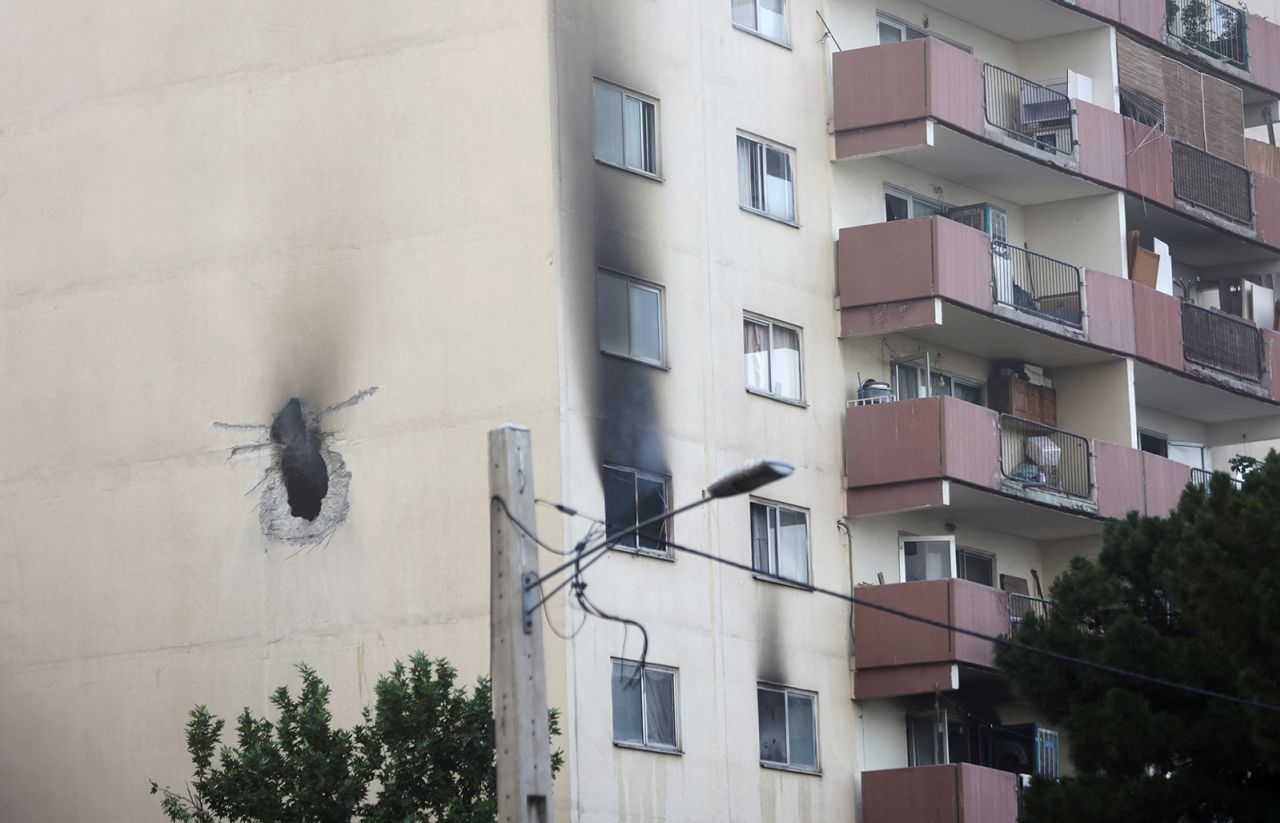
Photo and video posted by Iranian state media show the scale of damage to buildings from Israel’s strikes.
What appear to be apartment buildings are lit up in flames as firefighters work to put out the blaze, in one video from state-run Press TV, posted to Telegram. Several floors of the building also appear damaged by the strikes.
In another video from the outlet, windows on the top floors of a skyscraper in the capital Tehran appear to have been shattered.
Separately, Iran’s Natanz Nuclear Facility was also targeted. Video from Press TV shows large plumes of smoke billowing high into the sky from the facility.
Images posted to Telegram by the semi-official Tasnim news agency show several other properties damaged and on fire.
Large crowds of people can be seen gathered outside near fire trucks as workers attempt to put out the blaze, video from the scene shows.
Israel’s Health Ministry instructs hospitals to halt outpatient services and move people to protected areas
Israel’s Health Ministry has instructed all hospitals to halt outpatient and non-urgent activities and move to protected areas, as the country braces for retaliation to its strikes on Iran.
In the early hours of Friday local time Israel struck what it called “nuclear targets” in Iran.
Israel’s Health Ministry put hospitals on the highest level of alert and urged them to move people to protected areas, including underground complexes, ministry spokesperson Shira Solomon said in a statement.
The hospitals were also told to discharge patients who do not require hospital care.
Activities were also halted at health-fund clinics and milk drop-offs, except for essential activities such as dialysis, Solomon said.
The Health Ministry told members of the public to avoid going to hospitals for non-urgent care.
Images posted by Iranian state media show buildings on fire
Photo and video posted by Iranian state media show the scale of damage to buildings from Israel’s strikes.
What appear to be apartment buildings are lit up in flames as firefighters work to put out the blaze, in one video from state-run Press TV, posted to Telegram. Several floors of the building also appear damaged by the strikes.
In another video from the outlet, windows on the top floors of a skyscraper in the capital Tehran appear to have been shattered.
Separately, Iran’s Natanz Nuclear Facility was also targeted. Video from Press TV shows large plumes of smoke billowing high into the sky from the facility.
Images posted to Telegram by the semi-official Tasnim news agency show several other properties damaged and on fire.
Large crowds of people can be seen gathered outside near fire trucks as workers attempt to put out the blaze, video from the scene shows.
Failure to stop Iran could lead to nuclear arms race in Middle East, former Israeli Prime Minister says
Israel’s goal is to remove the nuclear threat in Iran as failure to do so could spark a scramble by other countries in the Middle East to obtain nuclear weapons, former Israeli Prime Minister Naftali Bennett told CNN.
“The whole Middle East and the world would become hell if Iran gets nuclear weapons,” Bennett told CNN’s Anderson Cooper 360 Friday.
He described Iran as an “octopus of terror” and said “It’s time to hit the head of the octopus.”
Asked if Israel would need close allies, including the US, to engage, Bennett said his country will have the ability to “take this one itself.”
Israel’s foreign minister holding “marathon of calls” with global counterparts

Israel’s foreign minister Gideon Sa’ar is “holding a marathon of calls” with his counterparts around the world.
“The Foreign Ministry has begun to operate in an emergency format and has opened an emergency situation room to operate all of Israel’s missions around the world,” the ministry said in a statement .
“Israel’s missions will operate diplomatically and through the media in all arenas to enable diplomatic legitimacy for the military operation.”
Israeli security source says top military leaders and nuclear scientists were targeted in opening strikes
An Israeli security source has briefed reporters that Iran’s top military leaders as well as senior nuclear scientists were targeted in the opening strikes and that “chances are increasing” that they were eliminated.
A separate source familiar with the details said some senior Israeli offficials have been moved to ‘secret locations’ following Israeli attempts to eliminate senior Iranian officials.
Analysis: Trump didn't want Israel to strike. They did it anyway
In the hours before Israeli warplanes carried out attacks on Iran tonight, raising fresh fears of all-out war in the region, President Donald Trump made clear it was an outcome he hoped to avoid.
“I don’t want them going in because, I mean, that would blow it,” he said, referring to his diplomatic efforts to curb Tehran’s nuclear ambitions.
The fact that Israel went in anyway – without any US involvement, and against the president’s publicly stated wishes – now thrusts Trump into one of the biggest tests of his young second presidency.
By his own telling, the strikes risk scuttling his attempts at diplomacy with Tehran, even as his top envoy was preparing to depart for Oman for another round of talks this weekend.
It casts a pall over his already tense relationship with Israeli Prime Minister Benjamin Netanyahu, with whom he has sharply disagreed for months and whom he urged as recently as this week to hold off on a strike.
And it presents him another global conflict without any easy resolution, this one with tens of thousands of US troops potentially caught in the regional crossfire.
Still, for all the complicated dynamics for Trump to now sort through, the attack hardly came as a surprise to the president and his team.
Even as he was speaking from the East Room on Thursday in the US, the president and his aides were aware the strikes were likely coming soon, sources said, despite Trump’s repeated attempts at urging Netanyahu to hold off.
Afterward, a terse statement from Secretary of State Marco Rubio sought to put distance between the US and any role in the attack.
“Israel advised us that they believe this action was necessary for its self-defense. President Trump and the Administration have taken all necessary steps to protect our forces and remain in close contact with our regional partners,” Rubio continued. “Let me be clear: Iran should not target U.S. interests or personnel.”
Devoid of even boilerplate language offering support for Israel and its defense, the statement made clear: this would be Israel’s conflict, not Trump’s.
GOP Sen. Ted Cruz defends strikes against Iran, says Israel is defending itself

GOP Sen. Ted Cruz enthusiastically defended Israel’s strikes against Iran on Thursday night, insisting that Israel is acting out of self-defense after Tehran said it would ramp up its nuclear activities.
“Israel is acting to defend themselves and tonight we should stand unequivocally with the state of Israel,” he told Fox New’s Sean Hannity.
“Israel has an incredible military. They are surrounded by nations that would drive them into the sea and exterminate them,” the Texas lawmaker continued “We don’t know how this is going to end up but a nuclear Iran would be a profound threat to Israel and a profound threat to America.”
Netanyahu says operation against Iran will continue for “many days”
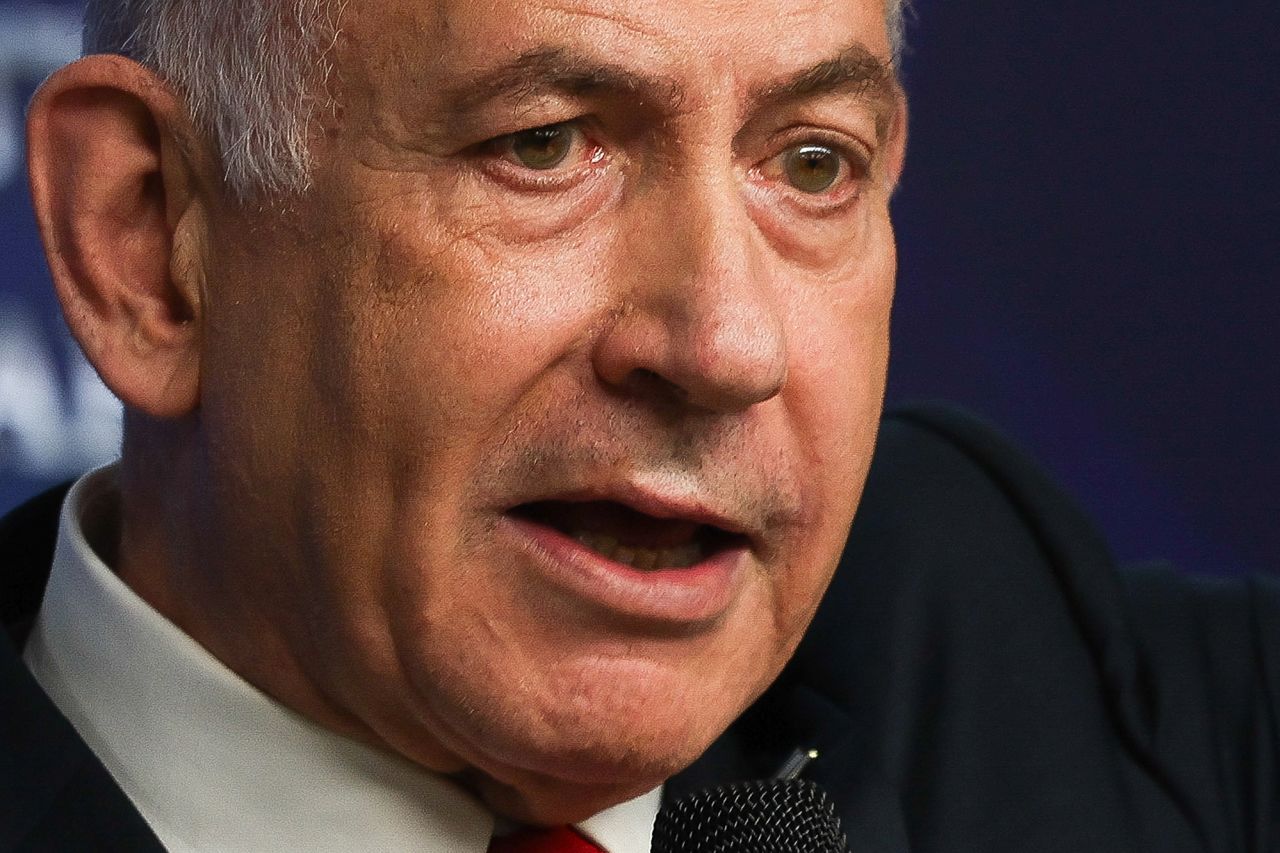
Israel’s Prime Minister Benjamin Netanyahu has confirmed Israel struck nuclear targets in Iran and said the operation will continue for many days.
“Moments ago, Israel launched operation Rising Lion, a targeted military operation to roll back the Iranian threat to Israel’s very survival,” Netanyahu said in a televised address.
“This operation will continue for as many days as it takes to remove this threat.”
He said Iran had a program to develop nuclear weapons and claimed it “could produce a nuclear weapon” if not stopped.
“This is a clear and present danger to Israel’s very survival,” Netanyahu said.
“We struck at the head of Iran’s nuclear weaponization program,” he added.
Netanyahu added: “In defending ourselves, we also defend others. We defend our Arab neighbors. They, too, have suffered from Iran’s campaign of chaos and carnage.”
Iran’s government has not yet commented on the strikes.
Israel is bracing for very significant Iranian retaliation, Israeli sources say
Israel is bracing for very significant Iranian retaliation that will be larger in scale than previous Iranian attacks against Israel, Israeli sources have told CNN.
Israel intends to keep up its attacks against Iran until it feels the Iranian nuclear threat has been removed, Israeli sources said, although there is some question within Israel’s security establishment about whether that can truly be accomplished through Israeli actions alone.
Israel is going after three primary targets: Iranian nuclear facilities, military assets and key figures in the Iranian military.
Rubio says there was no US involvement in Israeli strikes

Secretary of State Marco Rubio said Thursday that the United States was not involved in strikes that Israel launched against Iran, noting that Israel had “advised” the US that it believed the “action was necessary for its self-defense.”
“Tonight, Israel took unilateral action against Iran. We are not involved in strikes against Iran and our top priority is protecting American forces in the region. Israel advised us that they believe this action was necessary for its self-defense. President Trump and the Administration have taken all necessary steps to protect our forces and remain in close contact with our regional partners. Let me be clear: Iran should not target U.S. interests or personnel,” he said.
BREAKING: Commander-in-chief of Iran’s Islamic Revolutionary Guard Corps killed by the Israeli attack, multiple Iranian state media report

General Hossein Salami, the commander-in-chief of Iran’s Islamic Revolutionary Guard Corps (IRGC), was killed during Israel’s overnight attacks, multiple Iranian state media outlets have reported.
Israel shifts into state of emergency, bracing for retaliation

Israel has banned schools, social gatherings and non-essential work as it braces for retaliation, following its strikes on Iran.
Siren sounded across Jerusalem as a state of emergency was declared in the country, CNN’s Jerusalem Bureau Chief Oren Liebermann told Anderson Cooper.
Residents received alerts on their cell phones saying the Home Front Command is putting the country on alert, Liebermann said.
The Israel Defense Forces announced changes to the country’s Home Front Command Defensive Guidelines, shifting all areas of the country from “full activity” to “essential activity” at 03:00 a.m. local time.
The guidelines prohibit educational activities, gatherings and workplaces, except for essential sectors, Liebermann said.
Trump convening Cabinet-level meeting as Israel launches "preemptive strikes" on Iran
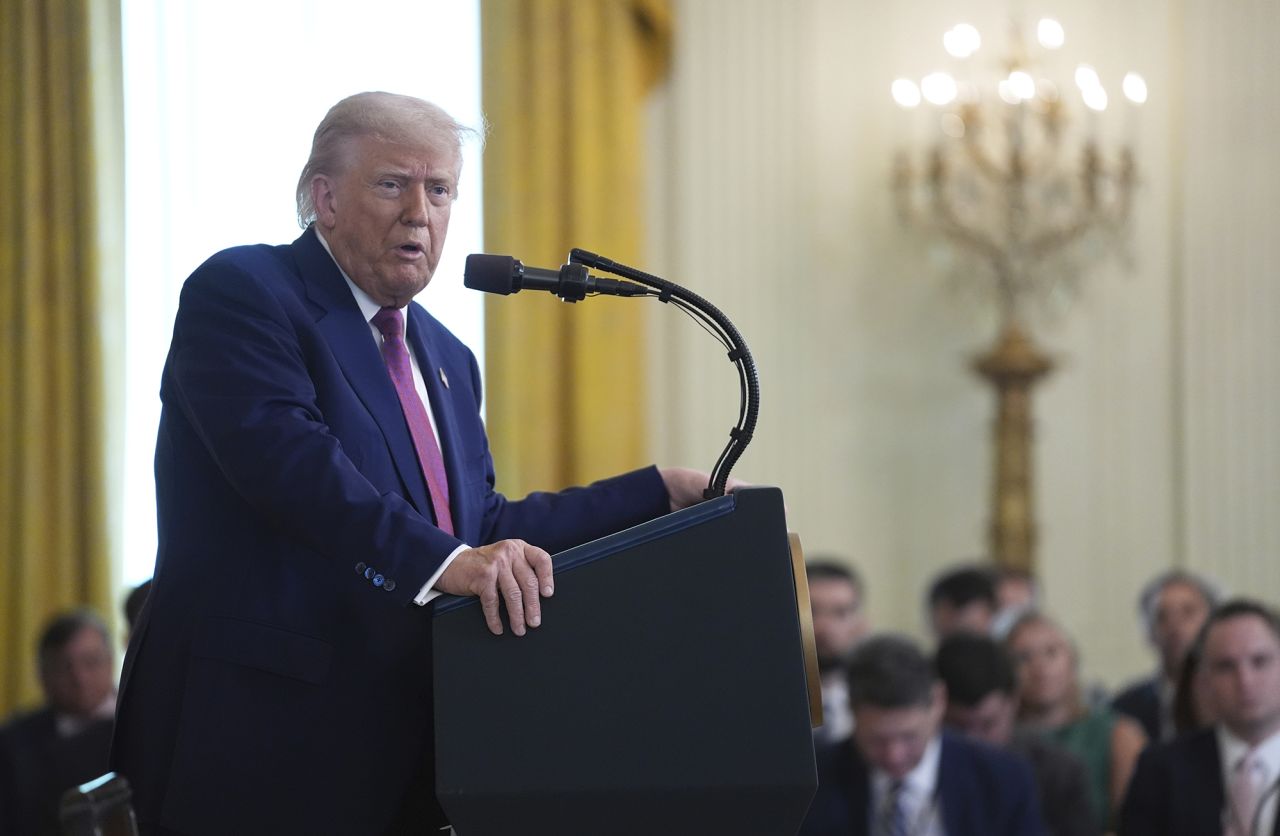
President Donald Trump is convening a Cabinet-level meeting Thursday evening as Israel launched what it called “preemptive strikes” against Iran, a White House official and two sources familiar with plans told CNN.
The meeting was expected to focus on the US response to the developing events in Iran, two of the sources said.
President Donald Trump was seen leaving the congressional picnic at the White House shortly after 8 p.m.
The president’s decision to call for a top-level meeting with his principals came before the strikes, as US officials were increasingly concerned about the threat.
Questioned about a potential strike earlier on Thursday, Trump said it “could very well happen” and warned that the possibility of “massive conflict” in the region could take place “soon.”
“I don’t want to say imminent, but it’s something that could very well happen,” Trump told reporters during an event at the White House.
The White House declined to comment on the Thursday evening meeting.
Trump and senior White House officials were expecting Israeli strikes, sources say
President Donald Trump and senior White House officials were expecting the Israeli strikes on Iran Thursday night, two sources familiar with the matter told CNN.
Earlier today, Trump was asked what the Israelis told him to prompt the departure of US personnel from the region. Trump replied: “They didn’t tell me anything, but I said look, there’s a chance of massive conflict.”
Behind the scenes, the sources said, his closest advisers were preparing for the strikes.
Iran shuts airspace over Tehran
Iran has temporarily closed its airspace over the capital Tehran, according to a NOTAM issued by Iran.
NOTAMs are bulletins that all pilots are required to read before taking off.
"This is not a one-day attack," Israeli source tells CNN
Israel is planning to carry out multiple rounds of attacks against Iran, an Israeli source told CNN.
“This is not a one-day attack,” the source said.
The Israeli government saw a window of opportunity to carry out this attack, both militarily and diplomatically, the source added.
Israeli military says strikes target Iran’s nuclear program and other military targets
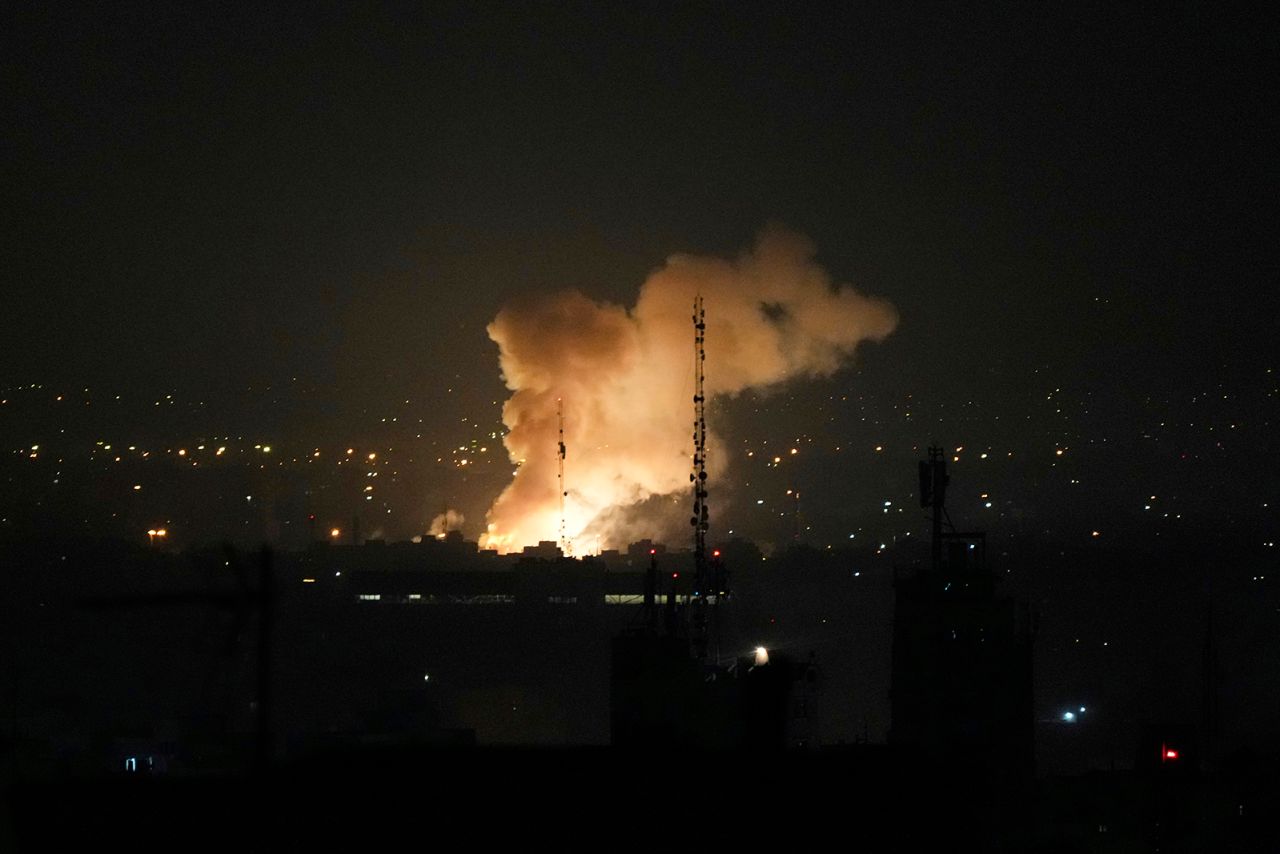
Israel’s strikes on Iran early Friday targeted the country’s nuclear program and its long-range missile capabilities, an Israeli military official said.
The strikes were a “preemptive, precise, combined offensive” that included “dozens of targets” across different areas of Iran, the military official said in a press briefing.
No US involvement or US assistance in Israeli strikes
There was no US involvement or US assistance in the strikes carried out by Israel in Iran, Secretary of State Marco Rubio said on Thursday.
“Tonight, Israel took unilateral action against Iran. We are not involved in strikes against Iran and our top priority is protecting American forces in the region,” he said in a statement.
“Israel advised us that they believe this action was necessary for its self-defense. President Trump and the Administration have taken all necessary steps to protect our forces and remain in close contact with our regional partners. Let me be clear: Iran should not target U.S. interests or personnel,” he said.
US Ambassador to Israel “closely following the situation”

US Ambassador to Israel Mike Huckabee said the embassy in Jerusalem is “closely following the situation” following Isarel’s strikes on Iran early Friday morning.
“At our Embassy in Jerusalem and closely following the situation. We will remain here all night. “Pray for the peace of Jerusalem!” Huckabee said in a post on X.
Israel launches "preemptive strikes" on Iran
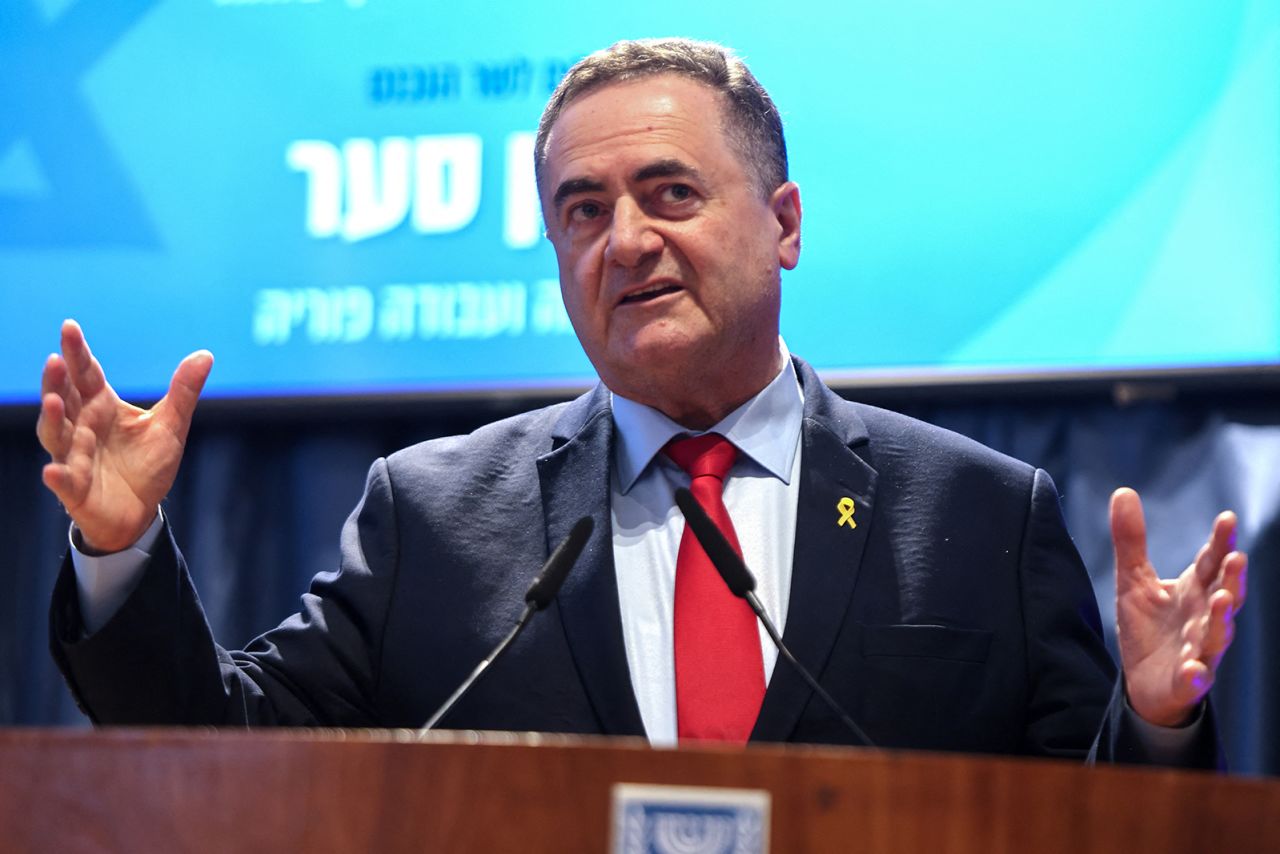
Israel has launched what it called “preemptive strikes” against Iran and a state of emergency has been declared in Israel, according to the country’s Defense Minister Israel Katz.
“Following the State of Israel’s preemptive strike against Iran, a missile and drone attack against the State of Israel and its civilian population is expected in the immediate future” Katz said in a statement.
Iranian state media outlet IRNA reported repeated explosions could be heard in Tehran.


No comments:
Post a Comment