There have been times trying to raise a family especially in the 1980s in Mt. Shasta (wife and 3 and the 4 kids) that shopping at a thrift store was a good idea. A lot of good can be accomplished for a family by shopping at thrift stores or going to good garage sale then and likely now as well. One time we were renting a house on an acre of land with fruit trees and blackberries and even old Black cherry trees and old English Walnut trees were there too. However, the house was built in 1925 or around there so very old on the acre of land and it had this really awful old orange colored carpet there. So, one day I just got angry at this old carpet and threw it out into the yard in the snow. The next day my wife bought a really beautiful white wool carpet 3 times as warm as the previous carpet for 25 dollars at a garage sale in Mt. Shasta.
So, my point is now is the time for many people and families to go to garage sales, swap meets, buy food from local growers and go to thrift stores to survive. Land was cheaper then in the 1980s too and I was able to buy 2 1/2 acres for only 8000 dollars with a view of Mt. Shasta at 4000 feet but without electricity or phone lines. So, I built my family an A-Frame house and it saved us around 60,000 to 70,000 dollars in Rent from 1980 to 1985. In 1980 the recession was 10% unemployment and locally 25% to 50% unemployment in the Mt. Shasta area then. We home schooled our then 3 children for 5 years too because we were living so remotely to save gas because there were no school buses out that far into the wilderness.
However, home schooling through Oak Meadow School worked really well for our children and all those older children got college degrees and one even became a lawyer. So, if you are wise when times are tough you can accomplish amazing things for your family and friends.
begin quote:
As inflation rises, a new generation is making thrift shopping cool again
A new generation is making thrift shopping cool (again)

Thrift shopping is back in fashion.
No, it’s not just about wearing your granddad’s clothes (and looking incredible). For a new generation of consumers, it’s about the fun of hunting for treasures — and finding bargains in an economy gripped by inflation.
“Secondhand fashion is booming, and that’s for I would say three key reasons: value, variety and also sustainability,” said Taylor Bowley, an economist at Bank of America Institute.
Transactions are up 22% from a year ago, according to a new report from Bank of America. The foot traffic site Placer.ai found thrift shops are now outperforming stores that sell new items. While visits to traditional apparel retailers dropped from late 2022 to late 2025, visits to thrift stores soared more than 25%.
Secondhand apparel in the U.S. has grown into an approximately $56 billion market, doubling from 2020 to 2025, according to a new report from the online consignment and thrift store ThredUp. Younger shoppers are driving the trend: ThredUp’s report found 62% of Gen Z shopped secondhand last year.
What’s old is new again — and it’s not just secondhand clothing. Vinyl, film cameras and knitting are all trendy again as younger generations embrace old-school tech, fashions and hobbies while also prioritizing quality and sustainability.
Thrift shopping has become a big enough piece of the economy that the Bureau of Labor Statistics is now incorporating secondhand apparel into its consumer price tracking. There are brick-and-mortar shops and online businesses, thrift stores and consignment shops and vintage stores. Businesses vet items for quality. Many accept only certain types of items, and some stock luxury brands.
Many Americans are getting squeezed by rising prices for everything from food to gas to clothing. Inflation is at a nearly three-year high and expected to be even higher in the Bureau of Labor Statistics’ next Consumer Price Index inflation report Wednesday.
Prices are rising faster than wages for the first time since 2023. Consumer prices overall have jumped 25% over the last five years. For the 12 months that ended in April, apparel prices rose 4.2%, the category’s highest year-over-year jump since 2022 coming out of the Covid-19 pandemic.
Inflation is fueling what experts call a K-shaped economy. Higher-income households, many benefiting from stock market gains and higher wage growth, are driving an outsized share of consumer spending. Meanwhile, many on the lower end of the “K” are finding their paychecks can’t keep up with rising costs.
Many are looking to thrift shops as a way to save, finding shirts, jeans and dresses with cheaper price tags.
2nd Street in Montclair, New Jersey, for example, has something for every budget — from $5.90 blazers to designer bags fetching thousands of dollars.
The secondhand chain, which is owned by the Japanese retail company GEO Holdings, has set up shop in more than a dozen states, especially in relatively affluent areas and college towns like Montclair. 2nd Street is one of a handful of secondhand stores in the area, ranging from church shops to vintage clothing boutiques.
Shoppers treasure-hunting there might happen upon hot-pink sparkly designer boots or a frilly green-and-white polka-dot dress, not the kinds of things you can find everywhere.
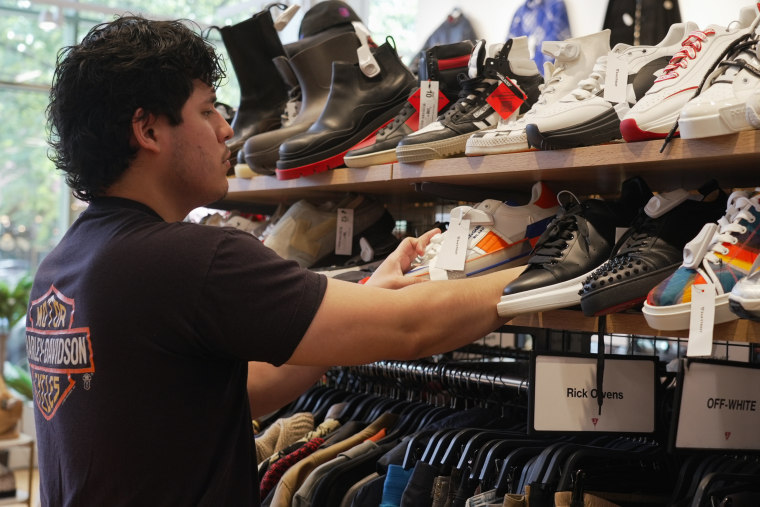
“It’s affordable, people are able to express themselves, and people are able to find things that usually they don’t get in a mall or get to find in fast-fashion brands like H&M and Zara,” said Marco Alvarado, store manager at 2nd Street Montclair.
Fast fashion exploded over the past three decades as companies rapidly produced trendy apparel without the hefty price tags of premium brands. And over the last few years, the online retailers Shein and Temu have taken off, offering shoppers a world of clothing at ultralow prices. It comes at a cost: The clothes are often made with materials that aren’t made to last. And fast-fashion companies have come under fire over environmental and health impacts.
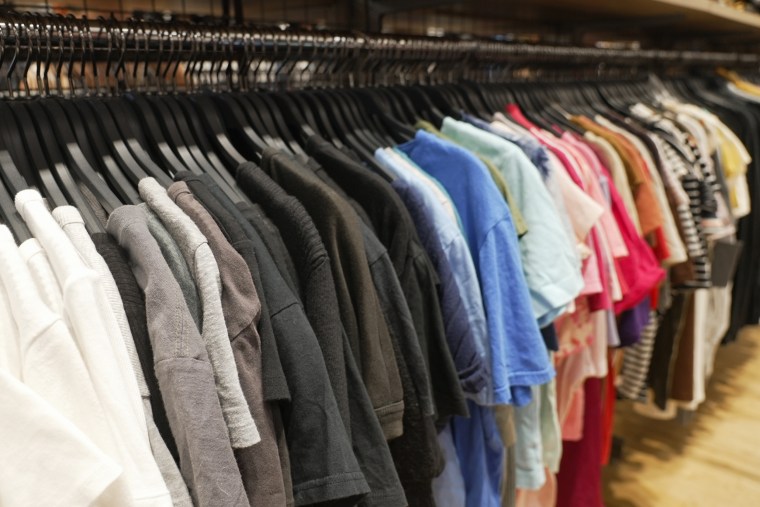
Economists say those issues have driven some to shop secondhand.
“The reuse and recycling of clothing has expanded into a thriving and growing market in recent years because of consumer concerns over clothing costs and environmental sustainability, particularly following the COVID-19 pandemic,” Bureau of Labor Statistics economist Sarah A. Van Giezen wrote.
Recommended


“The secondhand apparel market has also evolved, improving quality control and allowing consistent item comparability from month to month,” she wrote.
ThredUp, for example, advises prospective sellers to send in clean and freshly laundered clothes with little to no wear and tear. 2nd Street says it’s looking for “clean, in-season, and trend-forward styles” in great condition.
“Some of the clothes you get at the mall are such terrible quality these days,” Julia Laracy, 18, said as she was shopping last month at 2nd Street. “These clothes are cheaper and they’re older, but they have better quality.”
It may take some searching to find the perfect fit. But thrift shoppers say that’s part of the fun. And there’s something special about buying something with a story and creating a new one.
“My shirt is not black; it has a little bit of some fade,” Alvarado, the 2nd Street store manager, said of his short-sleeve Harley-Davidson shirt.
“It’s cool that it went through some other people before it came to me and I’m able to follow that up and give it a second life.”


No comments:
Post a Comment