We were watching Just visiting from I think 2001 which is a Time Traveling movie from maybe 1200s in France to present day U.S. that Malcome McDowell plays a character sort of like Merlin the Magician in and I found this film I likely saw in the past and likely will see again.
Lately I have been watching with my wife a lot of movies from the 1960s through the present day. I find I miss the different pace of older movies. However, before Star Wars in 1977 I find movies move a lot slower than since then which is hard to get used to but interesting too.
I saw a movie Recently called "A New Leaf" 1971 with Walter Matthau which is funny in a very strange way. But, I think a person would have to have been born in the 1930s or early 1940s at the latest to actually be either of the two main characters. because the male lead reminds me more of a single English Lord of the 1950s more than anything else.
begin quote:
Film Review: 'Time After Time' (1979): A Great Forgotten Thriller From the 70s
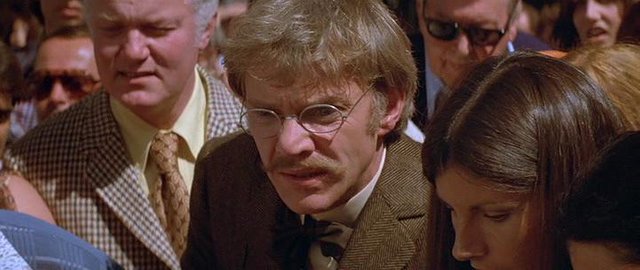
Accomplished screen villain Malcolm McDowell plays a good guy--for once--in Nicholas Meyer's underrated sci-fi thriller, Time After Time.
#film #movies #cinema #thriller #horror #writing #review
Time After Time (1979), directed by Nicholas Meyer from his own script; based on a story by Karl Alexander and Steve Hayes; starring Malcolm McDowell, Mary Steenburgen, David Warner, Charles Cioffi, and Patti d'Arbanville.
This film is on a long list of my favorite movies that few people remember or care about. Which is unfortunate, since it's highly entertaining and fun, as well as suspenseful. It can be described as a hybrid science fiction/serial killer/romantic comedy. Under the skilled hands of Meyer (who directed the legendary Star Trek II: The Wrath of Khan), what could have been a campy cheesefest (like a lot of hybrid films), is actually quite good.
The premise is audacious. The late Victorian science fiction pioneer, H. G. Wells (played by Malcolm McDowell of A Clockwork Orange fame), has actually invented the time machine that he wrote about in his story of the same name. As Wells is unveiling the machine to an audience of leading intellectuals, journalists, and skeptics in the year 1893, the police raid the venue in hot pursuit of a suspect whom they think is Jack the Ripper.
It turns out that the suspect is Wells's good friend, a top surgeon named Dr. John Leslie Stevenson (played by David Warner, who is most familiar to horror fans as the doomed photographer Jennings in Richard Donner's classic, The Omen (1976)). Stevenson jumps into the machine to evade the police and ends up being transported to the year 1979, in the city of San Francisco, California.
Once in San Francisco, Stevenson is delighted by the casual acceptance of violence in late 20th Century America. He considers the new world his personal playground, and begins killing and mutilating young women again. Feeling guilty about the way his machine was used, Wells uses it to follow after Stevenson and stop his killing spree.
Once in San Francisco, Wells is, of course, bewildered by all of the cultural changes he's confronted with. This part of the film becomes an amusing "fish-out-of-water" story. For example, McDowell orders a value meal at McDonald's and is amazed/delighted to find out that "French fries" are the same as "pommes frites." He caresses a molded plastic table top and enthuses, "I've never seen wood like this before."
Wells realizes that he needs money to navigate the strange new society, so he goes to a bank to exchange some ancient British currency for modern American dollars. At the bank, he is served by a slightly loopy teller named Amy, played with memorable charm by a young Mary Steenburgen, who would soon win an Oscar for her performance in the cult film, Melvin and Howard (1980).
While making the currency exchange for Wells, Amy mentions that she has recently served another Englishman in Victorian dress, who also exchanged old British pounds for dollars. Realizing that this customer is probably Stevenson, Wells enlists Amy's aid in tracking him down. Along the way they, of course, fall in love. The story becomes personal for Wells when Stevenson starts stalking Amy for his latest gruesome murder.
When Wells finally meets up with Stevenson, he tells Wells that late 20th Century America is the perfect world for him. He notes that as Jack the Ripper in the 1880s, he was a monster, but in 1979, he's an "amateur." Considering that 1979 in America was the purview of prolific serial killers like Ted Bundy, John Wayne Gacy, and the Hillside Slayers, Stevenson is deadly correct in that statement.
The editing, direction, and production values are all what you would expect from Meyer, a seriously underrated director. It was shot by Paul Lohmann, who also shot Nashville (1974) for Robert Altman. The excellent score was provided by Miklos Rozsa, who scored many famous films, including Ben-Hur (1959) for William Wyler and Double Indemnity (1944) for Billy Wilder. There are a few cheesy special effects that appear when the time machine speeds through the decades, but most viewers would probably just accept them as being typical of the 70s instead of being annoyed by them.
This film is available on disc and there's also a fairly good copy posted on DailyMotion. I give it a 7.5 out of 10.
P.S.: I predict that @modernzorker will like this film if he hasn't seen it already.


No comments:
Post a Comment