Showing posts with label 40. Show all posts

Saturday, February 21, 2026

Saturday, January 27, 2024

A city of 710,000 struggles to cope with 40,000 migrant arrivals

 begin quote from: 

https://www.nbcnews.com/news/us-news/denver-struggles-cope-40000-migrants-rcna135555

A city of 710,000 struggles to cope with 40,000 migrant arrivals

Starting Feb. 5, Denver will start limiting the number of days migrants can stay in shelters and sending those who exceed their stay out onto the streets.
00:18 /01:55

Get more news
on


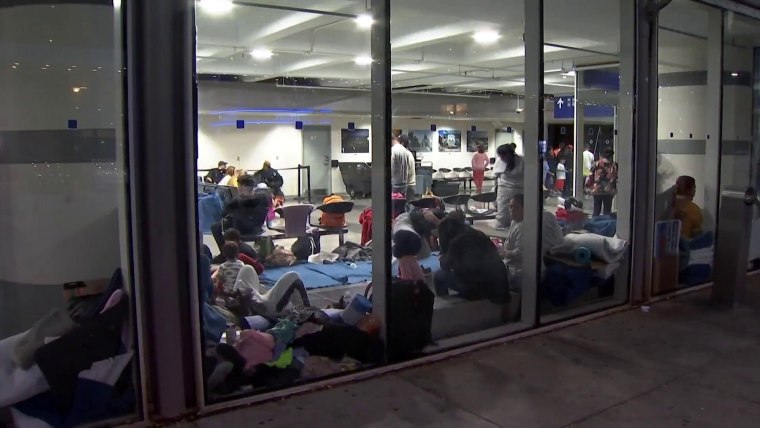
  • Nearly 40,000 migrants have arrived in Denver over the past year, making a city with a population of just over 710,000 the top destination per capita for newly arrived migrants crossing the U.S. southern border and traveling north in buses from Texas.

    The influx is taking a toll on the city’s public safety net. Starting Feb. 5, Denver will limit the number of days migrants can stay in shelters and send those who exceed their stay out onto the streets.

    One Venezuelan family, a mother, father and their three daughters, told NBC News they’ve been staying at a hotel paid for by the city, but they’ve just received notice that they’ll be evicted.

    “Just yesterday they started throwing away the toys, the bicycles in the common area,” Eddi Mujica, the mother, said. “We don’t know where we will go next.”
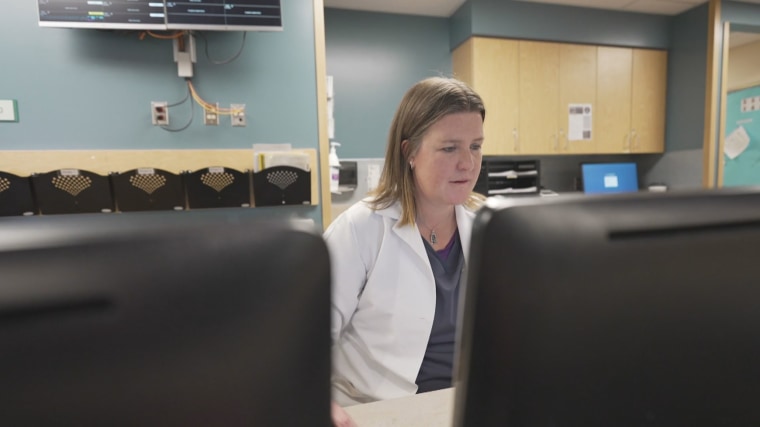
    Dr. Kristi Rodrigues, a doctor in Pediatric Emergency Medicine at Denver Health, said they are working hard to keep up with patient demand but are in need of more funding to support migrant arrivals.
    Dr. Kristi Rodrigues, a doctor in Pediatric Emergency Medicine at Denver Health, said staffers are working hard to keep up with patient demand but are in need of more funding to support migrant arrivals.NBC News

    Denver Health, the city’s “safety net” hospital, is asking for more money from both the state and federal government to help cover $10 million in unpaid medical bills from migrants.

    Denver Mayor Mike Johnston estimates the city will need $100 million over 2024 to pay for housing, schooling, health care and other services as a result of the unexpected influx of migrants.

    Dr. Steven Federico, a pediatrician and chief of government and community affairs at Denver Health, said the hospital has reached out to state and federal agencies for help.

    “I think it’s been an unheeded call so far in terms of who’s going to be responsible for the health care of this population," Federico told NBC News. "In the meantime, it falls on safety net hospitals like Denver Health."
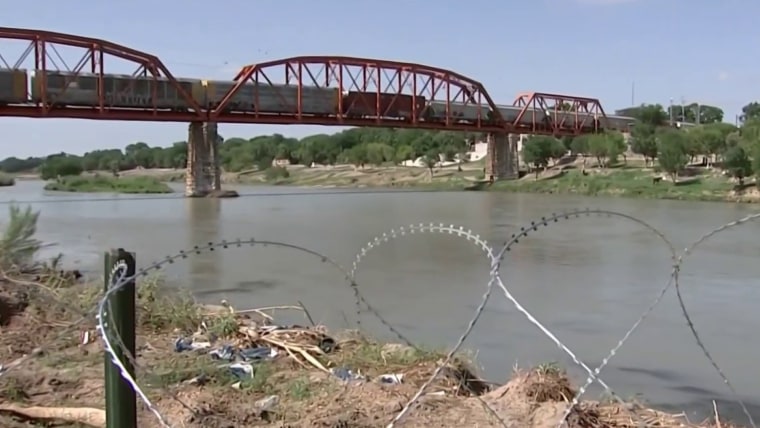
    A spokesperson for the Department of Homeland Security said in a statement that the agency will continue to work with the city in welcoming recently arrived migrants. "We continue to urge Congress to approve our supplemental request, provide us with the resources to manage the Southwest Border in a humane, safe, and orderly manner, and provide communities across the country with the financial support they need,” the spokesperson added.

    Another pediatrician getting ready to work the late shift in the emergency room, Dr. Kristi Rodrigues, said she worries about what care migrants will be able to access once they leave the ER. The hospital is required to cover anyone who comes in for emergency care, regardless of their immigration status or ability to pay, but Rodrigues worries that patients won’t be able to have checkups or get medication for illnesses that are sometimes life-threatening.

    The Bryant-Webster K-8 school in Denver, Colorado has received nearly 100 new migrant students since the start of the school year, the school’s principal said.
    The Bryant-Webster K-8 school in Denver has received nearly 100 migrant students since the start of the school year, the school’s principal said.NBC News

    “I don’t mind being busy. I can see a lot of patients, I can stay late,” Rodrigues said. “But I don’t know if this person is going to get his medicine filled. I don’t actually know if this person is ever going to get into a pediatrician to be seen and taken care of. For me, that’s the part that pulls at my heartstrings.”

    She’s seen an uptick in varicella, also known as chicken pox, and even some parasitic problems caused by poor drinking water that migrants have consumed on their journeys to the United States.

    In many ways, Denver has welcomed migrants in a way not seen in other cities. They have not had major protests like New York and Chicago. Instead, residents have joined with nonprofits to donate food and clothing and even organized carpools to get new migrant students to school.
    Nearly 3,000 immigrant children, mainly from Venezuela, have joined the Denver Public School system since July, said Adrienne Endres, who oversees multilingual education for the school district.

    Schools receive their allocated funding for the year based on their population in October, she explained, so it’s been hard to pay for the increasing numbers. 

    At Bryant Webster Dual Language School, Principal Brian Clark says he is receiving five to 10 new immigrant children per week, the number of new students he used to receive over a year.

    Endres says over 600 of the students come with little to no schooling, so they spend time in a specialized classroom to get accustomed.

    “We’ve gotten a lot of new kids really quickly, with a lot of needs,” Endres said. “It’s been getting creative in a lot of spaces. It’s been bringing a lot of other departments in. And it’s been an adventure that we’re glad to be on.”

    Both hospital and school administrators in Denver say that they’ve been able to handle the influx so far, but that the rate of growth is not sustainable without more outside funding. 

    The Biden administration has asked Congress for $1.4 billion in grants to local governments and nonprofits for temporary food, shelter and other services for recently arrived migrants. But so far Republicans have been unwilling to put more money toward helping cities cope with immigration until Democrats and the White House agree to a number of legislative changes to restrict immigration across the southern border. 

    Thursday, July 22, 2021

    40,000 new covid cases a day or 1,200,000 a month here in the U.S. now: 40% of cases in Texas, Missouri and Florida

    begin quote from:

    https://www.cnn.com/interactive/2020/health/coronavirus-us-maps-and-cases/ 

    We show a moving average to account for variations in the data caused by, for example, delays or errors in data reporting. Cases Deaths. Current 7-day avg. All ...
    Missing: 1200000 ‎month

    Sunday, April 19, 2020

    40,525 tested cases so far in U.S. and 1502 tested deaths today so far in U.S.

    506 of those were in New York
    113 of those were in New Jersey
    146 of those were in Massachusetts
    276 of those were in Pennsylvania
    29   of those were in California
    83 of those were in.  Michigan
    41 of those were in Connecticut
    29 of those were in Louisiana
    26 of those were in Florida
    31 of those were in Illinois

    These as far as I can tell were the top 10 in mortality rates from Coronavirus today

    As of 7:27 Pm PDT in California on April 19th 2020

    Monday, March 16, 2015

    40,000 Russian Troops in military exercise in Arctic?

    • I'm wondering whether this is over oil rights to Arctic? And sort of threatening all other nations away from Arctic Oil?

    Sunday, November 4, 2012

    40,000 in New York may need relocation:weather

    Wall Street Journal (blog)
    1. NYC Mayor Bloomberg says up to 40000 may need relocation
      CBS News‎ - 1 hour ago
      NEW YORKShivering victims of Superstorm Sandy went to church Sunday to pray for deliverance as cold weather settling in across the New ...

      CBS/AP/ November 4, 2012, 6:40 PM

      NYC Mayor Bloomberg says up to 40,000 may need relocation

      Kathy Lahey sifts through her damaged home for items to save November 4, 2012, in the Breezy Point neighborhood of the Queens borough of New York City. / Getty Images
      NEW YORKShivering victims of Superstorm Sandy went to church Sunday to pray for deliverance as cold weather settling in across the New York metropolitan region — and another powerful storm forecast for the middle of the week — added to their misfortunes and deepened the gloom.


      Play Video

      Watch: Aerials of Sandy-damaged Brooklyn


      Play Video

      Superstorm Sandy by the numbers

      With overnight temperatures sinking into the 30s and hundreds of thousands of homes and businesses still without electricity six days after Sandy howled through, people piled on layers of clothes, and New York City officials handed out blankets and urged victims to go to overnight shelters or daytime warming centers.
      At the same time, government leaders began to grapple with a daunting longer-term problem: where to find housing for the tens of thousands of people whose homes could be uninhabitable for weeks or months because of a combination of storm damage and cold weather.
      Mayor Michael Bloomberg said 30,000 to 40,000 New Yorkers may need to be relocated — a monumental task in a city where housing is scarce and expensive — though he said that number would probably drop to 20,000 within a couple of weeks as power is restored in more places.
      U.S. Homeland Security Secretary Janet Napolitano said on Sunday federal agencies are looking for apartments and hotel rooms for people displaced by Superstorm Sandy, Reuters reports.
      "Our goal is to try to get people out of the shelters," Napolitano said at a news conference in New Jersey with Governor Chris Christie.
      In a heavily flooded Staten Island neighborhood, Sara Zavala spent the night under two blankets and layers of clothing because the power was out. She had a propane heater but turned it on for only a couple of hours in the morning. She did not want to sleep with it running at night.
      "When I woke up, I was like, `It's freezing.' And I thought, `This can't go on too much longer,"' said Zavala, a nursing home admissions coordinator.


      Play Video

      Jersey shore communities frozen in time by Sandy

      Nearly a week after Sandy slammed into the New Jersey coastline in an assault that killed more than 100 people in 10 states, gasoline shortages persisted across the region, though odd-even rationing got under way in northern New Jersey in an echo of the gas crisis of the 1970s. More than 900,000 homes and businesses were still without power in New Jersey, and nearly 700,000 in New York City, its northern suburbs and Long Island.
      With more subways running and most city schools reopening on Monday, large swaths of the city were getting back to something resembling normal. But the week could bring new challenges, namely an Election Day without power in hundreds of polling places, and a nor'easter expected hit by Wednesday, with the potential for 55 mph gusts and more beach erosion, flooding and rain.
      "Well, the first storm flooded me out, and my landlord tells me there's a big crack in the ceiling, so I guess there's a chance this storm could do more damage," John Lewis said at a shelter in New Rochelle, N.Y. "I was hoping to get back in there sooner rather than later, but it doesn't look good."
      Voting machines in hundreds of locations will be operating on generator power, some polling stations are being moved and there are likely to be delays in reporting election results in a few closely contested races because of extended deadlines for counting ballots cast by mail.
      Churchgoers packed the pews Sunday in parkas, scarves and boots and looked for solace in faith.
      At the chilly Church of St. Rose in Belmar, N.J., its streets still slippery with foul-smelling mud, Roman Catholic Bishop David O'Connell said he had no good answer for why God would allow such destruction. But he assured parishioners: "There's more good, and there's more joy, and there's more happiness in life than there is the opposite. And it will be back."


      16 Photos

      Hurricane Sandy rescue missions


      Play Video

      Life and death of Sandy from a NASA satellite

      In the heart of the Staten Island disaster zone, the Rev. Steve Martino of Movement Church headed a volunteer effort that had scores of people delivering supplies in grocery carts and cleaning out ruined homes. Around midday, the work stopped, and volunteer and victim alike bowed their heads in prayer.
      In the crowd was Stacie Piacentino. After a singularly difficult week, she said, "it's good to feel God again."
      After the abrupt cancellation of Sunday's New York City Marathon, some of those who had been planning to run the 26.2-mile race through the city streets instead volunteered their time, handing out toothbrushes, batteries, sweatshirts and other supplies on Staten Island.
      Thousands of other athletes from around the world ran anyway inside Central Park, where a little more than four laps around it amounted to a marathon. "A lot of people just want to finish what they've started," said Lance Svendsen, organizer of a group called Run Anyway.
      Gov. Andrew Cuomo said New York state is facing "a massive, massive housing problem" for those whose neighborhoods or buildings are in such bad shape that they won't have power for weeks or months.
      "I don't know that anybody has ever taken this number of people and found housing for them overnight," Bloomberg said. "We don't have a lot of empty housing in this city," he added. "We're not going to let anybody go sleeping in the streets. ... But it's a challenge, and we're working on it."
      The mayor and the governor gave no details of where and how the victims might be housed.
      After Hurricanes Katrina and Rita smashed the Gulf Coast in 2005, hundreds of thousands of victims were put up by the Federal Emergency Management Agency in trailers, hotels, cruise ships and apartments across several states for months and even years.
      George W. Contreras, associate director of the emergency and disaster management program at Metropolitan College of New York, speculated that large encampments of trailers might be set up at a stadium, in a park or in some other open space in the city — something he couldn't recall being done in New York ever before.
      "The amount of actual units the city might have in buildings is probably very limited, so I think people will be in FEMA shelters for a while," he said.


      Play Video

      Superstorm Sandy brings climate change back into focus

      On a basketball court flanked by powerless apartment buildings in the Far Rockaway section of Queens, volunteers for the city handed out bagels, diapers, water, blankets and other necessities. Genice Josey stuffed a blanket into a garbage bag.
      "Nights are the worst because you feel like you're outside when you're inside," said Josey, who sleeps under three blankets and wears longjohns under her pajamas. "You shiver yourself to sleep." She added: "It's like we're going back to barbaric times where we had to go find food and clothing and shelter."
      On Staten Island, emergency management officials distributed leaflets urging people to take shelter from the cold. But "people are apprehensive and don't want to leave their houses. It's a definite problem," said Fred Melendez, who helped run a shelter at Tottenville High School that was nearly empty of storm victims Sunday afternoon.
      Fearing looters, Nick Veros and his relatives were hoping to hold out in their storm-damaged Staten Island home until power was restored. He figured the indoor temperature would plunge into the 40s.
      "If we get two consecutive below-freezing days, I'm probably going to have to drain the water out of the pipes," he said, "and then we'll have to get out of the house."
      To help victims of Sandy, donations to the American Red Cross can be made by visiting Red Cross disaster relief, or you can text REDCROSS to 90999 to make a $10 donation. You can also make a donation to the Mayor's Fund to Advance New York City by visiting here.
      Seaside Heights: Now and then
       

      end quote from:
      NYC Mayor Bloomberg says up to 40000 may need relocation