PARIS
- The latest news from the U.N. climate conference that began Monday in
Paris. All times local: 9:15 p.m.. U.S. House Majority Leader Kevin
McCarthy says the House will not go along if President Barack Obama
tries to commit taxpayer money to ...
PARIS — The latest news from the U.N.
climate conference that began Monday in Paris. All times local:
9:15 p.m.
U.S.
House Majority Leader Kevin McCarthy says the House will not go along
if President Barack Obama tries to commit taxpayer money to support a
climate accord reached in Paris.
He
says Congress has the authority to decide how to spend U.S. taxpayer
dollars, "and I don't think that's the best use of our money."
McCarthy
suggested that a must-pass year-end spending bill currently in the
works could become the vehicle for language blocking any such
expenditure.
The
California Republican on Monday also criticized Obama's overall
approach at the Paris talks, saying he should be focusing on America's
progress in switching to natural gas and thereby reducing greenhouse gas
emissions.
The
House votes this week on several pieces of legislation aimed at
confronting Obama on his climate policies, including taking aim at the
administration's controls on power plant emissions.
___
8:55 p.m.
President Barack Obama is capping a day of high-profile climate talks with a quiet dinner at a chic Paris eatery.
French
President Francois Hollande is hosting Obama, U.S. Secretary of State
John Kerry and other top advisers at L'Ambroisie — one of the finest
gastronomic restaurants in the trendy Marais.
L'Ambroisie's menu is fit for a king — or an occasional president.
According
to its website, delicacies like corolla of scallop meet white Alba
truffle, and the flavors of tasty lobster fricassee are set off with
Saint-Germain mashed peas.
It's not aimed at diners with shallow pockets — dinner can cost up to 360 euros ($380).
The White House dubbed the outing a "working dinner." The group of 12 sat in a cozy, lavishly decorated private room.
Obama
told reporters snapping photographs to be careful in the luxurious
surroundings, "Don't break the chandelier. You can't afford it."
___
8:25 p.m.
The
leaders of six countries and the World Bank have called on economies
across the globe to put a price on carbon dioxide emissions to fight
global warming.
The
heads of France, Germany, Chile, Mexico, Ethiopia and Canada all called
for some kind of mechanism that essentially charges a price for each
ton of carbon dioxide spewed by industry. It could be a simple tax or a
more complex carbon credit trading system, they said.
"We
simply cannot afford to continue polluting the planet at the current
pace," World Bank Group President Jim Yong Kim said. "Carbon pricing is
critical for reducing emissions."
Kim said that the number of countries, provinces, states or cities putting a price on carbon has tripled in the past year.
"Cheap
and dirty energy is not cheap for the planet or the health of our
people," Chilean President Michelle Bachelet said at the Paris climate
summit.
___
8 p.m.
Pope
Francis has warned climate change negotiators meeting in Paris that
"it's now or never" to come up with an agreement to limit global
warming.
Speaking
to reporters en route home from Africa, Francis said Monday the world
is "at the limit of suicide" if it doesn't reverse course and move away
from its fossil fuel-based economy.
Francis
pressed his environmental message during his Africa trip, urging world
leaders not to let special interests derail a deal — a clear reference
to the energy industry that has long fought curbs on the greenhouse gas
emissions blamed on global warming.
Despite
their influence, Francis said he was nevertheless optimistic that
something would emerge from Paris. He said: "I hope they will do it, and
I'm praying for it."
___
7:15 p.m.
Paris'
conference on climate is so crowded with world leaders that some of
them are having to wait hours for their turn at the podium — a highly
unusual situation for the most powerful people in their respective
countries.
About
150 leaders showed up, each giving a speech about their plans to fight
global warming. After eight hours of speeches, the original schedule is
totally out of whack — and it's not over yet.
Meanwhile,
at a sidelines launch of a clean energy initiative by Bill Gates, more
than a dozen heads of state and government waited for Barack Obama for
45 minutes.
Some
formed small informal discussion groups on the stage, while other
preferred to sit. Mexican President Enrique Pena Nieto conversed with
the French Environment Minister Segolene Royal, while Japanese Prime
Minister Shinzo Abe talked to Chilean President Michele Bachelet and
Norwegian Prime Minister Erna Solberg — until they finally decided to
begin without the American president.
"I'm in charge of the waiting time," French President Francois Hollande, host of the talks, joked when he started his speech.
___
7:10 p.m.
Today's
children and their future heirs are getting a lot of attention at an
unprecedented diplomatic conference on global warming.
British
Prime Minister David Cameron, urging fellow world leaders to pursue
cuts in man-made carbon dioxide emissions, said "We should ask what will
we say to our grandchildren if we fail. ... Instead of making excuses
tomorrow, let's take action today."
Prince
Charles, French President Francois Hollande and the prime minister of
Tuvalu were among others who invoked future generations to stress the
importance of a long-term deal.
More
than 150 leaders met Monday in an unusual diplomatic effort to give
impetus to two weeks of U.N.-led talks aiming at a new global climate
accord.
___
6:10 p.m.
President
Barack Obama says the private sector needs to have a seat at the table
as the world's governments attempt to curb global warming.
He
says that governments will set the targets that nations will try to
reach, but it will be scientists, private sector investors and workers
who will largely determine whether those goals are met.
Obama's
remarks come as part of an event in which at least 19 governments and
28 investors were announcing billions of dollars toward researching and
developing clean energy technology.
Obama
says Microsoft co-founder Bill Gates is correct in noting that
improving energy efficiency will only help nations get part of the way
toward reaching their targets. New inventions and technology will also
be required.
He calls the partnership one of the most significant private-public partnerships even forged to accelerate energy innovation.
___
5:40 p.m.
The
Paris prosecutor's office says all but nine of the 317 people taken
into custody following a demonstration seeking to call attention to
climate change have been released.
Police
forces arrested 341 protesters on Sunday in the French capital after
activists clashed with police at the Place de la Republique, a central
point for commemorations after the Nov. 13 attacks that killed 130
people. Most were taken into custody.
Under a state of emergency, France has banned protests ahead of the climate conference that opened Monday.
___
5:30 p.m.
Israel's prime minister and the
Palestinian president, in France for the climate summit, met and shook hands for the first time in years.
A
photograph shows Benjamin Netanyahu and Mahmoud Abbas shaking hands and
smiling on the sidelines of global climate talks outside Paris on
Monday. It wasn't immediately clear if they had agreed to meet or if
they spoke.
U.S. mediated peace talks between the sides collapsed early 2014 and the two leaders haven't met in years.
Their
meeting came amid heightened tensions between Israelis and
Palestinians. Over the past 2 months, almost daily Palestinian attacks
have killed 19 Israelis while at least 97 Palestinians have been killed,
including 62 said by Israel to be attackers. The rest died in clashes.
___
5:15 p.m.
Leaders
of small island nations are pleading for their survival, asking bigger
countries to do more to cut emissions and help threatened nations cope
with rising seas and wilder storms blamed on man-made global warming.
Peter
M. Christian, president of the Pacific nation of Micronesia, called on
U.N. Secretary-General Ban Ki-moon to declare a worldwide state of
emergency.
Christian said Monday: "The challenge is to save ourselves, not someone else, but ourselves."
The
prime minister of the Pacific country of Tuvalu, Enele Sosene Sopoaga,
adds that "any further temperature increase will spell the total demise
of Tuvalu."
They
spoke in Paris on the opening day of high-stakes climate talks aimed at
reaching a global compromise to cut emissions long-term.
___
5:05 p.m.
Bill
Gates says he and other investors are pledging $7 billion for research
and development of clean energy, and that they're hoping to get others
to pitch in more in the coming days.
The
Microsoft co-founder is announcing the investment as part of a larger
initiative with world governments that are promising to double spending
on renewable energy research.
Gates
told reporters that he is hoping to see more investors sign on
"possibly this week." The money is being raised by individual wealthy
investors and the University of California.
Gates said he has warned potential investors that new energy technologies take longer than IT or biotech to launch.
The
fund will support a wide range of technologies, Gates said — "biofuels,
carbon capture, high wind, fission, fusion - we're unbiased but it has
to be clean and possible to scale up cheaply."
___
4:15 p.m.
President
Barack Obama says India must curb its carbon dioxide pollution even
while it works to eradicate poverty, prioritize growth and promote
economic development.
Obama
is meeting with Indian Prime Minister Narendra Modi on the sidelines of
global climate talks outside Paris. Obama says he and Modi agree that
climate change is an "urgent threat." He's calling climate change one of
the major areas for deeper cooperation between the U.S. and India.
Modi
says that economic development and environmental protection "go hand in
hand." He says India's responsibilities on climate change "will be
fully undertaken and fulfilled."
The
U.S. has been pressing poorer, developing countries like India to make
ambitious pledges to reduce their greenhouse gas emissions as part of
the budding climate agreement. But India and others have balked because
they say rich, industrialized countries that have polluted the most bear
greater responsibility for climate change.
___
3 p.m.
President
Vladimir Putin says Russia is ready to cut its greenhouse gas emissions
by almost one-third over the next 15 years compared with 1990 levels —
although the fall in Russia's economy since 1990 means that it could
still increase its current emissions.
Putin
made the pledge at a global climate summit just outside Paris Monday.
He said that by 2030 Russia is ready to bring its greenhouse gas
emissions to 70 percent of their level in 1990.
Since
Russia's economy has shrunk sharply compared with the Soviet-era high
reached in 1990, it will still have plenty of room for increasing its
current emissions while keeping them low compared to the 1990 level.
Putin also said that a future global climate deal must include commitments from both developing and developed countries.
___
2 p.m.
Balinese dancers welcomed visitors to the Indonesian pavilion on the first day of vital climate talks near Paris.
The
dance by four silk-costumed performers was one of the more exotic
attractions in the carnival-like national pavilion hall, which resembled
an Epcot Center with countries from Ivory Coast to Brazil showing off
their efforts against climate change.
Long
lines for expensive concessions was another aspect of the event that
brought to mind an amusement park, but here the cups are reusable and
paper waste is kept to a minimum — visitors are not even provided a map
to the sprawling complex of halls and hangars. Anyone who asked was told
to download an app.
While
many pavilions opted for rough-and-ready particle board walls, others
like the Gulf Cooperation Council went all out with architecture
designed to resemble their local buildings. The USA stand looked like a
TV talk show set. Germany had a welcoming coffee bar in the middle of
its stand surrounded by lots of comfy sofas.
___
1:35 p.m.
Chinese
President Xi Jinping says an eventual global climate deal must include
aid for poor countries and acknowledge differences between developing
and established economies.
Xi,
speaking at U.N.-led climate talks near Paris on Monday, said an
agreement should also include transfer of climate technology to
developing countries.
He
said a deal should accommodate national interests, adding, "it's
imperative to respect differences" among countries, especially
developing ones.
"Addressing
climate change should not deny the legitimate needs of developing
countries to reduce poverty and improve living standards," he said.
The
question of what to expect from rich and poor countries is a key
sticking-point in the talks. The last climate deal, the 1997 Kyoto
Protocol, only required developed countries to cut man-made emissions.
Western countries say this time all countries must chip in, including China, the world's biggest emitter.
___
1:15 p.m.
Britain's
Prince Charles has issued a rallying cry to world leaders to address
climate change, describing it as the greatest threat faced by humanity.
Delivering
the keynote to the U.N. climate conference, Charles urged world leaders
Monday to think of their grandchildren in seeking a deal.
Echoing the sentiment offered by Winston Churchill to Battle of Britain pilots during
World War II he argued that "rarely in human history have so many people around the world placed their trust in so few."
The
heir to Britain's throne and champion of green causes told delegates:
"I urge you to consider the needs of the youngest generation, because
none of us has the right to assume that for our today they should give
up their tomorrow."
___
1:00 p.m.
President
Barack Obama is calling the Paris climate talks an "act of defiance" by
the world community following the Islamic State-linked attacks two
weeks ago.
Obama
says world leaders gathered near Paris for global climate talks have
come to the French capital to show resolve. He's saluting Parisians for
insisting the conference go on despite the attacks.
Obama
says it proves that nothing will deter the world from building a future
for its children. He says there's no greater rejection to those who
want to tear down the world than to mount best efforts to save it.
Obama
was also painting a dire picture of the future without aggressive
action to curb carbon emissions. He was describing submerged countries,
abandoned cities and fields that won't grow. He was also drawing a link
to the refugee crisis and saying climate effects will lead desperate
peoples to seek sanctuaries outside their home nations.
___
12:40 p.m.
A
UK-based network of artists has installed more than 600 artworks in
advertising places across Paris as part of a protest campaign against
the climate change talks.
Peter
Marcuse, a member of the Brandalism network, told The Associated Press
that it wants to "make the link between advertising and climate change."
He said "advertising is the engine of consumerism, telling us to buy more and more things regardless of the environment impact."
Without
seeking permission, the eco-activists placed their artworks in
advertising spaces owned by JC Decaux, "one of the world's largest
outdoor advertising firms and an official sponsor to the COP21 climate
talks."
Marcuse
said other big corporate sponsors of the negotiations including "Engie,
Renault-Nissan, and some banks like BNP Paribas have caused big
pollution problems and can't present themselves as being part of the
solution."
Brandalism
said that the artworks, some of them mocking the conference's sponsors,
were created by more than 80 artists from 19 countries.
___
12:15 p.m.
The
United States, Canada and nine European countries have pledged nearly
$250 million to help the most vulnerable countries adapt to rising seas,
droughts and other impacts of climate change.
The
pledge was announced at the start of U.N. climate talks outside Paris
on Monday and includes contributions of $53 million from Germany, $51
million from the U.S., and $45 million from Britain.
The
money will be made available to a fund for the least developed
countries hosted by the Global Environment Facility, a major funder of
environment projects worldwide. Other countries that contributed include
Denmark, Finland, France, Ireland, Italy, Sweden and Switzerland.
Money for adaptation is a key demand by developing countries in the U.N. climate talks.
The
money would be used for things like helping vulnerable nations develop
new agricultural practices for a hotter climate and boosting their
preparedness to cope with extreme weather events linked to climate
change.
___
12:10 p.m.
More world leaders are in the same place at the same time than ever before at a critical global climate conference in Paris.
The French organizers say 151 heads of state and other leaders are at the talks that started Monday.
U.N.
climate agency spokesman Nicholas Nuttall said it is the largest such
gathering of world leaders on the same day. The annual U.N. General
Assembly in New York also gathers world leaders, but the event is spread
out over several days and not all leaders attend at the same time.
French
President Francois Hollande, hosting the talks, said "no conference has
ever gathered so many leaders from so many countries ... but never
before have the international stakes been so high."
___
11:50 a.m.
The
international Red Cross is calling for delegates at the Paris
conference to make a priority of helping poor and vulnerable people to
deal with the impact of climate change.
The
International Federation of Red Cross and Red Crescent Societies called
Monday on negotiators to ensure that money is provided for communities
that will face, or already face, fallout from rising temperatures.
The
federation's secretary general, Elhadj As Sy, said that "the
consequences of climate change are already being felt by the world's
poorest and most vulnerable communities." He added: "It is crucial that
any new global agreement emphasizes the need to support these
communities to become more resilient and reduce the climate risks they
face."
___
11:45 a.m.
The French football federation says it wants to reduce the impact the sport can have on climate change.
In
a partnership with the French agency in charge of environmental and
energy-related issues, the soccer federation has issued guidelines for
its members aimed at reducing pollution and carbon emissions.
"With
one million matches played every year, 3 millions of kilometers (1.9
million miles) traveled every weekend, it is also football's
responsibility to contribute to limit the impact of this activity on the
environment," it said in a statement.
The
federation has published an electronic guide available to its 18,000
clubs stressing for instance the need to resort to carpools at weekend
matches across France or to save energy by using a reasonable amount of
light on football pitches.
___
11:35 a.m.
French President Francois Hollande is urging a strong, binding global agreement to fight climate change.
Hollande
told other world leaders gathered near Paris on Monday that a solid
global warming deal would help ensure world peace for future generations
and reduce the number of refugees fleeing increasingly extreme weather.
He linked the fight against global warming to the fight against extremism, weeks after deadly
attacks in Paris.
"What is at stake with this climate conference is peace," he said at the opening of two weeks of talks.
"The fight against terrorism and the fight against climate change are two major global challenges we must face," he said.
He called for a "deep change" in human attitudes toward resources and the planet.
___
11:30 a.m.
One
of the worst spells of air pollution in recent years is hitting Beijing
as negotiators meet in Paris to combat global warming.
The
city reported extremely hazardous levels of the tiny, poisonous matter
PM2.5 on Monday afternoon, 25 times more than what the World Health
Organization considers safe.
The
pollution, the worst in 2015, prompted Beijing authorities to issue a
rare orange alert — the second-highest in the four-level urgency system.
Schools have suspended outdoor activities, and factories must reduce
production.
The warnings came as the U.N. climate conference opened in Paris, aiming to create a landmark agreement to fight global warming.
___
11:20 a.m.
World
leaders gathered for a critical climate conference are holding a moment
of silence in honor of people killed in recent attacks in Paris,
Beirut, Baghdad, Tunisia and Mali.
U.N.
Secretary General Ban Ki-moon declared the moment of silence as he
launched two weeks of talks in Paris Monday aimed at a long-term deal to
slow man-made global warming.
Organizers
sought a high-level kickoff to the talks in hopes of providing impetus
for a strong agreement. They say 151 world leaders are expected to
attend.
Some
leaders have visited the sites of the deadly Nov. 13 attacks in Paris.
President Barack Obama laid a flower at a concert hall where dozens of
people were killed.
___
10:45 a.m.
The
European Union's environment agency says air pollution remains the
single largest environmental health risk in Europe, causing more than
430,000 premature deaths in 2012.
The
agency says the data, based on monitoring points across Europe, shows
that people living in cities are still exposed to air pollution of
"levels deemed unsafe by the World Health Organization" and resulting in
serious illnesses, including heart disease, respiratory problems and
cancer.
Hans
Bruyninckx, head of the Copenhagen-based European Environment Agency
said that air pollution also has "considerable economic impacts" by
increasing medical costs and reducing productivity through lost working
days.
The
annual air quality report was released Monday as the U.N. climate
conference opened in Paris, which aims to create a landmark agreement to
fight global warming.
___
10:10 a.m.
High-level climate talks have begun in Paris with the goal of a long-term deal to reduce man-made emissions.
Peruvian
Environment Minister Manuel Pulgar Vidal, who played host to the last
U.N. climate conference in Lima, declared this year's meeting open
Monday morning.
A
total of 151 world leaders have converged on Paris to launch the
two-week talks in hopes of giving an impetus for an ambitious agreement.
Vidal
said a deal would show the world that countries can work together to
fight global warming as well as terrorism. The talks are occurring just
two weeks after deadly attacks in Paris by Islamic State extremists.
___
10:05 a.m.
President
Barack Obama says nowhere has coordination between the United States
and China been more fruitful or critical than on climate change.
Obama
says 180 nations followed the lead of the U.S. and China on climate
change. He says "our leadership on this issue has been absolutely
vital."
Obama is meeting with Chinese President Xi Jinping on the sidelines of the climate conference.
Xi
says climate change is a huge challenge. He's calling for the U.S. and
China to build a new model of cooperation, using diplomatic language
long preferred by Beijing.
China emits about 30 percent of the world's greenhouse gases and the U.S. about 16 percent.
___
9:20 a.m.
Paris
police say 317 people were detained after an unauthorized protest
seeking to call attention to climate change, which ended with police
firing tear gas at protesters throwing bottles and candles.
The
Paris police department had said Sunday night that 174 were detained in
the protest, then said Monday morning that the figure had grown to 317.
It did not give a reason for the growing number.
France
is under a state of emergency after Nov. 13 attacks that killed 130
people. It banned protests ahead of landmark climate talks opening
Monday, citing security concerns.
But
thousands of people formed a human chain along the route of a
long-planned environmental march Sunday. It was largely peaceful.
President Francois Hollande denounced the violence as "scandalous."
___
8:20 a.m.
U.N.
Secretary General Ban Ki-moon and French President Francois Hollande
are greeting heads of state and government from around the world for
high-stakes talks aimed at fighting global warming.
One
by one, some 150 leaders are arriving at the conference center near the
Le Bourget airfield just north of Paris. Ban, Hollande, the head of the
U.N. climate change agency Christina Figueres, and French Environment
Minister Segolene Royal are standing in front of the conference center
to greet them.
Afterwards,
each leader will give a speech laying out their countries' efforts to
reduce man-made emissions and cope with climate change.
The event opening Monday lasts through Dec. 11 and is under extra-security after Nov. 13 extremist attacks in Paris.
___
7:30 a.m.
Wide
Paris-area highways usually packed with commuters are cordoned off to
clear the way for President Barack Obama and 150 other world leaders
joining critical talks about fighting global warming.
Riot
police vans and plainclothes officers are stationed around the capital
and the northern suburb of Le Bourget, where the U.N.-led climate
conference is being held Nov. 30-Dec. 11.
The
security measures are especially tight after Islamic extremists killed
130 people two weeks ago in Paris and targeted the national stadium
Stade de France, near the climate conference venue.
U.N.
Secretary-General Ban Ki-moon and French President Francois Hollande
will greet each of the leaders Monday morning then each will give a
speech about what their countries are doing to reduce emissions and slow
climate change.
end quote from:


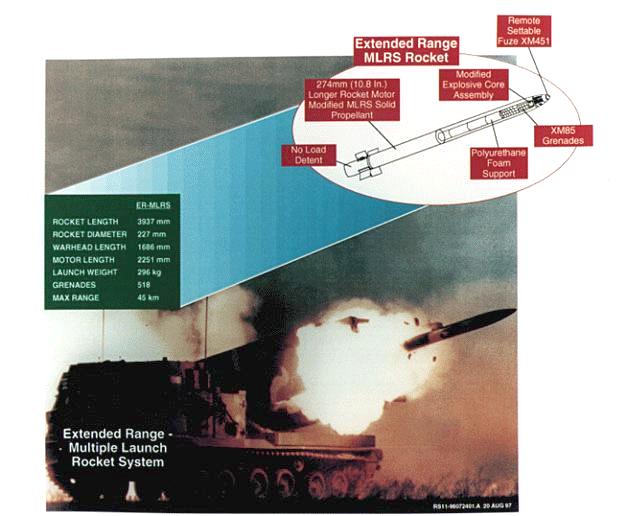
 The Multiple Launch Rocket System (MLRS) provides the Army an all-weather, indirect, area fire weapon system to strike
counterfire, air defense, armored formations, and other high-payoff targets at all depths of the tactical battlefield. Primary
missions of MLRS include the suppression, neutralization and destruction of threat fire support and forward area air defense
targets.
The Multiple Launch Rocket System is a versatile weapon system that supplements
traditional cannon artillery fires by delivering large volumes of firepower in a short time against
critical, time-sensitive targets. These targets often include enemy artillery, air defense systems,
mechanized units, and personnel. MLRS units can use their system's "shoot and scoot" capability to
survive while providing fire support for attacking manuever elements. MLRS is not intended to
replace cannon artillery, but has been designed to complement it.
MLRS performed extremely well in Operation Desert Storm (ODS) in which
significant numbers of
launchers were deployed. All operational requirement were met and, in
most cases, exceeded levels for readiness, reliability and
maintainability.
The MLRS rockets are tube-launched, spin-stabilized, free-flight
projectiles. The rockets are assembled, checked, and
packaged in a dual-purpose launch-storage tube at the factory. This
design provides for tactical loading and firing of
the rocket without troop assembly or detailed inspection. Major
components of the rocket assembly include four
stabilizer fins, a propulsion section, and a warhead section. Propulsion
for the rocket is provided by a solid propellant rocket motor. An
umbilical cable, passing through the aft
end of the launch tube, links the FCS to an igniter in the rocket
nozzle. The motor is ignited by an electrical command
from the FCS.
Each rocket is packaged with the four fins folded and secured by wire
rope retaining straps. As the rocket moves
forward upon firing, lanyard devices trigger a delayed strap-cutting
charge. After the rocket leaves the launch tube, the
charge cuts the straps. This allows the fins to unfold and lock. The M28
and M28A1 rockets' LPCs have an additional
fin release device to ensure deployment.
The MLRS rocket follows a ballistic, free-flight (unguided) trajectory to the target. The propulsion provided by the
solid propellant rocket motor is the same for each rocket, so rocket range is a function of LLM elevation. The four
stabilizer fins at the aft end of the rocket provide in-flight stability by maintaining a constant counterclockwise spin. The
initial spin is imparted to the rocket through spin rails mounted on the inner wall of the launch tube.
The Multiple Launch Rocket System (MLRS) provides the Army an all-weather, indirect, area fire weapon system to strike
counterfire, air defense, armored formations, and other high-payoff targets at all depths of the tactical battlefield. Primary
missions of MLRS include the suppression, neutralization and destruction of threat fire support and forward area air defense
targets.
The Multiple Launch Rocket System is a versatile weapon system that supplements
traditional cannon artillery fires by delivering large volumes of firepower in a short time against
critical, time-sensitive targets. These targets often include enemy artillery, air defense systems,
mechanized units, and personnel. MLRS units can use their system's "shoot and scoot" capability to
survive while providing fire support for attacking manuever elements. MLRS is not intended to
replace cannon artillery, but has been designed to complement it.
MLRS performed extremely well in Operation Desert Storm (ODS) in which
significant numbers of
launchers were deployed. All operational requirement were met and, in
most cases, exceeded levels for readiness, reliability and
maintainability.
The MLRS rockets are tube-launched, spin-stabilized, free-flight
projectiles. The rockets are assembled, checked, and
packaged in a dual-purpose launch-storage tube at the factory. This
design provides for tactical loading and firing of
the rocket without troop assembly or detailed inspection. Major
components of the rocket assembly include four
stabilizer fins, a propulsion section, and a warhead section. Propulsion
for the rocket is provided by a solid propellant rocket motor. An
umbilical cable, passing through the aft
end of the launch tube, links the FCS to an igniter in the rocket
nozzle. The motor is ignited by an electrical command
from the FCS.
Each rocket is packaged with the four fins folded and secured by wire
rope retaining straps. As the rocket moves
forward upon firing, lanyard devices trigger a delayed strap-cutting
charge. After the rocket leaves the launch tube, the
charge cuts the straps. This allows the fins to unfold and lock. The M28
and M28A1 rockets' LPCs have an additional
fin release device to ensure deployment.
The MLRS rocket follows a ballistic, free-flight (unguided) trajectory to the target. The propulsion provided by the
solid propellant rocket motor is the same for each rocket, so rocket range is a function of LLM elevation. The four
stabilizer fins at the aft end of the rocket provide in-flight stability by maintaining a constant counterclockwise spin. The
initial spin is imparted to the rocket through spin rails mounted on the inner wall of the launch tube.