Rare goblin shark filmed in the wild for the 1st time, study says
The deep-sea species is rarely observed in the wild, scientists say.
Scientists have captured and confirmed footage of the goblin shark, a rare deep-sea shark species, in the wild for the first time, according to a new study.
The goblin shark -- or Mitsukurina owstoni -- is the last representative of a lineage of the ancient shark family Mitsukurinidae that traces back about 125 million years. They are often referred to as "living fossils," according to researchers.
The rare shark species is known for its unique jaws, which can slingshot out to grab prey, and its "enormous rostrum," essentially the shark's nose, which resembles a horn, Aaron Judah, a PhD candidate at the University of Hawaii at Manoa, told ABC News.
The rostrum is covered in what is called Ampullae of Lorenzini, which are specialized sensory organs filled with gel that conduct electricity and allow the goblin sharks to search for squid, fish and crustaceans in the dark. They can grow to about 10 to 12 feet and are "almost ghostly white," or pinkish -- an uncharacteristic color for most sharks, Judah, the lead author of the study, added.
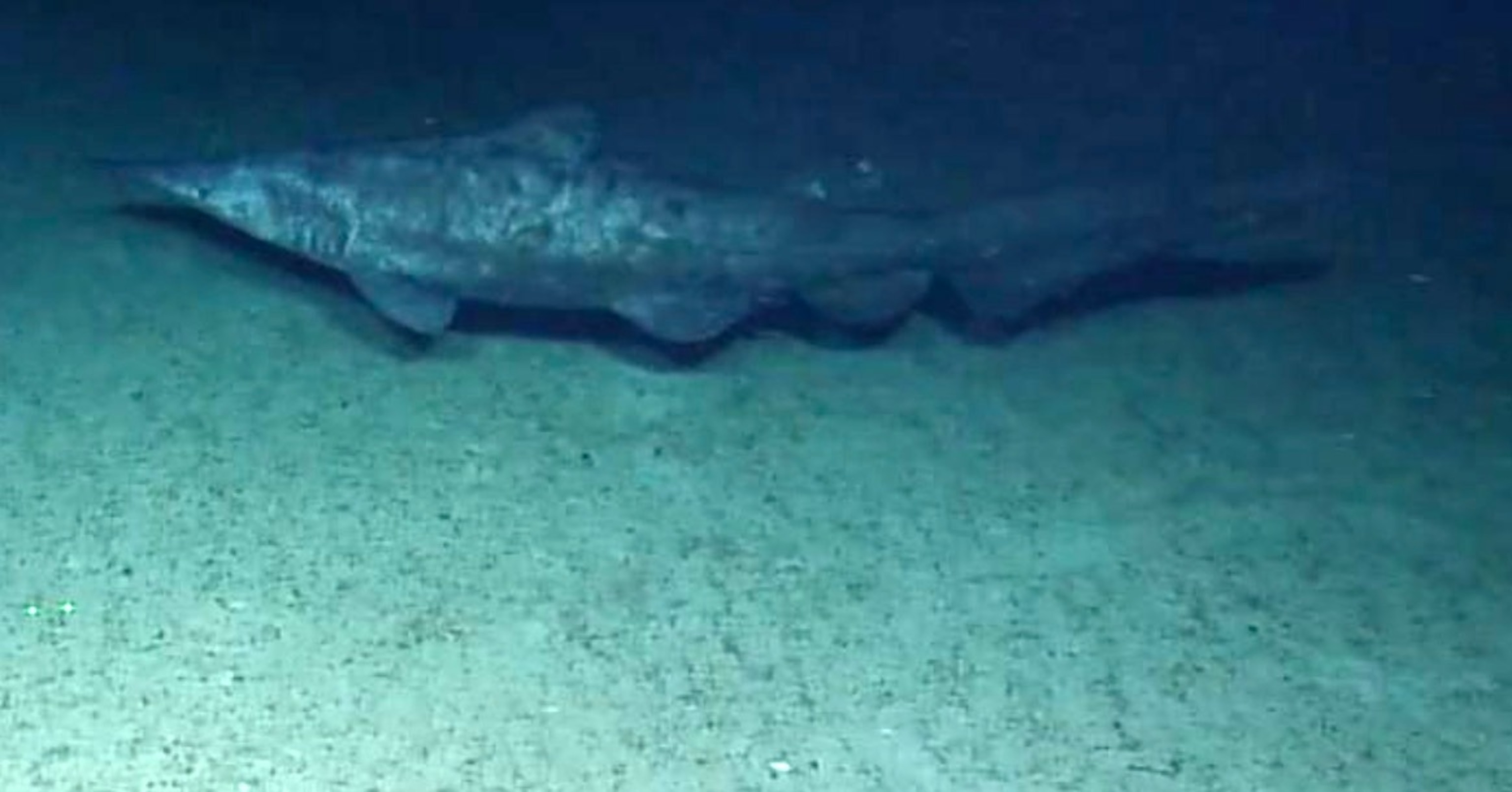
The goblin shark has now been recorded in the wild in two separate sightings, a paper published in the Journal of Fish Biology confirmed.
In 2019, remotely operated vehicle (ROV) video from the EV Nautilus -- a research vessel run by the Ocean Exploration Trust -- filmed the goblin shark on an unnamed seamount near Jarvis Island, an uninhabited 1.7-square-mile coral island in the Pacific Remote Islands Marine National Monument, a U.S. territory in the Central Pacific.
When researchers first saw the shark, about three-quarters of a mile below the surface, they had no identification for it, said Steve Auscavitch, a PhD scientist at the Department of Invertebrate Zoology at the Smithsonian Institution's National Museum of Natural History.
"At the time no one on board really knew the significance of what we had just seen," said Auscavitch, who was on board the research vessel.
The scientists only got a passing glimpse of the goblin shark before the lights and loud noise from the ROV's motor scared it away, Auscavitch told ABC News.
Judah said he later heard through the grapevine from fellow marine researchers that there was footage of what might be a goblin shark in the archives of a database that his lab manages.
"I was shocked because this species is not known from the Central Pacific, and this would be an enormous range extension for the animal," he said.
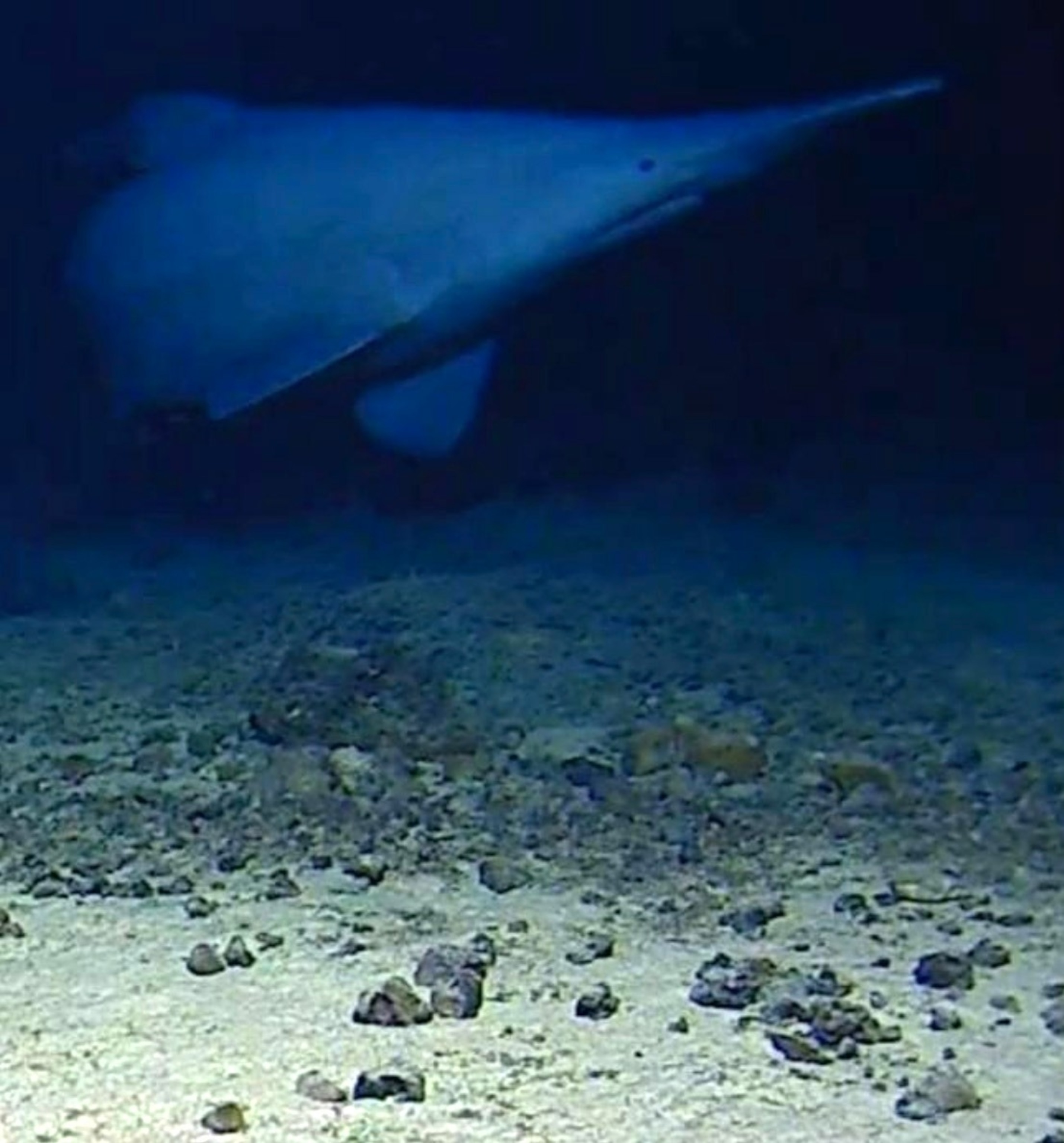
The research confirmed that these animals use seamounts, which are "incredibly important" habitats for biodiversity, said Judah, lead author of the study.



Separately, in 2024, baited camera footage taken in collaboration with the University of Western Australia captured the goblin shark along the slope of the Tonga Trench, about 1,250 miles southwest of Jarvis Island. This is the first time scientists saw the species living in trench slopes as well, Judah said.
This is the first time a video of a live goblin shark in its natural habitat was peer reviewed and fully confirmed, Judah said. Videos of the animals that were captured and brought closer to the surface have previously been taken, as has one other possible video of a goblin shark taken in the wild that was never reviewed nor confirmed, Judah said.
"We normally only ever really find them in fisheries, and rarely at that," James Lea, chief executive officer of the Save Our Seas Foundation, told ABC News.
The recently confirmed footage shows an impressive range extension for goblin sharks, Judah said. They have now been found in the Pacific Ocean, Atlantic Ocean and Indian Ocean, according to the International Union for Conservation of Nature.
The more scientists learn about rare marine species -- and discover new ones -- the more they can construct conservation plans to protect the biodiversity of the ocean, especially as fisheries extend to deeper waters and commercial seafloor mining becomes more commonplace, Judah said.
"If we don't know if the animals there, we can't really do anything with it or about it," he said.
News of two separate sightings has been "incredibly exciting" for the marine scientific community, Danielle Castillo, zoological curator of aquariums at SeaWorld San Diego, told ABC News.
"Just the two observations of this study alone have broadened our knowledge of goblin shark geographic range and depth use," Lea said. "They are so rare that every sighting gives us new glimpses into their lives."
Still, not much is currently known about their natural history, including their behavior, life cycle, and population status, Castillo said.
Deepwater exploration is now becoming more accessible with submersibles, and researchers will be able to learn more about the "alien" marine world, Lea said.
"New species, behaviors and habitats continue to be discovered with almost every dive," he said.


