It is in corporations interests to over inflate what they are doing with AI for Investors. This is likely going to help cause an AI Crash similar to the Dot Com Crash from 2000 to 2002. At that time the Dot Com Bubble crash dropped the Nasdaq I believe about 83% during this time. So, it might be important to prepare for this kind of Dot Com like crash again. If you are an AI investor I would study what happened to the Dot Comers from 2000 to 2002 in order to financially survive this.
begin quotes:
AI washing is
the
deceptive practice of exaggerating or misrepresenting the use of
artificial intelligence in a product or service to make it seem more
advanced or capable than it is. Companies may label basic
automation or rule-based systems as true AI to attract customers or
investors, leading to misleading marketing claims that can have
regulatory and financial consequences. This is a form of deception that
lacks the genuine learning and adaptive capabilities of actual AI. You can watch this video to learn what AI washing is and why it is a problem:
00:59


How AI washing works
- Exaggerating capabilities: A company may claim a product uses AI when it is actually performing simple, pre-programmed tasks.
- Misleading marketing: Claims are made that are not supported by the technology's actual performance, such as an app that overstates its "AI" photo enhancement capabilities.
- Hiding manual processes: A company might pretend that AI is performing a task, such as processing transactions, when in reality, it is being done manually by human workers.
Why it's a problem
- Deceives consumers: Customers may purchase products under the false impression of getting a genuine AI-powered experience.
- Misleads investors: Investors can be misled into investing in companies based on false claims of AI innovation, leading to significant financial losses when the deception is exposed. The SEC has brought enforcement actions against firms for this practice, as noted by Ncontracts and Compliance Week.
- Erodes trust: The practice can erode public trust in AI technology and the companies that develop it.
This video discusses the regulatory and legal aspects of AI washing: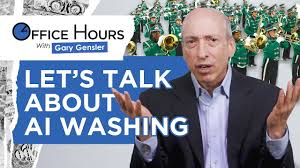
58s

Real-world examples
- In one case, the SEC charged an investment firm for falsely claiming its strategies were driven by a proprietary AI model, when they were not.
- Another example involved an investment in a company that was marketed as using AI but was allegedly using manual labor to process transactions.
- A paid advertising post was found to be misleading for exaggerating an app's performance, which was deemed to be a form of AI washing, according to the BBC.
How to identify it
- Look for evidence: A company's claims should be backed by evidence of how AI is truly being used, such as machine learning or neural networks, not just simple automation.
- Be skeptical of buzzwords: Be cautious of companies that use "AI" as a vague buzzword without providing specific details about their technology.
- Investigate the details: Research the company and its products, looking for information from independent sources and reviews to see if the technology performs as claimed.


Show all
Dive deeper in AI Mode


No comments:
Post a Comment