NASA Astronauts Eat Space Vegetables Grown In Orbit For The First Time & Gave ...
NASA Astronauts Eat Space Vegetables Grown In Orbit For The First Time & Gave Them A Surprising Review


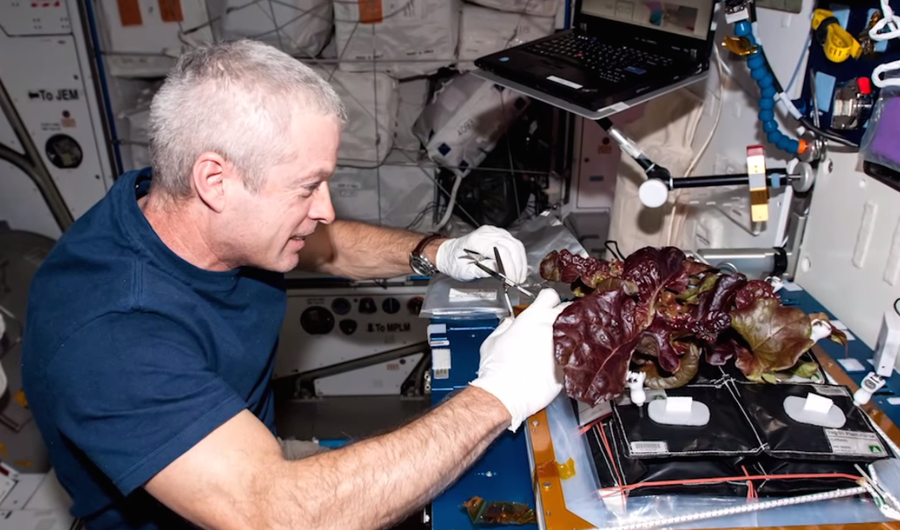
Astronauts on the International Space Station had a tasty
dinner on Monday: a romaine salad, lightly tossed with oil and balsamic
vinegar. The meal was simple, but the implications certainly were not.
This week, NASA astronauts ate space vegetables.
It was the first time in history that live produce was grown above
Earth's atmosphere. (Whoa.) The historic meal, which got a pretty decent
review, added a necessary food staple to what is usually a pretty
limited menu.
NASA launched its Advanced Food Sustainability Project more than three years ago, with the goal of providing more sustainable, nutritious food aboard space missions while minimizing waste and space concerns. According to NASA, the current system of prepackaged foods was costly and ill-suited for long space missions. According to a NASA abstract on this project, they've been exploring ways to incorporate "freshly grown crops and bulk packaged ingredients such as wheat berries" so that astronauts can grow food themselves while on long missions. That means that some of the old freeze-dried favorites from older space missions will soon be a thing of the past.
By growing veggies in space, NASA would save on energy, storage, and waste, said science and technology journalist Neel Patel in his report for Inverse.com. In his analysis, Patel argues that astronauts have just 32.85 square feet of space in which to store the seven gallons of water each crew member uses in a day, the half pound of food they split each day, and everything necessary for the mission. Each pound of food costs NASA $10,000 to send to space, according to the Christian Science Monitor. It's no wonder so much astronaut food is freeze-dried for use with recycled wate
NASA launched its Advanced Food Sustainability Project more than three years ago, with the goal of providing more sustainable, nutritious food aboard space missions while minimizing waste and space concerns. According to NASA, the current system of prepackaged foods was costly and ill-suited for long space missions. According to a NASA abstract on this project, they've been exploring ways to incorporate "freshly grown crops and bulk packaged ingredients such as wheat berries" so that astronauts can grow food themselves while on long missions. That means that some of the old freeze-dried favorites from older space missions will soon be a thing of the past.
By growing veggies in space, NASA would save on energy, storage, and waste, said science and technology journalist Neel Patel in his report for Inverse.com. In his analysis, Patel argues that astronauts have just 32.85 square feet of space in which to store the seven gallons of water each crew member uses in a day, the half pound of food they split each day, and everything necessary for the mission. Each pound of food costs NASA $10,000 to send to space, according to the Christian Science Monitor. It's no wonder so much astronaut food is freeze-dried for use with recycled wate
| Bustle | - |
Astronauts
at the International Space Station had a tasty dinner on Monday: a
romaine salad lightly tossed with oil and balsamic vinegar.

Astronauts are eating food grown in space for the first time — and that’s a huge deal http://bit.ly/1gXkHd4


No comments:
Post a Comment