White House ballroom: Judge signals skepticism of Trump administration arguments
The National Trust for Historic Preservation sued to stop the project.
The federal judge presiding over a challenge to the White House ballroom project signaled deep skepticism of the Trump administration's argument that the president has the legal authority to undertake the East Wing renovations and to fund them with private donations.
In a hearing on Thursday, U.S. District Court Judge Richard Leon pressed an administration lawyer on both of those issues -- as he questioned whether the president has the power to tear down part of what he called "an icon that's a national institution," and described the intent to fund it with private gifts as a "Rube Goldberg contraption" that would evade congressional oversight.
The National Trust for Historic Preservation filed a lawsuit last month seeking to stop the ballroom construction until the project completes the federal review process standard for federal building projects and the administration seeks public comment on the proposed changes.
The National Trust, the privately funded nonprofit designated by Congress to protect historic sites, was seeking a preliminary injunction.
At the end of the hour-long hearing Thursday, Judge Leon said he will likely not issue a decision this month, but "hopefully" in February. He said he expects the losing side to appeal.
In a statement provided to ABC News, White House spokesman Davis Ingle said: "President Trump is working 24/7 to Make America Great Again, including his historic beautification of the White House, at no taxpayer expense. These long-needed upgrades will benefit generations of future presidents and American visitors to the People's House."
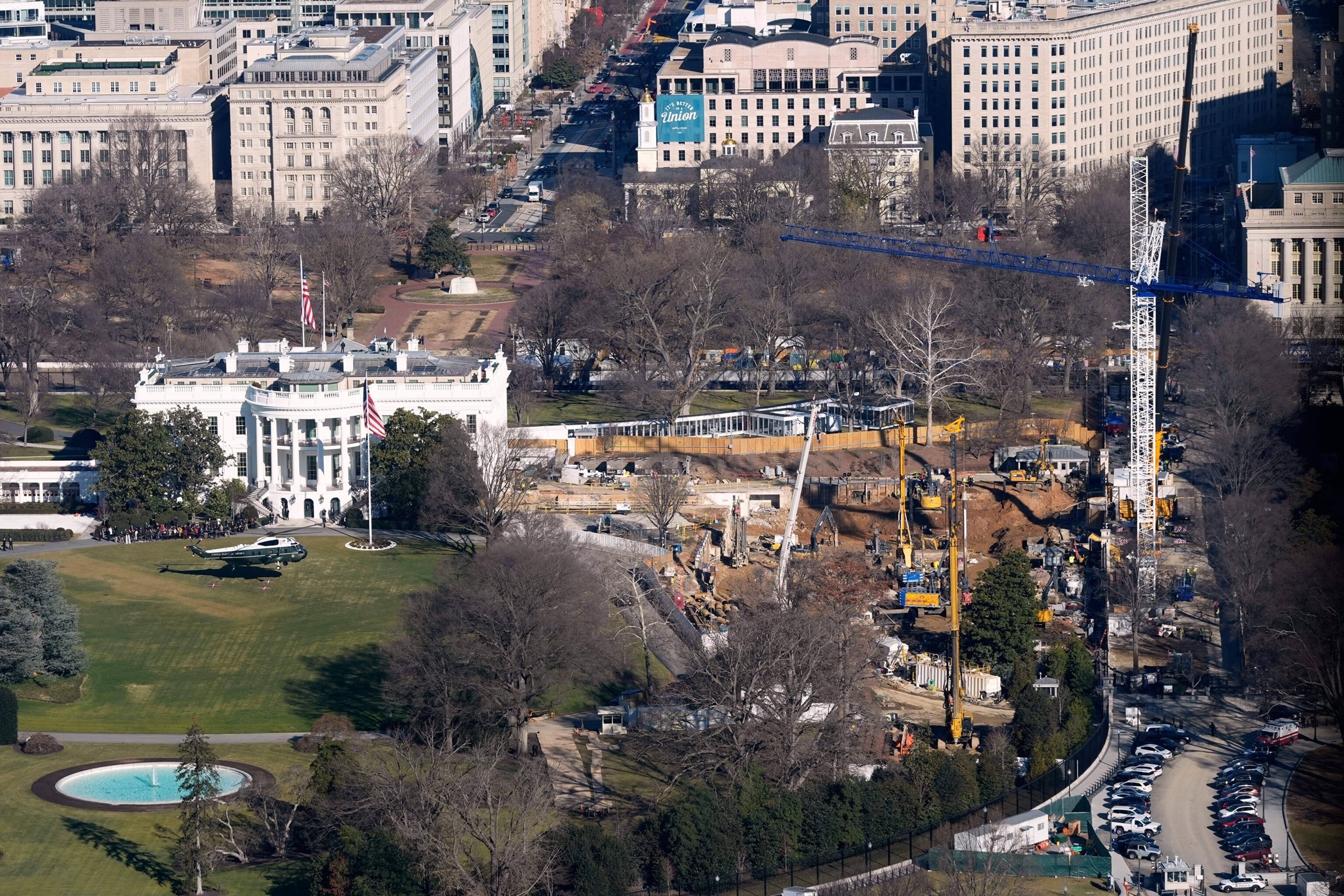
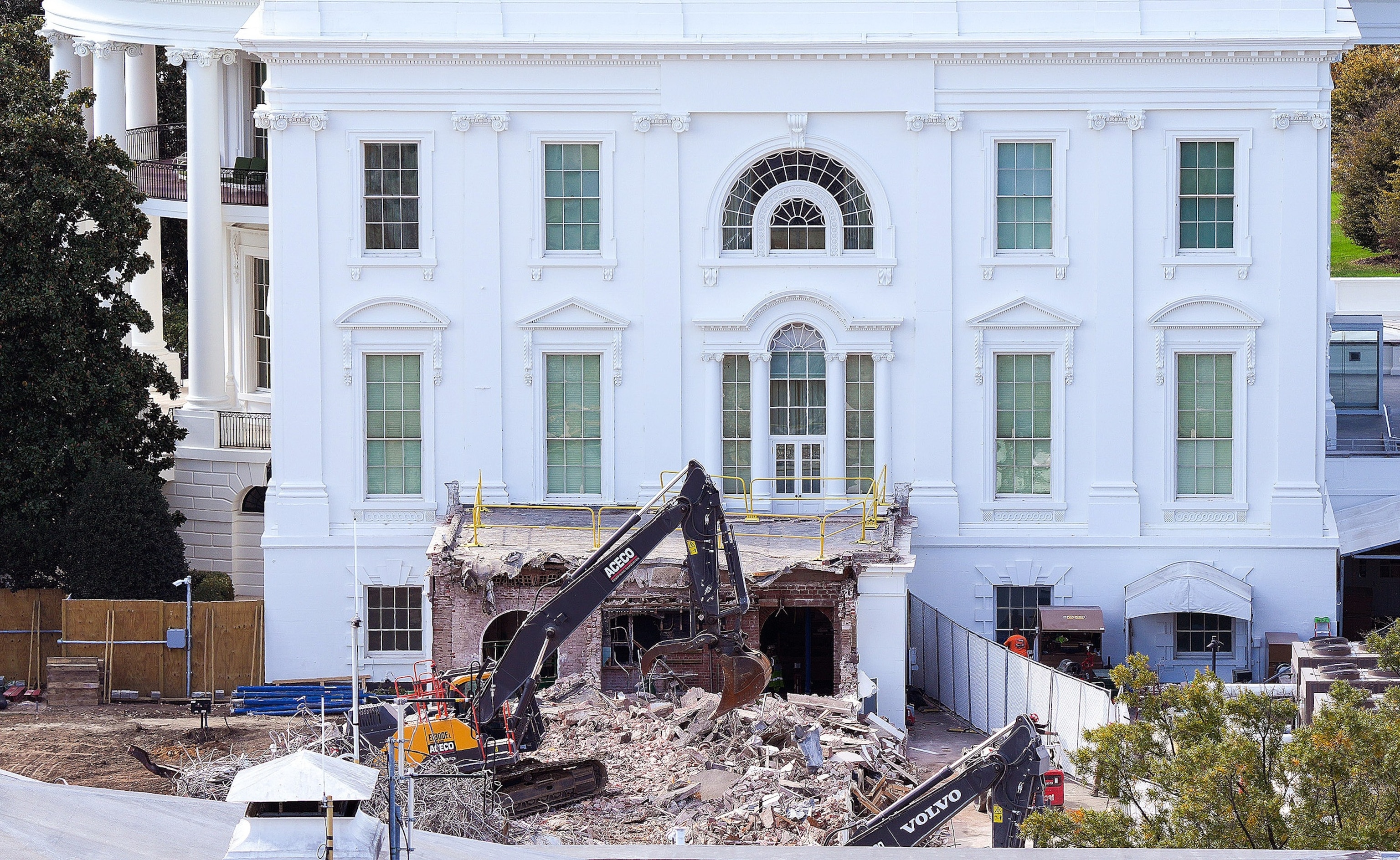
The White House announced the construction of a 90,000-square foot ballroom in late July, and demolition began suddenly on the East Wing in late October, when workers were spotted tearing down the wing of the White House that contained the first lady's offices.
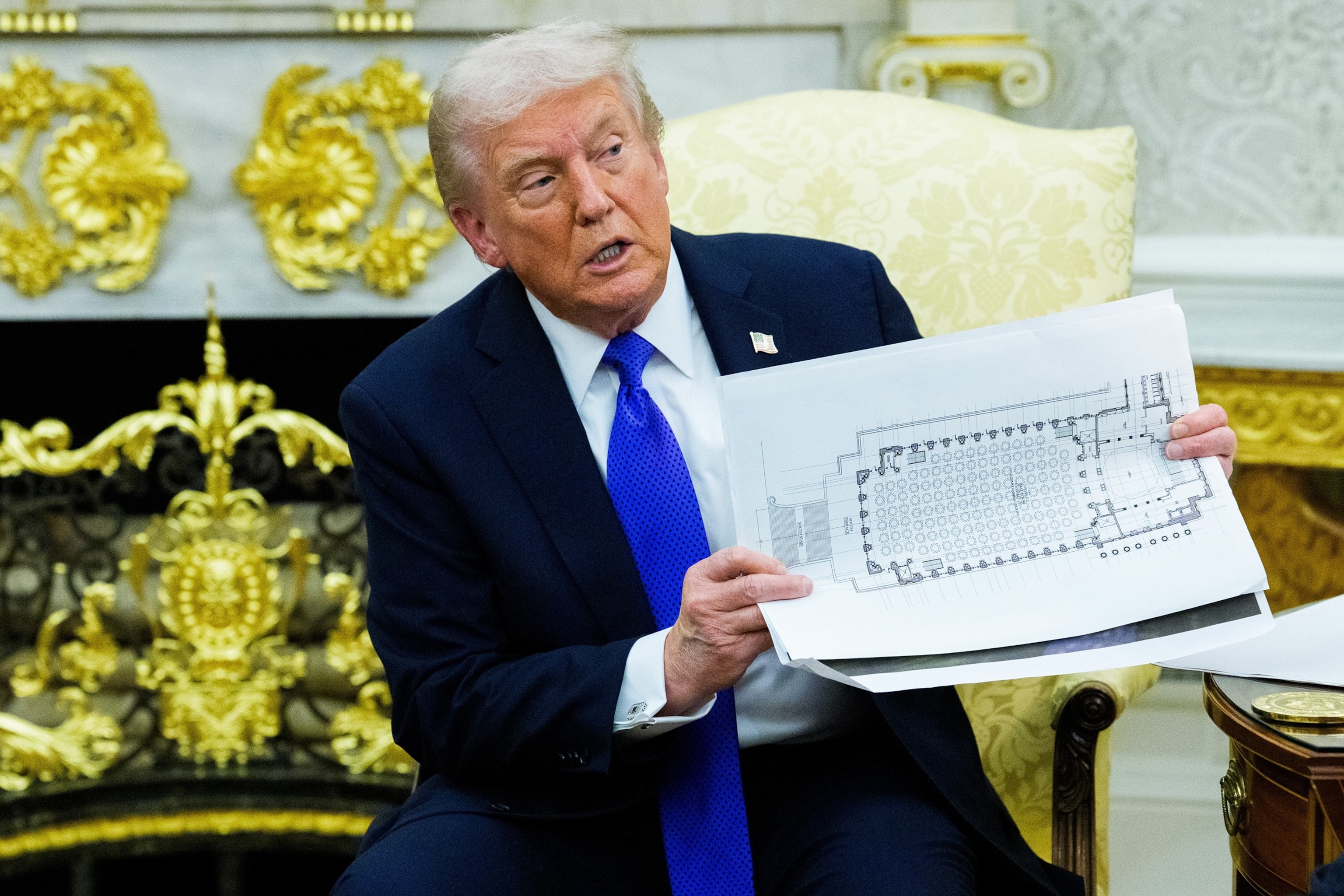
The size and cost of the project have increased since first being unveiled. In November, Trump said the project would cost $400 million, after an initial estimate of $200 million. The White House has said the project will be funded by private donations.
Judge Leon, a George W. Bush appointee, said the Trump administration appears to be making an "end run" around congressional oversight with the president's plan to privately raise $400 million for the ballroom project, and he admonished the Justice Department's lawyer to "be serious" in justifying a legal rationale for it.
While the case presents a series of complicated and overlapping legal issues, the judge spent much of the hearing focused on just two federal statutes -- one, which says that no "building or structure" can be built on any federal public grounds in the District of Columbia "without express authority of Congress," and another that calls for yearly appropriations for the "maintenance, repair, alteration, refurnishing [and] improvement" of the White House.
Leon noted that Republicans control both houses of Congress, and that the president could have gone to lawmakers to seek approval for the demolition and rebuild. He also suggested the $2.5 million Congress recently appropriated for White House maintenance was for "very small-size projects," not a ballroom.
Justice Department lawyer Yaakov Roth responded that Trump didn't want $400 million in taxpayer money to be used for the project, when he could solicit gifts to the National Park Service to fund it instead. Roth also noted that Congress was never asked in Gerald Ford's era to approve the building of a swimming pool, or a tennis pavilion during Trump's first term.
"[Your argument for using NPS's gift authority] on an icon that's a national treasure is, what? The '77 Gerald Ford swimming pool?" Leon asked. "You compare that to ripping down the East Wing? C'mon! Be serious."


No comments:
Post a Comment