The toxic aftermath of the L.A.-area fires
Since the Eaton Fire, Altadena residents have found hazardous substances such as lead and asbestos on their properties, fueling fear, conflict and a patchwork of emerging research.
ALTADENA, Calif. — A mother in Altadena started her son on chelation therapy to remove lead from his blood. A geochemist will not enter his home without a respirator and a full-body suit. A cinematographer spent thousands to get the lot where his home once stood tested for heavy metals and remediated — work the government cleanup program did not do.
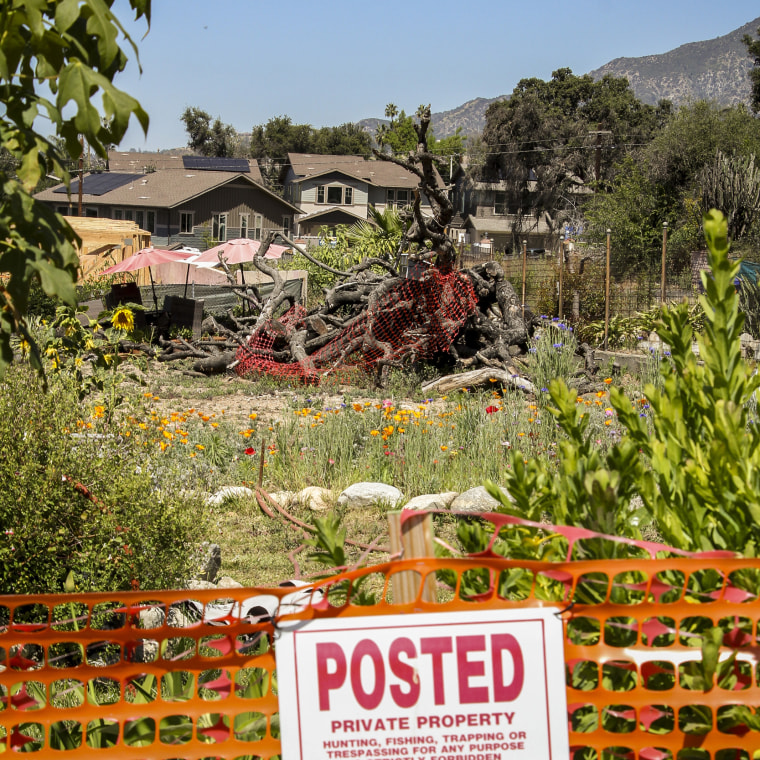
Sixteen months after the Eaton Fire, these are the extreme measures Altadena residents are taking to deal with a host of toxic compounds, including arsenic and asbestos, plaguing their families and properties. The contamination is a result of the unprecedented nature of this urban firestorm, in which thousands of houses and cars became the blaze’s fuel, releasing heavy metals into the smoke.
Even after charred debris was cleared from lots where homes burned and after the houses that remained standing were remediated, testing has revealed concentrations of lead high enough to sicken children.
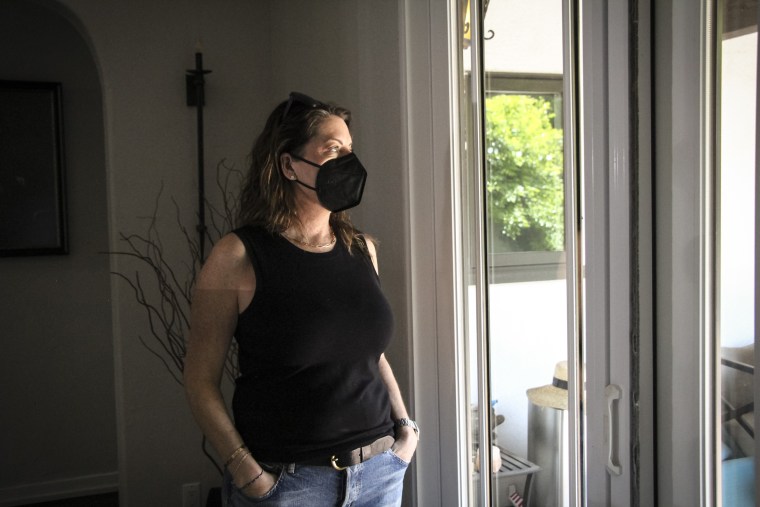
“I went and got one of those Amazon lead tests for $75 and I did a few swipes and found lead everywhere,” said Jennifer Rochlin, a ceramic artist and single mother to two sons. Her insurance company, she said, did not approve lead testing for her Altadena home until she found the metal herself, including in her HVAC system.
Rochlin has twice moved out and twice had to replace absorbent items like mattresses.
Situations like hers are, in large part, why so many residents are still not back in Altadena, a suburb northeast of Los Angeles, regardless of whether or not their homes burned. Thousands of people — nearly two-thirds of residents who lost homes or had smoke damage in the Eaton Fire, according to one report — remain displaced and stuck in temporary housing, often at huge cost to their insurers and to themselves as coverage runs out.
Uncertainty over when it is safe to return or rebuild has propelled a patchwork of academics, independent scientists and grassroots advocacy groups to conduct their own research into the contamination. What follows is the story of those findings and the ensuing conflicts, based on interviews with more than a dozen Altadena residents, six scientists working on the contamination issues, workers involved in the debris clearing, local politicians and insurance industry representatives.
Together, their experiences make it clear that the systems designed to respond to a fire disaster — insurance and remediation companies, local governments and environmental agencies — were not built for one like this.
“This was an urban conflagration, and the contamination we were dealing with was unlike anything you would have normally seen,” said Dawn Fanning, managing director of Eaton Fire Residents United, a nonprofit advocacy group.
Outside of lead and asbestos, California has no safety standards for indoor residential contamination with many of the dangerous substances found in Altadena. That makes it difficult for both homeowners and insurance companies to determine when the risk is low enough to move back in. Even the companies testing for contaminants do not use consistent methods. Meanwhile, on properties where homes burned, FEMA and the U.S. Army Corps of Engineers did not require soil testing, leaving residents in the dark about potential dangers.
Two whistleblowers who worked on the Army Corps cleanup said they worry the community will deal with soil contamination for a long time.
Both men, who asked that their names not be published for fear of retribution, described the work as rushed and inconsistent. One said he saw more debris left behind than after previous wildfires.
“It’s so incomplete. Other fires, we’re going from fence line to fence line, scraping, taking it all,” he said. But not this time: “There’s still contaminants.”
An Army Corps spokesperson said the scope of its cleanup efforts — including decisions about what would be removed — was established by FEMA and agreed upon by California and Los Angeles County beforehand.
“The mission as assigned covered the removal of structural ash and debris, and the top six inches of soil in the ash footprint and structural foundations,” the spokesperson said in a statement. “Soil testing was not part of the USACE mission assignment from FEMA.”
Hidden threats in the dirt
Altadena is where wilderness meets the city.
The area is tucked against the San Gabriel Mountains, which glow the color of warm terra cotta at sunset. From here, the silhouette of Los Angeles’ downtown skyscrapers can appear distant and abstract in the haze.
The Eaton Fire destroyed 9,400 homes and structures in Altadena in January 2025, leading the lithium in electric vehicle batteries, arsenic in old lumber and asbestos in attic insulation to become part of the smoke. The swirling winds that spread the flames topped 90 mph.
During the blaze, Alireza Namayandeh, a National Science Foundation postdoctoral fellow at Stanford University, collected samples of the smoke at a Pasadena park within the plume, using a device that filters and separates the particles. His subsequent research, Namayandeh said, shows that the majority of the particles were actually nanoparticles roughly one-1,000th the width of a human hair — a size at which they can easily enter the lungs, the bloodstream and the brain.
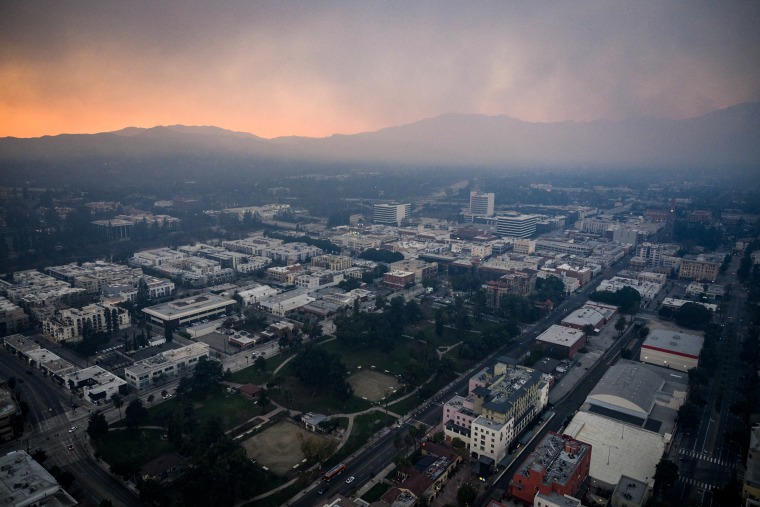
“What we observed is that more than 50% of lead and chromium are in ultrafine range, which was not something that we knew before,” Namayandeh said. His results have not yet been peer-reviewed or published in a scientific journal.
Chromium is classified as a group 1 carcinogen by the International Agency for Research on Cancer. Lead, a potent neurotoxin, can cause developmental delays, behavioral problems and growth issues in children; it was known to be in Los Angeles County soils before the fires.
Sanjay Mohanty, an associate professor of civil and environmental engineering at UCLA, has compiled testing results from about 1,300 properties affected by the Eaton Fire. He found that nearly 57% of the homes that remained standing had lead concentrations that exceeded California levels of concern. About 20% of lots where homes burned down and were “scraped” — cleared of debris and visible ash — also remain contaminated with lead by California standards, his data suggests. (The state’s rules are stricter than those of the Environmental Protection Agency, so about 5% remained contaminated by federal standards.)

The Army Corps of Engineers led the debris removal for about two-thirds of properties where houses burned in the Eaton Fire. The two cleanup workers who were interviewed worked for subcontractors, and both said the directives about what to remove and what to leave behind changed frequently.
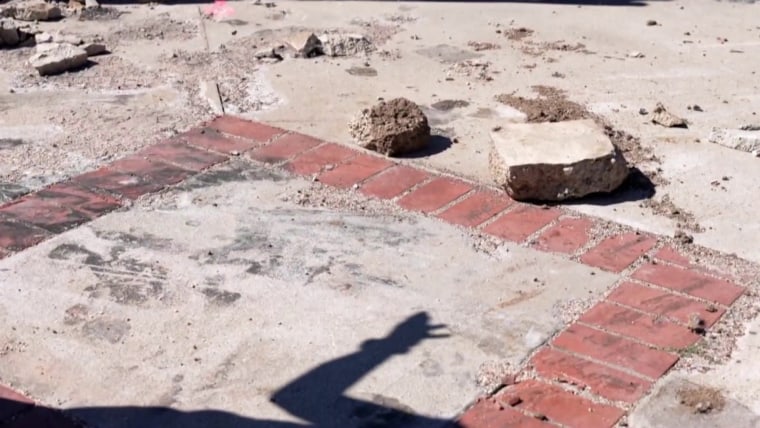
“One property, you’re doing one thing, and then, you know, they change things, and then it’s something totally different,” one said, adding as an example that some people’s driveways were removed and others were not as the orders shifted.
“It’s so excessive what was left,” the other worker said, describing cracked walls, visible ash and burned plastic trash cans that cleanup teams did not remove. “Those are all still contaminants that should have not been left behind.”
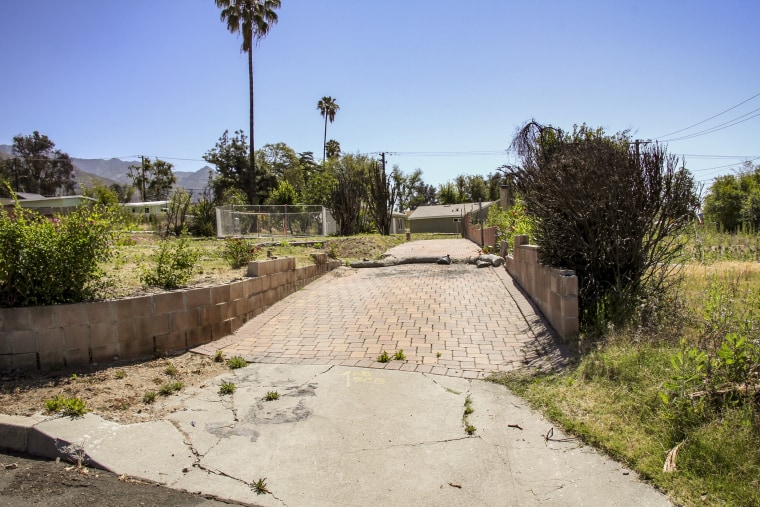
Caroline Chacon, the owner of a travel agency who lost her home of 17 years, said subcontractors left about half of her back patio, a scorched outdoor fireplace and chunks of concrete. Later, a sinkhole developed where her garage had been, filled with her broken pottery.
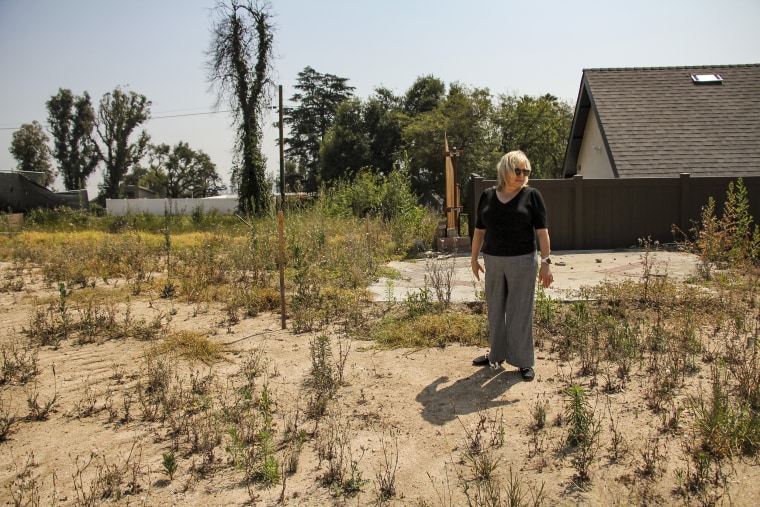
“It ended up being a lot less complete of a job than we were originally given to understand,” she said.
Matthew Blea, who works in cinematography and whose home also burned down, said that after the Army Corps cleared his lot, he sought free soil testing through aUCLA program then spent roughly $4,000 on additional testing and remediation.
“They didn’t go 6 inches down, which is what I thought they were going to do,” he said of the Army Corps, adding, “There was no mention or conversation about toxicity.”

In a fact sheet, the Army Corps listed the reasons it did not test soil: State and local laws do not require it, excavating beyond 6 inches would have slowed down the work, and there was not a clear baseline of what was in the soil before the fire.
Mohanty said that policy left subcontractors “unaccountable.”
Maj. Gen. Jason Kelly, the Army Corp’s deputy commanding general for civil and emergency operations, said any alleged inconsistencies in the cleanup were the result of experience.
“We continued to apply best practices and refine our approach to improve efficiency and safety,” he said. “What may appear as a shift in methods over time was actually the result of lessons learned in the field and the application of sound engineering judgment, all within the bounds of the mission scope and contract.”
‘The metals are off the charts’
Altadena these days can feel like a never-ending construction site. Saws buzz, trucks beep, and hammers clatter. Restaurants are filled with workers in dust-covered boots. On one street, a roadside stand sells visibility vests for work crews. Colorful signs along the roads advertise remediation and construction contractors next to posters proclaiming “Altadena strong” or “Altadena is not for sale.”
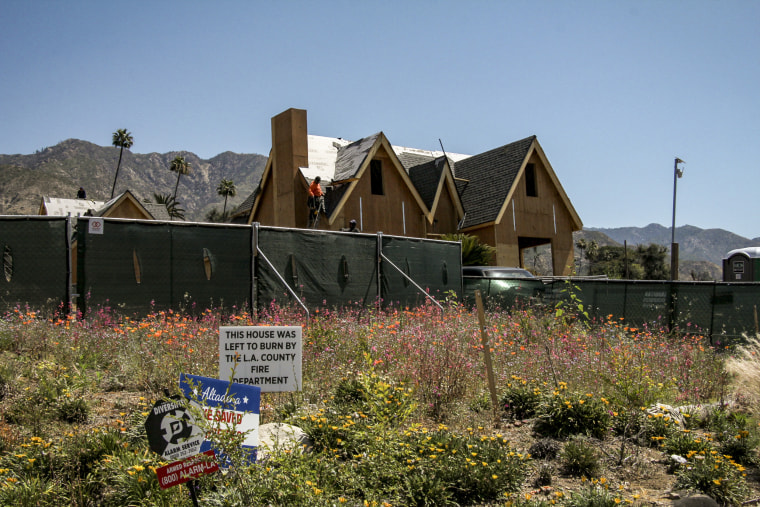
Newly framed construction stands next to burned-out lots filled with waist-high weeds or by picturesque homes that look pristine but sit empty as homeowners fight with their insurers about how to address the particles of heavy metals found inside.
“The lead is very high, the arsenic high, the beryllium is high, the chromium’s high,” said Dawn Bolstad-Johnson, an independent industrial hygienist who has tested about 150 homes affected by the Eaton and Palisades fires. Even after attempts at surface remediation, she added, she has found contamination inside walls, HVAC systems or dryer vents.
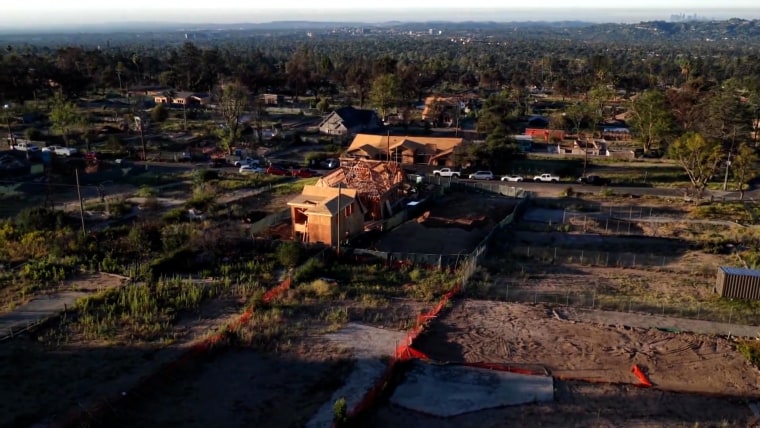
“Some homes have been deemed clean. You go in and you’re like, wow, it looks beautiful, you know? But when I get my swabs out, it doesn’t pass,” Bolstad-Johnson said.
Many Altadena homeowners say they have discovered contamination after remediation provided by their insurers.
François Tissot, a professor of geochemistry at the California Institute of Technology in Pasadena, has performed heavy metal testing on surfaces in more than 50 homes, including his own, where he found levels of lead about four times above federal limits. Tissot’s family is living elsewhere amid an ongoing dispute with his insurance company.
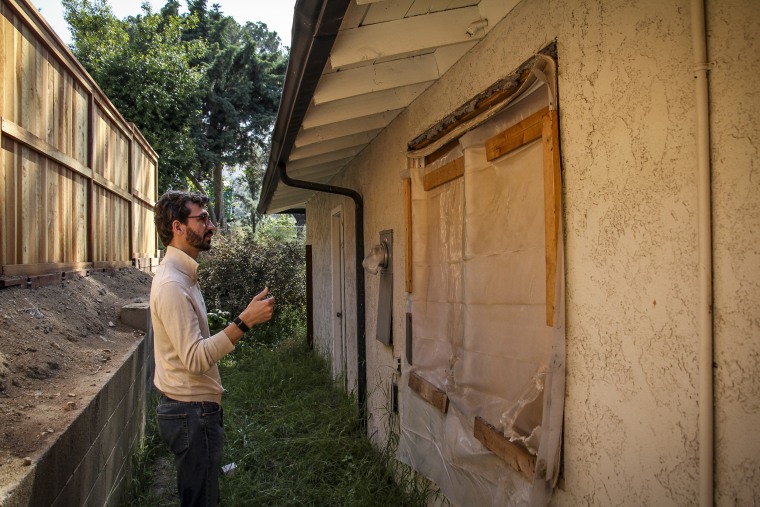
“My kids did not have to see the house burnt to ashes, and it avoided them a trauma,” he said. But now, Tissot added, he wants to demolish and rebuild his home because of the contamination.
In some ways, “it would have been much easier” had the house been destroyed, he said.
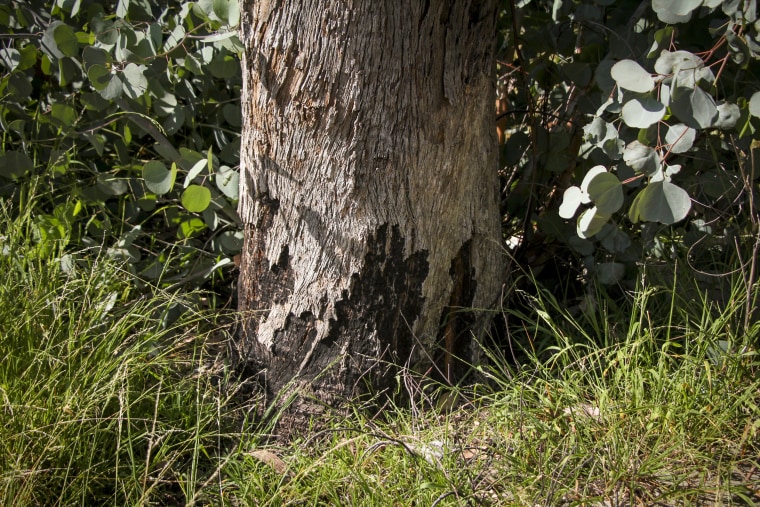
Other homeowners have reported health issues. One Altadena woman, who asked that her family’s names not be published to preserve her teenage son’s medical privacy, cleaned her smoke-damaged home herself wearing a respirator, then had her attic professionally remediated. But after the family moved back in, a test revealed elevated lead in her son’s blood.
“He’s doing OK. He’s starting a really gentle chelation treatment with his doctor,” the woman said.
After the family moved out for a second time, an industrial hygienist discovered high levels of lead and other metals in the house’s HVAC system, crawl space, attic and wall cavities.

Many homeowners face the looming expiration of the temporary housing assistance from their insurance companies. Tanya Veluz, a marriage and family therapist, said that her funding for that will expire in July but that the company she has hired to do remediation is still haggling with her insurer over the work’s scope.
In a couple of months, she will most likely have to start paying both her mortgage and rent.
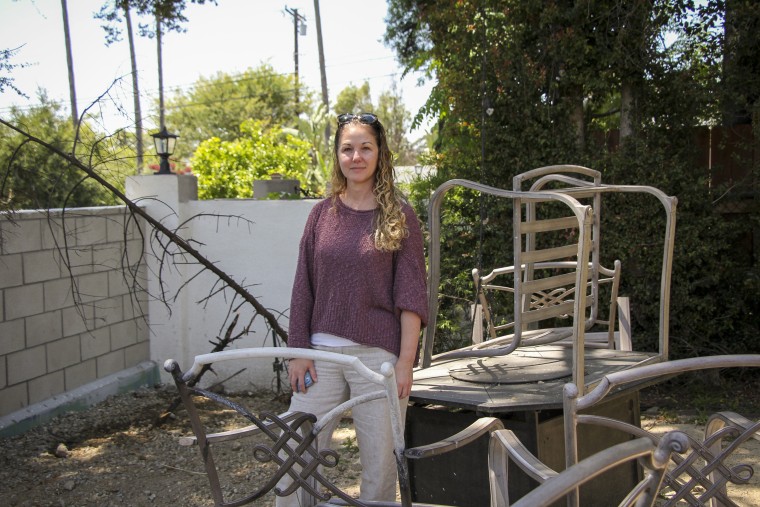
“It’s going to be really, really tight,” Veluz said, adding that she, her daughter and their two dogs might have to share a one-bedroom apartment. “I have a three-bedroom, two-bathroom house, and I can’t live there.”
Karen Collins, vice president of the American Property Casualty Insurance Association, said that insurance companies want people to feel safe returning to their homes but that the industry faces several challenges. For one, there are no established safety standards for residential exposure to many heavy metals. Some testing methods also are not peer-reviewed. And third, information about the average level of background contamination before the fires is lacking.
“There’s a scientific gap here,” she said.
Collins added that some testing companies prey on fearful residents and look for “everything under the sun,” without clear communication about whether the findings translate to health risks.
“People hear these concerns in the media, and then they want to get more testing, because they’ve heard something that plants that seed of fear,” she said. She was skeptical of Bolstad-Johnson’s methods and the media attention she has garnered.
Andrew Whelton, a professor of civil, environmental and ecological engineering at Purdue University in Indiana, has collected about 1,200 testing analyses from homeowners affected by the Palisades and Eaton Fires.He agreed there are issues with the process.
“There’s no standardization that I’ve found in the overall testing practices,” he said. “There is zero oversight.”
Whelton said he considers some of the contamination analyses he has seen excessive, while others were inadequate.
On one end of the spectrum, he said, “consultants are testing for things that have no regulatory standards and handing the testing reports to the property owners without context or interpretation.” On the other, some homes were assessed only for soot and ash.
“They didn’t look for lead. They didn’t look for asbestos,” Whelton said. “What we have is a Wild West where anything goes.”
A point of agreement: New regulations are needed
In the war between Altadena residents and their insurance companies, there is common ground: All want lawmakers to set clear standards for when it is safe to return home after an event like the Eaton Fire.

State leaders are working on it. A year ago, California’s Department of Insurance commissioned a task force to develop what it described as “long-overdue standards” for insurance coverage and cleanup of smoke-damaged homes. In a report, the task force, which includes Collins, wrote that there was more potential contamination from the Los Angeles-area fires than a typical wildfire, that indoor standards are urgently needed and that there should be training and certification programs for key players in wildfire cleanup.
To fill those gaps, state lawmakers have proposed several bills.
John Harabedian, a state assemblyman who represents Altadena, is behind one of the bills, which would create standards for environmental testing, contaminant removal and re-occupancy of smoke-damaged homes. The Eaton Fire residents’ advocacy group supports his proposal, while the insurance industry so far opposes it.
“Everyone just wants clarity,” Harabedian said.


No comments:
Post a Comment