Maui Ocean Center:8 Tenti-cool Facts About The Octopus
begin quote from:
Octopuses have three hearts, blue blood, and nine brains (one central and one in each of their eight arms)
.
They are also intelligent enough to use tools, solve puzzles, and
change the color and texture of their skin to camouflage themselves.
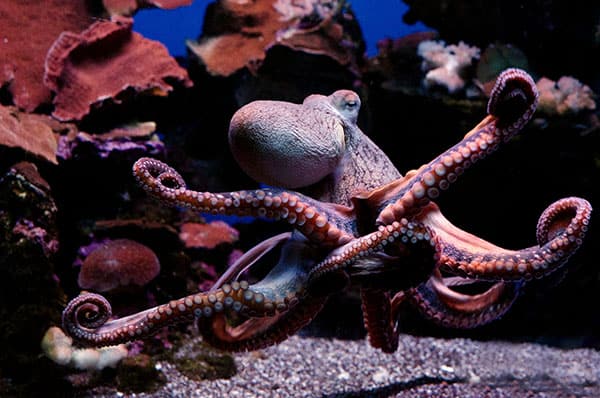
While often called "tentacles," their limbs are technically "arms"
because the suckers run along their entire length, not just the tips.
8 "tenti-cool" facts about the octopus
Nine brains:
An octopus has one central brain and a large cluster of nerve cells at
the base of each of its eight arms. This allows each arm to act
independently, a trait that helps with tasks like manipulating objects.
Three hearts:
Two hearts pump blood to the gills, while a third circulates it to the
rest of the body. The third heart stops beating when the octopus swims,
which may be why they prefer to crawl.
Blue blood:
Instead of iron-based hemoglobin, octopuses have copper-based
hemocyanin, which makes their blood blue. This is an adaptation that
helps them survive in cold, low-oxygen environments.
Arms, not tentacles:
The eight appendages are technically called arms because they have
suckers running the entire length. Tentacles, found in animals like
squids, only have suckers at the tips.
Intelligent and resourceful:
Octopuses are highly intelligent invertebrates that can solve puzzles,
use tools (like the coconut octopus that uses shells for protection),
and even learn from observation.
Masters of camouflage: They can change their skin's color, pattern, and texture to blend in with their surroundings.
Boneless wonders:
Lacking any bones, an octopus's only hard part is its beak. This makes
them incredibly flexible and able to squeeze into tiny spaces.
Ink-jet escape: When threatened, an octopus can release a cloud of ink to confuse predators and make a quick getaway by jet propulsion.
8 Tenti-cool Facts About The Octopus - Maui Ocean Center
Oct
3, 2018 — They can learn from observation, use tools, and solve
puzzles. An octopus has over 500 million neurons, of which 60% ar...
Maui Ocean Center
8 Tenti-cool Facts About The Octopus
October 4, 2018
Boneless, blue-blooded, slimy, and totally awesome, the
octopus has bewildered ocean lovers for centuries. From cultural
folklore to the gyotaku artists and sushi restaurants of Japan, the
octopus has influenced coastal cultures throughout the world. Here are 8
tenti-cool facts and reasons why the octopus is one most fascinating
animals beneath the waves.
1. The Hawaiian god Kanaloa takes the form of an octopus.
In Hawaiian culture, four main gods were worshipped: Kāne
(god of creation), Kū (god of war), Lono (god of agriculture), and
Kanaloa (god of the ocean). Kanaloa had several kinolau, or body forms,
that he could manifest into. The most associated form of Kanaloa is the
octopus.
2. They are rooted in Norwegian folklore, too.
In the 13th century Norse legend The Saga of Örvar-Oddr, the
protagonist encounters two large sea monsters in the Greenland Sea: the
Lyngbakr and Hafgufa. The Hafgufa is believed to be an early reference
to the Kraken, a legendary octopus or squid-like monster found in the
waters of Norway and Greenland. The Kraken is featured in various
fictional works and notoriously struck fear into the hearts of sailors, “It is the nature of this creature to swallow men and ships, and even whales and everything else within reach.”
3. They can learn from observation, use tools, and solve puzzles.
An octopus has over 500 million neurons, of which 60% are
located within its eight arms. Each arm can independently react to
environmental stimuli and carry out separate tasks at once. Octopuses at
Maui Ocean Center are given enrichment exercises, such as opening jars
containing food, to keep these highly intelligent animals engaged.
4. They have arms, not tentacles.
Contrary to popular belief (and our punny blog title),
octopuses don’t have tentacles. In the world of cephalopods (squids,
octopus, and nautilus), a tentacle has suckers only at the tip of its
appendage whereas an arm has suckers along the entire length.
5. They’re colorblind.
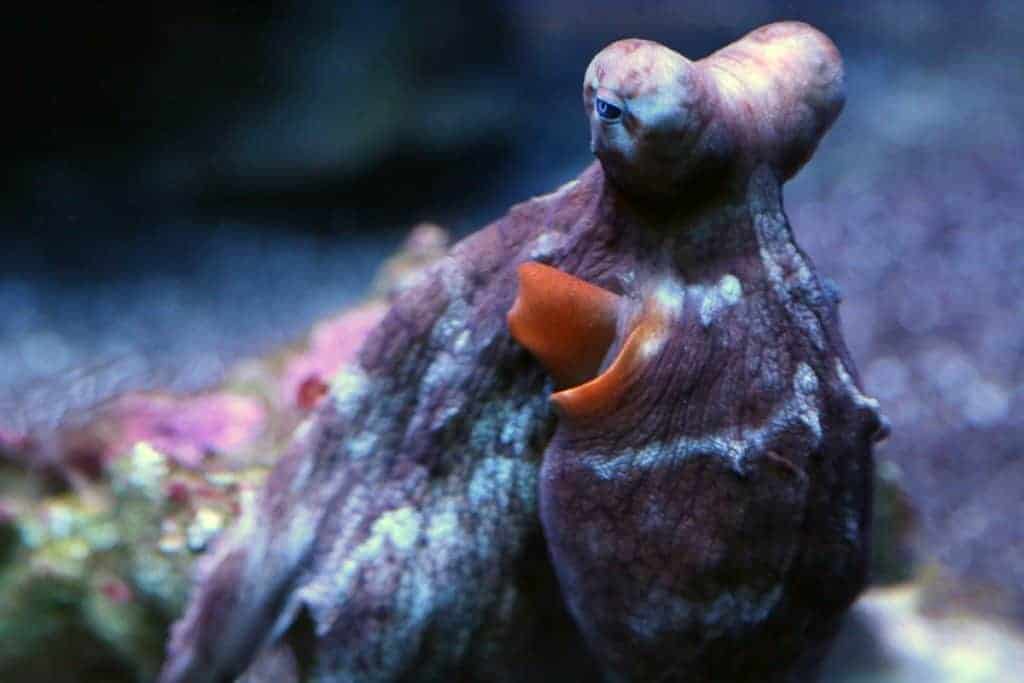
The octopus’s eye contains a single photoreceptor, meaning
it only sees black and white. Recent studies suggest that the octopus’s
unique pupil shape takes advantage of chromatic aberration (different
wavelengths come into focus at different distances). By rapidly focusing
its eye at different depths and taking light in from multiple
directions, an octopus may be able to distinguish different colors
despite technically being colorblind.
6. The Hawaiian word for octopus is he’e, not tako.
In the melting of cultures that is Hawaii, things often get
lost in translation. Tako, a common name for the octopus, is of Japanese
origin. The Hawaiian word for octopus is he’e.
7. Hawaiians fished for octopus using cowry shells.
Hawaiian fishermen (lawai’a) hauled octopuses from the
depths to their canoe using a special lure called the lu’e he’e, a
combination of a stone, cowry shell, and hook made from bone. Lawai’a
would drag the lu he’e along the ocean floor, lifting it methodically to
make the lure dance, which would cause an interested octopus to latch
on.
8. They have a beak… and a toothed tongue.
If the octopus wasn’t fascinating enough, consider that it
possesses a bird-like beak with a toothed tongue known as a radula. The
octopus’s beak helps it to pick apart crustaceans (crabs and lobsters)
as well as small fish. The beak is the only hard structure within the
octopus’s extremely flexible body. An octopus can fit through any hole
or crevice that is slightly larger than its beak.
On your next visit to Maui Ocean Center, you may encounter
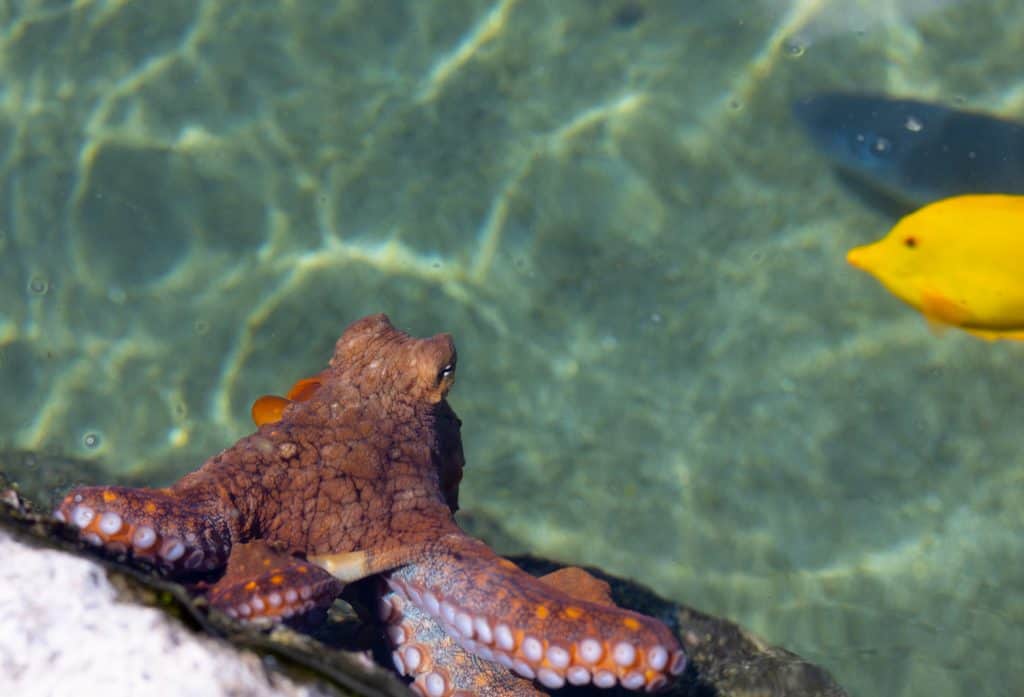
an octopus in the Mid Reef exhibit or occasionally in the outdoor Surge
Zone. Octopuses under Maui Ocean Center’s care are only here for a short
period of time before their return to the ocean. This ensures that
every octopus can complete its life’s purpose: to find a mate and
produce the next generation of octopuses!












No comments:
Post a Comment