I was watching a Grinch movie with one of my Grandsons where they had a musk Ox in it. However, the illustrator thought it was an overweight Reindeer. However, it looks exactly like this so it's a Musk Ox.
begin quote:


Native to the Arctic, it is noted for its thick coat and for the strong odor emitted by males during the seasonal rut, from which its name derives.

People also ask
Feedback
Things to know
Predators. What are the predators of the musk ox?
Habitat. What is the habitat of the musk ox?
Behavior. What is the behavior of the musk ox?
Diet. What is the diet of a musk ox?
Short videos
0:33


1:15
Videos
5:13
Feedback
What people are saying

16:57
We Found The Last Swedish Muskoxen - here's how
96.3K+ views · 2 days ago


Mossy Earth · YouTube
Conservation evidence champion
0:18
🔥Musk ox in Norwegian blizzard [OC]
300+ comments · 1 month ago

r/NatureIsFuckingLit
Reddit
0:19
Have
you ever wanted to see a baby muskox in the wild?? Well you can now! I
have a few spots left on my spring muskox & migratory birds
workshop. June 1-5th 2026
Link in bio 🔗
670+ likes · 1 day ago


sergiushannan_photography · Instagram
Alaska-based wildlife photographer


3:43
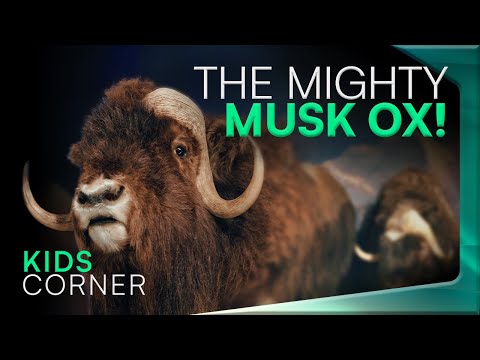
The Maskox: A Cold-Weather Marvel of God's Design | Kids Corner with David Rives
100+ views · 2 weeks ago

David Rives Ministries · YouTube
David Rives' organization


0:10
Musk Ox like it cold.
2.9K+ reactions · 3 weeks ago

exploreorg · Facebook
Animal & wildlife cams streaming

Swedish muskox population origins. Swedish
muskoxen face endangerment with only a few remaining, while Norway's
introduced population thrives, highlighting conservation's importance
and Ice Age survival.
Arctic habitat adaptations. Musk oxen thrive in extreme Arctic climates with thick fur, unique thermal regulation, and adaptations honed since the Ice Age.
Baby muskox development. Baby
muskox calves quickly adapt to the Arctic, standing within hours,
bonding with herds, and establishing social hierarchies through play.
Show 1 more

Musk oxen live in the frozen Arctic and roam the tundra in search of the roots, mosses, and lichens that sustain them.

Nov 7, 2024 — The muskox is the iconic species of the Greenland bioregion (NA1) located in the Subarctic America realm.

The muskox (Ovibos moschatus) is a stocky, long-haired animal with a slight shoulder hump and a very short tail.

Muskoxen are herbivores adapted to survive in areas that are barren for much of the year. They cannot dig through deep snow, so they rely on wind to uncover ...

Muskoxen are known as the shaggy survivors of the Ice Age. Today muskoxen are found in northern Canada, Greenland, and Alaska.

The Musk Ox Farm is a nonprofit organization dedicated to gentle musk ox husbandry, production of qiviut, and education to the public.

Apr 26, 2022 — Musk oxen are large, hoofed mammals. They have an extremely thick and shaggy coat. It is two-layered with the outermost layer consisting of ...
People also search for
Overview
The
muskox is a hoofed mammal of the family Bovidae. Native to the Arctic,
it is noted for its thick coat and for the strong odor emitted by males
during the seasonal rut, from which its name derives. This musky odor
has the effect of attracting females during mating season. Wikipedia
Speed: 37 mph (Maximum, Adult)
Trophic level: Herbivorous Encyclopedia of Life
Conservation status: Least Concern (Population stable) Encyclopedia of Life
Mass: 400 – 900 lbs (Adult)
Height: 3.6 – 4.9 ft. (Adult, At Shoulder)
Scientific name: Ovibos moschatus
Lifespan: 12 – 20 years (Adult, In the wild)
Feedback
People also search for


No comments:
Post a Comment