I think the main sources of our oxygen we breathe on land is Trees and plants. Without Trees and plants and diatoms in the oceans of the world we could not breathe air or oxygen. Yes it's true that 80 percent of our air is likely Nitrogen but we also need the oxygen just like all the fish in the sea and all animals and birds do on earth to survive.
So, to separate out Carbon dioxide (which we breathe out as human beings from the oxygen we need to stay alive) we need trees and plants and diatoms and other things in the ocean we could not breathe even here on land. We are Totally dependent and depending on Trees and plants and Diatoms and other thing on earth.
As I got into mt outside hot tub and spa the tree said to me the title here which is "We live partly because o you." I took it to mean all human beings and everything that breathes here on earth.
For TRees breathe in the carbon dioxide and give us back oxygen every day of the year.
Here is what I found about the oxygen makers in the oceans of the world:
begin quote:
 An official website of the United States government.
Here's how you know we're official.
An official website of the United States government.
Here's how you know we're official.

How much oxygen comes from the ocean?
About half of Earth’s oxygen comes from the ocean; about the same amount is consumed by marine life.
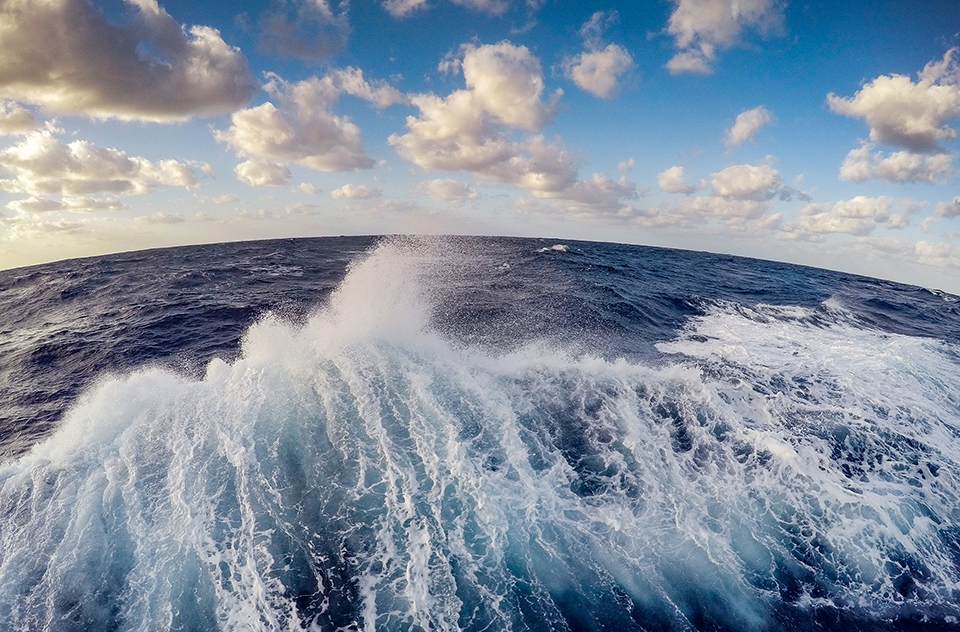
The surface layer of the ocean is teeming with photosynthetic plankton. Though they're invisible to the naked eye, they produce more oxygen than the largest redwoods.
Scientists estimate that roughly half of the oxygen production on Earth comes from the ocean. The majority of this production is from oceanic plankton — drifting plants, algae, and some bacteria that can photosynthesize. One particular species, Prochlorococcus, is the smallest photosynthetic organism on Earth. But this little bacteria produces up to 20% of the oxygen in our entire biosphere. That’s a higher percentage than all of the tropical rainforests on land combined.
Calculating the exact percentage of oxygen produced in the ocean is difficult because the amounts are constantly changing. Scientists can use satellite imagery to track photosynthesizing plankton and estimate the amount of photosynthesis occurring in the ocean, but satellite imagery cannot tell the whole story. The amount of plankton changes seasonally and in response to changes in the water’s nutrient load, temperature, and other factors. Studies have shown that the amount of oxygen in specific locations varies with time of day and with the tides.
It’s important to remember that although the ocean produces at least 50% of the oxygen on Earth, roughly the same amount is consumed by marine life. Like animals on land, marine animals use oxygen to breathe, and both plants and animals use oxygen for cellular respiration. Oxygen is also consumed when dead plants and animals decay in the ocean. There is also oxygen in the atmosphere which has accumulated over hundreds of millions of years. As land animals, most of the oxygen humans breathe comes from this source.
This is particularly problematic when algal blooms die and the decomposition process uses oxygen faster than it can be replenished. This can create areas of extremely low oxygen concentrations, or hypoxia. These areas are often called dead zones, because the oxygen levels are too low to support most marine life. NOAA’s National Centers for Coastal Ocean Science conducts extensive research and forecasting on algal blooms and hypoxia to lessen the harm done to the ocean ecosystem and human environment.


No comments:
Post a Comment