begin quote from:
Ancient city emerges after extreme drought
A 3,400-year-old city in Iraq emerges from underwater after an extreme droughtBy Megan Marples, CNN
Updated 1:06 PM ET, Mon June 20, 2022
 Photos: 3,400 year-old city in Iraq revealed after droughtResearchers tightly covered the ruins with plastic tarps to prevent the ancient site from water erosion.Hide Caption4 of 7Photos: 3,400 year-old city in Iraq revealed after droughtThe cuneiform tablets have yet to be studied, but researchers hope they detail the fate of the city after a devastating earthquake.Hide Caption5 of 7Photos: 3,400 year-old city in Iraq revealed after droughtArchaeologists had to work in extreme weather, like storms and freezing temperatures, to excavate the settlement before it disappeared underwater.Hide Caption6 of 7Photos: 3,400 year-old city in Iraq revealed after droughtIt's virtually a miracle the vessels with the unfired clay tablets survived for decades underwater, according to researchers.Hide Caption7 of 7
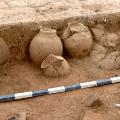
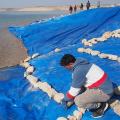
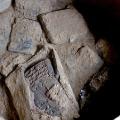
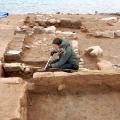
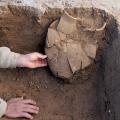
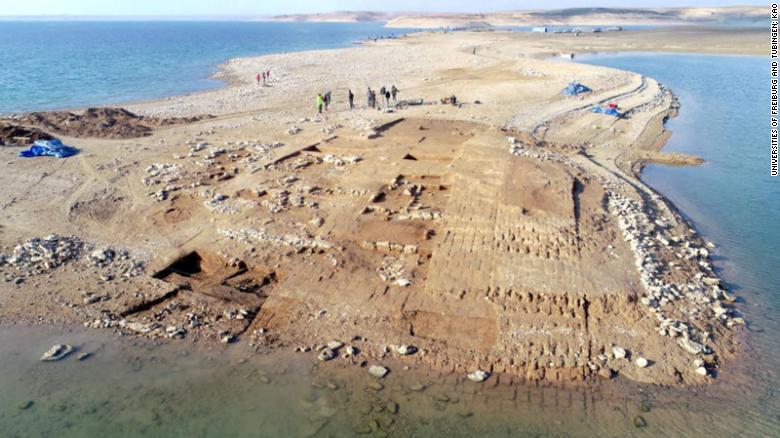 Photos: 3,400 year-old city in Iraq revealed after droughtAn ancient city in Iraq is believed to be Zakhiku, a settlement in the Mittani Empire that reigned from 1550 to 1350 BC.Hide Caption1 of 7Photos: 3,400 year-old city in Iraq revealed after droughtArchaeologists raced against the clock to excavate the site before rising water levels engulfed the city again.Hide Caption2 of 7Photos: 3,400 year-old city in Iraq revealed after droughtFive ceramic vessels were discovered among the ruins and contained over 100 cuneiform tablets. They are likely from the Middle Assyrian Period, directly followng the Mittani Empire's reign.Hide Caption3 of 7Photos: 3,400 year-old city in Iraq revealed after droughtResearchers tightly covered the ruins with plastic tarps to prevent the ancient site from water erosion.Hide Caption4 of 7Photos: 3,400 year-old city in Iraq revealed after droughtThe cuneiform tablets have yet to be studied, but researchers hope they detail the fate of the city after a devastating earthquake.Hide Caption5 of 7Photos: 3,400 year-old city in Iraq revealed after droughtArchaeologists had to work in extreme weather, like storms and freezing temperatures, to excavate the settlement before it disappeared underwater.Hide Caption6 of 7Photos: 3,400 year-old city in Iraq revealed after droughtIt's virtually a miracle the vessels with the unfired clay tablets survived for decades underwater, according to researchers.Hide Caption7 of 7
 Photos: 3,400 year-old city in Iraq revealed after droughtAn ancient city in Iraq is believed to be Zakhiku, a settlement in the Mittani Empire that reigned from 1550 to 1350 BC.Hide Caption1 of 7Photos: 3,400 year-old city in Iraq revealed after droughtArchaeologists raced against the clock to excavate the site before rising water levels engulfed the city again.Hide Caption2 of 7Photos: 3,400 year-old city in Iraq revealed after droughtFive ceramic vessels were discovered among the ruins and contained over 100 cuneiform tablets. They are likely from the Middle Assyrian Period, directly followng the Mittani Empire's reign.Hide Caption3 of 7Photos: 3,400 year-old city in Iraq revealed after droughtResearchers tightly covered the ruins with plastic tarps to prevent the ancient site from water erosion.Hide Caption4 of 7
 Sign up for CNN's Wonder Theory science newsletter. Explore the universe with news on fascinating discoveries, scientific advancements and more.
(CNN)A sprawling 3,400-year-old city emerged in Iraq after a reservoir's water level swiftly dropped due to extreme drought.
Kurdish and German archaeologists excavated the settlement in the Mosul reservoir, along the Tigris River in the Kurdistan region of northern Iraq, in January and February. The project was in partnership with the Directorate of Antiquities and Heritage in Duhok to preserve the area's cultural heritage for future generations.The archaeological site, Kemune, is believed to be the Bronze Age city Zakhiku, a major hub of the Mittani Empire that reigned from 1550 to 1350 BC. The kingdom's territory stretched from the Mediterranean Sea to northern Iraq, according to Ivana Puljiz, junior professor in the department of near eastern archaeology and assyriology at the University of Freiburg in Breisgau, Germany, and one of the directors of the project.A race against time
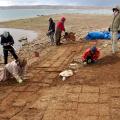
Zakhiku was submerged underwater after the Iraqi government built the Mosul Dam in the 1980s and has rarely seen the light of day since then.After Puljiz heard the city had reemerged, her team hurried to excavate the site because it was unknown when the water levels would rise again.Enter your email to sign up for the Wonder Theory newsletter.close dialog"Due to the enormous time pressure, we dug in freezing temperatures, snow, hail, rain, even storms, as well as the occasional sunny day, not knowing when the water would rise again and how much time we would have," Puljiz said.The ancient city is now resubmerged, but researchers were able to catalog much of the site.A palace had already been documented when the city briefly emerged in 2018, but multiple additional structures were documented during the latest excavation. Some of the discoveries include a fortification complete with towers and walls and a storage building multiple stories tall.Much of the structures were made of sun-dried mud bricks, which ordinarily would not hold up well underwater, researchers said. However, Zakhiku suffered from an earthquake around 1350 BC, and parts of the upper walls collapsed and covered the buildings.Preserving the past
Little is known about the ancient Mittani people who built the city, largely due to the fact that researchers have not identified the empire's capital or discovered their archives, Puljiz said. However, certain artifacts unearthed during the latest excavation could help provide insight.Archaeologists found five ceramic vessels holding over 100 clay cuneiform tablets, dating back to closely after the earthquake event. They are believed to be from the Middle Assyrian period, which lasted from 1350 to 1100 BC, and could shed light on the city's demise and the rise of Assyrian rule in the area, according to a news release."It is close to a miracle that cuneiform tablets made of unfired clay survived so many decades under water," said Peter Pfälzner, professor of near eastern archaeology at University of Tübingen and one of the excavation directors, in a statement.The tablets have not yet been deciphered, but Puljiz hypothesized they belonged to a private archive."I am curious next to see what the study of the cuneiform texts will reveal about the fate of the city and its inhabitants after the devastating earthquake," she said.All artifacts that were excavated, including the tablets, are being housed in the Duhok National Museum.Before the city once again disappeared underwater, researchers covered the ruins in tight-fitting plastic sheets held down with stones and gravel. Puljiz hopes these measures will protect the ancient site from water erosion and prevent it from disappearing altogether.


No comments:
Post a Comment