

Thinking through the transition

begin quote from:
Trump's learning curve starts with those he insulted
One president, two Americas


These are Trump's key promises for his first 100 days 01:02
Washington (CNN)The transformation of Donald Trump begins Thursday.
The freewheeling, acerbic, often vulgar and offensive maverick of the campaign trail has 70 days to become a president.
Trump
will begin the process with a remarkable meeting with President Barack
Obama at the White House, an encounter between antagonists who never
bothered to hide their visceral dislike for one another.
After
his stunning election victory over Hillary Clinton, Trump also has a
dizzying list of tasks to fulfill, and the White House meeting is only
the start of his hectic agenda before Inauguration Day.

These are Trump's key promises for his first 100 days 01:02
First,
the President-elect must make a stab at uniting the country, after a
scorched-earth campaign in which he consciously tore at the nation's
gender, racial and economic fault lines to build a movement to win
power. He's practicing some unusual humility.
"I
pledge to every citizen of our lands that I will be the president for
the American people," Trump said in his victory speech Tuesday. "For
those who have chosen not to support me in the past, for which there
were a few people, I'm reaching out to you for your guidance and your
help so we can work together and unify our great country."
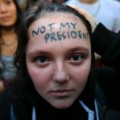
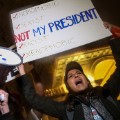
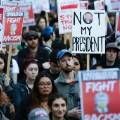
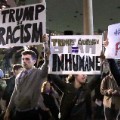
But his challenges were on clear display Wednesday as protests broke out from Boston to Los Angeles.

Photos: Protests against Trump election across US
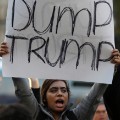
A protester holds up a "Dump Trump" sign in downtown Seattle on November 9.
Hide Caption
10 of 19

Photos: Protests against Trump election across US
Thousands
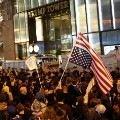
march down Fifth Avenue in New York on November 9. Authorities
estimated as many as 5,000 people protested the real estate mogul's
victory outside Trump Tower.
Hide Caption
11 of 19

Photos: Protests against Trump election across US
Protesters rally against Trump in New York's Union Square on November 9.
Hide Caption
12 of 19

Photos: Protests against Trump election across US
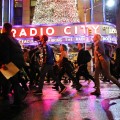
Demonstrators march past Radio City Music Hall in New York on November 9.
Hide Caption
13 of 19

Photos: Protests against Trump election across US
People
listen to speakers protesting Trump's election in Seattle on November
9. Many cited the polarizing tenor of his campaign that they say stoked
xenophobic fears.
Hide Caption
14 of 19

Photos: Protests against Trump election across US
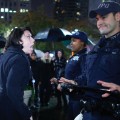
A woman argues with police officers during a protest in New York on November 9.
Hide Caption
15 of 19

Photos: Protests against Trump election across US
Demonstrators gather before the start of an anti-Trump rally on Boston Common on November 9.
Hide Caption
16 of 19

Photos: Protests against Trump election across US
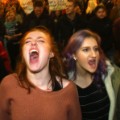
Sasha Savenko, left, and Sydney Kane join thousands of protesters in Seattle on November 9.
Hide Caption
17 of 19

Photos: Protests against Trump election across US
Crowds
rally outside Trump Tower in New York on November 9. Fifteen
protesters were arrested there for disorderly conduct, a police
spokesman said.
Hide Caption
18 of 19

Photos: Protests against Trump election across US
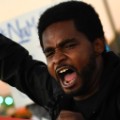
Charles Watkins speaks out at a Trump protest rally in Denver on November 9.
Hide Caption
19 of 19

Photos: Protests against Trump election across US
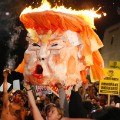
Protesters set an effigy of Donald Trump afire outside Los Angeles City Hall on Wednesday, November 9. Tens of thousands rallied in at least 25 US cities to protest Trump's unexpected victory in the divisive 2016 presidential election. Dozens were arrested.
Hide Caption
1 of 19

Photos: Protests against Trump election across US
Demonstrators march down Second Avenue in Seattle on November 9.
Hide Caption
2 of 19

Photos: Protests against Trump election across US
A protester yells during an anti-Trump rally in Boston on November 9.
Hide Caption
3 of 19

Photos: Protests against Trump election across US
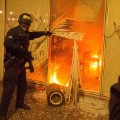
Police
respond to a fire set by anti-Trump protesters in Oakland, California,
on November 9. Police said some protesters threw Molotov cocktails,
rocks and fireworks at officers.
Hide Caption
4 of 19
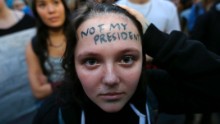
Photos: Protests against Trump election across US
Clair Sheehan takes part in a protest against the President-elect in downtown Seattle on November 9.
Hide Caption
5 of 19

Photos: Protests against Trump election across US
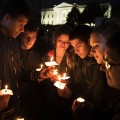
A crowd gathers in front of the White House in Washington for a candlelight vigil on November 9.
Hide Caption
6 of 19

Photos: Protests against Trump election across US
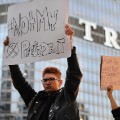
Protesters display anti-Trump signs near Trump International Hotel and Tower in Chicago on November 9.
Hide Caption
7 of 19

Photos: Protests against Trump election across US
One demonstrator consoles another during a protest at Washington Square Park in New York on November 9.
Hide Caption
8 of 19

Photos: Protests against Trump election across US
Anti-Trump protesters take to the streets in Philadelphia on November 9.
Hide Caption
9 of 19
Photos: Protests against Trump election across US
A protester holds up a "Dump Trump" sign in downtown Seattle on November 9.
Hide Caption
10 of 19
Photos: Protests against Trump election across US
Thousands
march down Fifth Avenue in New York on November 9. Authorities
estimated as many as 5,000 people protested the real estate mogul's
victory outside Trump Tower.
Hide Caption
11 of 19
Photos: Protests against Trump election across US
Protesters rally against Trump in New York's Union Square on November 9.
Hide Caption
12 of 19
Photos: Protests against Trump election across US
Demonstrators march past Radio City Music Hall in New York on November 9.
Hide Caption
13 of 19
Photos: Protests against Trump election across US
People
listen to speakers protesting Trump's election in Seattle on November
9. Many cited the polarizing tenor of his campaign that they say stoked
xenophobic fears.
Hide Caption
14 of 19
Photos: Protests against Trump election across US
A woman argues with police officers during a protest in New York on November 9.
Hide Caption
15 of 19
Photos: Protests against Trump election across US
Demonstrators gather before the start of an anti-Trump rally on Boston Common on November 9.
Hide Caption
16 of 19
Photos: Protests against Trump election across US
Sasha Savenko, left, and Sydney Kane join thousands of protesters in Seattle on November 9.
Hide Caption
17 of 19
Photos: Protests against Trump election across US
Crowds
rally outside Trump Tower in New York on November 9. Fifteen
protesters were arrested there for disorderly conduct, a police
spokesman said.
Hide Caption
18 of 19
Photos: Protests against Trump election across US
Charles Watkins speaks out at a Trump protest rally in Denver on November 9.
Hide Caption
19 of 19
Photos: Protests against Trump election across US
Protesters set an effigy of Donald Trump afire outside Los Angeles City Hall on Wednesday, November 9. Tens of thousands rallied in at least 25 US cities to protest Trump's unexpected victory in the divisive 2016 presidential election. Dozens were arrested.
Hide Caption
1 of 19
Photos: Protests against Trump election across US
Demonstrators march down Second Avenue in Seattle on November 9.
Hide Caption
2 of 19
Photos: Protests against Trump election across US
A protester yells during an anti-Trump rally in Boston on November 9.
Hide Caption
3 of 19
Photos: Protests against Trump election across US
Police
respond to a fire set by anti-Trump protesters in Oakland, California,
on November 9. Police said some protesters threw Molotov cocktails,
rocks and fireworks at officers.
Hide Caption
4 of 19
Photos: Protests against Trump election across US
Clair Sheehan takes part in a protest against the President-elect in downtown Seattle on November 9.
Hide Caption
5 of 19
Photos: Protests against Trump election across US
A crowd gathers in front of the White House in Washington for a candlelight vigil on November 9.
Hide Caption
6 of 19
Photos: Protests against Trump election across US
Protesters display anti-Trump signs near Trump International Hotel and Tower in Chicago on November 9.
Hide Caption
7 of 19
Photos: Protests against Trump election across US
One demonstrator consoles another during a protest at Washington Square Park in New York on November 9.
Hide Caption
8 of 19
Photos: Protests against Trump election across US
Anti-Trump protesters take to the streets in Philadelphia on November 9.
Hide Caption
9 of 19
Photos: Protests against Trump election across US
A protester holds up a "Dump Trump" sign in downtown Seattle on November 9.
Hide Caption
10 of 19

Trump's
meeting with Obama promises to be one of the most awkward encounters
ever between a president and his successor. The President-elect's agenda
is diametrically opposed to Obama, including the repeal of his
signature health care law.
Trump
built his political career and appeal to what eventually became his
base with his crusade to prove that Obama was not a natural born citizen
and was not therefore eligible for the presidency. Many Democrats found
his antics racist and deeply offensive to the first African-American
president.
Partly spurred by his
contempt for Trump, Obama used the power of his office like no other
president before him to make the case on the campaign trail that his
potential successor was essentially un-American, unfit for the
presidency and too risky to be trusted with the nuclear codes.
"The
president made a forceful argument and he stands by that argument, but
the time for making that argument has passed," White House spokesman
Josh Earnest said Wednesday. "The American people rendered their
judgment, and President Obama doesn't get to choose his successor, the
American people do, and they did."

Preserving
the integrity of American democracy makes it incumbent on Obama to
ensure the peaceful transition of power, despite his own deep
reservations and antipathy toward his successor.
Trump
is also under immediate pressure to build a relationship with
Republican leaders, including House Speaker Paul Ryan and Senate
Majority leader Mitch McConnell, who have often viewed him with deep
skepticism but are now crucial to his agenda .
Trump
must build an administration that is ready to hit the ground running
January 20. And perhaps his most daunting assignment is building a
national security structure from scratch, and bringing his own sketchy
foreign policy and national security credentials up to speed.
Every
president who walks into the Oval Office faces an adjustment to the
inhuman demands of the presidency. Obama is fond of saying that only
problems that no one else can solve reach the President's desk.

But
Trump is the only man ever to win the presidency with no political,
diplomatic or military executive experience, so his learning curve to
becoming the most powerful man in the world will be even steeper.
Trump
is no longer on the campaign trail and is not therefore subject to the
same pressures that a candidate faces. So in a sense, the transition
allows him to reset and at least attempt to adopt a more presidential
posture.
His task will be
exacerbated by the fact that he appears on track to lose the popular
vote to Clinton, even though he won the electoral college -- a factor
that undercuts any claims of a mandate.
Clinton's
2008 campaign manager Patti Solis Doyle, a CNN contributor, said Trump
needs to make amends to Americans insulted by his conduct -- including
African-Americans, women and Hispanics.
"I
think he needs to start with an apology — honestly," she said on CNN's
"The Lead." Given the President-elect's reluctance to admit he is wrong,
that step at least seems unlikely.
Trump's
new audience stretches beyond Washington and the United States. US
allies were alarmed by Trump's victory, given his criticism of US
alliances overseas and hazy knowledge of defense and nuclear doctrine.


What classified info will Trump have access to now? 01:17
Adversaries
like Russia and China will already be gaming out how best they can take
advantage of their inexperienced new counterpart in Washington.
While
Trump has the advantage of a ready-made domestic program given
Republican control of Congress, he has no such luxury when it comes to
national security policy.
Trump's
foreign policy team also lacks a diplomatic heavy hitter respected
abroad: speculation is mounting that he will bring in someone who is a
known quantity overseas as Secretary of State — someone like Sen. Bob
Corker, who heads the Senate Foreign Relations Committee.
He
has just over two months to staff the State Department, Pentagon, his
White House National Security staff, install new leadership at the
Intelligence Agencies and begin to install top diplomatic envoys
overseas.
It would be a daunting
task for any president. Trump is further handicapped by the fact that a
huge chunk of the Republican national security establishment, alarmed by
his volatile temperament and rudimentary knowledge, defected en masse
to Clinton.
But the most fundamental question facing Trump may be his own temperament.

The
idea that the President-elect was too erratic and volatile to be
commander-in-chief was at the center of Clinton's campaign, and many
Americans and foreigners alike worry that his inauguration will usher in
a period full of danger and risks.
Trump
showed at times on the campaign trail that he could be disciplined.
Such a demeanor will be even more crucial now because a stray word from a
president who can send financial markets tumbling or send foreign
armies onto red alert.
The transition period will be a time for him to try on his new role as a statesman.
The
question is whether he will be the version of Trump who vowed to throw
Clinton in jail or someone with a personality more becoming of a
commander in chief.
"Is this the
Donald Trump who wanted to ban all Muslims coming into America?" CNN
contributor Matt Lewis, a conservative author, said on CNN Wednesday.
"Or is this the Donald Trump that sounded a much more conciliatory last
night?
He added: "I hope that he
was sort of fronting a little bit to win the election and that he will
actually govern in a more statesmanlike manner."


No comments:
Post a Comment