begin quote from:
Diet sodas may be tied to dementia risk
Diet sodas may be tied to stroke, dementia risk

Photos: How much sugar is in that drink?
Milk: Generic skim milk – An 8-ounce glass of skim milk has about 11 grams of sugar. A single Starburst candy has 2.7 grams.
Hide Caption
10 of 18

Photos: How much sugar is in that drink?
Milk: Silk Vanilla Soymilk – A glass of vanilla soymilk has about 8 grams of sugar, which is equal to the amount found in three Starbursts.
Hide Caption
11 of 18

Photos: How much sugar is in that drink?
Milk: Silk Almond Milk Original – A glass of original almond milk contains 7 grams of sugar. Unsweetened almond milk has 0 grams.
Hide Caption
12 of 18
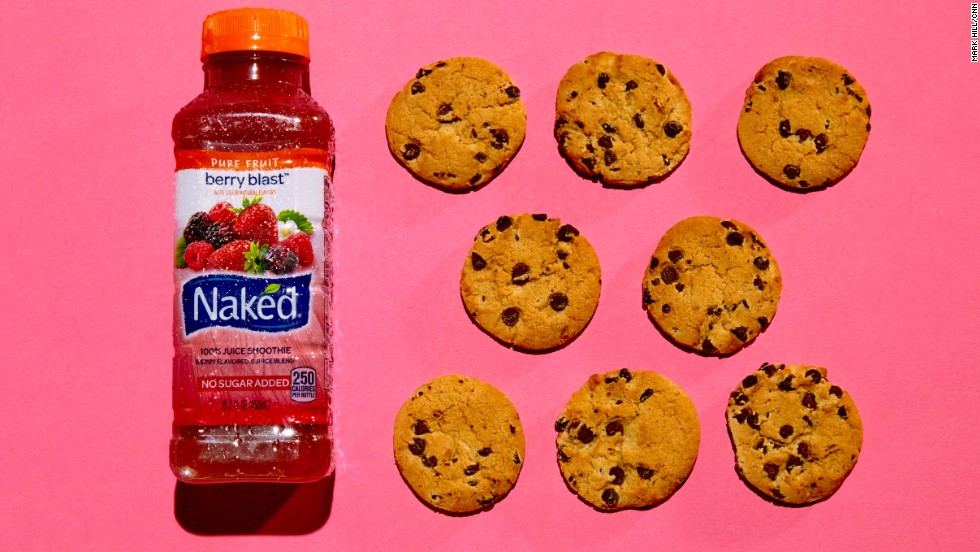
Photos: How much sugar is in that drink?
Juice smoothie: Naked Berry Blast – The
15.2-ounce bottle of Naked Berry Blast has 29 grams of sugar. Each of
these eight Chips Ahoy! cookies contains about 3.6 grams of sugar.
Hide Caption
13 of 18

Photos: How much sugar is in that drink?
Juice smoothie: Bolthouse Farms Berry Boost – You'd
consume 24 grams of sugar by drinking this Bolthouse Farms Berry Boost
15.2-ounce bottle -- or by eating six Chips Ahoy! cookies.
Hide Caption
14 of 18
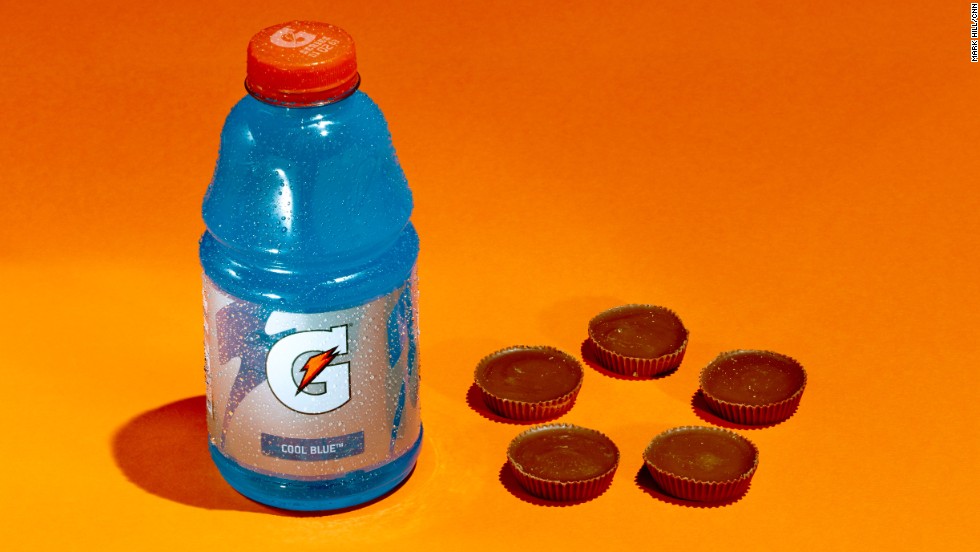
Photos: How much sugar is in that drink?
Sports drink: Gatorade Thirst Quencher Cool Blue – This
32-ounce Gatorade bottle has 56 grams of sugar, the same that can be
found in approximately five Reese's Peanut Butter Cups.
Hide Caption
15 of 18

Photos: How much sugar is in that drink?
Sports drink: Powerade Mountain Berry Blast – Powerade's Mountain Berry Blast also has 56 grams of sugar. Each of these five Reese's cups contains about 11 grams of sugar.
Hide Caption
16 of 18

Photos: How much sugar is in that drink?
Iced coffee: Starbucks Iced Flavored Latte – A
Grande Starbucks Iced Flavored Latte with 2% milk and your choice of
syrup has about 28 grams of sugar. The same amount of sugar is in 2.5
Krispy Kreme donuts.
Hide Caption
17 of 18

Photos: How much sugar is in that drink?
Iced coffee: Dunkin Donuts Iced Caramel Latte – A 16-ounce Dunkin Donuts Iced Caramel Latte has 37 grams of sugar. Each Krispy Kreme donut has about 11 grams of sugar.
Hide Caption
18 of 18
Photos: How much sugar is in that drink?
While
food accounts for a large portion of the added sugar in our diet, many
experts recommend cutting back on sugary beverages to reduce daily
intake. Consumption of sugary drinks might lead to an estimated 184,000
adult deaths each year worldwide, according to research published in the journal Circulation, an update of a 2013 American Heart Association conference presentation.
In the following slides, we compare the amount of sugar found in some
of America's top-selling beverages -- according to Beverage Industry
magazine's 2013 State of the Industry Report -- to the sugar found in common sugary snacks.
Hide Caption
1 of 18

Photos: How much sugar is in that drink?
Soda: Coca-Cola – A
20-ounce bottle of Coca-Cola Classic contains 65 grams of sugar, which
is the same amount of sugar found in five Little Debbie Swiss Rolls.
Hide Caption
2 of 18

Photos: How much sugar is in that drink?
Soda: Pepsi – A 20-ounce bottle of Pepsi contains 69 grams of sugar. Each Little Debbie Swiss Roll contains an estimated 13 grams of sugar.
Hide Caption
3 of 18

Photos: How much sugar is in that drink?
Juice: Minute Maid 100% Apple Juice – This
15.2-ounce bottle contains 49 grams of sugar, which is about the amount
of sugar in 10 Oreos. Sugar occurs naturally in fruit, but natural
sugar isn't any different in chemical structure from what most people
refer to as added sugar. The body processes both the same way. One
benefit of eating whole fruit is the fiber that helps slow absorption;
that fiber is generally lost in the juice-making process.
Hide Caption
4 of 18

Photos: How much sugar is in that drink?
Juice: SunnyD Original – A 16-ounce bottle of SunnyD Original contains 28 grams of sugar. Each these six Oreos contains about 4.6 grams of sugar.
Hide Caption
5 of 18
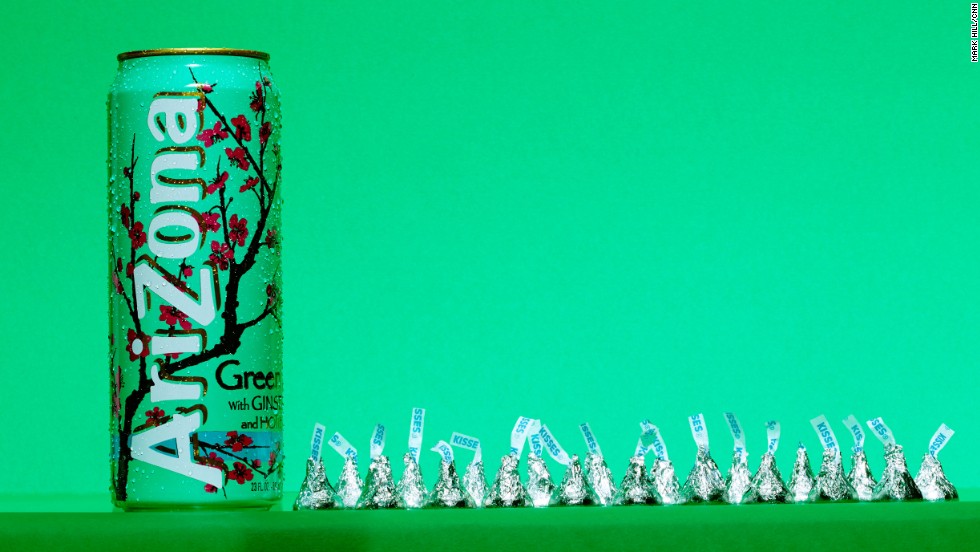
Photos: How much sugar is in that drink?
Tea: Arizona Green Tea with Ginseng & Honey – A 23-ounce can of Arizona Green Tea contains 51
grams of sugar, which is about the same as can be found in 20 Hershey's
Kisses. The World Health Organization recently proposed new guidelines
that recommend consuming less than 5% of our total daily calories from
added sugars. For an adult at a normal body mass index, or BMI, 5% would
be around 25 grams of sugar -- or six teaspoons.
Hide Caption
6 of 18

Photos: How much sugar is in that drink?
Tea: Lipton Lemon Iced Tea – There
are 32 grams of sugar in this 20-ounce bottle of iced tea. Each of
these 12 Hershey's Kisses contains approximately 2.5 grams of sugar.
Hide Caption
7 of 18

Photos: How much sugar is in that drink?
Energy drink: Red Bull – Three-quarters
of a cup of generic-brand frosted flakes contains about 11 grams of
sugar. This 16-ounce can of Red Bull has 52 grams of sugar. Red Bull and
many of the companies in this gallery offer lower or no-sugar versions
of their drinks. "Nearly half -- 45% -- of all non-alcoholic beverages
contain 0% (sugar)," said Christopher Gindlesperger, spokesman for the
American Beverage Association.
Hide Caption
8 of 18

Photos: How much sugar is in that drink?
Energy drink: Monster Energy – This
16-ounce can of Monster Energy has 54 grams of sugar. It contains the
same amount of sugar as about 3.5 cups of frosted flakes.
Hide Caption
9 of 18
Photos: How much sugar is in that drink?
Milk: Generic skim milk – An 8-ounce glass of skim milk has about 11 grams of sugar. A single Starburst candy has 2.7 grams.
Hide Caption
10 of 18
Photos: How much sugar is in that drink?
Milk: Silk Vanilla Soymilk – A glass of vanilla soymilk has about 8 grams of sugar, which is equal to the amount found in three Starbursts.
Hide Caption
11 of 18
Photos: How much sugar is in that drink?
Milk: Silk Almond Milk Original – A glass of original almond milk contains 7 grams of sugar. Unsweetened almond milk has 0 grams.
Hide Caption
12 of 18
Photos: How much sugar is in that drink?
Juice smoothie: Naked Berry Blast – The
15.2-ounce bottle of Naked Berry Blast has 29 grams of sugar. Each of
these eight Chips Ahoy! cookies contains about 3.6 grams of sugar.
Hide Caption
13 of 18
Photos: How much sugar is in that drink?
Juice smoothie: Bolthouse Farms Berry Boost – You'd
consume 24 grams of sugar by drinking this Bolthouse Farms Berry Boost
15.2-ounce bottle -- or by eating six Chips Ahoy! cookies.
Hide Caption
14 of 18
Photos: How much sugar is in that drink?
Sports drink: Gatorade Thirst Quencher Cool Blue – This
32-ounce Gatorade bottle has 56 grams of sugar, the same that can be
found in approximately five Reese's Peanut Butter Cups.
Hide Caption
15 of 18
Photos: How much sugar is in that drink?
Sports drink: Powerade Mountain Berry Blast – Powerade's Mountain Berry Blast also has 56 grams of sugar. Each of these five Reese's cups contains about 11 grams of sugar.
Hide Caption
16 of 18
Photos: How much sugar is in that drink?
Iced coffee: Starbucks Iced Flavored Latte – A
Grande Starbucks Iced Flavored Latte with 2% milk and your choice of
syrup has about 28 grams of sugar. The same amount of sugar is in 2.5
Krispy Kreme donuts.
Hide Caption
17 of 18
Photos: How much sugar is in that drink?
Iced coffee: Dunkin Donuts Iced Caramel Latte – A 16-ounce Dunkin Donuts Iced Caramel Latte has 37 grams of sugar. Each Krispy Kreme donut has about 11 grams of sugar.
Hide Caption
18 of 18
Photos: How much sugar is in that drink?
While
food accounts for a large portion of the added sugar in our diet, many
experts recommend cutting back on sugary beverages to reduce daily
intake. Consumption of sugary drinks might lead to an estimated 184,000
adult deaths each year worldwide, according to research published in the journal Circulation, an update of a 2013 American Heart Association conference presentation.
In the following slides, we compare the amount of sugar found in some
of America's top-selling beverages -- according to Beverage Industry
magazine's 2013 State of the Industry Report -- to the sugar found in common sugary snacks.
Hide Caption
1 of 18
Photos: How much sugar is in that drink?
Soda: Coca-Cola – A
20-ounce bottle of Coca-Cola Classic contains 65 grams of sugar, which
is the same amount of sugar found in five Little Debbie Swiss Rolls.
Hide Caption
2 of 18
Photos: How much sugar is in that drink?
Soda: Pepsi – A 20-ounce bottle of Pepsi contains 69 grams of sugar. Each Little Debbie Swiss Roll contains an estimated 13 grams of sugar.
Hide Caption
3 of 18
Photos: How much sugar is in that drink?
Juice: Minute Maid 100% Apple Juice – This
15.2-ounce bottle contains 49 grams of sugar, which is about the amount
of sugar in 10 Oreos. Sugar occurs naturally in fruit, but natural
sugar isn't any different in chemical structure from what most people
refer to as added sugar. The body processes both the same way. One
benefit of eating whole fruit is the fiber that helps slow absorption;
that fiber is generally lost in the juice-making process.
Hide Caption
4 of 18
Photos: How much sugar is in that drink?
Juice: SunnyD Original – A 16-ounce bottle of SunnyD Original contains 28 grams of sugar. Each these six Oreos contains about 4.6 grams of sugar.
Hide Caption
5 of 18
Photos: How much sugar is in that drink?
Tea: Arizona Green Tea with Ginseng & Honey – A 23-ounce can of Arizona Green Tea contains 51
grams of sugar, which is about the same as can be found in 20 Hershey's
Kisses. The World Health Organization recently proposed new guidelines
that recommend consuming less than 5% of our total daily calories from
added sugars. For an adult at a normal body mass index, or BMI, 5% would
be around 25 grams of sugar -- or six teaspoons.
Hide Caption
6 of 18
Photos: How much sugar is in that drink?
Tea: Lipton Lemon Iced Tea – There
are 32 grams of sugar in this 20-ounce bottle of iced tea. Each of
these 12 Hershey's Kisses contains approximately 2.5 grams of sugar.
Hide Caption
7 of 18
Photos: How much sugar is in that drink?
Energy drink: Red Bull – Three-quarters
of a cup of generic-brand frosted flakes contains about 11 grams of
sugar. This 16-ounce can of Red Bull has 52 grams of sugar. Red Bull and
many of the companies in this gallery offer lower or no-sugar versions
of their drinks. "Nearly half -- 45% -- of all non-alcoholic beverages
contain 0% (sugar)," said Christopher Gindlesperger, spokesman for the
American Beverage Association.
Hide Caption
8 of 18
Photos: How much sugar is in that drink?
Energy drink: Monster Energy – This
16-ounce can of Monster Energy has 54 grams of sugar. It contains the
same amount of sugar as about 3.5 cups of frosted flakes.
Hide Caption
9 of 18


Story highlights
- A controversial study ties diet sodas to a higher risk of stroke and dementia
- One expert called the new study "a piece of a larger puzzle"
(CNN)Gulping
down an artificially sweetened beverage not only may be associated with
health risks for your body, but also possibly your brain, a new study suggests.
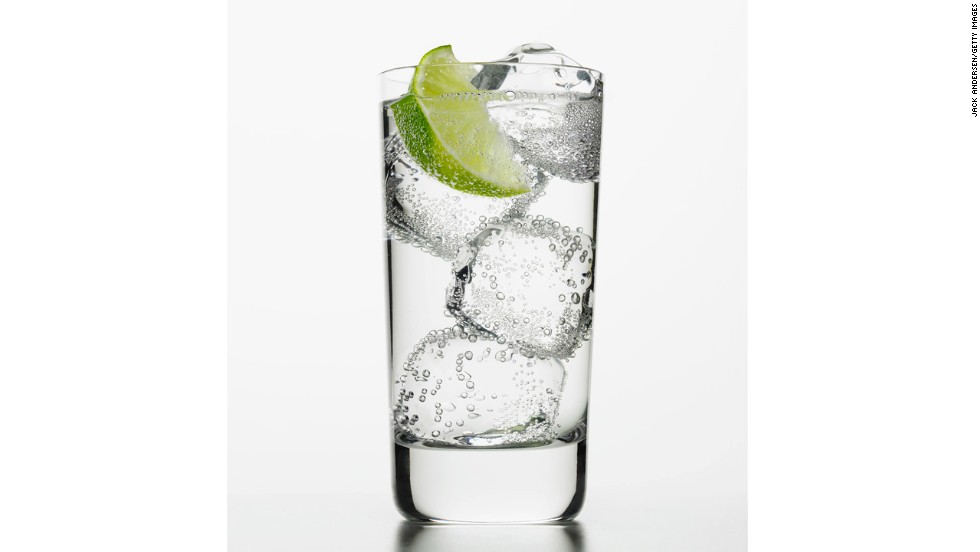
Artificially
sweetened drinks, such as diet sodas, were tied to a higher risk of
stroke and dementia in the study, which published in the American Heart Association's journal Stroke on Thursday.
The
study sheds light only on an association, as the researchers were
unable to determine an actual cause-and-effect relationship between
sipping artificially sweetened drinks and an increased risk for stroke
and dementia. Therefore, some experts caution that the findings should
be interpreted carefully.
No
connection was found between those health risks and other sugary
beverages, such as sugar-sweetened sodas, fruit juice and fruit drinks.

Are diet sodas dangerous to your health? 04:19
"We
have little data on the health effects of diet drinks and this is
problematic because diet drinks are popular amongst the general
population," said Matthew Pase, a senior research fellow in the
department of neurology at Boston University School of Medicine and lead
author of the new study.
"More
research is needed to study the health effects of diet drinks so that
consumers can make informed choices concerning their health," he said.
The
new study involved data on 2,888 adults older than 45 and 1,484 adults
older than 60 from the town of Framingham, Massachusetts. The data came
from the Framingham Heart Study, a project of the National Heart, Lung, and Blood Institute and Boston University.
In the older-than-45 group, the researchers measured for stroke and in the older-than-60 group, they measured for dementia.
"The
sample sizes are different because we studied people of different
ages," Pase said. "Dementia is rare in people under the age of 60 and so
we focused only on those aged over 60 years for dementia. Similarly,
stroke is rare in people aged under 45 and so we focused on people older
than age 45 for stroke."

How diet soda confuses your body 01:52
The
researchers analyzed how many sugary beverages and artificially
sweetened soft drinks each person in the two different age groups drank,
at different time points, between 1991 and 2001. Then, they compared
that with how many people suffered stroke or dementia over the next 10
years.
Compared to never drinking
artificially sweetened soft drinks, those who drank one a day were
almost three times as likely to have an ischemic stroke, caused by
blocked blood vessels, the researchers found.
They also found that those who drank one a day were nearly three times as likely to be diagnosed with dementia.
Those
who drank one to six artificially sweetened beverages a week were 2.6
times as likely to experience an ischemic stroke but were no more likely
to develop dementia, Pase said.
"So,
it was not surprising to see that diet soda intake was associated with
stroke and dementia. I was surprised that sugary beverage intake was not
associated with either the risks of stroke or dementia because sugary
beverages are known to be unhealthy," Pase said.

Unhealthy sugary drinks 01:11
In
response, Lauren Kane, a spokeswoman for the American Beverage
Association, issued a statement from the group that said low-calorie
sweeteners found in beverages have been proven safe by worldwide
government safety authorities.
"The
FDA, World Health Organization, European Food Safety Authority and
others have extensively reviewed low-calorie sweeteners and have all
reached the same conclusion -- they are safe for consumption," the
statement said.
"While we respect
the mission of these organizations to help prevent conditions like
stroke and dementia, the authors of this study acknowledge that their
conclusions do not -- and cannot -- prove cause and effect. And
according to the National Institutes of Health (NIH), many risk factors
can increase an individual's likelihood of developing stroke and
dementia including age, hypertension, diabetes and genetics. NIH does
not mention zero calorie sweeteners as a risk factor," the statement
said. "America's beverage companies support and encourage balanced
lifestyles by providing people with a range of beverage choices — with
and without calories and sugar — so they can choose the beverage that is
right for them."
Separate
previous studies have shown an association between the intake of
sugar-sweetened beverages and adverse health effects, such as type 2 diabetes, obesity, heart disease, stroke, and possibly even heart failure.
"This
article provides further evidence though on artificially sweetened
beverages and their possible effects on vascular health, including
stroke and dementia," said Dr. Ralph Sacco, professor and chair of
neurology at the University of Miami Miller School of Medicine, about
the new study.
Sacco was a co-author of an editorial published alongside the study in the journal Stroke on Thursday.
"We
believe the pathways of which artificially sweetened beverages would
affect the brain are probably through vascular mechanisms," Sacco said.
"When
the authors controlled for hypertension and diabetes and obesity the
effects diminish, which implies that some of the effects of artificially
sweetened beverages could still be going through a vascular pathway,"
he said about the new study. "Many strokes are caused by hardening of
arteries; and the risk of dementia is also increased by the hardening of
arteries in large and small vessels. So, I believe the mechanisms may
be through vascular disease, though we can't prove it."









Heather
Snyder, senior director of medical and scientific operations at the
Alzheimer's Association, called the new study "a piece of a larger
puzzle" when it comes to better understanding how your diet and
behaviors impact your brain.
"It's
actually really more of your overall diet and overall lifestyle that is
linked to cardiovascular disease and diabetes risk, and we do know that
heart disease and diabetes are linked to an increased risk of dementia,"
said Snyder, who was not involved in the new study.
"We
know that sugary and artificially sweetened beverages are not great for
us. This study adds strength to that, and also says they may not be
great for your brain, specifically," she said. "There are alternatives
-- things we can all do everyday to keep our brains and our bodies as
healthy as we can as we age." Alternatives such as regular
cardiovascular exercise that elevates heart rate and increases blood
flow and doing puzzles and games to activate and challenge the mind.
These are recommendations from the Alzheimer's Associations list of 10 lifestyle habits to reduce risk of cognitive decline.


No comments:
Post a Comment