
Friday, April 30, 2021

the Celtic word for “dog” is “Kergi.”


begin quote from:

https://corgicare.com/blue-merle-corgi/

Blue Merle In Corgis: Can Corgis Be Merle?
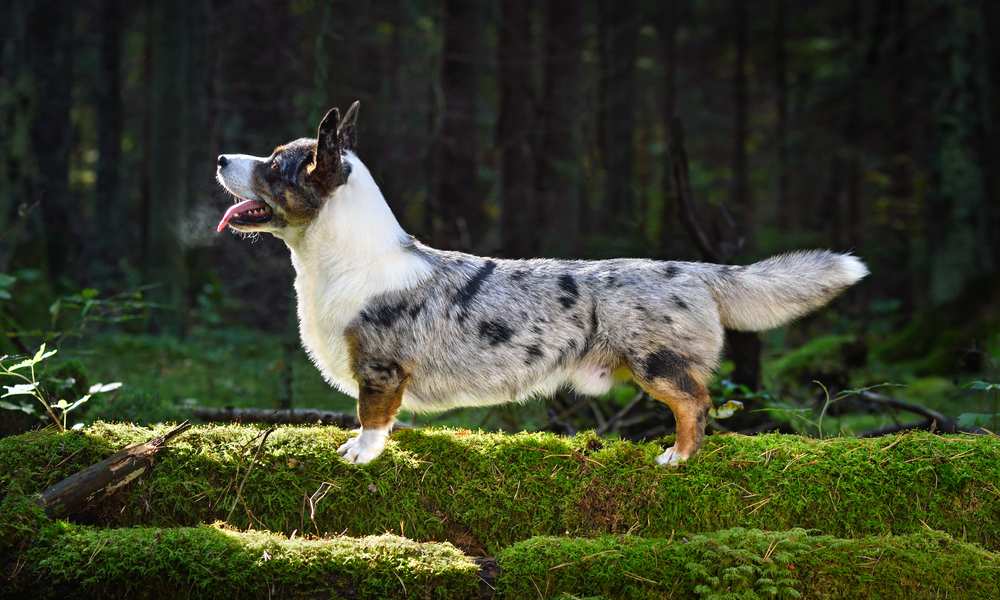

So you’re walking along your usual route to work. You suddenly see a little Corgi, jumping up and down on its leash, trying to run about on its famous tiny legs. 

But when you manage to look beyond the cuteness, you notice something strange. 

This isn’t your usual Corgi. This dog has a brand new coat on it! Well, the reason behind this is, you just saw a Blue Merle Corgi.

So is this just a corgi with some colorful spots on the coat? 

Well, yes… and no, it’s a bit more complicated than that. 

See, there are two kinds of Corgis – the Cardigan and the Pembroke. The second one is the more famous brother, with its light brown and white coat. Them having representatives in the Royal British Family doesn’t hurt the reputation either. But even if the Cardigan Corgi doesn’t have the word royalty on its CV, it’s royal in its own right. 

The plan we have here is to give you all the corgi knowledge we can gather. So what are the differences, and what exactly does Blue Merle mean? Let’s find out.


The History Of The Blue Merle Corgi

Corgis have been with us for a long, long time. It is generally believed that the Celts brought them over during their migrations over 3000 years ago. The Cardigan Corgi was the first kind that was brought, and from it, we got the Pembroke. The name can pretty much confirm this version of its origin, considering that the Celtic word for “dog” is “Kergi.” 

But let’s talk about the Cardigan. While many people say that the name comes from the long tail that looks like a cardigan sleeve, it has a different meaning. 

The Celts brought Corgis to a specific part of Wales – Cardiganshire. Cardiganshire is a historic county of Wales that was located in what is now Ceredigion. But, we refuse to let the sleeve-tail story die. If you want to keep telling it to people, we sure won’t be stopping you. 

The Cardigan Corgi comes in many different colors (the shape and size are constants): brindle, red, black, and the one we’re focusing on – The Blue Merle. This specific color is no random accident, but we’ll get to that in a bit.

The Corgi is famously a loyal worker. Sure, you may think that they’re a family pet that’s great for small children to play with. While that is true, the Corgi has been used as a herding dog, a guard dog, and a hunting partner for centuries. The majority of them changed their line of work, sure, but they still have it in them. 

During the medieval ages, Corgis were used exclusively for all these things, and there are some researches that claim them to be the oldest dog breed in Britain. It all makes sense when you think about it. The famous short legs help with herds, as they help the Corgi not get hit by sheep or other livestock that they may be guiding. 

These legs work well during hunting as they are closer to the ground, which means that their noses pick up smells easier. The work doesn’t stop when the sun goes down. During the night, they were used as excellent guard dogs. All in all, the working dog reputation they have in Wales is well earned. 

Now the Corgi didn’t change that much during all these years. How the general public looks at dogs in general, did. 

Today, the Corgi Is a loveable part of many families. The Blue Merle Corgi, on the other hand, is not so frequent. Because of this, it’s unique. No matter which Corgi you get, you can be sure that your new family member will be smart, playful, and however much love you give it, it will give back!


The Merle Gene: Can Corgis Be Merle?

So what’s so special about the Blue Merle Corgi? Well, first of all, they look quite different from the other Cardigan Corgis. Cardigans are usually multi-colored – the color spectrum on this particular breed gets a bit wider because of the Merle gene.

What Is The Merle Gene?

Any dog with mottled patches all over its coat, strange colored eyes, or even patchy colorful skin – has the Merle Gene. This genetic trait affects the overall skin, fur, and even visions of any dog that has it.

This strange occurrence can happen in any dog breed. The most famous Merle breeds are the Australian Shepard and the Catahoula Leopard Dog. For instance, these two don’t have the word Merle in their name because it’s a given. But the Blue Merle Corgi’s name goes into more details. So why is this?

Well, the first reason is that the Merle Gene isn’t so common amongst Corgis. But if we go deeper into analyzing the name, we’ll run into the word Blue. But the chances of you running into a blue Corgi are zero. There are two general types of these beautiful coats: Liver and Blue Merle. Liver Merle is the combination of brown and black, while Blue means that blue hairs from in the patches just get mixed up with all the other colors

The Coats are just the beginning of the story. The Merle Gene can affect the eyes as well, but in a more complex way than you think. Sure, some Corgis can have regular (but still striking) blue eyes. Others can have only one eye affected by the gene, and if you think that’s weird, some get only parts of one eye affected! This kind of means that each Blue Merle Corgi is a unique, strange model of an already beautiful dog. But unfortunately, this beauty has its side effects.

Health Problems That Come With The Gene

All those things that make this Corgi breed unique, unfortunately, have a price. The Merle Gene can cause some severe side effects. The most common parts that suffer are the eyes and ears. The more serious problems usually come with dogs whose both parents carry the gene. For this reason, Merle to Merle breeding is forbidden in some dog breeds. Let’s take a closer look at what this means for our precious Corgis.

Eye Problems

Double Merle dogs, which means that both parents carried the gene, are usually easily recognized. They can have blue eyes, and their coat can even become all-white. Unfortunately, one of the ways that you can spot these dogs is if they seem to have smaller than normal eyes. This condition is called microphthalmia. It can cause increased ocular pressure, and in more serious cases, the dogs can even go completely blind.

These extremes are not usually found in the Blue Merle Corgi, as is it rare for them to carry such strong Merle Gene. They are very rarely Double Merle dogs, but it still is a concern that should be noted.

Hearing Problems

The other serious issue that can happen with Double Merle dogs is – hearing problems. And let’s get something straight, we’re not talking about dogs that don’t hear 100%, and that’s it. The issues are much more significant. 

Several studies have shown that around 50% of Double Merle dogs go completely deaf within the first couple of years of their life. Some even sooner than that. In comparison, the dogs that had only one Merle parent had no hearing problems whatsoever.

These two main problems are the reason that many national kennel clubs refuse to register double Merle dogs. The logic that is used is that if the Kennel clubs refuse the register them, maybe people will stop breeding them like this. Luckily these breeding practices are not common with corgis, but they exist – and that’s a problem.

Sure, the kennel clubs won’t register them, which means that these poor dogs’ prices will go down. Money is the ultimate goal for breeders who purposely breed double Merle dogs, so there is hope for this to stop.

These are still dogs, even if they suffer from these health risks, and they need to be taken care of. Blind or deaf, these dogs can live a perfectly normal life with a loving family!


Health, Exercise, And Temperament

Let’s get back to the dog at hand – the Blue Merle Corgi!

Corgis are generally healthy dogs that are active, happy, and full of love. We highlighted a couple of things concerning their energy levels, their temperament, and general health. 

We already mentioned the worker’s reputation that Cardigan Cordis have, which gets translated into their daily lives very often. These are energetic dogs that can follow and guide a herd for quite a long way. So you can imagine that a simple walk won’t do the trick with them!

Exercise 

A Cardigan Corgi is a worker, unlike the Pembroke – it’s in their blood. And even though they seem like a perfect fit for your family, they need exercise. They won’t ever admit it, but all those years working don’t just go away. Still to this day, Cardigans usually end up in homes that have at least horses. The farmers appreciate their assistance; we guarantee it. 

But if you don’t own a farm or a horse stable – don’t sweat it! As long as you make sure that your Cardigan gets enough exercise, you’ll be fine. They won’t mind switching to a family lifestyle, and in fact, they love it. There are a couple of things that we have to mention considering their history and how much of it is still shown in their temperament.

The Temperament

Cardigans can be loveable family dogs if you need them to be that. But there are differences when they are compared to a Pembroke Corgi. See, Pembrokes were never asked to guide a herd or look after the village. This means that the Cardigan doesn’t get scared easily and that if needed, he will try to protect you and your family. 

The trouble starts when they get possessive and when they are exposed to unknown dogs or people. This isn’t necessarily a bad thing, but you should expect some barking you plan on meeting a friend for a doggy play-date. 

Being left alone is also not something that this breed likes very much. These dogs are used to the company, and if you take that away – you may end up with an anxious and destructive dog. As long as you keep them by your side, you won’t be able to take the grin off their faces. 

Health

We mentioned the health risks that come with the Merle Gene that the Blue Merle Corgi has, but don’t worry! These dogs are usually healthy, just like all other Corgis. They pretty much maintain themselves. They don’t get sick easily, and they have a long life span

As long as owners get regular checkups, they’ll have a happy and energized little rascal on their hands!

Feeding the Blue Merle is also quite an easy task. Those short legs and little bodies are, after all, the reason that farmers loved to have them! These little workers eat a small amount of food and require minimal maintenance. Talk about a perfect farmer


Final Words

The Blue Merle Corgi is a beautiful, fun, and lovable dog. Sure, health risks are connected to the already mentioned beauty, but the numbers for those cases are luckily on the lower side. Like all Cardigans, this is a true family that will keep you and your loved ones feeling loved for a long, long time. 

In the beginning, we said that the Cardigan doesn’t have connections in the Royal family as the Pembroke does – but that it’s royal in its own right. Well, we stand by that. The history of this little worker alone deserves our attention. So we hope that we’ve convinced you, and even though we love the Queen’s little Corgis, the Cardigan holds a special place in our hearts. Blue Merles especially. 

And if nothing else, those blue eyes and spots make them seem like a beautiful jewel that the other dogs could only dream about! That’s enough for us.

Recent Posts

Mother Earth and planned natural selection?

 If you study how ecological balance works it isn't at all about fairness of what species die when. It's about balance mostly.

When there are too many of any one species often what they eat dies out and then large amounts of them die until there is enough to eat left for some of them. So, starvation is one way species stay in balance.

Another way species die out or stay in balance is some species dies out and then the remaining species become vulnerable because the remaining species or a single species carries a disease that the one that died out didn't. This then takes out several other species.

By the way coronavirus isn't the only thing going on like this on earth. 

First of all, you have global Climate change that is extincting plants and animals (including humans) all over the planet. When you have a tornado or hurricane it isn't just people dying, it's animals and plants dying and some going extinct too. So, likely for every human that dies in a hurricane or tornado you have to consider the thousands to millions of plants and animals and insects that are dying in each event too.

Even when a human being inhales or exhales 25,000 to 50,000 organisms die in a human being every time we even take a breath. So, deaths of organisms are always more about balance than fairness. When we look at natural selection it is not about fairness at all. Fairness is only a human construct that likely arose from standing in lines rather than all killing each other while we waited to use the bathroom or were waiting for our turn at getting some food other other things we needed.

So, fairness is NOT a part of natural selection here on earth. This might be important to consider while we all are dealing with variants of Coronavirus however long it is around here on earth.

And human overpopulation is the main cause of global Climate change in the first place. So, what happens next is not about fairness to human beings or any animals or plants on earth at all. It is about Balance more than anything else because that's how ecosystems actually work.

In Asia and South America people are dying like never before in history because they cannot get vaccines:

 Here in the U.S. people are hesitant about getting vaccines. The problem is that the variants in Brazil and South America AND the Variants taking whole families to the hospital in India will likely eventually this summer or fall make there way here to the U.S. and begin to take whole families here to to the hospital as one person in a household gets infected where no one is vaccinated. Because of this not getting a vaccine here in the U.S. could be tantamount to murder of one or more members of your family given all these present variables.

So, at least at this point it looks to me like not getting vaccines is a way to murder one or more members of your family or friends. It's true it's your freedom of choice. The problem is that your freedom to choose not to get a vaccine could literally kill thousands of people between now and 2030 the way this is presently progressing.

And because these vaccines might be shipped to other countries where people are begging not to die it also might mean that when you choose to get vaccinated there won't be any for you and then you might die because of that too.

We don't know where all this is going folks. Right now on a world level it is just wiping out whole groups of people who cannot get vaccinated in India and South America and the variants are now hitting whole families from age 16 and above in both India and South America right now.

How can we keep these variants from killing you and your families if you don't get vaccinated now while there are still vaccines available?

I would have preferred not to get any vaccine too that is experimental and new. But, when I reviewed all scientific Data I saw it likely was a choice between Life and Death for me and my wife and eventually my family between now and 2030. My son just got his first vaccine yesterday and my adopted daughter got her vaccine last month when my wife and I did. If you have a choice Pfizer or Moderna are the best ones right now.

Young people shouldn't avoid getting the vaccine because of what is happening in India and South America

Even though we have now reached the lowest point in the number of deaths per week and cases per week since July of 2020 now, young people shouldn't avoid getting vaccines because whole families over 16 years of age are having to go to the hospital together because of Variants in India and South America is also at it's worst number of cases per day too. The problem is you cannot really keep those variants from making their way to the U.S. eventually whether it is this summer or fall or whenever they get here.

begin quote from:

https://www.cnn.com/2021/04/29/health/us-coronavirus-thursday/index.html

Weekly average of new Covid-19 deaths in US hits lowest point since July

(CNN)The seven-day average of new Covid-19 deaths in the United States hit its lowest point since July 2020, a CNN analysis of Johns Hopkins University data found Thursday.

As of Wednesday, 684 new deaths were reported, the JHU data showed, which is about an 80% drop since January. Since the beginning of 2021, the seven-day average number of Covid-19 deaths appears to have regularly decreased, according to JHU data.
The fall in deaths is at least partly due to vaccinations, experts said.
    Covid-19 vaccinations are already having a significant impact on death rates among certain groups in the United States, such as older adults, Dr. Amesh Adalja, senior scholar at the Johns Hopkins Center for Health Security, told CNN on Thursday.
      "If you look, for example at populations that have been highly vaccinated like nursing home residents, you will see that deaths in nursing homes have plummeted, and overall, the death rate has been falling over time," Adalja said. "It's really a function of how many of the high-risk individuals have been vaccinated and that is becoming more evident,"
        Yet, experts warn that to defeat the virus, more Americans need to get vaccinated, notably young people, some of whom still are hesitant or may think they don't have as much to fear from the virus.
        Everyone 16 and older is currently eligible for a Covid-19 vaccine. But a recent Quinnipiac University poll found 36% of adults under the age of 35 don't plan on getting one.
          Here's why it matters that young groups sign up for the shots: When Centers for Disease Control and Prevention Director Dr. Rochelle Walensky warned of a rise in Covid-19 cases and hospitalizations earlier this month, that increase was predominantly among younger adults, most of whom were not vaccinated.
          Some experts estimate that to suppress the spread of the virus, somewhere between 70% to 85% of the US population needs to be immune. So far, roughly 43% of the country has received at least one Covid-19 vaccine dose and about 29.5% is fully vaccinated, according to CDC data.
          About 35% of the US population has been infected with the virus that causes Covid-19, the CDC said Thursday. The agency estimates the virus has led to 114.6 million infections, 97.1 million symptomatic illnesses and 5.6 million hospitalizations from February 2020 to March 2021.
          The more people are vaccinated, the fewer opportunities the virus has to not only transmit but to further mutate. And we already know what those mutations could mean. One coronavirus variant, for example, which became the dominant strain in the US, helped fuel recent Covid-19 spikes in several states, including Michigan. That strain, the B.1.1.7 variant, is more contagious and hit younger people particularly hard.
          And there's another major reason young people shouldn't turn away from the shot: long-term consequences of Covid-19.
          "One critical way to prevent long Covid is to prevent Covid itself," National Institutes of Health Director Dr. Francis Collins said at a House Energy and Commerce subcommittee hearing on Wednesday.
          "Even for young people who consider their risk of severe Covid to be low, the long-term consequences can be quite serious," he added. "So long Covid represents one more reason to encourage everyone age 16 and over to get vaccinated as quickly as possible."
          And those long-lasting symptoms can develop even in people who have mild cases of Covid-19. Americans have reported dozens of persistent symptoms that last months after their infection, including fatigue, headaches, memory loss, gastrointestinal problems, muscle aches, heart palpitations and loss of smell or taste.
          A pharmacy resident gives a Johnson & Johnson Covid-19 vaccine at the Indianapolis Motor Speedway on April 25, 2021

          Decrease in vaccine demand leads officials to scale down size

          Despite the push for more vaccinations, state and local leaders are seeing a decrease in demand. As a result, they're asking vaccine manufacturers to scale down the size of vials and how much is distributed.
          "Many of our health departments, especially those in rural America, are providing feedback that they either need smaller dosage vials or we may have to contend with waste," said Lori Tremmel Freeman, CEO of the National Association of County and City Health Officials.
          Pfizer said Thursday it will begin offering smaller shipment sizes of its Covid-19 vaccine at the end of May to give vaccine sites more flexibility.
          The current shipment size is a 195-vial pack that contains 1,170 doses. The smaller shipment sizes will come in three 25-vial packs which contain a total of 450 doses. Vaccination sites will have the option to order either size.

          'How many people are going to have to die?'

          In a bid to encourage young people to get vaccinated, West Virginia Gov. Jim Justice has said the state will offer a $100 savings bond to each person between 16 and 35 years old who gets the vaccine.
          "West Virginians from 16 to 35 years of age are transmitting this thing faster than anyone," the governor said. "How many people are we going to have to put in body bags? How many people are going to have to die?"
          The governor said roughly 52% of the state's eligible population has received at least a dose of vaccine and his goal is to get to more than 70% of eligible residents fully vaccinated.
          That, he said, will mean "we'll be able to get rid of the masks and get life back to normal."
          "Our young people have had to stand up a lot of times over the years in West Virginia," the governor said. "Most of the time they were standing up to go to war. I'm not asking for you to go to war. I'm asking you to do something that could very well save your life, or save the life of your mom, your dad, your grandparents and all your loved ones."

          Governors offer road maps to normalcy

          Other governors hope to incentivize vaccinations by offering a timeline for a return to normal or looking to those who are vaccinated to encourage others to get a shot.
          Washington Gov. Jay Inslee said residents of Ferry County, about 100 miles northwest of Spokane, "ignored clear science" after a superspreader event led to Covid-19 infections for more than one out of every 100 people in the rural county in the last two weeks.
          "It is a terrible thing to think we would have vaccines that could save people's lives, and not see it in people's arms," Inslee said.
          With vaccine hesitancy now a serious concern, Washington health officials are asking people who already have been fully vaccinated to continue helping their communities by actively encouraging others to get their shots.
          "We really want you to encourage those around you -- your parents, your family, your coworkers," said Umair Shah, Washington Secretary of Health.
          In North Carolina, Gov. Roy Cooper lifted the outdoor mask mandate and said the state hopes to lift the indoor mask mandate once two-thirds of adults are vaccinated with at least one vaccine dose.
          About half of the state's adults currently have gotten at least one shot, he said.
          Maryland Gov. Larry Hogan also lifted the state's outdoor mask mandate and said he expects to take "additional actions" in the coming weeks as more people get vaccinated and the Covid-19 metrics improve.
            "The fastest way to put this pandemic behind us once and for all is for every single eligible Marylander to get vaccinated as soon as possible," Hogan said.
            The governors' announcements follow new guidance issued by the CDC this week on outdoor mask use for fully vaccinated Americans. The agency said fully vaccinated people can unmask at small outdoor gatherings or when dining outside with friends from multiple households -- activities the CDC said unvaccinated people still need to wear a mask for.

            CNN's Ryan Prior, Jacqueline Howard, Michael Nedelman, Rebekah Riess, Jamiel Lynch, Andy Rose and Hannah Sorisohn contributed to this report.