2:16 p.m. ET, May 1, 2022
begin partial quote from:
Large fires break out at Russian military installation in Belgorod
From CNN's Tim Lister
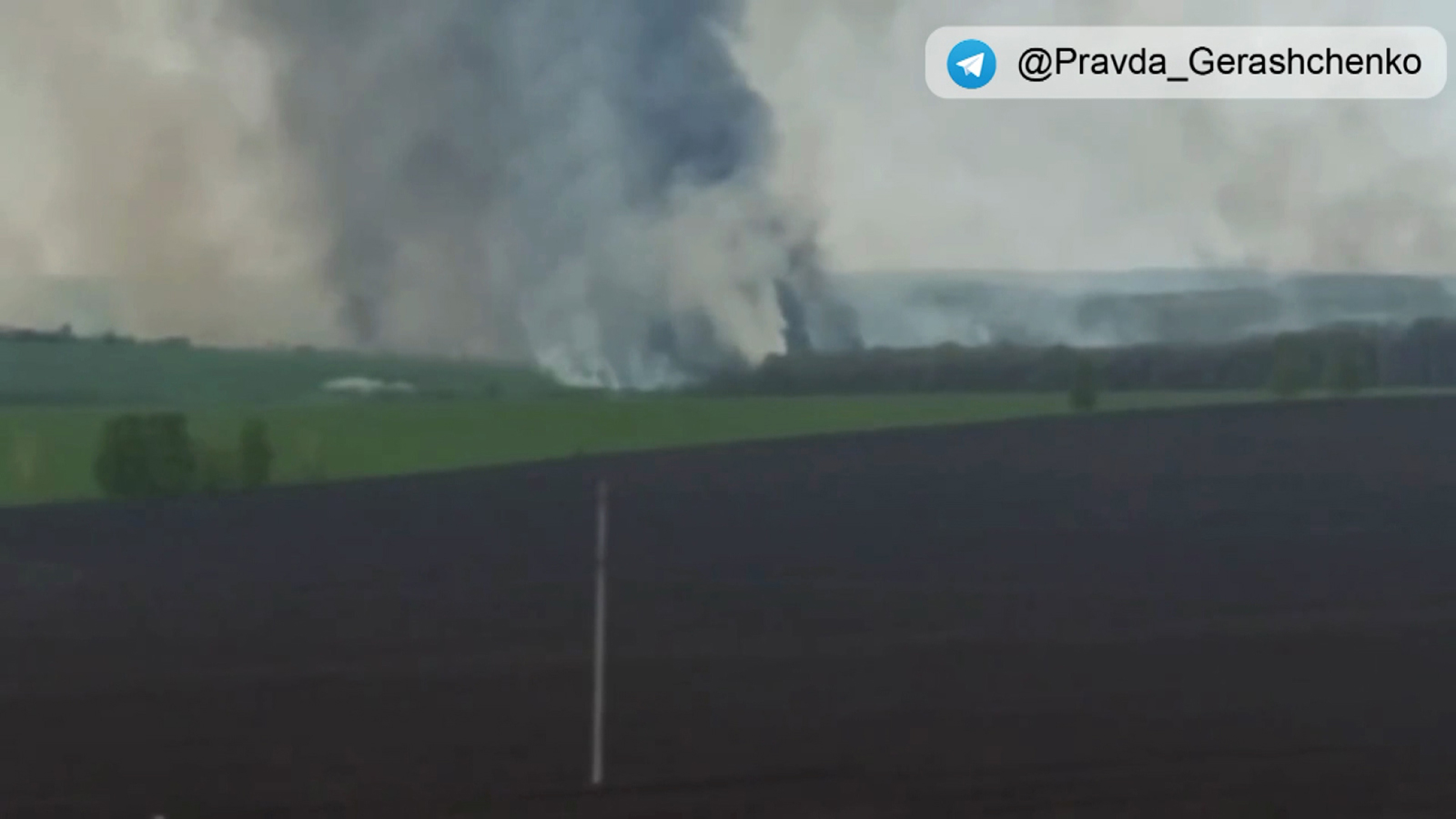
Social media video shows fires and columns of black smoke rising from a site near Belgorod in Russia not far from the Ukrainian border. Other video shows police in the area redirecting traffic away from the area and helicopters circling above the city.
The governor of the Belgorod region, Vyascheslav Gladkov, said on Telegram that a fire had broken out at a facility belonging to the Ministry of Defense.
"On the border of three municipalities - Borisov and Belgorod districts and Yakovlevsky urban district - a fire occurred on the territory of one of the facilities of the Ministry of Defense of the Russian Federation," he wrote.
Russia's war in Ukraine causing "catastrophic effect" on global food prices, says USAID administrator
From CNN's Sonnet Swire
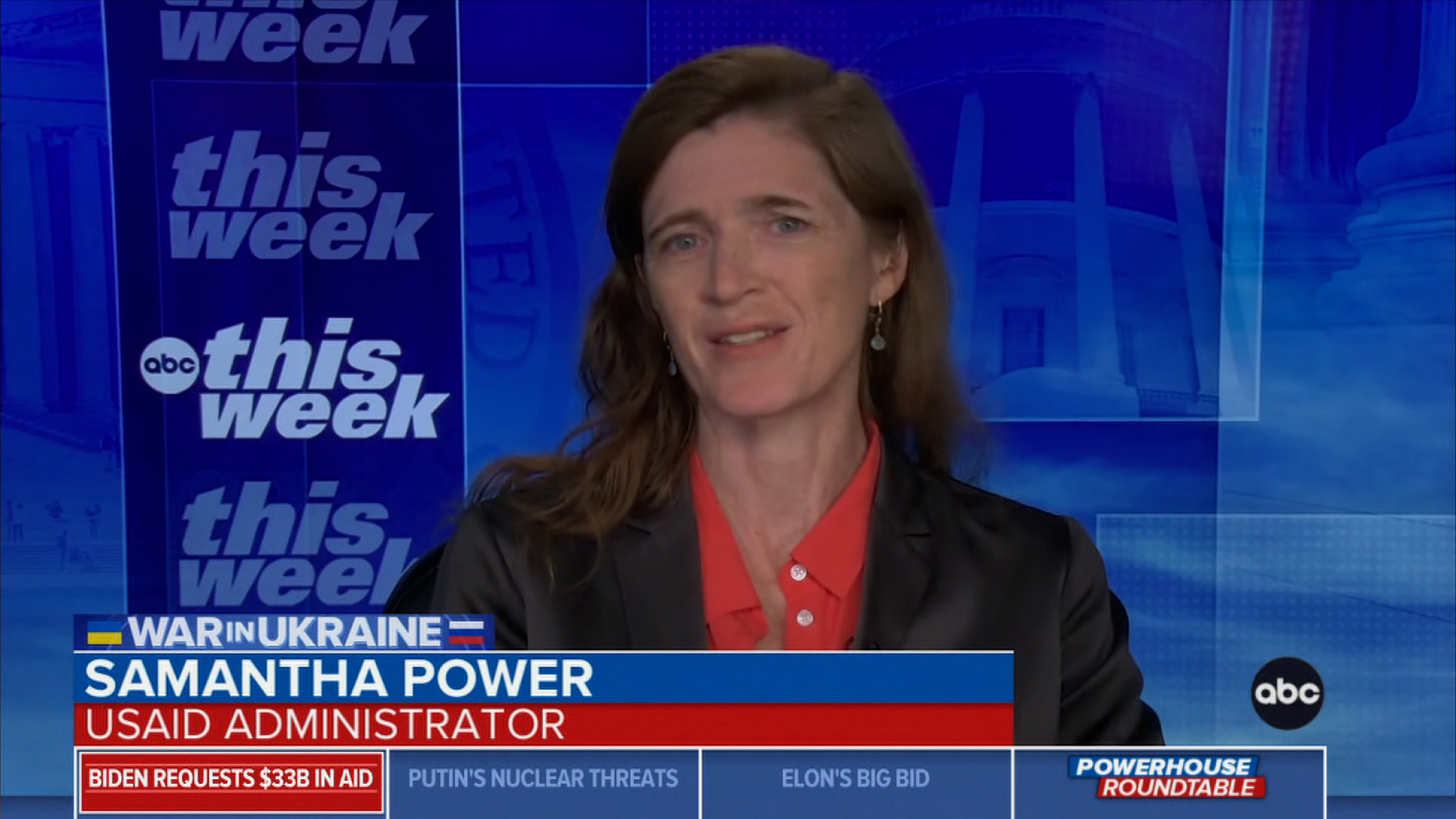
Samantha Power, the administrator of the US Agency for International Development, said Sunday that the impacts of the war in Ukraine include global food shortages and prices, maintaining “our job is to look at it globally” when asked if the worldwide consequences are reflective of a brewing world war.
"It is just another catastrophic effect of Putin's unprovoked invasion of Ukraine," Power said on ABC's "This Week.”
This comes after US President Joe Biden pressed Congress on Thursday to consider supplying Ukraine with an additional $33 billion aid package, with $3 billion allocated for humanitarian assistance and food security funding.
“Food prices, right now, George, globally, are up 34 percent from where they were a year ago. Aided substantially, again, by this invasion,” Power said, adding: “So we’ve gone to Congress asking for a substantial increase in humanitarian assistance.”
She continued: “We really do need this financial support from the Congress to be able to meet emergency food needs so we don’t see the cascading deadly effects of Russia’s war extend into Africa and beyond.”
Power noted that many countries in sub-Saharan Africa and in the Middle East get much of their wheat from Ukraine, where farmers are struggling to plant and harvest their crops for fear of shelling and Russian landmines, she said. Their path to exporting these vital products is then severely restricted by Russia’s invasion which caused the closure of Ukraine's ports.
Power was pressed on the nature of the crisis by host George Stephanopoulos, who noted that “listening to you lay out these consequences, it’s hard not to conclude that in some respects this is already become something of a world war.”
“Certainly in terms of effects, not confined to the horrors that the Ukrainian people are suffering,” Power responded. “But our job is to look at it globally.”
“Russia tries to take advantage of this and say, 'oh, it’s the sanctions that are causing these high food prices.' Not at all," she said. "It is Russian’s invasion of Ukraine for no reason and its unwillingness now to come to the negotiating table and get out of Ukraine and get back to Russia.”
Red Cross confirms Mariupol evacuation operation is ongoing
From CNN's Andrew Carey in Lviv
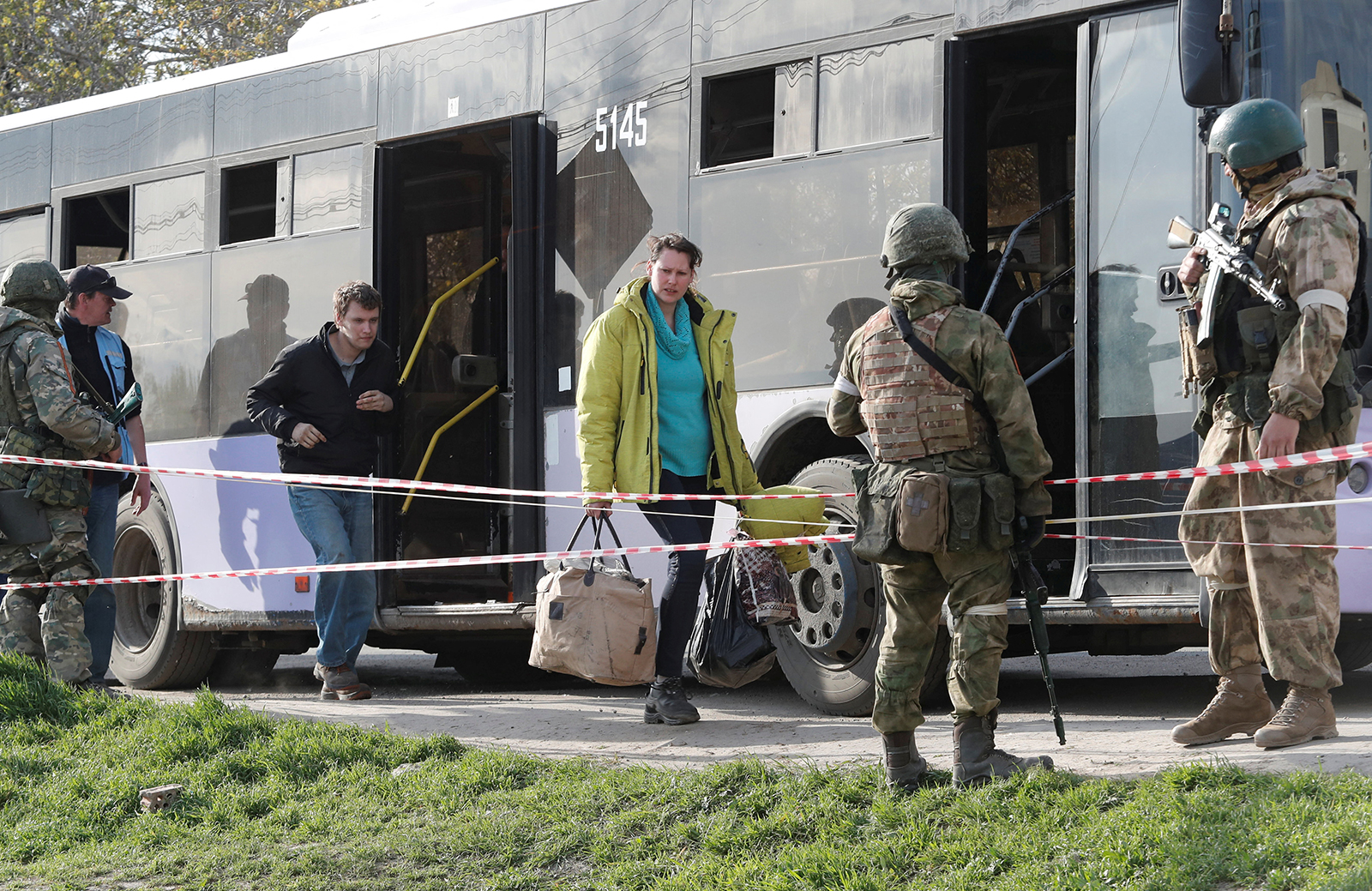
The International Committee of the Red Cross (ICRC) is working with the United Nations in an ongoing operation to move people out of Mariupol and the besieged Azovstal steel plant, the ICRC said in a statement.
“The ICRC confirms that a safe passage operation is ongoing, in coordination with the UN and the parties to the conflict. The convoy to evacuate civilians started on 29 April, travelled some 230 kilometres and reached the plant in Mariupol on Saturday morning, local time, according to the statement. "The ICRC insists on the fact that no details can be shared until the situation allows, as it could seriously jeopardize the safety of the civilians and the convoy. Relevant local authorities are communicating with the civilians about practical details."
Ukrainian President Volodymyr Zelensky confirmed in a tweet on Sunday that the "Evacuation of civilians from Azovstal began."
"The 1st group of about 100 people is already heading to the controlled area," he added.
Mariupol's city council said Sunday there was a "chance" to evacuate civilians from the besieged city of Mariupol.
The Council urged people to gather at 4 p.m. local time (9 a.m. ET) near a shopping center called "Port City" in order to evacuate them to the southern region of Zaporizhzhia.
"If you have relatives or acquaintances in Mariupol, try to contact them by all ways. Call, text and say that it is possible to go to Zaporozhzhia, where it is safe," the Council said on Telegram.
"We pray that everything works," it added.
A local Telegram channel said earlier that through 3 p.m. local time, a "green corridor" would be open for citizens wishing to enter territory "controlled by the enemy in the Kamensky district."
There are about 100,000 people still in Mariupol, even though most of the city has been severely damaged by weeks of shelling and airstrikes by Russian forces.
Ukrainian officials have been giving more details on the evacuation of civilians who had been trapped at the Azovstal steep plant.
David Arakhamia, an advisor to President Zelensky, said: "Today is the third day of a special operation we call "Azovstal evacuation." Since the beginning of the war, since the beginning of the blockade of Azovstal, we have managed to withdraw more than 100 civilians - small children, women and the elderly."
Iryna Vereshchuk, deputy prime minister, said on Ukrainian television: "Sorry, we were silent. We really wanted everything to work out. Our silence was in order for people to come out alive and unharmed. More than 100 people have been evacuated, and the evacuation continues. All this happened thanks to the control of the President of Ukraine Zelensky, Antonio Guterres, and the International Committee of the Red Cross, for which we are very, very grateful."
Some more context: Mariupol is home to the Azovstal steel plant, which has been subjected to heavy Russian bombardment in recent weeks. Hundreds of people, dozens of whom are injured, are thought to be inside the steel-making complex.
The Russian news agency TASS says that according to the Ministry of Defense in Moscow, 80 civilians have now been rescued from the “territory” of the Azovstal plant and evacuated to a Russian controlled compound a few miles away
It’s unclear whether any of them came from within the plant itself, where hundreds of civilians have been under a weeks-long bombardment.
"Civilians evacuated by Russian servicemen from the Azovstal plant, who wished to leave for areas controlled by the Kiev regime, were handed over to representatives of the UN and the International Committee of the Red Cross," the ministry said.
The report followed comments from a Ukrainian commander inside the plant who said some civilians have been evacuated from the steel works after the introduction of a ceasefire.
It was hoped that these civilians, all women and children, would go to the "agreed destination" of Zaporizhzhia, Capt. Svyatoslav Palamar said.
CNN's Kostan Nechyporenko contributed to this report.


No comments:
Post a Comment