begin quote from:
Northern California Could See Worst Flooding in 10 Years as State ...
KTLA-Jan 6, 2017
California is bracing for a major storm that is forecast to bring heavy ... At this point in 2016, nearly 45% of the state was in exceptional drought.
Northern California Could See Worst Flooding in 10 Years as State ...
KTLA-Jan 6, 2017
California is bracing for a major storm that is forecast to bring heavy ... At this point in 2016, nearly 45% of the state was in exceptional drought.
Northern California Could See Worst Flooding in 10 Years as State ...
KTLA-Jan 6, 2017
California is bracing for a major storm that is forecast to bring heavy ... At this point in 2016, nearly 45% of the state was in exceptional drought.
Northern California Could See Worst Flooding in 10 Years as State Braces for Major Storm This Weekend
California is bracing for a major storm that is forecast to bring heavy rain and snow to the state this weekend.
The National Weather Service office in Sacramento says this weekend “could be the greatest potential for significant flooding we’ve seen in over 10 years.” Meteorologists are forecasting up to 15 inches of rain in the Sierra Nevada, while higher elevations could see an additional 2 feet of snow on Saturday alone, causing a travel nightmare.
An earlier storm dumped several feet of snow in lower elevations, and this system will bring mostly rain in those same areas. The rain will melt the snow and cause additional runoff, possibly leading to significant flooding and even landslides.
The atmospheric river
The cause of the expected flooding: a weather phenomenon known as an atmospheric river, a column of moisture that flows inland from the Pacific. An atmospheric river can be 250 to 375 miles wide.
A strong atmospheric river “transports an amount of water vapor roughly equivalent to 7.5-15 times the average flow of liquid water at the mouth of the Mississippi River,” according to the National Oceanic and Atmospheric Administration.
NOAA says, “On average, about 30%-50% of annual precipitation in the (West Coast) states occurs in just a few (atmospheric river) events, thus contributing to water supply” — and unfortunately, flooding.
Drought relief
Much of California remains in the throes of a decade-long drought, welcome rain has come in recent weeks, and the snowpack is above normal in many places.
Last year, ski resorts had to open late, close early or not open at all due to a lack of snowfall. This year is quite the opposite: Places such as Alpine and Soda Springs received more than 75 inches of fresh powder with the latest weather system, and another one is right on its heels.
And while so much rain and snow at one time can be catastrophic to some, it’s very much a Catch-22 since California desperately needs the moisture. There has been a vast improvement in drought conditions this year compared with last, according to the U.S. Drought Monitor.
Last year, 100% of the state was in a drought, but that number is now down to 81%. At this point in 2016, nearly 45% of the state was in exceptional drought. It’s now 18%. Most of the improvement is in the northern part of the state, while the south is still suffering.
Unfortunately, the next few storm systems don’t seem like they’ll bring much relief to Southern California. But Californians can only hope that this wetter trend will bring needed relief from the state’s crippling drought.
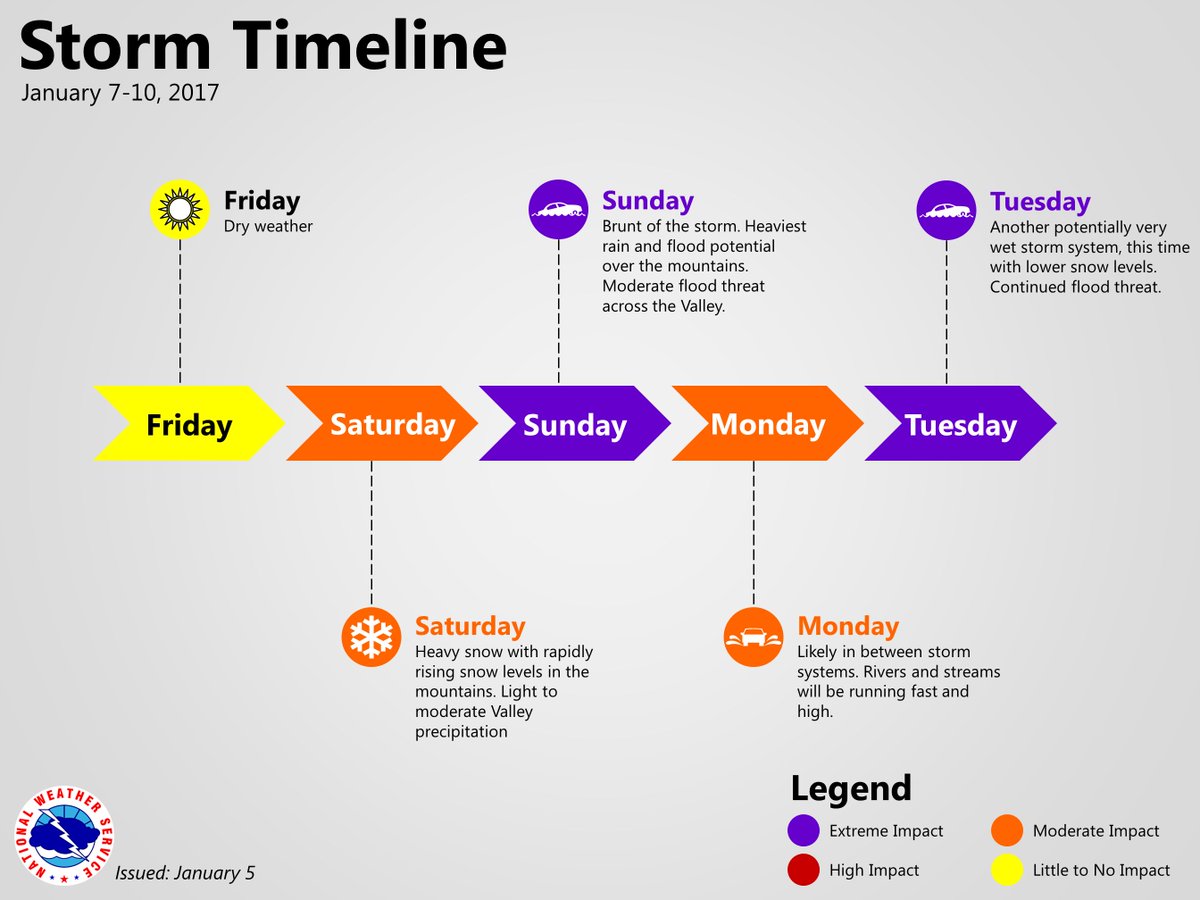

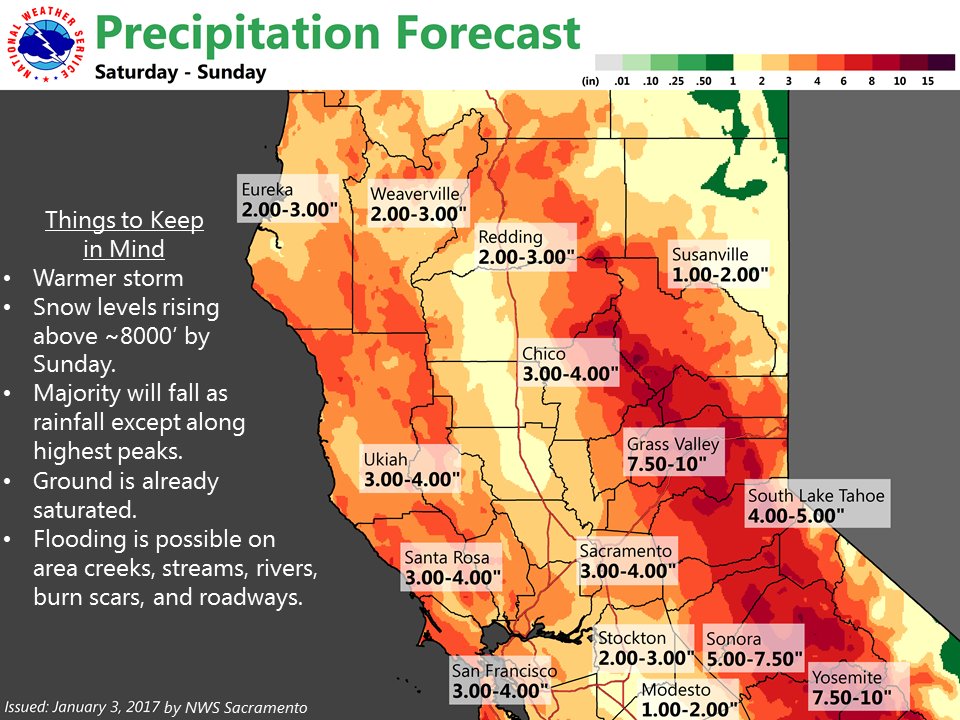
After Thursday, a warmer #atmosphericriver will bring higher snow levels & heavy rain this weekend. Heightened concern for flooding. #cawx
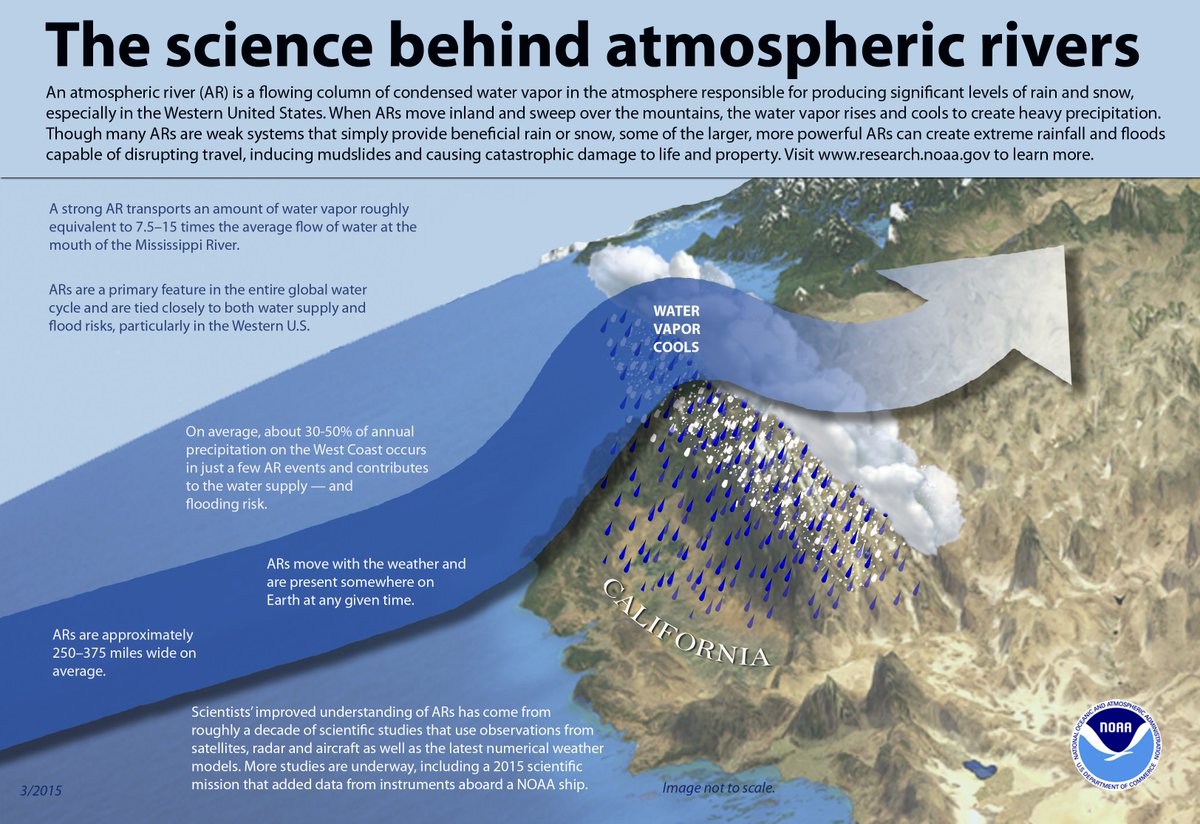
What's all this talk about Atmospheric Rivers? Here's a great NOAA graphic that might help answer that question. noaa.gov/stories/what-a…

RELATED STORIES
- ‘Atmospheric River’ to Bring Lots of Rain, Snow to California Beginning This Weekend
- Pair of Storms Expected to Bring More Wet Weather to SoCal
- Avalanche Warning Issued in Northern California as Sierras Hit by Major Snowstorm; 4-5 Feet Expected This Week
World
begin quote from:2-week blitz of storms to bring damaging flooding, 12-plus feet of ...
In-Depth-Mashable-Jan 6, 2017Firehose of moisture to slam California with 12-feet plus of snow, flooding rains
IMAGE: MAMMOTH MOUNTAINAfter six years of coping with the state's worst drought on record, Californians are not used to rain. But they'd better prepare for it, fast, because an onslaught of storms the likes of which the state has not seen in at least a decade is coming quickly.These storms have tropical connections, and are bringing with them extraordinary amounts of rain and snow, along with strong winds. A dizzying array of storm watches and warnings have been issued across the West, from freezing rain advisories (Oregon) to flash flood watches (California) to winter storm watches and warnings (Rocky Mountains), as the most intense storm approaches for Saturday through Monday.These storms, known as "atmospheric rivers" for their extraordinarily narrow channels of eye-popping levels of moisture, and hence copious amounts of rain and mountain snow, could have deadly consequences, officials are warning.The National Weather Service is cautioning millions from the San Francisco Bay area to Lake Tahoe to be prepared for potentially historic flooding as the storm systems wreak havoc with streams and rivers.
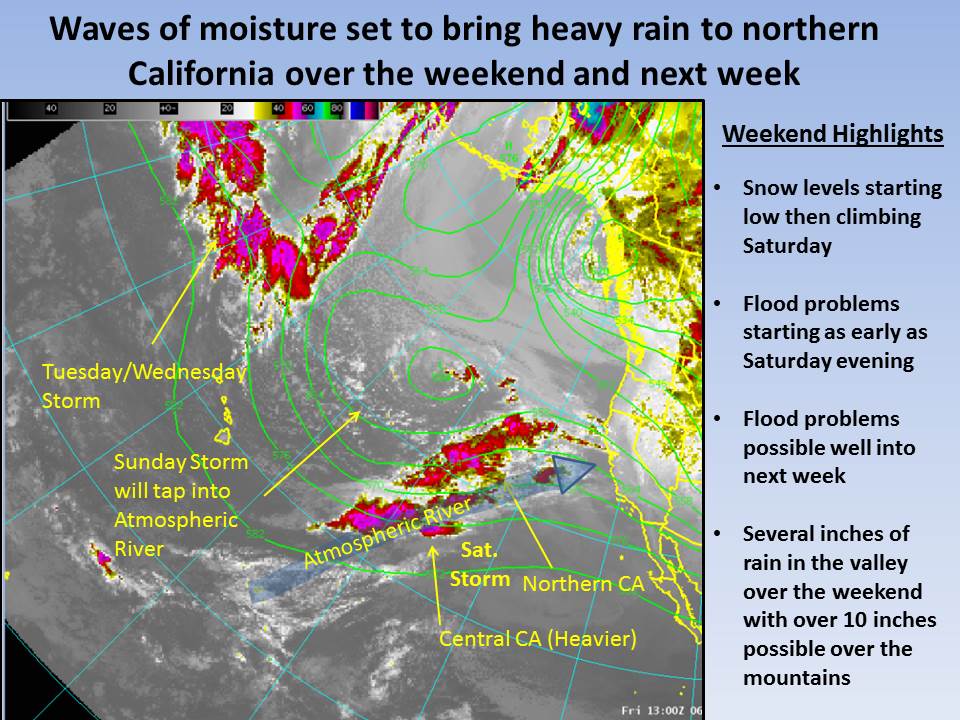
IMAGE: PIVOTAL WEATHERThe weekend storm is forecast to dump at least 7 inches of rain in the Bay Area, with up to a foot of rain in some of the hilly areas nearby, while several more feet of snow fall in the highest peaks of the Sierra Nevada Mountains.Of particular concern is the presence of 4 to 8 feet of new snow that fell this week even at lower elevations in the mountains of northern and central California.Photos from ski areas in the Sierras showed a winter wonderland of fresh powder, which many skiers and snowboarders took advantage of before the next storms hit.The weekend storm is forecast to bring with it a slug of mild air all the way from the tropics, which will turn the heavy, cement-like snow to rain from the surface all the way to 9,000 feet during the height of the storm. This means all but the highest mountain peaks will see rain for part of the event, before temperatures plummet again by Monday.This raises the specter of snowmelt-induced flooding in areas like Yosemite National Park, the Lake Tahoe region and other parts of the Golden State.Here's how meteorologists at the National Weather Service in Reno described the flood dangers this storm poses:"It won't take much rainfall to generate flood impacts across the Sierra and western Nevada.Creeks, streams, urban areas and farmland are certainly at risk for flooding late this weekend."By the time the next storm is over, the highest peaks of California's Sierra Nevada Mountains and parts of the Cascade range will have picked up over 120 to 150 inches of snow in the past seven days, with much more on the way as more storms take aim at the West next week and beyond.In fact, computer models show storms with atmospheric river links stacked up one after the other like planes landing at O'Hare Airport during rush hour."The amount of rain over the next 7-10 days will likely be substantial if not historic," according to the National Weather Service (NWS) forecast office in San Francisco.A large area of atmospheric moisture moves toward the West Coast in this GOES West water vapor imagery from 1/6: goo.gl/wr7anRUsing NWS predictions, the private forecasting firm WeatherBell Analytics calculated that these storms could dump 14.45 trillion gallons of water during the next seven days. Such a figure is far from exact, but it illustrates the potency of the atmospheric river.The NWS is predicting up to a foot of rainfall from the weekend event alone, and has referenced a particularly damaging storm that hit on January 3, 1982 as a potential analog to this event. That storm caused mudslides in the Santa Cruz Mountains and north bay.Mudslides, debris flows and river flooding are all threats from the upcoming storms throughout central California in particular."It's impossible to predict the exact impacts of this weekend but [it's] a good reminder of what can happen when the the [sic] sub-tropical connection off the Pacific kicks in," meteorologists wrote in a technical forecast discussion early Friday morning. "After several years of drought and dry January's its [sic] a stark reminder of what northern California winters can throw at you."The weekend storm also appears to be comparable to an event that began in late Dec. 2005 and caused about $300 million in damage across the state, according to the U.S. Geological Survey.Atmospheric rivers
The upcoming storm, as well as the storms that will follow it, is an example of a potent atmospheric river event.Atmospheric rivers are narrow highways of moisture in the sky. These phenomena transport huge amounts of water vapor — the gas form of liquid water — and point it like a firehose at a relatively narrow area. When the moisture hits a source of lift, such as a storm system, a mountain range, or both, that moisture is wrung out in the form of rain and snow.While other parts of the country receive precipitation from various types of storms — like hurricanes along the East Coast — California is highly dependent on atmospheric rivers for its annual precipitation. About six to 12 storms per year typically contribute nearly half of California's annual precipitation.
IMAGE: SCRIPPS INSTITUTION OF OCEANOGRAPHYSome research shows that extremely prolific atmospheric rivers could become far more common — perhaps twice as common as they are now — in parts of California by the end of the century, though this is still a matter of scientific debate. If this occurs, water managers will have to adjust to accommodate more precipitation extremes and avoid severe floods.Not enough to end the drought
In the next 7 days alone, California is forecast to average about 5 inches of rain and melted snow statewide, which is about 25 percent of the state’s annual average precipitation and 1.2 inches higher than an average January, according to WeatherBell calculations based on NWS forecasts.With heavy rain and snow having already fallen in parts of California at the start of January, the state is likely to far exceed the average January precipitation in the Golden State during the next 7 to 10 days.Even with these atmospheric river events, however, California’s drought won’t be over.It would take several more such events to make a more significant dent in the long-term precipitation deficit the state has accrued.
IMAGE: SQUAW VALLEY ALPINE MEADOWSBut there's no El Niño
One of the remarkable things about these Western storms is that they're hitting during a winter in which there's no El Niño present in the tropical Pacific Ocean. Yet during the past two winters, when one of the most powerful El Niño events on record was occurring, such storms were a no-show.El Niño years tend to be more efficient at producing atmospheric rivers, since moisture and atmospheric heat are heightened above parts of the tropical Pacific Ocean at such times.El Niño events are characterized by higher ocean temperatures in the tropical Pacific Ocean, altered Pacific trade winds and shifts in weather patterns from Australia to North America and beyond.Atmospheric rivers can occur during other winters as well, but they may be slightly less frequent or potent.So far, the winter of 2016-17 is turning out to be exactly what California was hoping for from last year's El Niño, it's just arriving as an unexpected, and potentially dangerous, guest.




No comments:
Post a Comment