Even without El Niño, Earth's temperatures continue to rise
WASHINGTON-- Earth last year wasn't quite as hot as 2016's record-shattering mark, but it ranked second or third, depending on who was counting.
Either
way, scientists say it showed a clear signal of man-made global warming
because it was the hottest year they've seen without an El Niño
boosting temperatures naturally.
The National Oceanic and
Atmospheric Administration (NOAA) and the United Kingdom's
meteorological office on Thursday announced that 2017 was the third
hottest year on record. At the same time, NASA and researchers from a
nonprofit in Berkeley, California, called it the second.
The agencies slightly differ because of how much they count an overheating Arctic, where there are gaps in the data.
The
global average temperature in 2017 was 58.51 degrees (14.7 degrees
Celsius), which is 1.51 degrees (0.84 Celsius) above the 20th century
average and just behind 2016 and 2015, NOAA said. Other agencies'
figures were close but not quite the same.
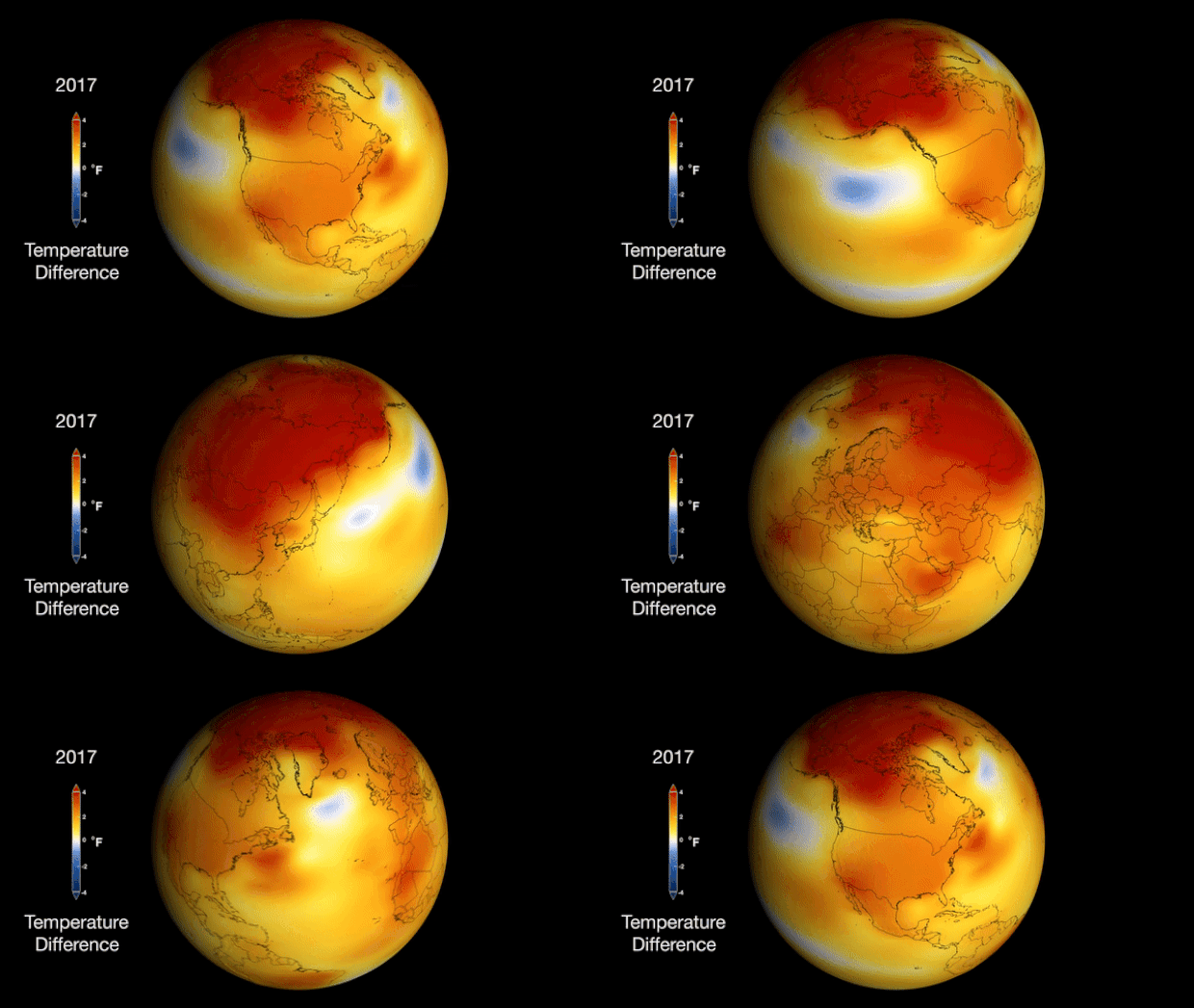
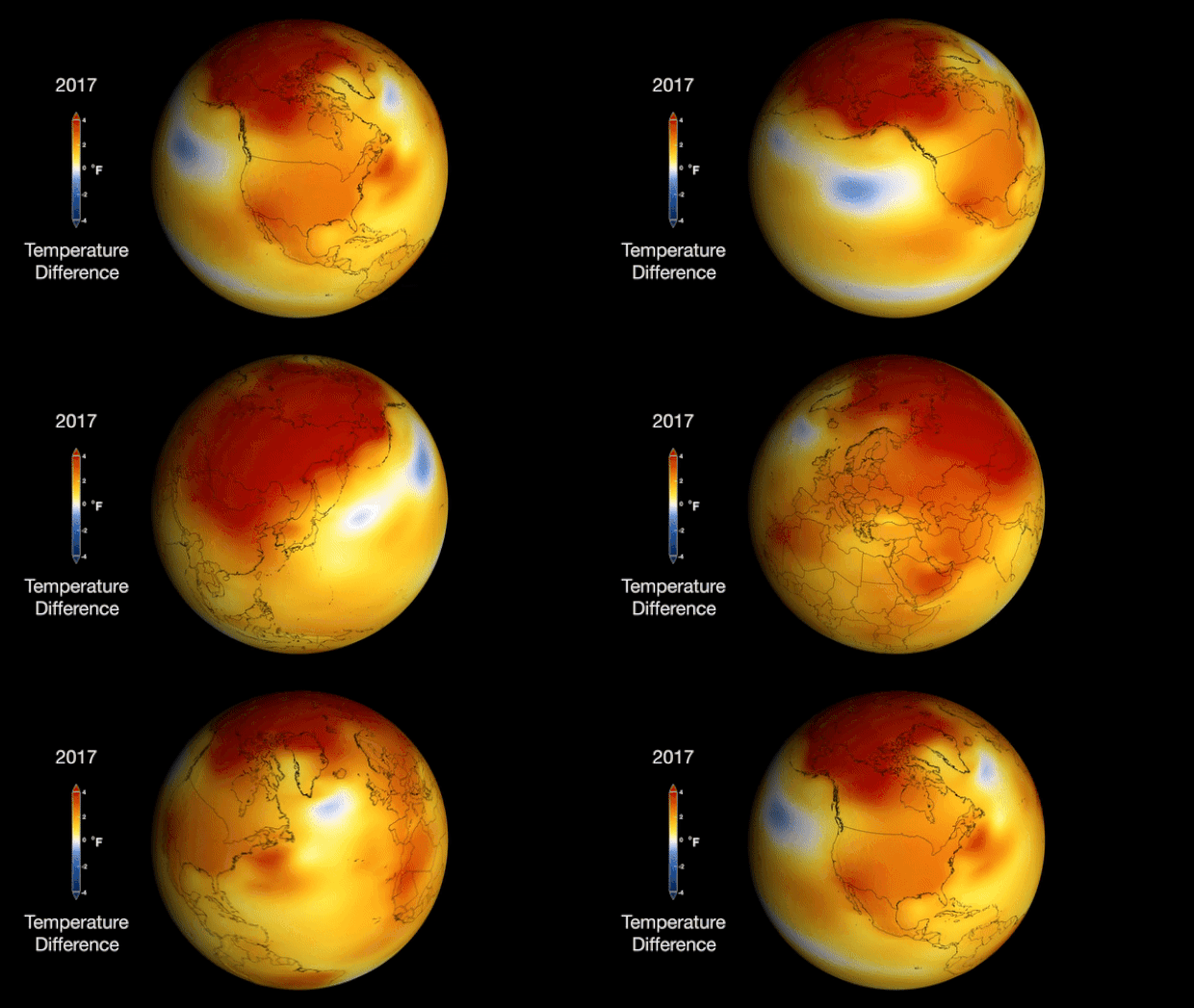
NASA animation shows above-normal average temperatures for most of the globe in 2017.
NASA's Scientific Visualization Studio
Earlier,
European forecasters called 2017 the second hottest year, while the
Japanese Meteorological Agency called it the third hottest. Two other
scientific groups that use satellite, not ground, measurements split on
2017 being second or third hottest. With four teams calling it the
second hottest year and four teams calling it third, the United Nations'
World Meteorological Organization termed 2017 a tie for second with
2015.
However, experts say it doesn't really matter which year is hottest, instead, it's important to look at long-term trends.
"Seventeen
of the 18 warmest years on record have all been during this century,"
said Petteri Taalas, World Meteorological Organization
Secretary-General. "The degree of warming during the past three years
has been exceptional."
"Arctic warmth has been especially
pronounced and this will have profound and long-lasting repercussions on
sea levels, and on weather patterns in other parts of the world."
During an El Niño year
-- when a warming of the central Pacific changes weather worldwide --
the globe's annual temperature can spike, naturally, by a tenth or two
of a degree, scientists said. There was a strong El Niño during 2015 and
2016.
But 2017 finished with a La Nina, the cousin of El Niño
that lowers temperatures. Had there been no man-made warming, 2017 would
have been average or slightly cooler than normal, said National Center
for Atmospheric Research climate scientist Ben Sanderson.
On the
other hand, NASA calculated if the temperature contributions of El Niño
and El Niña were removed from the global data through the years, 2017
would go down as the hottest year on record, NASA chief climate
scientist Gavin Schmidt said.
Carbon pollution is like putting the Earth on an escalator
of rising temperatures, with natural variation such as El Niño or the
cooling effect of volcanoes like hopping up or down a step or two on
that escalator, scientists said. Not every year will be warmer than the
last because of natural variations, but the trend over years will be
rising temperatures, they said.
The observed warming has been
predicted within a few tenths of a degree in computer simulations going
back to the 1970s and 1980s, several scientists said.
It has been 33 years since the last month that the globe was cooler than normal, according to NOAA.
Northern
Illinois University climate scientist Victor Gensini has never lived
through a month or year that wasn't hotter than normal.
"I look at
pictures of the great winters of the late '70s from my parents and
wonder if I'll ever experience anything like that in my lifetime," said
Gensini, who's 31.














No comments:
Post a Comment