Why millennials struggle for success

25 photos: 2015 CNN Heroes
Jersey babysitter-turned-hero – In 2006, New Jersey native Maggie Doyne
used $5,000 she had earned for babysitting to purchase land in Surkhet,
a district in western Nepal. She worked with the local community to
build the Kopila Valley Children's Home, which today is home to nearly
50 children.
Hide Caption
13 of 25

25 photos: 2015 CNN Heroes
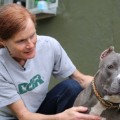
Keeping people and pets together – Lori Weise
runs Downtown Dog Rescue, a nonprofit that provides resources to help
low-income families keep and care for their pets near Skid Row in Los
Angeles.
Hide Caption
14 of 25

25 photos: 2015 CNN Heroes
Hero was once expelled – Artist Adarsh Alphons'
nonprofit, ProjectArt, provides free arts classes for New York City
public school children. Once expelled from school for doodling, Alphons
eventually presented his work to the late world leaders Nelson Mandela
and Pope John Paul II.
Hide Caption
15 of 25

25 photos: 2015 CNN Heroes
Saving 'throwaway kids' – Teacher Richard Bienvenue
helps troubled teens learn trade skills from professionals and offers
them high school education. Many graduates of the Our House program have
earned trade licenses and are working full-time.
Hide Caption
16 of 25

25 photos: 2015 CNN Heroes
Helping the Lakota people – Rochelle Ripley's
nonprofit has delivered an estimated $9 million in services and goods
to the Lakota people. She and volunteers run a food bank and provide
free health services, home renovations and educational opportunities.
Hide Caption
17 of 25

25 photos: 2015 CNN Heroes
Changing the doctor-patient relationship – Cardiologist Dr. David Sabgir's nonprofit spurs doctors and patients to meet for regular walks.
Hide Caption
18 of 25

25 photos: 2015 CNN Heroes
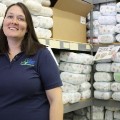
Helping families with children – Corinne Cannon founded the D.C. Diaper Bank when her son was only one years old. The nonprofit has provided nearly 2 million diapers to low-income families.
Hide Caption
19 of 25

25 photos: 2015 CNN Heroes
New ways to aid troubled young people – Tomás Alvarez started a hip-hop therapy program
aimed at troubled youth. Participants join peer-mentorship activities
and are encouraged to write and rap about their feelings. Since 2009,
Alvarez says more than 1,000 young people have found hope through the
program.
Hide Caption
20 of 25

25 photos: 2015 CNN Heroes
'River from the Sky' – Bhagwati Agrawal's nonprofit, Sustainable Innovations,
created a network of rooftops, gutters, pipes and underground
reservoirs that collect and store water from monsoon rains. The
time-saving system frees adults to pursue valuable activities and
children to attend school.
Hide Caption
21 of 25

25 photos: 2015 CNN Heroes
Helping single parents with cancer – Jody Farley-Berens
helped start Singleton Moms to support single moms battling cancer.
Since 2006, the nonprofit has provided assistance to more than 300
parents in the Phoenix area.
Hide Caption
22 of 25

25 photos: 2015 CNN Heroes
Helping kids 'see' their future – Eight U.S. states don't require vision and hearing screenings in schools. After going partially blind and deaf as a child, Chelsea Elliott
created a solution. Her nonprofit -- the Half-Helen Foundation --
offers free hearing and vision screenings for thousands of children,
particularly in lower income communities.
Hide Caption
23 of 25

25 photos: 2015 CNN Heroes
Helping inmates become 'better people' – Kim Carroll's nonprofit aims to teach life skills to inmates so they can successfully move from prison to society.
Hide Caption
24 of 25

25 photos: 2015 CNN Heroes
Breaking a cycle of homelessness – Kim Carter helps provide housing, counseling and job training to help women reunite with their children.
Hide Caption
25 of 25

25 photos: 2015 CNN Heroes
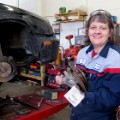
Giving needy a lift – All of the 2015 CNN Heroes show how one person can truly make a difference. Cathy Heying
helps the needy repair their vehicles at low cost so they can continue
on the road to success. Heying has provided affordable car repairs to
hundreds of low-income individuals, saving them a total of over
$170,000. Click through the gallery to meet more 2015 CNN Heroes.
Hide Caption
1 of 25

25 photos: 2015 CNN Heroes
Undercover doctor treats homeless – Dr. Jim Withers
used to dress like a homeless person. On purpose. Two to three nights a
week, he rubbed dirt in his hair and muddied up his jeans and shirt
before walking the dark streets of Pittsburgh, searching for homeless
people who needed medical care.
Hide Caption
2 of 25

25 photos: 2015 CNN Heroes
Showing kids nature, by bike – For three decades, Marilyn Price
has helped at-risk kids use bikes to experience nature. Her nonprofit,
Trips for Kids, has 90 chapters worldwide, serving more than 15,000
children a year.
Hide Caption
3 of 25

25 photos: 2015 CNN Heroes
Choosing guitars over guns – Musician Chad Bernstein's
nonprofit, Guitars Over Guns, pairs kids with professional musician
mentors in two of Miami's poorest communities. He says his group has
seen more than a 90% increase in academic performance and school
attendance of students in the program.
Hide Caption
4 of 25

25 photos: 2015 CNN Heroes
Growing food for his community – Richard Joyner's nonprofit, Conetoe Family Life Center, grows food which feeds nearby residents for free and helps students raise scholarship money.
Hide Caption
5 of 25

25 photos: 2015 CNN Heroes
Transforming waste into acts of heroism – An estimated 40% of food in the U.S. goes to waste, while one in six Americans struggles with food insecurity. Robert Lee's nonprofit picks up fresh food that would otherwise go to waste and gets it to people in need.
Hide Caption
6 of 25

25 photos: 2015 CNN Heroes
'Walking off' the war – Iraq War veteran Sean Gobin's
nonprofit, Warrior Hike, helps combat vets -- some with PTSD -- by
offering them equipment for hikes so they can connect with nature and
work through their issues while enjoying the camaraderie and support of
fellow war veterans.
Hide Caption
7 of 25

25 photos: 2015 CNN Heroes
Healing Chicago's 'mean streets' – Dr. Daniel Ivankovich
co-founded OnePatient Global Health Initiative to help those with
little or no insurance. "I thought to myself, this is happening in
America?" he said. He has treated more than 200 victims of gun violence
in Chicago and today runs three clinics and performs more than 600
surgeries a year.
Hide Caption
8 of 25

25 photos: 2015 CNN Heroes
Meet the 'Sloth Lady of Suriname' – In Suriname, Monique Pool has
been a passionate sloth protector since 2005. She also takes in
anteaters, armadillos and porcupines. Her volunteer group has rescued,
rehabilitated and released more than 600 animals.
Hide Caption
9 of 25

25 photos: 2015 CNN Heroes
Teaching city kids Hollywood skills – Fred Heinrich's nonprofit
provides free hands-on job training and placement for low-income
minority youth, giving them increased access to the film and television
industry.
Hide Caption
10 of 25

25 photos: 2015 CNN Heroes
He turns poachers into protectors – Edwin Sabuhoro's
nonprofit, Iby'lwacu Cultural Village, turns gorilla poachers into
protectors by offering income opportunities near a habitat for
endangered gorillas.
Hide Caption
11 of 25

25 photos: 2015 CNN Heroes
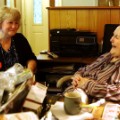
No one should die alone – More than 11 million senior citizens live alone in the United States. To help this frail and vulnerable population, Inez Russell
started Friends for Life. The nonprofit enlists advocates and friends
for seniors in Texas who need a helping hand. Since 1986, Russell and
her group have helped 22,000 people navigate a variety of difficulties.
Hide Caption
12 of 25
25 photos: 2015 CNN Heroes
Jersey babysitter-turned-hero – In 2006, New Jersey native Maggie Doyne
used $5,000 she had earned for babysitting to purchase land in Surkhet,
a district in western Nepal. She worked with the local community to
build the Kopila Valley Children's Home, which today is home to nearly
50 children.
Hide Caption
13 of 25
25 photos: 2015 CNN Heroes
Keeping people and pets together – Lori Weise
runs Downtown Dog Rescue, a nonprofit that provides resources to help
low-income families keep and care for their pets near Skid Row in Los
Angeles.
Hide Caption
14 of 25
25 photos: 2015 CNN Heroes
Hero was once expelled – Artist Adarsh Alphons'
nonprofit, ProjectArt, provides free arts classes for New York City
public school children. Once expelled from school for doodling, Alphons
eventually presented his work to the late world leaders Nelson Mandela
and Pope John Paul II.
Hide Caption
15 of 25
25 photos: 2015 CNN Heroes
Saving 'throwaway kids' – Teacher Richard Bienvenue
helps troubled teens learn trade skills from professionals and offers
them high school education. Many graduates of the Our House program have
earned trade licenses and are working full-time.
Hide Caption
16 of 25
25 photos: 2015 CNN Heroes
Helping the Lakota people – Rochelle Ripley's
nonprofit has delivered an estimated $9 million in services and goods
to the Lakota people. She and volunteers run a food bank and provide
free health services, home renovations and educational opportunities.
Hide Caption
17 of 25
25 photos: 2015 CNN Heroes
Changing the doctor-patient relationship – Cardiologist Dr. David Sabgir's nonprofit spurs doctors and patients to meet for regular walks.
Hide Caption
18 of 25
25 photos: 2015 CNN Heroes
Helping families with children – Corinne Cannon founded the D.C. Diaper Bank when her son was only one years old. The nonprofit has provided nearly 2 million diapers to low-income families.
Hide Caption
19 of 25
25 photos: 2015 CNN Heroes
New ways to aid troubled young people – Tomás Alvarez started a hip-hop therapy program
aimed at troubled youth. Participants join peer-mentorship activities
and are encouraged to write and rap about their feelings. Since 2009,
Alvarez says more than 1,000 young people have found hope through the
program.
Hide Caption
20 of 25
25 photos: 2015 CNN Heroes
'River from the Sky' – Bhagwati Agrawal's nonprofit, Sustainable Innovations,
created a network of rooftops, gutters, pipes and underground
reservoirs that collect and store water from monsoon rains. The
time-saving system frees adults to pursue valuable activities and
children to attend school.
Hide Caption
21 of 25
25 photos: 2015 CNN Heroes
Helping single parents with cancer – Jody Farley-Berens
helped start Singleton Moms to support single moms battling cancer.
Since 2006, the nonprofit has provided assistance to more than 300
parents in the Phoenix area.
Hide Caption
22 of 25
25 photos: 2015 CNN Heroes
Helping kids 'see' their future – Eight U.S. states don't require vision and hearing screenings in schools. After going partially blind and deaf as a child, Chelsea Elliott
created a solution. Her nonprofit -- the Half-Helen Foundation --
offers free hearing and vision screenings for thousands of children,
particularly in lower income communities.
Hide Caption
23 of 25
25 photos: 2015 CNN Heroes
Helping inmates become 'better people' – Kim Carroll's nonprofit aims to teach life skills to inmates so they can successfully move from prison to society.
Hide Caption
24 of 25
25 photos: 2015 CNN Heroes
Breaking a cycle of homelessness – Kim Carter helps provide housing, counseling and job training to help women reunite with their children.
Hide Caption
25 of 25
25 photos: 2015 CNN Heroes
Giving needy a lift – All of the 2015 CNN Heroes show how one person can truly make a difference. Cathy Heying
helps the needy repair their vehicles at low cost so they can continue
on the road to success. Heying has provided affordable car repairs to
hundreds of low-income individuals, saving them a total of over
$170,000. Click through the gallery to meet more 2015 CNN Heroes.
Hide Caption
1 of 25
25 photos: 2015 CNN Heroes
Undercover doctor treats homeless – Dr. Jim Withers
used to dress like a homeless person. On purpose. Two to three nights a
week, he rubbed dirt in his hair and muddied up his jeans and shirt
before walking the dark streets of Pittsburgh, searching for homeless
people who needed medical care.
Hide Caption
2 of 25
25 photos: 2015 CNN Heroes
Showing kids nature, by bike – For three decades, Marilyn Price
has helped at-risk kids use bikes to experience nature. Her nonprofit,
Trips for Kids, has 90 chapters worldwide, serving more than 15,000
children a year.
Hide Caption
3 of 25
25 photos: 2015 CNN Heroes
Choosing guitars over guns – Musician Chad Bernstein's
nonprofit, Guitars Over Guns, pairs kids with professional musician
mentors in two of Miami's poorest communities. He says his group has
seen more than a 90% increase in academic performance and school
attendance of students in the program.
Hide Caption
4 of 25
25 photos: 2015 CNN Heroes
Growing food for his community – Richard Joyner's nonprofit, Conetoe Family Life Center, grows food which feeds nearby residents for free and helps students raise scholarship money.
Hide Caption
5 of 25
25 photos: 2015 CNN Heroes
Transforming waste into acts of heroism – An estimated 40% of food in the U.S. goes to waste, while one in six Americans struggles with food insecurity. Robert Lee's nonprofit picks up fresh food that would otherwise go to waste and gets it to people in need.
Hide Caption
6 of 25
25 photos: 2015 CNN Heroes
'Walking off' the war – Iraq War veteran Sean Gobin's
nonprofit, Warrior Hike, helps combat vets -- some with PTSD -- by
offering them equipment for hikes so they can connect with nature and
work through their issues while enjoying the camaraderie and support of
fellow war veterans.
Hide Caption
7 of 25
25 photos: 2015 CNN Heroes
Healing Chicago's 'mean streets' – Dr. Daniel Ivankovich
co-founded OnePatient Global Health Initiative to help those with
little or no insurance. "I thought to myself, this is happening in
America?" he said. He has treated more than 200 victims of gun violence
in Chicago and today runs three clinics and performs more than 600
surgeries a year.
Hide Caption
8 of 25
25 photos: 2015 CNN Heroes
Meet the 'Sloth Lady of Suriname' – In Suriname, Monique Pool has
been a passionate sloth protector since 2005. She also takes in
anteaters, armadillos and porcupines. Her volunteer group has rescued,
rehabilitated and released more than 600 animals.
Hide Caption
9 of 25
25 photos: 2015 CNN Heroes
Teaching city kids Hollywood skills – Fred Heinrich's nonprofit
provides free hands-on job training and placement for low-income
minority youth, giving them increased access to the film and television
industry.
Hide Caption
10 of 25
25 photos: 2015 CNN Heroes
He turns poachers into protectors – Edwin Sabuhoro's
nonprofit, Iby'lwacu Cultural Village, turns gorilla poachers into
protectors by offering income opportunities near a habitat for
endangered gorillas.
Hide Caption
11 of 25
25 photos: 2015 CNN Heroes
No one should die alone – More than 11 million senior citizens live alone in the United States. To help this frail and vulnerable population, Inez Russell
started Friends for Life. The nonprofit enlists advocates and friends
for seniors in Texas who need a helping hand. Since 1986, Russell and
her group have helped 22,000 people navigate a variety of difficulties.
Hide Caption
12 of 25
25 photos: 2015 CNN Heroes
Jersey babysitter-turned-hero – In 2006, New Jersey native Maggie Doyne
used $5,000 she had earned for babysitting to purchase land in Surkhet,
a district in western Nepal. She worked with the local community to
build the Kopila Valley Children's Home, which today is home to nearly
50 children.
Hide Caption
13 of 25












Story highlights
- Angela Duckworth: Grit, that special combination of passion and perseverance, is the key to success
- Baby boomers are grittier than millennials, she says, but not for the reasons we think
Angela Duckworth, PhD, is a 2013 MacArthur Fellow and professor of psychology at the University of Pennsylvania. She is the co-founder of the Character Lab, a nonprofit whose mission is to advance the science and practice of character development in children. She is the author of a new book, GRIT: The Power of Passion and Perseverance (Scribner). The opinions expressed in this commentary are solely those of the author.

(CNN)"What's
wrong with millennials?" This is a question many older Americans are
asking. Why do they keep changing their minds about what they want to
do with their lives? Why does even a hint of critical feedback send them
into a tailspin of self-doubt?
In a word, why don't they have more grit?
This
last question is particularly important to me because I am a
psychologist who studies grit. I define grit as passion and
perseverance for long-term goals. It's what keeps us going when
everything else makes it seem easier to give up. In my research, I find
that how you score on my Grit Scale—a short survey of your current level of passion and perseverance—predicts achievement.
Grittier
students are more likely to earn their diplomas, grittier teachers are
more effective in the classroom, grittier soldiers are more likely to
complete their training, and grittier salespeople are more likely to
keep their jobs. The more challenging the domain, the more grit seems to
matter.

I
now have Grit Scale scores from thousands of American adults. My data
provide a snapshot of grit across adulthood. And I've discovered a
strikingly consistent pattern: grit and age go hand in hand.
Sixty-somethings tend to be grittier, on average, than fifty-somethings,
who are in turn grittier than forty-somethings, and so on.
So,
why are millennials at the bottom of the heap in grit? There are two
possible explanations. That's because the sixty-somethings I've surveyed
differ from the twenty-somethings in two ways. One difference is that
they grew up in the "Mad Men" era rather than the new millennium. But
it's also true that they have more than twice as much life experience.
Do millennials lack grit because our culture devalues a work ethic?
Let's
consider the first possibility and assume that older adults are
grittier than their younger counterparts because in their formative
years, they were shaped by different cultural forces. Back in the day, the story goes,
you were expected to grow up to do one thing for a living and then
retire. You were exhorted to work hard, and you were told that nothing
in life comes easy. These cultural norms validated a solid work ethic
and a single lifelong career.
If
you're a baby boomer, chances are you agree with this explanation. I've
lost count of the business leaders who've told me that their young
employees are far less gritty than they themselves were at the same age.
Millennials, they complain, sigh loudly when work needs to be taken
home over the weekend, spend less time at the office than older
colleagues with children at home, and are both puzzled and indignant
when, after a few months on the job, they haven't been promoted.


The secret to productivity 01:07
There
is ample evidence that certain cultural attitudes have changed. We know
this because there are surveys that have been given to young adults
again and again over the decades. For instance, millennials are
comparatively more likely to support same-sex marriage and the legalization of marijuana. They have less faith in institutions like our elected government.
Scientific
evidence, however, fails to confirm what older business leaders believe
about their younger employees. When it comes to differences in
psychological attributes like grit, the evidence of generational difference is much less robust than you might think. Because I created the Grit Scale
only about a decade ago, I can't directly test whether young adults
growing up in earlier epochs would score higher than young adults today.

11 photos: Millennials describe the 2016 election in 1 word


 end quote from


Be
that as it may, plenty of archival data has been collected on
psychological traits highly correlated with grit, like
conscientiousness. Some of these studies have found absolutely no
differences in conscientiousness. Others, such as one study
of Dutch college students, suggests that those entering university 30
years ago were, if anything, slightly less conscientious than those
entering just a decade ago.
Or do baby boomers have more grit because they have more life experience?
Now
let's test our second hypothesis for why millennials might have less
grit: the possibility that we develop passion and perseverance with life
experience. This makes good intuitive sense. After all, as the years
go by, we get to know ourselves better. We figure out what we're
interested in. With practice, we learn that trying to do something hard,
and failing at it, isn't the end of the world. As a friend who lost a
job once told me, there's nothing like getting fired to make you realize
how bumpy the road of life is, and how surprisingly capable we are of
getting up after falling down.
In longitudinal studies
conducted by different scientists on different people over varying
swathes of the lifespan, the consistent pattern is that positive
psychological traits get better over time. As our knees and hips and
eyesight deteriorate, we become more dependable, less impulsive, kinder,
and less moody. Psychologists call this the maturity principle.
My
own life experience fits this principle to a T. I spent my twenties
skipping around from career to career. I worked very briefly in the
White House, writing speeches. I spent a year doing management
consulting. Another year, I helped run a nonprofit website for parents. I
taught math in urban public schools. At one point, I thought seriously
about starting a charter school. Betwixt and between, I earned degrees
in neurobiology and neuroscience.


The healing powers of music 01:32
By
the time I turned 30, I realized that not having a clear direction in
life was tremendously unsatisfying. After much soul searching (our
living room couch nearly turned crusty with the salt of my tears) I
turned to my husband and declared I was going to graduate school.
I
wanted to become a psychologist so that I could understand, finally,
why some people end up successful in life and why others in identical
circumstances do not. And that's exactly what I did. When I look back on
that decision and the work I have done since then, I realize that in an
important sense, knowing with certainty why older adults are grittier
than their younger counterparts is less important than simply
acknowledging that they are.

This knowledge could revolutionize how we think about older workers in what Anne-Marie Slaughter calls "phase three." Slightly slower-moving silverbacks may have more passion and perseverance, not to mention perspective, expertise and emotional equanimity,
than younger whippersnappers. If the quality and quantity of continuous
effort toward goals matters as much as I think it does, we may actually
get more productive, not less, as we get older—even if we can't pull
all-nighters like we used to.
In the end, grit and growth go hand in hand
Even
more encouraging—whether because of life experience or cultural
changes—age trends in grit affirm that our character is never entirely
fixed. Who we become in life is not entirely determined by our genes.
Sure, the DNA we inherited from our parents inclines us toward more grit
or less, just like it influences everything else about us from our
waistline to our risk for skin cancer. But like those traits, grit is
also influenced by what happens to us, and what we make happen.
I am almost exactly the same age as the writer Pamela Druckerman, who observed
shortly before her forty-fourth birthday that "the biggest transition
of the 40s is realizing that we've actually, improbably, managed to
learn and grow a bit." As an example, she points out that "soul mate" is
a title earned, not discovered. I'd say the same of career callings.
So what's wrong with millennials? Nothing. They just haven't grown up. Yet.


No comments:
Post a Comment