ISIS in the crosshairs: Battle for Mosul begins
By Ray Sanchez, Eliott C. McLaughlin and Mohammed Tawfeeq, CNN
Updated 9:50 PM ET, Sun October 16, 2016




Story highlights
- ISIS tunnels, trenches targeted in missiles attacks, militia umbrella group says
- Offensive aims to rout estimate 3,500 to 5,000 fighters in last ISIS stronghold
(CNN)The offensive to liberate Mosul from ISIS control has begun, Iraqi Prime Minister Haider al-Abadi said in a televised statement early Monday.
"Our dearest people in Nineveh province, the victory bell has rung, and the operations to liberate Mosul have begun," he said. "I am announcing today the beginning of these heroic operations to liberate you from the brutality and terrorism of ISIS. God willing, we will meet soon on the ground of Mosul where we will all celebrate the liberation and your freedom."
Only forces with the Iraqi army and National Police will enter the city "and no others," the Prime Minister said.
Fighting with them are the Popular Mobilization Units, largely Shiite paramilitary forces that include Sunnis, Christians and other ethnic and religious groups. The units released a statement shortly after Monday's offensive began saying they were targeting ISIS tunnels and trenches south of Mosul with highly destructive thermobaric missiles.
Defeating ISIS in Mosul would represent a major victory for the Abadi government, as it struggles to boost its credibility, prove its military prowess and end the terrorist group's territorial dominance in Iraq's oil-rich north.
Routing the group from a port city close to the border of Syria and Turkey could also help stem the flow of fighters and weapons between the states.
The fight is expected to last weeks, if not months, and if the battles to wrest Falluja and Ramadi from ISIS' grip are indicators, Mosul will be a messy melee.
The assault's buildup has been ongoing for some time. US-led coalition and Iraqi forces have hammered ISIS targets with airstrikes for more than a year.

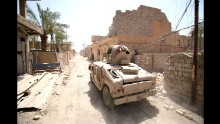
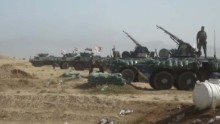
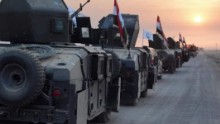
Iraqi forces gather at the Qayyarah military base, about 35 miles south of Mosul, on Sunday, as they prepare for an offensive to retake Mosul.
The Nineveh Liberation Operations Center, which was set up to coordinate the offensive, has brought in dozens of American and British advisers. A US artillery unit has provided cover for operations south of Mosul.
On ISIS' side of the fight, there have been reports of a growing network of tunnels leaving the city. The terrorist outfit has also allowed wounded fighters to leave Mosul and freed prisoners jailed for low-level offenses. The militants were also taking measures to combat the effectiveness of airstrikes.
Skirmishes flared outside Mosul in the days leading up to the battle, and Sunday brought several signs that the fight for Mosul was near, including an airstrike on one of the city's main bridges.
Not only did Abadi declare, "God willing, the decisive battle will begin soon," but leaflets proclaiming, "It's victory time," also rained over the city Sunday.
US playing supporting role

The 30,000-strong force tasked with recapturing the largest city under the terrorist group's control comprises many groups, with the Iraqi army and Kurdish Peshmerga making up the bulk.
Iraqi security forces are expected to lead the ground campaign with the backing of coalition airstrikes and advisers, US officials have said. Once Abadi announced the offensive had begun, Brett McGurk, the US State Department's special presidential envoy for the global coalition to counter ISIS, acknowledged in a tweet the operation aimed to end "two years of darkness under (ISIS) terrorists."
"Godspeed to the heroic Iraqi forces, Kurdish #Peshmerga, and #Ninewa volunteers. We are proud to stand with you in this historic operation,' he wrote in a second tweet.
Godspeed to the heroic Iraqi forces, Kurdish #Peshmerga, and#Ninewa volunteers. We are proud to stand with you in this historic operation.

The US recently announced the deployment of 600 additional troops to aid in the city's capture. The deployment brings the number of US personnel to more than 5,200, the Pentagon says.
"There are no major objectives after that," Navy Capt. Jeff Davis, a Pentagon spokesman, said. "This is it. This is the last big holdout in Iraq for (ISIS)."
Before becoming the top prize in the Iraqi portion of the militant group's self-declared caliphate, Mosul was inhabited by more than 2 million people.
About 1 million residents remain today -- in the clutches of an organization known to use civilians as shields.
Potential humanitarian disaster
The UN refugee agency says most of the remaining residents could flee once the fighting is underway, creating what a UN representative says could be "one of the largest man-made displacement crises of recent times."

Camps are being set up to accommodate the refugees, who will need transport and basic necessities once the Iraqi security forces and Peshmerga screen them as they leave the city.
Abadi told CNN in September that forces "are planning for a fight for many months." Some Peshmerga commanders have predicted it will take at least three months to clear the city as ISIS leaves sleeper cells behind.
Others expect a quicker victory, with ISIS leaders retreating to the desert west of Mosul.
ISIS prepares
Bracing for the offensive, ISIS in recent days allowed wounded fighters in Mosul to move to Raqqa, Syria, the group's de facto capital, a source inside Mosul said.

ISIS also released some low-level prisoners, including those jailed for their beards, cigarettes or clothing, the source added.
A tunnel network large enough to accommodate motorbikes stretches from the outskirts of the city to the nearby village of Hamdania, according to the source.
US military officials estimate there are 3,500 to 5,000 ISIS fighters in Mosul. ISIS supporters put the number at 7,000.
Plumes of black smoke rose from oil-filled trenches on fire outside northeastern Mosul, an attempt by ISIS to obscure its fighters' positions during airstrikes, military sources said.
In northern Iraq, the main road to Mosul is dotted with villages deserted in expectation of the fight.
Holding force
At checkpoints, ISIS fighters wore masks to disguise their identities in what is seen as a sign of decreasing confidence, as well as concerns about retaliation from Mosul residents.
There is concern among diplomats and Kurdish officials about plans for stabilizing and governing Mosul once ISIS is evicted, and according to US Deputy Secretary of State Antony Blinken, a holding force of about 15,000 Sunni elements was being trained and equipped to secure the city once it's liberated.
The push to Mosul is being felt more than 200 miles south, in Baghdad, where ISIS has launched suicide attacks. At least 34 people were killed in a Saturday suicide bombing at a Shiite gathering in the capital, police sources said.
Photos:
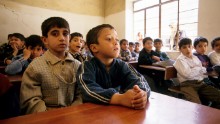
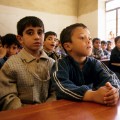
Children at a school in Mosul in 2002. ISIS developed its own curriculum after it took control of the city in 2014.
Hide Caption
14 of 26
Photos:
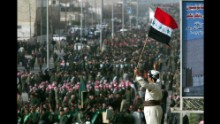
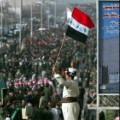
Crowds gathered in Mosul in February 2003 to protest US threats of invasion.
Hide Caption
15 of 26
Photos:
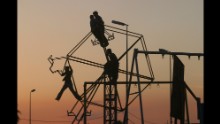
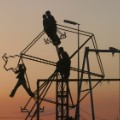
Kurdish children play on a broken ferris wheel in Mosul, a month before the invasion of Iraq in 2003.
Hide Caption
16 of 26
Photos:
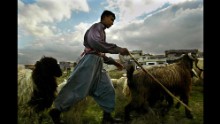
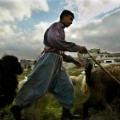
A teenage boy tends to a herd of sheep on the outskirts of Mosul in 2003.
Hide Caption
17 of 26
Photos:
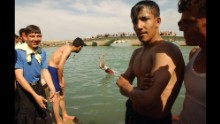
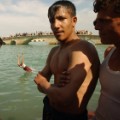
The lake in Saddam Hussein's palace was off-limits to Mosul's ordinary citizens until the dictator was toppled in April 2003.
Hide Caption
18 of 26
Photos:
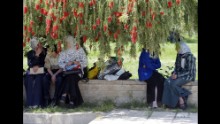
The University of Mosul is the second-largest in Iraq and boasted a rich tradition of learning. ISIS militants destroyed thousands of books and manuscripts housed at the university and developed a new curriculum.
Hide Caption
19 of 26
Photos:
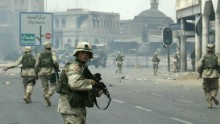
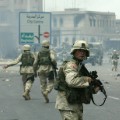
Fierce clashes erupted in Mosul in the summer of 2003, and US soldiers found themselves in the midst of urban warfare.
Hide Caption
20 of 26
Photos:
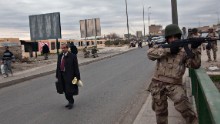
Iraqi police patrolled the city in 2005.
Hide Caption
21 of 26
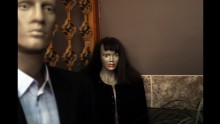
Photos:
This children's clothing factory in Mosul was operating after reconstruction efforts in 2007.
Hide Caption
22 of 26
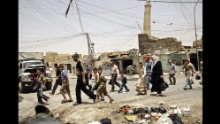
Photos:
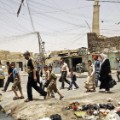
Moslawis walk past trash strewn about a busy market area in Mosul in 2009.
Hide Caption
23 of 26
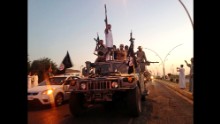
Photos:
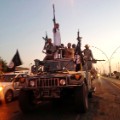
ISIS fighters parade down a main road in a commandeered Iraqi security forces vehicle after the militant group took control of Mosul in June 2014.
Hide Caption
24 of 26
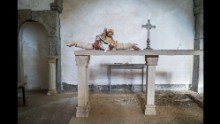
Photos:
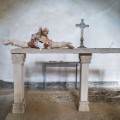
ISIS destroyed ancient Christian shrines and churches like this 13th-century church in the Assyrian town of Telskuf, not far from Mosul in the Nineveh plains.
Hide Caption
25 of 26
Photos:
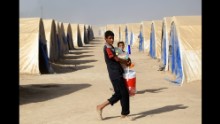
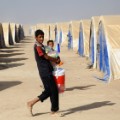
Iraqis displaced from ISIS-controlled towns and villages take shelter at this camp in Qayyarah, a few miles south of Mosul. Aid workers warn an assault on Mosul could trigger an exodus of catastrophic dimensions.
Hide Caption
26 of 26
Photos:
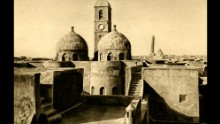
The clock tower of the Dominican Mission Church in Mosul, built in the 1870s, was a gift from Empress Eugenie of France.
Hide Caption
1 of 26
Photos:
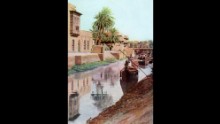
This print of Mosul is from the 1930s, when Iraq was a kingdom occupied by the British.
Hide Caption
2 of 26
Photos:
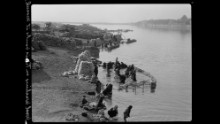
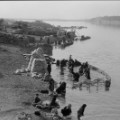
Among the many activities on the Tigris River in Mosul was wool washing.
Hide Caption
3 of 26
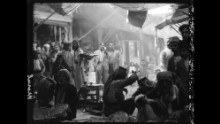
Photos:
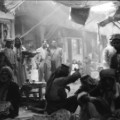
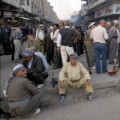
The souks, or markets, of Mosul hummed with activity every day.
Hide Caption
4 of 26
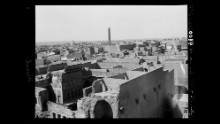
Photos:
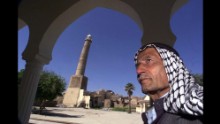
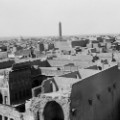
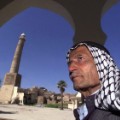
The famous leaning minaret of Mosul's 12th-century Great Mosque of al-Nuri towers in the background of this photo taken in the 1930s.
Hide Caption
5 of 26
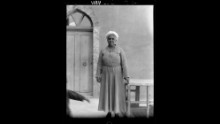
Photos:
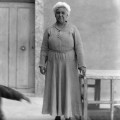
Lady Surma was the sister of the patriarch of the Assyrian Christian church in Mosul and became an ambassador for her people.
Hide Caption
6 of 26
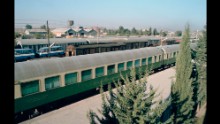
Photos:
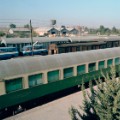
The British writer Agatha Christie arrived at this railway station in Mosul. Agatha Christie spent time in Mosul in the early 1950s while her husband, the archaeologist Max Mallowan, excavated the ancient site of Nimrud.
Hide Caption
7 of 26
Photos:
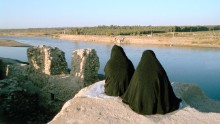
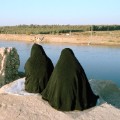
Two women look out over the Tigris from the 12th-century Bashtabiya Castle, a big part of Mosul's identity. ISIS destroyed the castle last year, according to the Iraqi Ministry of Tourism and Antiquities.
Hide Caption
8 of 26
Photos:
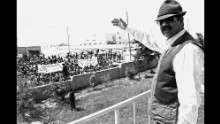
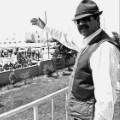
President Saddam Hussein waves to supporters from the balcony of the mayor's office in Mosul on a trip to see how farmers were faring under international sanctions.
Hide Caption
9 of 26
Photos:
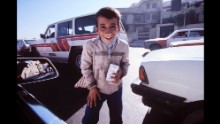
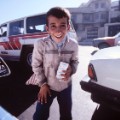
A boy begs for money in 1996. By then, Iraq was reeling under punishing international sanctions and widespread corruption.
Hide Caption
10 of 26
Photos:
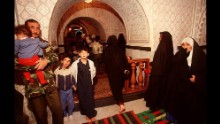
The mosque of the prophet Yunus (Arabic for Jonah from the Bible) stood on one of the two most prominent mounds of Nineveh's ruins and served at one time as an Assyrian Church. It contained Jonah's tomb and was destroyed by ISIS in 2014.
Hide Caption
11 of 26
Photos:
In this 2001 photo, a man stands before the Great Mosque's minaret, which leans like the Tower of Pisa and is nicknamed "al-Habda," or "the hunchback."
Hide Caption
12 of 26
Photos:
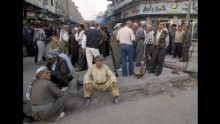
Kurds mingle with the crowds in central Mosul in 2002, just a few months before the U.S.-led invasion of Iraq.
Hide Caption
13 of 26
Photos:
Children at a school in Mosul in 2002. ISIS developed its own curriculum after it took control of the city in 2014.
Hide Caption
14 of 26
Photos:
Crowds gathered in Mosul in February 2003 to protest US threats of invasion.
Hide Caption
15 of 26
Photos:
Kurdish children play on a broken ferris wheel in Mosul, a month before the invasion of Iraq in 2003.
Hide Caption
16 of 26
Photos:
A teenage boy tends to a herd of sheep on the outskirts of Mosul in 2003.
Hide Caption
17 of 26
Photos:
The lake in Saddam Hussein's palace was off-limits to Mosul's ordinary citizens until the dictator was toppled in April 2003.
Hide Caption
18 of 26
Photos:
The University of Mosul is the second-largest in Iraq and boasted a rich tradition of learning. ISIS militants destroyed thousands of books and manuscripts housed at the university and developed a new curriculum.
Hide Caption
19 of 26
Photos:
Fierce clashes erupted in Mosul in the summer of 2003, and US soldiers found themselves in the midst of urban warfare.
Hide Caption
20 of 26
Photos:
Iraqi police patrolled the city in 2005.
Hide Caption
21 of 26
Photos:
This children's clothing factory in Mosul was operating after reconstruction efforts in 2007.
Hide Caption
22 of 26
Photos:
Moslawis walk past trash strewn about a busy market area in Mosul in 2009.
Hide Caption
23 of 26
Photos:
ISIS fighters parade down a main road in a commandeered Iraqi security forces vehicle after the militant group took control of Mosul in June 2014.
Hide Caption
24 of 26
Photos:
ISIS destroyed ancient Christian shrines and churches like this 13th-century church in the Assyrian town of Telskuf, not far from Mosul in the Nineveh plains.
Hide Caption
25 of 26
Photos:
Iraqis displaced from ISIS-controlled towns and villages take shelter at this camp in Qayyarah, a few miles south of Mosul. Aid workers warn an assault on Mosul could trigger an exodus of catastrophic dimensions.
Hide Caption
26 of 26
Photos:
The clock tower of the Dominican Mission Church in Mosul, built in the 1870s, was a gift from Empress Eugenie of France.
Hide Caption
1 of 26
Photos:
This print of Mosul is from the 1930s, when Iraq was a kingdom occupied by the British.
Hide Caption
2 of 26
Photos:
Among the many activities on the Tigris River in Mosul was wool washing.
Hide Caption
3 of 26
Photos:
The souks, or markets, of Mosul hummed with activity every day.
Hide Caption
4 of 26
Photos:
The famous leaning minaret of Mosul's 12th-century Great Mosque of al-Nuri towers in the background of this photo taken in the 1930s.
Hide Caption
5 of 26
Photos:
Lady Surma was the sister of the patriarch of the Assyrian Christian church in Mosul and became an ambassador for her people.
Hide Caption
6 of 26
Photos:
The British writer Agatha Christie arrived at this railway station in Mosul. Agatha Christie spent time in Mosul in the early 1950s while her husband, the archaeologist Max Mallowan, excavated the ancient site of Nimrud.
Hide Caption
7 of 26
Photos:
Two women look out over the Tigris from the 12th-century Bashtabiya Castle, a big part of Mosul's identity. ISIS destroyed the castle last year, according to the Iraqi Ministry of Tourism and Antiquities.
Hide Caption
8 of 26
Photos:
President Saddam Hussein waves to supporters from the balcony of the mayor's office in Mosul on a trip to see how farmers were faring under international sanctions.
Hide Caption
9 of 26
Photos:
A boy begs for money in 1996. By then, Iraq was reeling under punishing international sanctions and widespread corruption.
Hide Caption
10 of 26
Photos:
The mosque of the prophet Yunus (Arabic for Jonah from the Bible) stood on one of the two most prominent mounds of Nineveh's ruins and served at one time as an Assyrian Church. It contained Jonah's tomb and was destroyed by ISIS in 2014.
Hide Caption
11 of 26
Photos:
In this 2001 photo, a man stands before the Great Mosque's minaret, which leans like the Tower of Pisa and is nicknamed "al-Habda," or "the hunchback."
Hide Caption
12 of 26
Photos:
Kurds mingle with the crowds in central Mosul in 2002, just a few months before the U.S.-led invasion of Iraq.
Hide Caption
13 of 26
ISIS' last stand in Iraq
Mosul, a city almost 3,000 years old, would represent ISIS' last stand in Iraq. Though ISIS seeks to create an Islamic caliphate, it has lost considerable territory in the past two years, being driven out of Tikrit, Ramadi and Falluja.
Kurdish forces have dug in to the east, north and west of Mosul, and Iraqi forces have been moving slowly from the south.
Iraqi security forces also recently recaptured the Qayyara oil refinery and seized the Qayyara airbase, Iraq's third-largest. The airbase is expected to be a vital staging ground in the battle for Mosul.


On Friday, Abadi visited oil-rich Kirkuk province, where he met with leaders ahead of the operation to liberate the ISIS-controlled city of Hawija, about 100 miles south of Mosul. It has been under ISIS control since 2014, and Iraqi security forces estimate about 1,200 ISIS fighters occupy the city and nearby villages.
Abadi inspected military units and spoke to security officials. He said he was preparing for a military operation to take back more cities from ISIS.
Having nearly cleared ISIS from Anbar and Salaheddin provinces, the retaking of Hawija would be a coup as it would lessen or eliminate the threat to Iraqi and Peshmerga forces who would have their backs to the city during the battle for Mosul.
CNN's Arwa Damon, Ben Wedeman, Hamdi Alkhshali, Daniel Nikbakht, Susanna Capelouto, Nick Paton Walsh and Ghazi Balkiz contributed to this report.
end quote from:

(CNN)The offensive to liberate Mosul from ISIS control has begun, Iraqi Prime Minister …
Story highlights
- ISIS tunnels, trenches targeted in missiles attacks, militia umbrella group says
- Offensive aims to rout estimate 3,500 to 5,000 fighters in last ISIS stronghold
(CNN)The offensive to liberate Mosul from ISIS control has begun, Iraqi Prime Minister Haider al-Abadi said in a televised statement early Monday.
"Our dearest people in Nineveh province, the victory bell has rung, and the operations to liberate Mosul have begun," he said. "I am announcing today the beginning of these heroic operations to liberate you from the brutality and terrorism of ISIS. God willing, we will meet soon on the ground of Mosul where we will all celebrate the liberation and your freedom."
Only forces with the Iraqi army and National Police will enter the city "and no others," the Prime Minister said.
Fighting with them are the Popular Mobilization Units, largely Shiite paramilitary forces that include Sunnis, Christians and other ethnic and religious groups. The units released a statement shortly after Monday's offensive began saying they were targeting ISIS tunnels and trenches south of Mosul with highly destructive thermobaric missiles.
Defeating ISIS in Mosul would represent a major victory for the Abadi government, as it struggles to boost its credibility, prove its military prowess and end the terrorist group's territorial dominance in Iraq's oil-rich north.
Routing the group from a port city close to the border of Syria and Turkey could also help stem the flow of fighters and weapons between the states.
The fight is expected to last weeks, if not months, and if the battles to wrest Falluja and Ramadi from ISIS' grip are indicators, Mosul will be a messy melee.
The assault's buildup has been ongoing for some time. US-led coalition and Iraqi forces have hammered ISIS targets with airstrikes for more than a year.
Iraqi forces gather at the Qayyarah military base, about 35 miles south of Mosul, on Sunday, as they prepare for an offensive to retake Mosul.
The Nineveh Liberation Operations Center, which was set up to coordinate the offensive, has brought in dozens of American and British advisers. A US artillery unit has provided cover for operations south of Mosul.
On ISIS' side of the fight, there have been reports of a growing network of tunnels leaving the city. The terrorist outfit has also allowed wounded fighters to leave Mosul and freed prisoners jailed for low-level offenses. The militants were also taking measures to combat the effectiveness of airstrikes.
Skirmishes flared outside Mosul in the days leading up to the battle, and Sunday brought several signs that the fight for Mosul was near, including an airstrike on one of the city's main bridges.
Not only did Abadi declare, "God willing, the decisive battle will begin soon," but leaflets proclaiming, "It's victory time," also rained over the city Sunday.
US playing supporting role
The 30,000-strong force tasked with recapturing the largest city under the terrorist group's control comprises many groups, with the Iraqi army and Kurdish Peshmerga making up the bulk.
Iraqi security forces are expected to lead the ground campaign with the backing of coalition airstrikes and advisers, US officials have said. Once Abadi announced the offensive had begun, Brett McGurk, the US State Department's special presidential envoy for the global coalition to counter ISIS, acknowledged in a tweet the operation aimed to end "two years of darkness under (ISIS) terrorists."
"Godspeed to the heroic Iraqi forces, Kurdish #Peshmerga, and #Ninewa volunteers. We are proud to stand with you in this historic operation,' he wrote in a second tweet.
Godspeed to the heroic Iraqi forces, Kurdish #Peshmerga, and#Ninewa volunteers. We are proud to stand with you in this historic operation.
The US recently announced the deployment of 600 additional troops to aid in the city's capture. The deployment brings the number of US personnel to more than 5,200, the Pentagon says.
"There are no major objectives after that," Navy Capt. Jeff Davis, a Pentagon spokesman, said. "This is it. This is the last big holdout in Iraq for (ISIS)."
Before becoming the top prize in the Iraqi portion of the militant group's self-declared caliphate, Mosul was inhabited by more than 2 million people.
About 1 million residents remain today -- in the clutches of an organization known to use civilians as shields.
Potential humanitarian disaster
The UN refugee agency says most of the remaining residents could flee once the fighting is underway, creating what a UN representative says could be "one of the largest man-made displacement crises of recent times."
Camps are being set up to accommodate the refugees, who will need transport and basic necessities once the Iraqi security forces and Peshmerga screen them as they leave the city.
Abadi told CNN in September that forces "are planning for a fight for many months." Some Peshmerga commanders have predicted it will take at least three months to clear the city as ISIS leaves sleeper cells behind.
Others expect a quicker victory, with ISIS leaders retreating to the desert west of Mosul.
ISIS prepares
Bracing for the offensive, ISIS in recent days allowed wounded fighters in Mosul to move to Raqqa, Syria, the group's de facto capital, a source inside Mosul said.
ISIS also released some low-level prisoners, including those jailed for their beards, cigarettes or clothing, the source added.
A tunnel network large enough to accommodate motorbikes stretches from the outskirts of the city to the nearby village of Hamdania, according to the source.
US military officials estimate there are 3,500 to 5,000 ISIS fighters in Mosul. ISIS supporters put the number at 7,000.
Plumes of black smoke rose from oil-filled trenches on fire outside northeastern Mosul, an attempt by ISIS to obscure its fighters' positions during airstrikes, military sources said.
In northern Iraq, the main road to Mosul is dotted with villages deserted in expectation of the fight.
Holding force
At checkpoints, ISIS fighters wore masks to disguise their identities in what is seen as a sign of decreasing confidence, as well as concerns about retaliation from Mosul residents.
There is concern among diplomats and Kurdish officials about plans for stabilizing and governing Mosul once ISIS is evicted, and according to US Deputy Secretary of State Antony Blinken, a holding force of about 15,000 Sunni elements was being trained and equipped to secure the city once it's liberated.
The push to Mosul is being felt more than 200 miles south, in Baghdad, where ISIS has launched suicide attacks. At least 34 people were killed in a Saturday suicide bombing at a Shiite gathering in the capital, police sources said.
Photos:
Children at a school in Mosul in 2002. ISIS developed its own curriculum after it took control of the city in 2014.
Hide Caption
14 of 26
Photos:
Crowds gathered in Mosul in February 2003 to protest US threats of invasion.
Hide Caption
15 of 26
Photos:
Kurdish children play on a broken ferris wheel in Mosul, a month before the invasion of Iraq in 2003.
Hide Caption
16 of 26
Photos:
A teenage boy tends to a herd of sheep on the outskirts of Mosul in 2003.
Hide Caption
17 of 26
Photos:
The lake in Saddam Hussein's palace was off-limits to Mosul's ordinary citizens until the dictator was toppled in April 2003.
Hide Caption
18 of 26
Photos:
The University of Mosul is the second-largest in Iraq and boasted a rich tradition of learning. ISIS militants destroyed thousands of books and manuscripts housed at the university and developed a new curriculum.
Hide Caption
19 of 26
Photos:
Fierce clashes erupted in Mosul in the summer of 2003, and US soldiers found themselves in the midst of urban warfare.
Hide Caption
20 of 26
Photos:
Iraqi police patrolled the city in 2005.
Hide Caption
21 of 26
Photos:
This children's clothing factory in Mosul was operating after reconstruction efforts in 2007.
Hide Caption
22 of 26
Photos:
Moslawis walk past trash strewn about a busy market area in Mosul in 2009.
Hide Caption
23 of 26
Photos:
ISIS fighters parade down a main road in a commandeered Iraqi security forces vehicle after the militant group took control of Mosul in June 2014.
Hide Caption
24 of 26
Photos:
ISIS destroyed ancient Christian shrines and churches like this 13th-century church in the Assyrian town of Telskuf, not far from Mosul in the Nineveh plains.
Hide Caption
25 of 26
Photos:
Iraqis displaced from ISIS-controlled towns and villages take shelter at this camp in Qayyarah, a few miles south of Mosul. Aid workers warn an assault on Mosul could trigger an exodus of catastrophic dimensions.
Hide Caption
26 of 26
Photos:
The clock tower of the Dominican Mission Church in Mosul, built in the 1870s, was a gift from Empress Eugenie of France.
Hide Caption
1 of 26
Photos:
This print of Mosul is from the 1930s, when Iraq was a kingdom occupied by the British.
Hide Caption
2 of 26
Photos:
Among the many activities on the Tigris River in Mosul was wool washing.
Hide Caption
3 of 26
Photos:
The souks, or markets, of Mosul hummed with activity every day.
Hide Caption
4 of 26
Photos:
The famous leaning minaret of Mosul's 12th-century Great Mosque of al-Nuri towers in the background of this photo taken in the 1930s.
Hide Caption
5 of 26
Photos:
Lady Surma was the sister of the patriarch of the Assyrian Christian church in Mosul and became an ambassador for her people.
Hide Caption
6 of 26
Photos:
The British writer Agatha Christie arrived at this railway station in Mosul. Agatha Christie spent time in Mosul in the early 1950s while her husband, the archaeologist Max Mallowan, excavated the ancient site of Nimrud.
Hide Caption
7 of 26
Photos:
Two women look out over the Tigris from the 12th-century Bashtabiya Castle, a big part of Mosul's identity. ISIS destroyed the castle last year, according to the Iraqi Ministry of Tourism and Antiquities.
Hide Caption
8 of 26
Photos:
President Saddam Hussein waves to supporters from the balcony of the mayor's office in Mosul on a trip to see how farmers were faring under international sanctions.
Hide Caption
9 of 26
Photos:
A boy begs for money in 1996. By then, Iraq was reeling under punishing international sanctions and widespread corruption.
Hide Caption
10 of 26
Photos:
The mosque of the prophet Yunus (Arabic for Jonah from the Bible) stood on one of the two most prominent mounds of Nineveh's ruins and served at one time as an Assyrian Church. It contained Jonah's tomb and was destroyed by ISIS in 2014.
Hide Caption
11 of 26
Photos:
In this 2001 photo, a man stands before the Great Mosque's minaret, which leans like the Tower of Pisa and is nicknamed "al-Habda," or "the hunchback."
Hide Caption
12 of 26
Photos:
Kurds mingle with the crowds in central Mosul in 2002, just a few months before the U.S.-led invasion of Iraq.
Hide Caption
13 of 26
Photos:
Children at a school in Mosul in 2002. ISIS developed its own curriculum after it took control of the city in 2014.
Hide Caption
14 of 26
Photos:
Crowds gathered in Mosul in February 2003 to protest US threats of invasion.
Hide Caption
15 of 26
Photos:
Kurdish children play on a broken ferris wheel in Mosul, a month before the invasion of Iraq in 2003.
Hide Caption
16 of 26
Photos:
A teenage boy tends to a herd of sheep on the outskirts of Mosul in 2003.
Hide Caption
17 of 26
Photos:
The lake in Saddam Hussein's palace was off-limits to Mosul's ordinary citizens until the dictator was toppled in April 2003.
Hide Caption
18 of 26
Photos:
The University of Mosul is the second-largest in Iraq and boasted a rich tradition of learning. ISIS militants destroyed thousands of books and manuscripts housed at the university and developed a new curriculum.
Hide Caption
19 of 26
Photos:
Fierce clashes erupted in Mosul in the summer of 2003, and US soldiers found themselves in the midst of urban warfare.
Hide Caption
20 of 26
Photos:
Iraqi police patrolled the city in 2005.
Hide Caption
21 of 26
Photos:
This children's clothing factory in Mosul was operating after reconstruction efforts in 2007.
Hide Caption
22 of 26
Photos:
Moslawis walk past trash strewn about a busy market area in Mosul in 2009.
Hide Caption
23 of 26
Photos:
ISIS fighters parade down a main road in a commandeered Iraqi security forces vehicle after the militant group took control of Mosul in June 2014.
Hide Caption
24 of 26
Photos:
ISIS destroyed ancient Christian shrines and churches like this 13th-century church in the Assyrian town of Telskuf, not far from Mosul in the Nineveh plains.
Hide Caption
25 of 26
Photos:
Iraqis displaced from ISIS-controlled towns and villages take shelter at this camp in Qayyarah, a few miles south of Mosul. Aid workers warn an assault on Mosul could trigger an exodus of catastrophic dimensions.
Hide Caption
26 of 26
Photos:
The clock tower of the Dominican Mission Church in Mosul, built in the 1870s, was a gift from Empress Eugenie of France.
Hide Caption
1 of 26
Photos:
This print of Mosul is from the 1930s, when Iraq was a kingdom occupied by the British.
Hide Caption
2 of 26
Photos:
Among the many activities on the Tigris River in Mosul was wool washing.
Hide Caption
3 of 26
Photos:
The souks, or markets, of Mosul hummed with activity every day.
Hide Caption
4 of 26
Photos:
The famous leaning minaret of Mosul's 12th-century Great Mosque of al-Nuri towers in the background of this photo taken in the 1930s.
Hide Caption
5 of 26
Photos:
Lady Surma was the sister of the patriarch of the Assyrian Christian church in Mosul and became an ambassador for her people.
Hide Caption
6 of 26
Photos:
The British writer Agatha Christie arrived at this railway station in Mosul. Agatha Christie spent time in Mosul in the early 1950s while her husband, the archaeologist Max Mallowan, excavated the ancient site of Nimrud.
Hide Caption
7 of 26
Photos:
Two women look out over the Tigris from the 12th-century Bashtabiya Castle, a big part of Mosul's identity. ISIS destroyed the castle last year, according to the Iraqi Ministry of Tourism and Antiquities.
Hide Caption
8 of 26
Photos:
President Saddam Hussein waves to supporters from the balcony of the mayor's office in Mosul on a trip to see how farmers were faring under international sanctions.
Hide Caption
9 of 26
Photos:
A boy begs for money in 1996. By then, Iraq was reeling under punishing international sanctions and widespread corruption.
Hide Caption
10 of 26
Photos:
The mosque of the prophet Yunus (Arabic for Jonah from the Bible) stood on one of the two most prominent mounds of Nineveh's ruins and served at one time as an Assyrian Church. It contained Jonah's tomb and was destroyed by ISIS in 2014.
Hide Caption
11 of 26
Photos:
In this 2001 photo, a man stands before the Great Mosque's minaret, which leans like the Tower of Pisa and is nicknamed "al-Habda," or "the hunchback."
Hide Caption
12 of 26
Photos:
Kurds mingle with the crowds in central Mosul in 2002, just a few months before the U.S.-led invasion of Iraq.
Hide Caption
13 of 26
ISIS' last stand in Iraq
Mosul, a city almost 3,000 years old, would represent ISIS' last stand in Iraq. Though ISIS seeks to create an Islamic caliphate, it has lost considerable territory in the past two years, being driven out of Tikrit, Ramadi and Falluja.
Kurdish forces have dug in to the east, north and west of Mosul, and Iraqi forces have been moving slowly from the south.
Iraqi security forces also recently recaptured the Qayyara oil refinery and seized the Qayyara airbase, Iraq's third-largest. The airbase is expected to be a vital staging ground in the battle for Mosul.
On Friday, Abadi visited oil-rich Kirkuk province, where he met with leaders ahead of the operation to liberate the ISIS-controlled city of Hawija, about 100 miles south of Mosul. It has been under ISIS control since 2014, and Iraqi security forces estimate about 1,200 ISIS fighters occupy the city and nearby villages.
Abadi inspected military units and spoke to security officials. He said he was preparing for a military operation to take back more cities from ISIS.
Having nearly cleared ISIS from Anbar and Salaheddin provinces, the retaking of Hawija would be a coup as it would lessen or eliminate the threat to Iraqi and Peshmerga forces who would have their backs to the city during the battle for Mosul.
CNN's Arwa Damon, Ben Wedeman, Hamdi Alkhshali, Daniel Nikbakht, Susanna Capelouto, Nick Paton Walsh and Ghazi Balkiz contributed to this report.


No comments:
Post a Comment