For the U.S. and the world maybe the most important thing to say about the Houthis is they are armed by Iran to overthrow the government of Saudi Arabia.This might be important to know. However, the other side of this is Saudi Arabia is now genociding Houthis just like Assad is genociding Sunni Muslim civilians in Aleppo. Genocide is historic in the Middle East and has returned with a vengeance in Syria, Yemen and Iraq.
US launches strikes in Yemen after American ships are targeted1:28
U.S. missile attacks on targets in Houthi-controlled areas of Yemen
on Thursday marked a new stage in the country's civil war and raised
the prospect of deeper American involvement in the protracted conflict.
It also throws a spotlight on a conflict that
has dragged on for almost two years and threatens to play into a wider
regional schism between Sunni and Shiite Islam.
Who are the Houthis?
The Houthis are key players in an alliance of
rebels formally known as Ansar Allah — or "Partisans of God" — who
follow Shiite Islam.
Their name comes from Hussein Badr al-Din
al-Houthi, who led an uprising in 2004 aimed at winning greater autonomy
for provinces and protecting them from the perceived encroachment of
Sunni Islam.
Sunnis and Shiites: What's the Difference?1:37
Houthi was killed in 2004 but his family and
supporters led further rebellions and their influence has continued to
expand following the 2012 ouster of strongman President Ali Abdullah
Saleh.
Houthis now control much of northern Yemen,
having taken over the capital Sanaa in September 2014 and pushed the
government into exile in November 2015.
Sunni-ruled Saudi Arabia and its allies,
including the U.S., see the Shiite Houthis as being financially and
militarily supported by Shiite-ruled Iran.
Iran denies this, although the U.S. Navy says it
has intercepted several shipping boats since the war began carrying
Iranian weaponry suspected to be on the way to Yemen.
Armed Houthis brandish weapons in Sanaa, Yemen, on Oct. 2. YAHYA ARHAB / EPA
Iran is a regional foe of Saudi Arabia and
continues to be a critic of the government in Riyadh and its bombing
campaign in Yemen.
However, the Washington Institute for Near East Policy said there were limits to Iran's ties with the Houthis.
"Houthi relations with the Islamic republic
resemble the Iran-Hamas relationship more than the Iran-Hezbollah
relationship — that is, the Houthis are autonomous partners who usually
act in accordance with their own interests, though often with smuggled
Iranian arms and other indirect help," analysts wrote in a report early
Thursday.
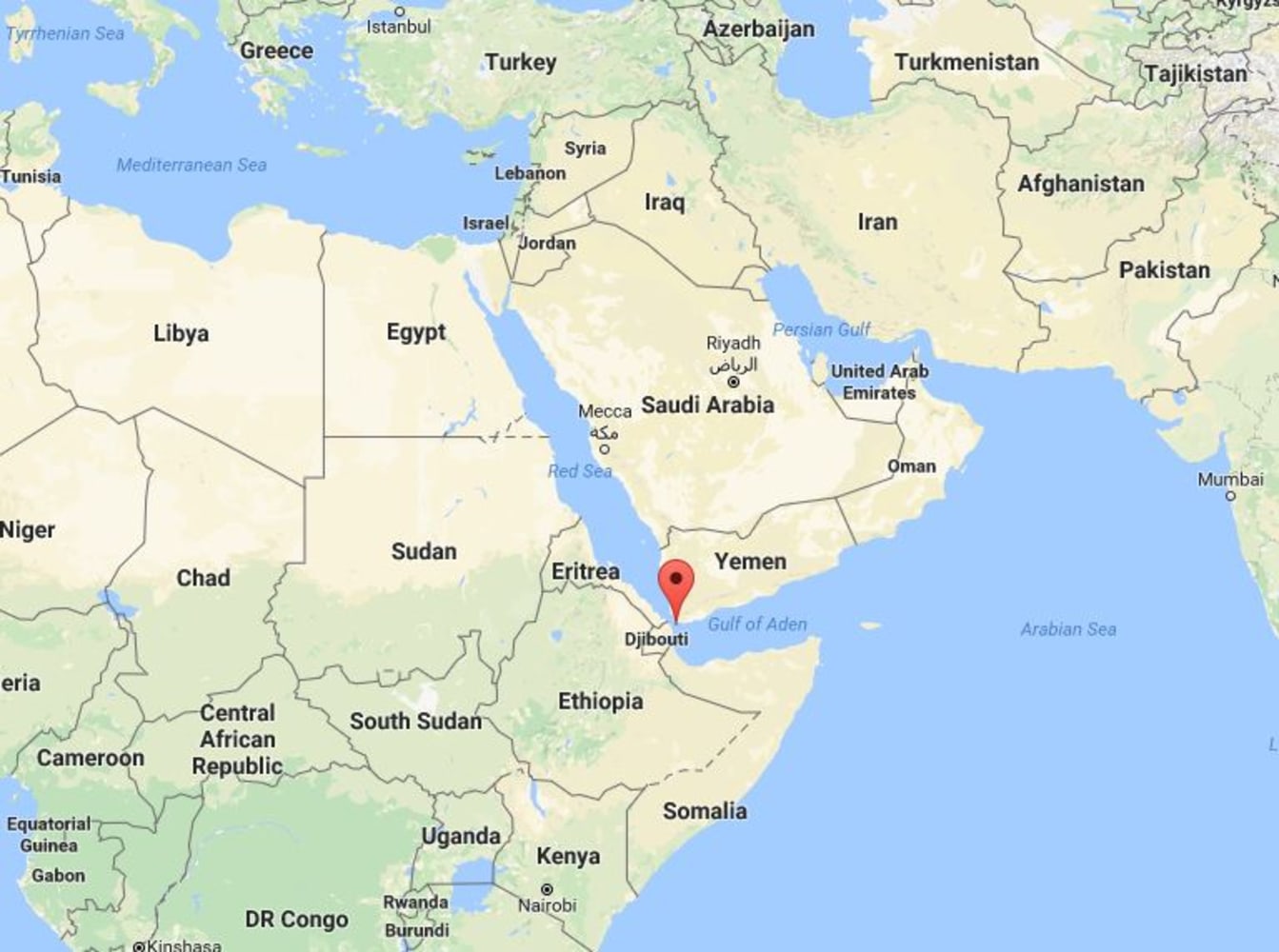
Saudi Arabia and Egypt fear the civil war
threatens the globally-important Gulf of Aden and the Suez Canal because
Yemen sits on the narrow Bab el-Mandeb strait through which much of the
world's oil shipments pass.
A map showing the location of the Bab el-Mandeb Strait. Google Maps
Recent missile attacks have underscored those
fears. An Emirati-leased Swift boat came under rocket fire from Houthis
in the area last week, suffering serious damage. The United Arab
Emirates described the vessel as carrying humanitarian aid and having a
crew of civilians, but Houthis said it was being used as a warship.
Houthis also fire missiles or mortars almost daily into southern Saudi border areas. In June 2015, they fired a Scud missile at Saudi Arabia but it was intercepted.
Were Houthis behind the failed attack on the USS Mason?
The Houthis on Thursday reiterated a denial that
they carried out the failed missile attacks on the U.S. navy destroyer,
a news agency controlled by the group reported, according to Reuters.
They said the missiles did not come from areas
under its control, said the Saba news agency, citing what it called a
military source.
"These allegations are unfounded and [Houthis]
have nothing to do with this action," the agency reported the source as
saying. "Such claims are part of the general context of creating false
justifications to escalate assaults and cover up the continuous crimes
committed by the aggression against the Yemeni people, along with the
blockade imposed on it, and after the increasing condemnations to such
barbaric and hideous crimes against Yemenis."
Has America been involved in Yemen until now?
The U.S. has been providing logistical support and refueling to the Saudi-led coalition battling the Houthis and other rebels.
U.S. military operations have focused instead on the influence of al Qaeda in Yemen, a breeding ground for Islamist militancy.
However, NBC News' British partner ITV News reported that U.S. and U.K.-made bombs had been used by Saudi Arabia in its aerial campaign — including Saturday's attack on a funeral that killed 140 people and led to international condemnation.
'Deadliest Attack in Yemen's 19-Month War' Kills Dozens1:36
The conflict has also led to the death of an American who was being held by Houthis in Yemen.
John Hamen, a contractor for a company
maintaining a building being used by the U.N., was detained by rebels at
the Sanaa airport.
What are the prospects for resolving the conflict?
A shaky cease-fire between the government and the Houthis began in April but collapsed in August after peace talks broke down.
The exiled government of President Abd-Rabu
Mansour Hadi is still recognized internationally, including by the U.N.
and the U.S.
Hadi had previously proposed a plan under which Yemen would become a federation of six regions, but Houthis rejected it.
Gerry Northwood, chief operations officer with
British maritime security firm MAST, suggested the Houthis would find it
difficult to stage similar strikes now that the U.S. has retaliated.
"Now that the U.S. is getting involved, it will
become increasingly difficult for the Houthis to position their missiles
for further attacks," Northwood said.
What is the situation inside Yemen?
At least 4,125 civilians have been killed in Yemen during the conflict, the Office of the United Nations High Commissioner for Human Rights said Monday.
Instability and large-scale displacement, as
well as weak governance, corruption, resource depletion and poor
infrastructure, have hindered development in the poorest country in the
Middle East.
Schools and Hospitals Hit by Saudi Airstrikes on Yemen2:07
Unemployment, high food prices and limited social services mean more than 10 million Yemenis are believed to be food insecure.
With food ships finding it hard to get into
Yemen's ports due to a virtual blockade by Saudi Arabia, over half the
country's 28 million people already do not have enough to eat, according
to the United Nations.
The World Food Programme says half Yemen's
children under five are stunted, meaning they are too short for their
age because of chronic malnutrition.
 U.S. missile attacks on targets in Houthi-controlled areas of Yemen
on Thursday marked a new stage in the country's civil war and raised
the prospect of deeper American involvement in the protracted conflict.
U.S. missile attacks on targets in Houthi-controlled areas of Yemen
on Thursday marked a new stage in the country's civil war and raised
the prospect of deeper American involvement in the protracted conflict.  Houthi was killed in 2004 but his family and
supporters led further rebellions and their influence has continued to
expand following the 2012 ouster of strongman President Ali Abdullah
Saleh.
Houthi was killed in 2004 but his family and
supporters led further rebellions and their influence has continued to
expand following the 2012 ouster of strongman President Ali Abdullah
Saleh. 

 The conflict has also led to the death of an American who was being held by Houthis in Yemen.
  Unemployment, high food prices and limited social services mean more than 10 million Yemenis are believed to be food insecure.


No comments:
Post a Comment