
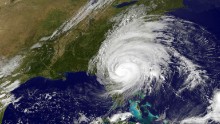
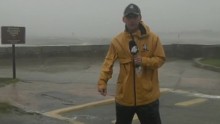
(CNN)Hurricane Matthew was leaving behind record-breaking flooding Saturday as the …
Flooding worse than any time in recorded history in some places Hurricane Matthew has hit

Hurricane Matthew creates 'record-breaking' flooding






Story highlights
- Three deaths are reported in North Carolina and one in Georgia
- Matthew is expected to weaken in the next 48 hours
Are you affected by Hurricane Matthew? If it is safe for you to do so, WhatsApp us on *+44 7435 939 154* to share your photos, experiences and video. Please tag #CNNiReport in your message.
(CNN)Hurricane
Matthew was leaving behind record-breaking flooding Saturday as the
center of the storm moved out into the Atlantic Ocean, dragging bands of
heavy rain with it across eastern North Carolina.
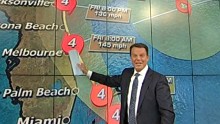
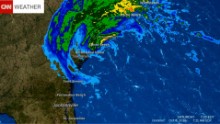
The Category 1 hurricane was dropping 8 to 20 inches of rain in the Tar Heel State and southeast Virginia.
"This
rainfall is leading to record-breaking flooding over portions of
eastern North Carolina, and it may result in life-threatening flooding
and flash flooding elsewhere across the region," the National Hurricane
Center said.
Matthew reportedly was responsible for three deaths in North Carolina in addition to four in Florida and one in Georgia.
The
hurricane left swaths of damage and millions of power outages along
parts of the US Southeast from Florida to the Carolinas after a
destructive trip through the Caribbean that took the lives of hundreds
of people.
Though
the storm has weakened, serious threats remain before Matthew becomes a
post-tropical cyclone Saturday night or Sunday, the hurricane center
said.

Photos: Hurricane Matthew hits US coast
A supermarket shelf is nearly cleared out in Titusville, Florida, on Wednesday, October 5.
Hide Caption
33 of 65

Photos: Hurricane Matthew hits US coast
Bumper-to-bumper traffic lines Interstate 26 in Columbia, South Carolina, as people drive west on October 5.
Hide Caption
34 of 65

Photos: Hurricane Matthew hits US coast
Workers
start removing umbrellas and the colorful rocking chairs that line the
Cocoa Beach Pier in Cocoa Beach, Florida, on October 5.
Hide Caption
35 of 65

Photos: Hurricane Matthew hits US coast
People carry a coffin and try to cross the La Digue river on October 5 after a bridge collapsed in Petit-Goave, Haiti.
Hide Caption
36 of 65

Photos: Hurricane Matthew hits US coast
People cross the La Digue river on October 5.
Hide Caption
37 of 65

Photos: Hurricane Matthew hits US coast
Evacuees return to their homes in the Carbonera community of Guantanamo, Cuba, on October 5.
Hide Caption
38 of 65

Photos: Hurricane Matthew hits US coast
People
embrace at their damaged home in Baracoa, Cuba. The hurricane rolled
across the sparsely populated tip of Cuba, destroying dozens of homes in
the country's easternmost city and leaving hundreds of others damaged.
Hide Caption
39 of 65

Photos: Hurricane Matthew hits US coast
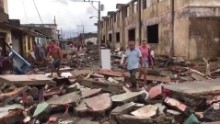
A woman cries amid the rubble of her home in Baracoa.
Hide Caption
40 of 65

Photos: Hurricane Matthew hits US coast
Anthony Schirado, left, and Tom Kennedy put up plywood to cover the windows of a storefront in Cocoa Beach on October 5.
Hide Caption
41 of 65

Photos: Hurricane Matthew hits US coast
Bus drivers in North Charleston, South Carolina, wait for word to start evacuations.
Hide Caption
42 of 65

Photos: Hurricane Matthew hits US coast
The high winds of Hurricane Matthew roar over Baracoa on Tuesday, October 4.
Hide Caption
43 of 65

Photos: Hurricane Matthew hits US coast
Beth Johnson fills up her car at a gas station in Mt. Pleasant, South Carolina, on October 4.
Hide Caption
44 of 65

Photos: Hurricane Matthew hits US coast
The
mother of two girls who died in the storm is comforted near her home in
Santo Domingo, Dominican Republic, on October 4. The girls were killed
when a landslide caused by flooding breached the walls of their house.
Hide Caption
45 of 65

Photos: Hurricane Matthew hits US coast
A worker clears a sewer on a flooded street in Santo Domingo.
Hide Caption
46 of 65

Photos: Hurricane Matthew hits US coast
Anita
Baranyi feeds her baby while keeping an eye on the generator she
intends to purchase from a home-improvement store in Oakland Park,
Florida, on October 4.
Hide Caption
47 of 65

Photos: Hurricane Matthew hits US coast
People
wade through the flooded streets of Cite Soleil in the Haitian capital
of Port-au-Prince on October 4. Hurricane Matthew is the strongest storm
to hit Haiti since 1964 and the first hurricane to make landfall in the
country since the devastating earthquake in 2010.
Hide Caption
48 of 65

Photos: Hurricane Matthew hits US coast
People observe the flooding of a river near Port-au-Prince on October 4.
Hide Caption
49 of 65

Photos: Hurricane Matthew hits US coast
Children swim in a flooded neighborhood of Santo Domingo on October 4.
Hide Caption
50 of 65

Photos: Hurricane Matthew hits US coast
A truck used as public transportation drives through flooded streets in Port-au-Prince on October 4.
Hide Caption
51 of 65
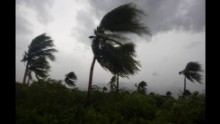
Photos: Hurricane Matthew hits US coast
Hurricane winds blow against palm trees in Port-au-Prince.
Hide Caption
52 of 65

Photos: Hurricane Matthew hits US coast
A food vendor lays out goods for sale during a light rain in Port-au-Prince on October 4.
Hide Caption
53 of 65

Photos: Hurricane Matthew hits US coast
Haitian civil protection workers arrive to evacuate the Tabarre region of Haiti on October 3.
Hide Caption
54 of 65

Photos: Hurricane Matthew hits US coast
Officials urge residents to evacuate their homes in the Grise River area of Tabarre on October 3.
Hide Caption
55 of 65

Photos: Hurricane Matthew hits US coast
Clouds loom over the hills of the Petionville suburb of Port-au-Prince on October 3.
Hide Caption
56 of 65

Photos: Hurricane Matthew hits US coast
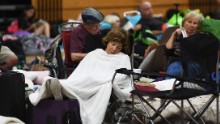
Families seek shelter from Hurricane Matthew at a university facility in Guantanamo, Cuba.
Hide Caption
57 of 65

Photos: Hurricane Matthew hits US coast
People near Kingston, Jamaica, take a photo in front of the rough surf produced by Hurricane Matthew on October 3.
Hide Caption
58 of 65

Photos: Hurricane Matthew hits US coast
A backhoe removes garbage to clear a canal in Port-au-Prince on October 3.
Hide Caption
59 of 65

Photos: Hurricane Matthew hits US coast
Nice Simon, the mayor of Tabarre, Haiti, holds a baby as she helps evacuate the area along a river.
Hide Caption
60 of 65

Photos: Hurricane Matthew hits US coast
People stock up on food at a supermarket in Port-au-Prince on Sunday, October 2.
Hide Caption
61 of 65

Photos: Hurricane Matthew hits US coast
A worker dismantles a traffic light in Santiago before Hurricane Matthew struck Cuba.
Hide Caption
62 of 65

Photos: Hurricane Matthew hits US coast
Motorists drive through heavy rains in Kingston, Jamaica, on October 2.
Hide Caption
63 of 65

Photos: Hurricane Matthew hits US coast
Residents of Cuba's Holguin Province line up to buy gas on October 2.
Hide Caption
64 of 65

Photos: Hurricane Matthew hits US coast
A worker nails a board to a storefront window in Kingston on Saturday, October 1.
Hide Caption
65 of 65
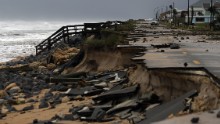
Photos: Hurricane Matthew hits US coast
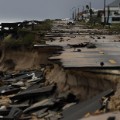
Parts
of Highway A1A in Flagler Beach, Florida, were washed away by Hurricane
Matthew on Friday, October 7. The storm left more than 1 million people
without power as it moves up the Southeast coast.
Hide Caption
1 of 65
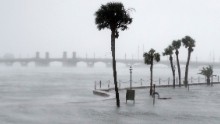
Photos: Hurricane Matthew hits US coast
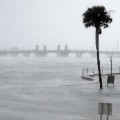
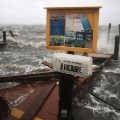
Water flows over a seawall and fills the streets in St. Augustine, Florida.
Hide Caption
2 of 65
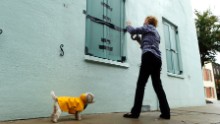
Photos: Hurricane Matthew hits US coast
Barbara Hearst tapes her storm shutters as Hurricane Matthew nears Charleston, South Carolina, on October 7.
Hide Caption
3 of 65
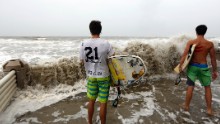
Photos: Hurricane Matthew hits US coast
Adam
and Alec Selent watch waves crash over a retainer wall at the Ocean
Club condominiums in Isle of Palms, South Carolina, on October 7.
Hide Caption
4 of 65
Photos: Hurricane Matthew hits US coast
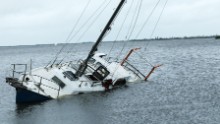
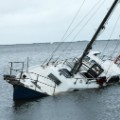
A damaged boat sits partially submerged on the intercoastal waterway in Melbourne, Florida on October 7.
Hide Caption
5 of 65

Photos: Hurricane Matthew hits US coast
A police officer helps persuade a woman to board a bus and evacuate Savannah, Georgia, on October 7.
Hide Caption
6 of 65
Photos: Hurricane Matthew hits US coast
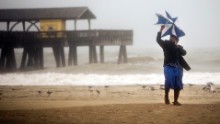
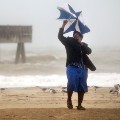
Preston
Payne tires to hold his umbrella as Hurricane Matthew makes its way up
the East Coast, Friday, October 7 on Tybee Island, Georgia. Authorities
warned that the danger was far from over, with hundreds of miles of
coastline in Florida, Georgia and South Carolina still under threat of
torrential rain and dangerous storm surges.
Hide Caption
7 of 65
Photos: Hurricane Matthew hits US coast
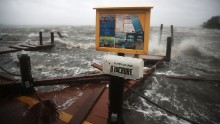
Heavy waves pound boat docks in Cocoa Beach, Florida, on October 7.
Hide Caption
8 of 65
Photos: Hurricane Matthew hits US coast
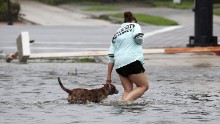
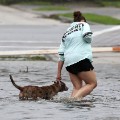
A women helps a dog walk through floodwaters in Port Orange, Florida, on October 7.
Hide Caption
9 of 65
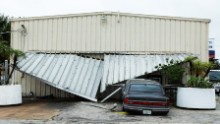
Photos: Hurricane Matthew hits US coast
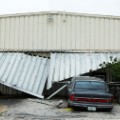
Damage in Cocoa Beach.
Hide Caption
10 of 65
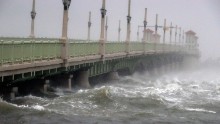
Photos: Hurricane Matthew hits US coast
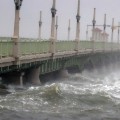
Waves crash against a bridge in St. Augustine, Florida.
Hide Caption
11 of 65
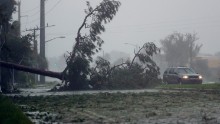
Photos: Hurricane Matthew hits US coast
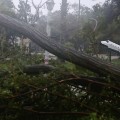
A car drives past a downed tree as the hurricane moves through Daytona Beach, Florida, on October 7.
Hide Caption
12 of 65

Photos: Hurricane Matthew hits US coast
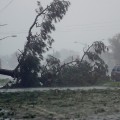
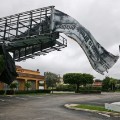
A billboard canvas flaps in the wind after Hurricane Matthew passed North Palm Beach, Florida, on October 7.
Hide Caption
13 of 65
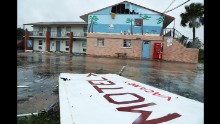
Photos: Hurricane Matthew hits US coast
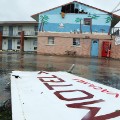
A motel in southeast Florida is damaged on October 7.
Hide Caption
14 of 65
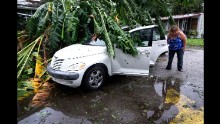
Photos: Hurricane Matthew hits US coast
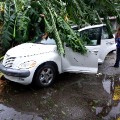
A woman inspects her damaged car under a tree in Fort Pierce, Florida, on October 7.
Hide Caption
15 of 65
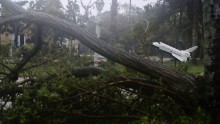
Photos: Hurricane Matthew hits US coast
A space shuttle model stands near some downed trees after Hurricane Matthew passed by Cocoa Beach.
Hide Caption
16 of 65
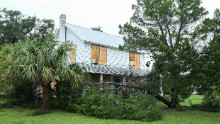
Photos: Hurricane Matthew hits US coast
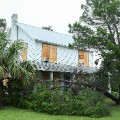
A home in Sebastian, Florida, is boarded up on October 7.
Hide Caption
17 of 65

Photos: Hurricane Matthew hits US coast
A woman uses her phone under a battery-operated lantern at a hotel in Titusville, Florida, on October 7.
Hide Caption
18 of 65
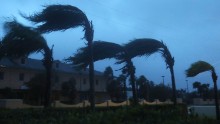
Photos: Hurricane Matthew hits US coast
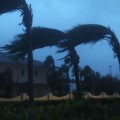
Palm trees on Cocoa Beach sway in the wind on October 7.
Hide Caption
19 of 65
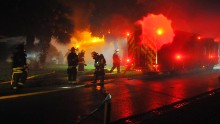
Photos: Hurricane Matthew hits US coast
Firefighters
respond to a pre-dawn house fire in Satellite Beach, Florida, that was
possibly caused by a downed power line on October 7.
Hide Caption
20 of 65
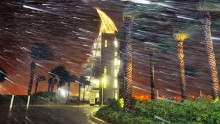
Photos: Hurricane Matthew hits US coast
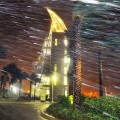
Heavy rain billows in front of Exploration Tower in Cape Canaveral, Florida, on October 7.
Hide Caption
21 of 65

Photos: Hurricane Matthew hits US coast
People stand on a beach in Broward County, Florida, as the storm approached the coast on Thursday, October 6.
Hide Caption
22 of 65

Photos: Hurricane Matthew hits US coast
A police officer walks along the beach in Singer Island, Florida, on October 6.
Hide Caption
23 of 65
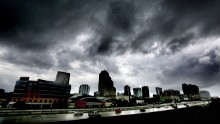
Photos: Hurricane Matthew hits US coast
The first outer bands of rain from Hurricane Matthew pass over downtown Orlando on October 6.
Hide Caption
24 of 65

Photos: Hurricane Matthew hits US coast
A lifeguard patrols the beach in Jacksonville, Florida, ahead of the storm on October 6.
Hide Caption
25 of 65

Photos: Hurricane Matthew hits US coast
Kevin Forde and John Haughey put plywood on a Miami Beach window on October 6.
Hide Caption
26 of 65

Photos: Hurricane Matthew hits US coast
Hurricane
Matthew moves through Paradise Island in Nassau, Bahamas, on October 6.
Capt. Stephen Russell, the head of the Bahamas National Emergency
Management Authority, said there were many downed trees and power lines
but no reports of casualties.
Hide Caption
27 of 65

Photos: Hurricane Matthew hits US coast
People
leave Disney's Magic Kingdom theme park, in heavy rain, after it closed
in Orlando, Florida in preparation for the landfall of Hurricane
Matthew, on October 6.
Hide Caption
28 of 65
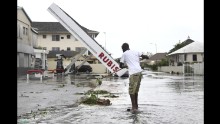
Photos: Hurricane Matthew hits US coast
A man rakes up debris from a storm drain as he begins cleanup near a damaged gas station in Nassau on October 6.
Hide Caption
29 of 65

Photos: Hurricane Matthew hits US coast
Residents repair their homes in Les Cayes, Haiti, on October 6. The damage from Hurricane Matthew was especially brutal in southern Haiti, where sustained winds of 130 mph punished the country.
Hide Caption
30 of 65

Photos: Hurricane Matthew hits US coast
Girls hold hands as they help each other wade through a flooded street in Les Cayes on October 6.
Hide Caption
31 of 65

Photos: Hurricane Matthew hits US coast
Two
days after the storm, authorities and aid workers in Haiti still lacked
a clear picture of what they fear is the country's biggest disaster in
years.
Hide Caption
32 of 65
Photos: Hurricane Matthew hits US coast
A supermarket shelf is nearly cleared out in Titusville, Florida, on Wednesday, October 5.
Hide Caption
33 of 65
Photos: Hurricane Matthew hits US coast
Bumper-to-bumper traffic lines Interstate 26 in Columbia, South Carolina, as people drive west on October 5.
Hide Caption
34 of 65
Photos: Hurricane Matthew hits US coast
Workers
start removing umbrellas and the colorful rocking chairs that line the
Cocoa Beach Pier in Cocoa Beach, Florida, on October 5.
Hide Caption
35 of 65
Photos: Hurricane Matthew hits US coast
People carry a coffin and try to cross the La Digue river on October 5 after a bridge collapsed in Petit-Goave, Haiti.
Hide Caption
36 of 65
Photos: Hurricane Matthew hits US coast
People cross the La Digue river on October 5.
Hide Caption
37 of 65
Photos: Hurricane Matthew hits US coast
Evacuees return to their homes in the Carbonera community of Guantanamo, Cuba, on October 5.
Hide Caption
38 of 65
Photos: Hurricane Matthew hits US coast
People
embrace at their damaged home in Baracoa, Cuba. The hurricane rolled
across the sparsely populated tip of Cuba, destroying dozens of homes in
the country's easternmost city and leaving hundreds of others damaged.
Hide Caption
39 of 65
Photos: Hurricane Matthew hits US coast
A woman cries amid the rubble of her home in Baracoa.
Hide Caption
40 of 65
Photos: Hurricane Matthew hits US coast
Anthony Schirado, left, and Tom Kennedy put up plywood to cover the windows of a storefront in Cocoa Beach on October 5.
Hide Caption
41 of 65
Photos: Hurricane Matthew hits US coast
Bus drivers in North Charleston, South Carolina, wait for word to start evacuations.
Hide Caption
42 of 65
Photos: Hurricane Matthew hits US coast
The high winds of Hurricane Matthew roar over Baracoa on Tuesday, October 4.
Hide Caption
43 of 65
Photos: Hurricane Matthew hits US coast
Beth Johnson fills up her car at a gas station in Mt. Pleasant, South Carolina, on October 4.
Hide Caption
44 of 65
Photos: Hurricane Matthew hits US coast
The
mother of two girls who died in the storm is comforted near her home in
Santo Domingo, Dominican Republic, on October 4. The girls were killed
when a landslide caused by flooding breached the walls of their house.
Hide Caption
45 of 65
Photos: Hurricane Matthew hits US coast
A worker clears a sewer on a flooded street in Santo Domingo.
Hide Caption
46 of 65
Photos: Hurricane Matthew hits US coast
Anita
Baranyi feeds her baby while keeping an eye on the generator she
intends to purchase from a home-improvement store in Oakland Park,
Florida, on October 4.
Hide Caption
47 of 65
Photos: Hurricane Matthew hits US coast
People
wade through the flooded streets of Cite Soleil in the Haitian capital
of Port-au-Prince on October 4. Hurricane Matthew is the strongest storm
to hit Haiti since 1964 and the first hurricane to make landfall in the
country since the devastating earthquake in 2010.
Hide Caption
48 of 65
Photos: Hurricane Matthew hits US coast
People observe the flooding of a river near Port-au-Prince on October 4.
Hide Caption
49 of 65
Photos: Hurricane Matthew hits US coast
Children swim in a flooded neighborhood of Santo Domingo on October 4.
Hide Caption
50 of 65
Photos: Hurricane Matthew hits US coast
A truck used as public transportation drives through flooded streets in Port-au-Prince on October 4.
Hide Caption
51 of 65
Photos: Hurricane Matthew hits US coast
Hurricane winds blow against palm trees in Port-au-Prince.
Hide Caption
52 of 65
Photos: Hurricane Matthew hits US coast
A food vendor lays out goods for sale during a light rain in Port-au-Prince on October 4.
Hide Caption
53 of 65
Photos: Hurricane Matthew hits US coast
Haitian civil protection workers arrive to evacuate the Tabarre region of Haiti on October 3.
Hide Caption
54 of 65
Photos: Hurricane Matthew hits US coast
Officials urge residents to evacuate their homes in the Grise River area of Tabarre on October 3.
Hide Caption
55 of 65
Photos: Hurricane Matthew hits US coast
Clouds loom over the hills of the Petionville suburb of Port-au-Prince on October 3.
Hide Caption
56 of 65
Photos: Hurricane Matthew hits US coast
Families seek shelter from Hurricane Matthew at a university facility in Guantanamo, Cuba.
Hide Caption
57 of 65
Photos: Hurricane Matthew hits US coast
People near Kingston, Jamaica, take a photo in front of the rough surf produced by Hurricane Matthew on October 3.
Hide Caption
58 of 65
Photos: Hurricane Matthew hits US coast
A backhoe removes garbage to clear a canal in Port-au-Prince on October 3.
Hide Caption
59 of 65
Photos: Hurricane Matthew hits US coast
Nice Simon, the mayor of Tabarre, Haiti, holds a baby as she helps evacuate the area along a river.
Hide Caption
60 of 65
Photos: Hurricane Matthew hits US coast
People stock up on food at a supermarket in Port-au-Prince on Sunday, October 2.
Hide Caption
61 of 65
Photos: Hurricane Matthew hits US coast
A worker dismantles a traffic light in Santiago before Hurricane Matthew struck Cuba.
Hide Caption
62 of 65
Photos: Hurricane Matthew hits US coast
Motorists drive through heavy rains in Kingston, Jamaica, on October 2.
Hide Caption
63 of 65
Photos: Hurricane Matthew hits US coast
Residents of Cuba's Holguin Province line up to buy gas on October 2.
Hide Caption
64 of 65
Photos: Hurricane Matthew hits US coast
A worker nails a board to a storefront window in Kingston on Saturday, October 1.
Hide Caption
65 of 65
Photos: Hurricane Matthew hits US coast
Parts
of Highway A1A in Flagler Beach, Florida, were washed away by Hurricane
Matthew on Friday, October 7. The storm left more than 1 million people
without power as it moves up the Southeast coast.
Hide Caption
1 of 65
Photos: Hurricane Matthew hits US coast
Water flows over a seawall and fills the streets in St. Augustine, Florida.
Hide Caption
2 of 65
Photos: Hurricane Matthew hits US coast
Barbara Hearst tapes her storm shutters as Hurricane Matthew nears Charleston, South Carolina, on October 7.
Hide Caption
3 of 65
Photos: Hurricane Matthew hits US coast
Adam
and Alec Selent watch waves crash over a retainer wall at the Ocean
Club condominiums in Isle of Palms, South Carolina, on October 7.
Hide Caption
4 of 65
Photos: Hurricane Matthew hits US coast
A damaged boat sits partially submerged on the intercoastal waterway in Melbourne, Florida on October 7.
Hide Caption
5 of 65
Photos: Hurricane Matthew hits US coast
A police officer helps persuade a woman to board a bus and evacuate Savannah, Georgia, on October 7.
Hide Caption
6 of 65
Photos: Hurricane Matthew hits US coast
Preston
Payne tires to hold his umbrella as Hurricane Matthew makes its way up
the East Coast, Friday, October 7 on Tybee Island, Georgia. Authorities
warned that the danger was far from over, with hundreds of miles of
coastline in Florida, Georgia and South Carolina still under threat of
torrential rain and dangerous storm surges.
Hide Caption
7 of 65
Photos: Hurricane Matthew hits US coast
Heavy waves pound boat docks in Cocoa Beach, Florida, on October 7.
Hide Caption
8 of 65
Photos: Hurricane Matthew hits US coast
A women helps a dog walk through floodwaters in Port Orange, Florida, on October 7.
Hide Caption
9 of 65
Photos: Hurricane Matthew hits US coast
Damage in Cocoa Beach.
Hide Caption
10 of 65
Photos: Hurricane Matthew hits US coast
Waves crash against a bridge in St. Augustine, Florida.
Hide Caption
11 of 65
Photos: Hurricane Matthew hits US coast
A car drives past a downed tree as the hurricane moves through Daytona Beach, Florida, on October 7.
Hide Caption
12 of 65
Photos: Hurricane Matthew hits US coast
A billboard canvas flaps in the wind after Hurricane Matthew passed North Palm Beach, Florida, on October 7.
Hide Caption
13 of 65
Photos: Hurricane Matthew hits US coast
A motel in southeast Florida is damaged on October 7.
Hide Caption
14 of 65
Photos: Hurricane Matthew hits US coast
A woman inspects her damaged car under a tree in Fort Pierce, Florida, on October 7.
Hide Caption
15 of 65
Photos: Hurricane Matthew hits US coast
A space shuttle model stands near some downed trees after Hurricane Matthew passed by Cocoa Beach.
Hide Caption
16 of 65
Photos: Hurricane Matthew hits US coast
A home in Sebastian, Florida, is boarded up on October 7.
Hide Caption
17 of 65
Photos: Hurricane Matthew hits US coast
A woman uses her phone under a battery-operated lantern at a hotel in Titusville, Florida, on October 7.
Hide Caption
18 of 65
Photos: Hurricane Matthew hits US coast
Palm trees on Cocoa Beach sway in the wind on October 7.
Hide Caption
19 of 65
Photos: Hurricane Matthew hits US coast
Firefighters
respond to a pre-dawn house fire in Satellite Beach, Florida, that was
possibly caused by a downed power line on October 7.
Hide Caption
20 of 65
Photos: Hurricane Matthew hits US coast
Heavy rain billows in front of Exploration Tower in Cape Canaveral, Florida, on October 7.
Hide Caption
21 of 65
Photos: Hurricane Matthew hits US coast
People stand on a beach in Broward County, Florida, as the storm approached the coast on Thursday, October 6.
Hide Caption
22 of 65
Photos: Hurricane Matthew hits US coast
A police officer walks along the beach in Singer Island, Florida, on October 6.
Hide Caption
23 of 65
Photos: Hurricane Matthew hits US coast
The first outer bands of rain from Hurricane Matthew pass over downtown Orlando on October 6.
Hide Caption
24 of 65
Photos: Hurricane Matthew hits US coast
A lifeguard patrols the beach in Jacksonville, Florida, ahead of the storm on October 6.
Hide Caption
25 of 65
Photos: Hurricane Matthew hits US coast
Kevin Forde and John Haughey put plywood on a Miami Beach window on October 6.
Hide Caption
26 of 65
Photos: Hurricane Matthew hits US coast
Hurricane
Matthew moves through Paradise Island in Nassau, Bahamas, on October 6.
Capt. Stephen Russell, the head of the Bahamas National Emergency
Management Authority, said there were many downed trees and power lines
but no reports of casualties.
Hide Caption
27 of 65
Photos: Hurricane Matthew hits US coast
People
leave Disney's Magic Kingdom theme park, in heavy rain, after it closed
in Orlando, Florida in preparation for the landfall of Hurricane
Matthew, on October 6.
Hide Caption
28 of 65
Photos: Hurricane Matthew hits US coast
A man rakes up debris from a storm drain as he begins cleanup near a damaged gas station in Nassau on October 6.
Hide Caption
29 of 65
Photos: Hurricane Matthew hits US coast
Residents repair their homes in Les Cayes, Haiti, on October 6. The damage from Hurricane Matthew was especially brutal in southern Haiti, where sustained winds of 130 mph punished the country.
Hide Caption
30 of 65
Photos: Hurricane Matthew hits US coast
Girls hold hands as they help each other wade through a flooded street in Les Cayes on October 6.
Hide Caption
31 of 65
Photos: Hurricane Matthew hits US coast
Two
days after the storm, authorities and aid workers in Haiti still lacked
a clear picture of what they fear is the country's biggest disaster in
years.
Hide Caption
32 of 65
Photos: Hurricane Matthew hits US coast
A supermarket shelf is nearly cleared out in Titusville, Florida, on Wednesday, October 5.
Hide Caption
33 of 65












"Surge-related
flooding depends on the relative timing of the surge and the tidal
cycle, and can vary greatly over short distances," the hurricane center
said in its 8 p.m. advisory. "Large waves generated by Matthew will
cause water rises to occur well in advance of and well away from the
track of the center."
North Carolina Gov. Pat McCrory told residents the flooding could be the worst since Hurricane Floyd pounded the state in 1999.
Even
though Matthew made its first US landfall Saturday morning in South
Carolina, part of the storm's eyewall -- the hurricane's strongest
section -- passed over parts of coastal Florida, Georgia and South
Carolina from Friday into Saturday, helping to flood low-lying areas,
down trees and make some roads impassable.
By the numbers
• The storm has killed hundreds in the Caribbean, almost entirely in Haiti.
More than 330 people died in Haiti, according to a spokesman for
Haiti's Civil Protection Service. Others report much higher deaths. A
count by Reuters, based on information from local civil protection
officials, puts the death toll in Haiti well over 800. Four deaths were
reported in the Dominican Republic and one in St. Vincent and the
Grenadines.
• Two people died in a
submerged vehicle in Bladen County, North Carolina, and a third person
died in Samson County when car crashed after hydroplaning. A man in
Savannah, Georgia was found dead in his house Saturday after a tree fell
on it, police said.
That brought the US death toll to at least eight people, including four deaths Friday in Florida.
• As of 8 p.m. ET, Matthew's
center was 40 miles east of Cape Fear, North Carolina. The storm was
moving east-northeast at 13 mph as a Category 1 hurricane and was
expected to become a post-tropical storm in the next 36 hours.
•
More than 2 million utility customers were reported without power
Saturday night in South Carolina (833,000), Florida (673,000), North
Carolina (457,000) and Georgia (276,000).
Flooding in Georgia, South Carolina
In
the coastal Georgia city of Savannah, 85-year-old Sue Alice Walker said
she was sleeping in her house when she awoke early Friday evening to
find water -- eventually about 3 inches -- flowing inside.

Sue Alice Walker, 85, of Savannah, Georgia
"First
I saw it in the living room, then in the kitchen, and then last it came
in my son's room," she told CNN's Sara Ganim, adding that she spent the
rest of the night and much of Saturday morning mopping and shoveling
the water into buckets.
Storm
surges sent water spilling into Myrtle Beach's streets early Saturday
afternoon, before the storm's center arrived, video posted to social
media by reporters with CNN affiliate WPDE showed.
Matthew left more than 100
roads impassable in the Charleston area Saturday morning, and damage
assessments had yet to be completed in a large portion of the state,
officials said.
South Carolina Gov.
Nikki Haley, who'd warned coastal residents to evacuate ahead of the
storm, asked them to stay away a while longer Saturday morning.
"I'm going to ask for patience. ... Do not plan to go home," Haley said, asserting that driving conditions still weren't safe.

Florida left drenched
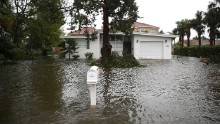
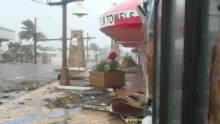
Matthew battered the coast of east-central and northeastern Florida on Saturday, leaving swaths of damage.

What's left in Florida after Hurricane Matthew 01:16
Water
from the storm rushed through streets, making roadways look more like
rivers, in parts of Jacksonville, Merritt Island, Fleming Island and
other Florida communities.
Florida
struggled with the rising water, rain and strong winds as
meteorologists said the storm surge had been measured at more than 4
feet in some areas.

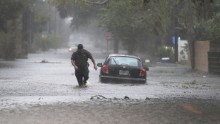
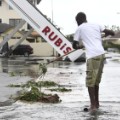
Nick Lomasney walks on a flooded street in St Augustine, Florida.
Jacksonville
was not battered as heavily as initially feared. But several
communities nearby received extensive damage with water surging down
some streets, and massive trees toppled over.
Part of the Jacksonville Beach Pier washed away Friday morning, according to CNN affiliate WFOX/WJAX. The original pier was washed away during Hurricane Floyd and rebuilt a few years later, the station said.


No comments:
Post a Comment