
Hurricane Matthew
begin quote from:
'It's going to get a lot worse'

Hurricane Matthew blamed for 4 US deaths, sparks flash-flood fears





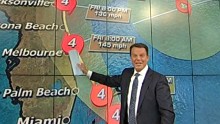

Story highlights
- Storm surge near Jacksonville reported at more than 4 feet
- Death toll in Florida rises to four
Are you affected by Hurricane Matthew? If it is safe for you to do so, WhatsApp us on *+44 7435 939 154* to share your photos, experiences and video. Please tag #CNNiReport in your message.
(CNN)Floridians
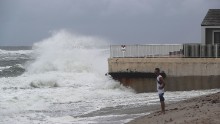
along the Atlantic coast were coping Friday with rising water as
Hurricane Matthew drenched the state with rain and strong winds pushed
waves over beaches.
Meteorologists said storm surge had been measured at more than 4 feet in some areas.
The
storm, which is blamed for four deaths in Florida, sparked flash-flood
concerns. The National Weather Service issued a warning for parts of
Nassau County, north of Jacksonville.
"The
combination of a dangerous storm surge, the tide and large and
destructive waves will cause normally dry areas near the coast to be
flooded by rising waters moving inland from the shoreline," the National
Hurricane Center said.
After
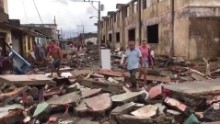
killing hundreds in Haiti and other Caribbean nations, Matthew's
frightening power led to the deaths of four people in Florida. The list
included a woman in her 60s in Volusia County (by a falling tree) and an
82-year-old man and a woman in St. Lucie County, officials said. The
latter two had medical emergencies and responders were unable to reach
them in time because of hazardous weather.
A woman in northeast Florida died after a tree fell on her camper trailer, the Putnam County Sheriff's Office said.
The
Category 2 hurricane, while losing some of its wind speed, has left
more than 1 million people without power as it skirts the state's east
coast, with the most damaging blow possibly still to come.
Governors
in North and South Carolina warned residents to get out in advance of
the storm, which could drop as much as 15 inches of rain.
But it's not as if Matthew -- with winds of 110 mph at the center -- didn't cause any damage with its powerful winds.
Parts
of St. Augustine flooded even as the hurricane was still approaching. A
virtual river of water rushed past a bed and breakfast business in the
city about 35 miles southeast of Jacksonville, according to video posted
by reporter Russell Colburn of CNN affiliate WJAX.
Special concern surrounded
Jacksonville's St. Johns River, which could be overwhelmed by water
pushed into it by the storm. The hurricane center said a tide gauge
reported storm surge of 4.28 feet.
"Just
because the center of circulation is offshore doesn't mean you can't be
the center of action (along the coast)," National Hurricane Center
Director Rick Knabb said. "It's going to get a lot worse before it (has)
a chance of getting better."
Here's what you need to know:
•
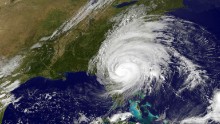
As of 6 p.m. ET, Matthew's center was over the Atlantic, about 40 miles
east of Jacksonville Beach, the National Hurricane Center said.
Hurricane-force winds extended outward up to 60 miles from that center.
It was moving north at 12 mph.
•
Jacksonville could see storm surges of up to 9 feet Friday afternoon,
forecasters said. Anything over 3 feet in the city is life-threatening,
Mayor Lenny Curry said.
• "Very dangerous conditions, and it's going to get worse into the afternoon," Curry said.
• A total of 1.1 million customers statewide were without power.

Photos: Hurricane Matthew hits US coast
Workers
start removing umbrellas and the colorful rocking chairs that line the
Cocoa Beach Pier in Cocoa Beach, Florida, on October 5.
Hide Caption
32 of 62

Photos: Hurricane Matthew hits US coast
People carry a coffin and try to cross the La Digue river on October 5 after a bridge collapsed in Petit-Goave, Haiti.
Hide Caption
33 of 62

Photos: Hurricane Matthew hits US coast
People cross the La Digue river on October 5.
Hide Caption
34 of 62

Photos: Hurricane Matthew hits US coast
Evacuees return to their homes in the Carbonera community of Guantanamo, Cuba, on October 5.
Hide Caption
35 of 62

Photos: Hurricane Matthew hits US coast
People
embrace at their damaged home in Baracoa, Cuba. The hurricane rolled
across the sparsely populated tip of Cuba, destroying dozens of homes in
the country's easternmost city and leaving hundreds of others damaged.
Hide Caption
36 of 62

Photos: Hurricane Matthew hits US coast
A woman cries amid the rubble of her home in Baracoa.
Hide Caption
37 of 62

Photos: Hurricane Matthew hits US coast
Anthony Schirado, left, and Tom Kennedy put up plywood to cover the windows of a storefront in Cocoa Beach on October 5.
Hide Caption
38 of 62

Photos: Hurricane Matthew hits US coast
Bus drivers in North Charleston, South Carolina, wait for word to start evacuations.
Hide Caption
39 of 62

Photos: Hurricane Matthew hits US coast
The high winds of Hurricane Matthew roar over Baracoa on Tuesday, October 4.
Hide Caption
40 of 62

Photos: Hurricane Matthew hits US coast
Beth Johnson fills up her car at a gas station in Mt. Pleasant, South Carolina, on October 4.
Hide Caption
41 of 62

Photos: Hurricane Matthew hits US coast
The
mother of two girls who died in the storm is comforted near her home in
Santo Domingo, Dominican Republic, on October 4. The girls were killed
when a landslide caused by flooding breached the walls of their house.
Hide Caption
42 of 62

Photos: Hurricane Matthew hits US coast
A worker clears a sewer on a flooded street in Santo Domingo.
Hide Caption
43 of 62

Photos: Hurricane Matthew hits US coast
Anita
Baranyi feeds her baby while keeping an eye on the generator she
intends to purchase from a home-improvement store in Oakland Park,
Florida, on October 4.
Hide Caption
44 of 62

Photos: Hurricane Matthew hits US coast
People
wade through the flooded streets of Cite Soleil in the Haitian capital
of Port-au-Prince on October 4. Hurricane Matthew is the strongest storm
to hit Haiti since 1964 and the first hurricane to make landfall in the
country since the devastating earthquake in 2010.
Hide Caption
45 of 62

Photos: Hurricane Matthew hits US coast
People observe the flooding of a river near Port-au-Prince on October 4.
Hide Caption
46 of 62

Photos: Hurricane Matthew hits US coast
Children swim in a flooded neighborhood of Santo Domingo on October 4.
Hide Caption
47 of 62

Photos: Hurricane Matthew hits US coast
A truck used as public transportation drives through flooded streets in Port-au-Prince on October 4.
Hide Caption
48 of 62
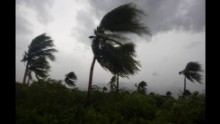
Photos: Hurricane Matthew hits US coast
Hurricane winds blow against palm trees in Port-au-Prince.
Hide Caption
49 of 62

Photos: Hurricane Matthew hits US coast
A food vendor lays out goods for sale during a light rain in Port-au-Prince on October 4.
Hide Caption
50 of 62

Photos: Hurricane Matthew hits US coast
Haitian civil protection workers arrive to evacuate the Tabarre region of Haiti on October 3.
Hide Caption
51 of 62

Photos: Hurricane Matthew hits US coast
Officials urge residents to evacuate their homes in the Grise River area of Tabarre on October 3.
Hide Caption
52 of 62

Photos: Hurricane Matthew hits US coast
Clouds loom over the hills of the Petionville suburb of Port-au-Prince on October 3.
Hide Caption
53 of 62

Photos: Hurricane Matthew hits US coast
Families seek shelter from Hurricane Matthew at a university facility in Guantanamo, Cuba.
Hide Caption
54 of 62

Photos: Hurricane Matthew hits US coast
People near Kingston, Jamaica, take a photo in front of the rough surf produced by Hurricane Matthew on October 3.
Hide Caption
55 of 62

Photos: Hurricane Matthew hits US coast
A backhoe removes garbage to clear a canal in Port-au-Prince on October 3.
Hide Caption
56 of 62

Photos: Hurricane Matthew hits US coast
Nice Simon, the mayor of Tabarre, Haiti, holds a baby as she helps evacuate the area along a river.
Hide Caption
57 of 62

Photos: Hurricane Matthew hits US coast
People stock up on food at a supermarket in Port-au-Prince on Sunday, October 2.
Hide Caption
58 of 62

Photos: Hurricane Matthew hits US coast
A worker dismantles a traffic light in Santiago before Hurricane Matthew struck Cuba.
Hide Caption
59 of 62

Photos: Hurricane Matthew hits US coast
Motorists drive through heavy rains in Kingston, Jamaica, on October 2.
Hide Caption
60 of 62

Photos: Hurricane Matthew hits US coast
Residents of Cuba's Holguin Province line up to buy gas on October 2.
Hide Caption
61 of 62

Photos: Hurricane Matthew hits US coast
A worker nails a board to a storefront window in Kingston on Saturday, October 1.
Hide Caption
62 of 62
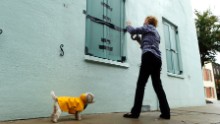
Photos: Hurricane Matthew hits US coast
Barbara
Hearst tapes her storm shutters closed as Hurricane Matthew neared
Charleston, South Carolina, on Friday, October 7. The storm has left
more than 1 million people without power as it moves up the East Coast.
Hide Caption
1 of 62
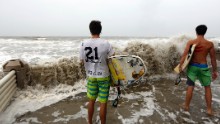
Photos: Hurricane Matthew hits US coast
Adam
and Alec Selent watch waves crash over a retainer wall at the Ocean
Club condominiums in Palms, South Carolina, on October 7.
Hide Caption
2 of 62

Photos: Hurricane Matthew hits US coast
A police officer helps persuade a woman to board a bus and evacuate Savannah, Georgia, on October 7.
Hide Caption
3 of 62
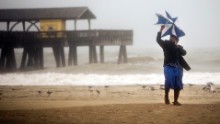
Photos: Hurricane Matthew hits US coast
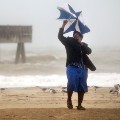
Preston
Payne tires to hold his umbrella as Hurricane Matthew makes its way up
the East Coast, Friday, October 7 on Tybee Island, Georgia. Authorities
warned that the danger was far from over, with hundreds of miles of
coastline in Florida, Georgia and South Carolina still under threat of
torrential rain and dangerous storm surges.
Hide Caption
4 of 62
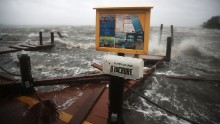
Photos: Hurricane Matthew hits US coast
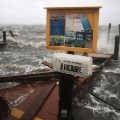
Heavy waves pound boat docks in Cocoa Beach, Florida, on October 7.
Hide Caption
5 of 62
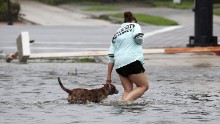
Photos: Hurricane Matthew hits US coast
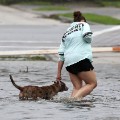
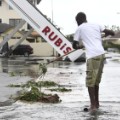
A women helps a dog walk through floodwaters in Port Orange, Florida, on October 7.
Hide Caption
6 of 62
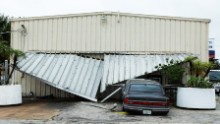
Photos: Hurricane Matthew hits US coast
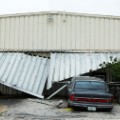
Damage in Cocoa Beach.
Hide Caption
7 of 62
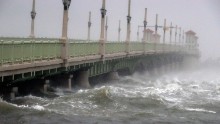
Photos: Hurricane Matthew hits US coast
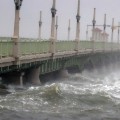
Waves crash against a bridge in St. Augustine, Florida.
Hide Caption
8 of 62
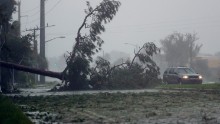
Photos: Hurricane Matthew hits US coast
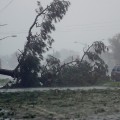
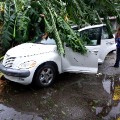
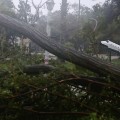
A car drives past a downed tree as the hurricane moves through Daytona Beach, Florida, on October 7.
Hide Caption
9 of 62
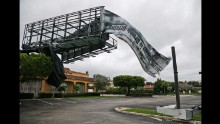
Photos: Hurricane Matthew hits US coast
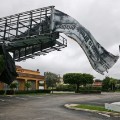
A billboard canvas flaps in the wind after Hurricane Matthew passed North Palm Beach, Florida, on October 7.
Hide Caption
10 of 62
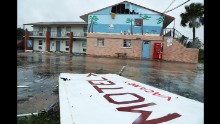
Photos: Hurricane Matthew hits US coast
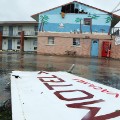
A motel in southeast Florida is damaged on October 7.
Hide Caption
11 of 62
Photos: Hurricane Matthew hits US coast
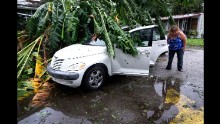
A woman inspects her damaged car under a tree in Fort Pierce, Florida, on October 7.
Hide Caption
12 of 62
Photos: Hurricane Matthew hits US coast
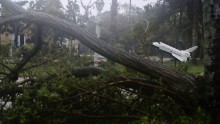
A space shuttle model stands near some downed trees after Hurricane Matthew passed by Cocoa Beach.
Hide Caption
13 of 62
Photos: Hurricane Matthew hits US coast
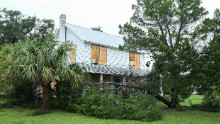
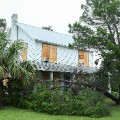
A home in Sebastian, Florida, is boarded up on October 7.
Hide Caption
14 of 62

Photos: Hurricane Matthew hits US coast
A woman uses her phone under a battery-operated lantern at a hotel in Titusville, Florida, on October 7.
Hide Caption
15 of 62
Photos: Hurricane Matthew hits US coast
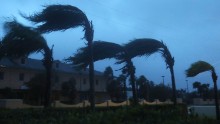
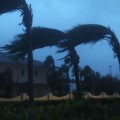
Palm trees on Cocoa Beach sway in the wind on October 7.
Hide Caption
16 of 62
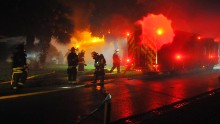
Photos: Hurricane Matthew hits US coast
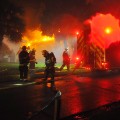
Firefighters
respond to a pre-dawn house fire in Satellite Beach, Florida, that was
possibly caused by a downed power line on October 7.
Hide Caption
17 of 62
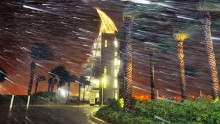
Photos: Hurricane Matthew hits US coast
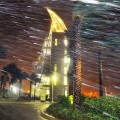
Heavy rain billows in front of Exploration Tower in Cape Canaveral, Florida, on October 7.
Hide Caption
18 of 62

Photos: Hurricane Matthew hits US coast
People stand on a beach in Broward County, Florida, as the storm approached the coast on Thursday, October 6.
Hide Caption
19 of 62

Photos: Hurricane Matthew hits US coast
A police officer walks along the beach in Singer Island, Florida, on October 6.
Hide Caption
20 of 62
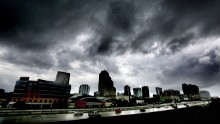
Photos: Hurricane Matthew hits US coast
The first outer bands of rain from Hurricane Matthew pass over downtown Orlando on October 6.
Hide Caption
21 of 62

Photos: Hurricane Matthew hits US coast
A lifeguard patrols the beach in Jacksonville, Florida, ahead of the storm on October 6.
Hide Caption
22 of 62

Photos: Hurricane Matthew hits US coast
Kevin Forde and John Haughey put plywood on a Miami Beach window on October 6.
Hide Caption
23 of 62

Photos: Hurricane Matthew hits US coast
Hurricane
Matthew moves through Paradise Island in Nassau, Bahamas, on October 6.
Capt. Stephen Russell, the head of the Bahamas National Emergency
Management Authority, said there were many downed trees and power lines
but no reports of casualties.
Hide Caption
24 of 62

Photos: Hurricane Matthew hits US coast
People
leave Disney's Magic Kingdom theme park, in heavy rain, after it closed
in Orlando, Florida in preparation for the landfall of Hurricane
Matthew, on October 6.
Hide Caption
25 of 62
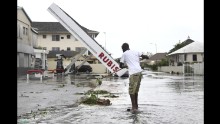
Photos: Hurricane Matthew hits US coast
A man rakes up debris from a storm drain as he begins cleanup near a damaged gas station in Nassau on October 6.
Hide Caption
26 of 62

Photos: Hurricane Matthew hits US coast
Residents repair their homes in Les Cayes, Haiti, on October 6. The damage from Hurricane Matthew was especially brutal in southern Haiti, where sustained winds of 130 mph punished the country.
Hide Caption
27 of 62

Photos: Hurricane Matthew hits US coast
Girls hold hands as they help each other wade through a flooded street in Les Cayes on October 6.
Hide Caption
28 of 62

Photos: Hurricane Matthew hits US coast
Two
days after the storm, authorities and aid workers in Haiti still lacked
a clear picture of what they fear is the country's biggest disaster in
years.
Hide Caption
29 of 62

Photos: Hurricane Matthew hits US coast
A supermarket shelf is nearly cleared out in Titusville, Florida, on Wednesday, October 5.
Hide Caption
30 of 62

Photos: Hurricane Matthew hits US coast
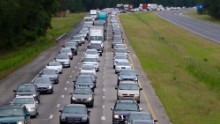
Bumper-to-bumper traffic lines Interstate 26 in Columbia, South Carolina, as people drive west on October 5.
Hide Caption
31 of 62
Photos: Hurricane Matthew hits US coast
Workers
start removing umbrellas and the colorful rocking chairs that line the
Cocoa Beach Pier in Cocoa Beach, Florida, on October 5.
Hide Caption
32 of 62
Photos: Hurricane Matthew hits US coast
People carry a coffin and try to cross the La Digue river on October 5 after a bridge collapsed in Petit-Goave, Haiti.
Hide Caption
33 of 62
Photos: Hurricane Matthew hits US coast
People cross the La Digue river on October 5.
Hide Caption
34 of 62
Photos: Hurricane Matthew hits US coast
Evacuees return to their homes in the Carbonera community of Guantanamo, Cuba, on October 5.
Hide Caption
35 of 62
Photos: Hurricane Matthew hits US coast
People
embrace at their damaged home in Baracoa, Cuba. The hurricane rolled
across the sparsely populated tip of Cuba, destroying dozens of homes in
the country's easternmost city and leaving hundreds of others damaged.
Hide Caption
36 of 62
Photos: Hurricane Matthew hits US coast
A woman cries amid the rubble of her home in Baracoa.
Hide Caption
37 of 62
Photos: Hurricane Matthew hits US coast
Anthony Schirado, left, and Tom Kennedy put up plywood to cover the windows of a storefront in Cocoa Beach on October 5.
Hide Caption
38 of 62
Photos: Hurricane Matthew hits US coast
Bus drivers in North Charleston, South Carolina, wait for word to start evacuations.
Hide Caption
39 of 62
Photos: Hurricane Matthew hits US coast
The high winds of Hurricane Matthew roar over Baracoa on Tuesday, October 4.
Hide Caption
40 of 62
Photos: Hurricane Matthew hits US coast
Beth Johnson fills up her car at a gas station in Mt. Pleasant, South Carolina, on October 4.
Hide Caption
41 of 62
Photos: Hurricane Matthew hits US coast
The
mother of two girls who died in the storm is comforted near her home in
Santo Domingo, Dominican Republic, on October 4. The girls were killed
when a landslide caused by flooding breached the walls of their house.
Hide Caption
42 of 62
Photos: Hurricane Matthew hits US coast
A worker clears a sewer on a flooded street in Santo Domingo.
Hide Caption
43 of 62
Photos: Hurricane Matthew hits US coast
Anita
Baranyi feeds her baby while keeping an eye on the generator she
intends to purchase from a home-improvement store in Oakland Park,
Florida, on October 4.
Hide Caption
44 of 62
Photos: Hurricane Matthew hits US coast
People
wade through the flooded streets of Cite Soleil in the Haitian capital
of Port-au-Prince on October 4. Hurricane Matthew is the strongest storm
to hit Haiti since 1964 and the first hurricane to make landfall in the
country since the devastating earthquake in 2010.
Hide Caption
45 of 62
Photos: Hurricane Matthew hits US coast
People observe the flooding of a river near Port-au-Prince on October 4.
Hide Caption
46 of 62
Photos: Hurricane Matthew hits US coast
Children swim in a flooded neighborhood of Santo Domingo on October 4.
Hide Caption
47 of 62
Photos: Hurricane Matthew hits US coast
A truck used as public transportation drives through flooded streets in Port-au-Prince on October 4.
Hide Caption
48 of 62
Photos: Hurricane Matthew hits US coast
Hurricane winds blow against palm trees in Port-au-Prince.
Hide Caption
49 of 62
Photos: Hurricane Matthew hits US coast
A food vendor lays out goods for sale during a light rain in Port-au-Prince on October 4.
Hide Caption
50 of 62
Photos: Hurricane Matthew hits US coast
Haitian civil protection workers arrive to evacuate the Tabarre region of Haiti on October 3.
Hide Caption
51 of 62
Photos: Hurricane Matthew hits US coast
Officials urge residents to evacuate their homes in the Grise River area of Tabarre on October 3.
Hide Caption
52 of 62
Photos: Hurricane Matthew hits US coast
Clouds loom over the hills of the Petionville suburb of Port-au-Prince on October 3.
Hide Caption
53 of 62
Photos: Hurricane Matthew hits US coast
Families seek shelter from Hurricane Matthew at a university facility in Guantanamo, Cuba.
Hide Caption
54 of 62
Photos: Hurricane Matthew hits US coast
People near Kingston, Jamaica, take a photo in front of the rough surf produced by Hurricane Matthew on October 3.
Hide Caption
55 of 62
Photos: Hurricane Matthew hits US coast
A backhoe removes garbage to clear a canal in Port-au-Prince on October 3.
Hide Caption
56 of 62
Photos: Hurricane Matthew hits US coast
Nice Simon, the mayor of Tabarre, Haiti, holds a baby as she helps evacuate the area along a river.
Hide Caption
57 of 62
Photos: Hurricane Matthew hits US coast
People stock up on food at a supermarket in Port-au-Prince on Sunday, October 2.
Hide Caption
58 of 62
Photos: Hurricane Matthew hits US coast
A worker dismantles a traffic light in Santiago before Hurricane Matthew struck Cuba.
Hide Caption
59 of 62
Photos: Hurricane Matthew hits US coast
Motorists drive through heavy rains in Kingston, Jamaica, on October 2.
Hide Caption
60 of 62
Photos: Hurricane Matthew hits US coast
Residents of Cuba's Holguin Province line up to buy gas on October 2.
Hide Caption
61 of 62
Photos: Hurricane Matthew hits US coast
A worker nails a board to a storefront window in Kingston on Saturday, October 1.
Hide Caption
62 of 62
Photos: Hurricane Matthew hits US coast
Barbara
Hearst tapes her storm shutters closed as Hurricane Matthew neared
Charleston, South Carolina, on Friday, October 7. The storm has left
more than 1 million people without power as it moves up the East Coast.
Hide Caption
1 of 62
Photos: Hurricane Matthew hits US coast
Adam
and Alec Selent watch waves crash over a retainer wall at the Ocean
Club condominiums in Palms, South Carolina, on October 7.
Hide Caption
2 of 62
Photos: Hurricane Matthew hits US coast
A police officer helps persuade a woman to board a bus and evacuate Savannah, Georgia, on October 7.
Hide Caption
3 of 62
Photos: Hurricane Matthew hits US coast
Preston
Payne tires to hold his umbrella as Hurricane Matthew makes its way up
the East Coast, Friday, October 7 on Tybee Island, Georgia. Authorities
warned that the danger was far from over, with hundreds of miles of
coastline in Florida, Georgia and South Carolina still under threat of
torrential rain and dangerous storm surges.
Hide Caption
4 of 62
Photos: Hurricane Matthew hits US coast
Heavy waves pound boat docks in Cocoa Beach, Florida, on October 7.
Hide Caption
5 of 62
Photos: Hurricane Matthew hits US coast
A women helps a dog walk through floodwaters in Port Orange, Florida, on October 7.
Hide Caption
6 of 62
Photos: Hurricane Matthew hits US coast
Damage in Cocoa Beach.
Hide Caption
7 of 62
Photos: Hurricane Matthew hits US coast
Waves crash against a bridge in St. Augustine, Florida.
Hide Caption
8 of 62
Photos: Hurricane Matthew hits US coast
A car drives past a downed tree as the hurricane moves through Daytona Beach, Florida, on October 7.
Hide Caption
9 of 62
Photos: Hurricane Matthew hits US coast
A billboard canvas flaps in the wind after Hurricane Matthew passed North Palm Beach, Florida, on October 7.
Hide Caption
10 of 62
Photos: Hurricane Matthew hits US coast
A motel in southeast Florida is damaged on October 7.
Hide Caption
11 of 62
Photos: Hurricane Matthew hits US coast
A woman inspects her damaged car under a tree in Fort Pierce, Florida, on October 7.
Hide Caption
12 of 62
Photos: Hurricane Matthew hits US coast
A space shuttle model stands near some downed trees after Hurricane Matthew passed by Cocoa Beach.
Hide Caption
13 of 62
Photos: Hurricane Matthew hits US coast
A home in Sebastian, Florida, is boarded up on October 7.
Hide Caption
14 of 62
Photos: Hurricane Matthew hits US coast
A woman uses her phone under a battery-operated lantern at a hotel in Titusville, Florida, on October 7.
Hide Caption
15 of 62
Photos: Hurricane Matthew hits US coast
Palm trees on Cocoa Beach sway in the wind on October 7.
Hide Caption
16 of 62
Photos: Hurricane Matthew hits US coast
Firefighters
respond to a pre-dawn house fire in Satellite Beach, Florida, that was
possibly caused by a downed power line on October 7.
Hide Caption
17 of 62
Photos: Hurricane Matthew hits US coast
Heavy rain billows in front of Exploration Tower in Cape Canaveral, Florida, on October 7.
Hide Caption
18 of 62
Photos: Hurricane Matthew hits US coast
People stand on a beach in Broward County, Florida, as the storm approached the coast on Thursday, October 6.
Hide Caption
19 of 62
Photos: Hurricane Matthew hits US coast
A police officer walks along the beach in Singer Island, Florida, on October 6.
Hide Caption
20 of 62
Photos: Hurricane Matthew hits US coast
The first outer bands of rain from Hurricane Matthew pass over downtown Orlando on October 6.
Hide Caption
21 of 62
Photos: Hurricane Matthew hits US coast
A lifeguard patrols the beach in Jacksonville, Florida, ahead of the storm on October 6.
Hide Caption
22 of 62
Photos: Hurricane Matthew hits US coast
Kevin Forde and John Haughey put plywood on a Miami Beach window on October 6.
Hide Caption
23 of 62
Photos: Hurricane Matthew hits US coast
Hurricane
Matthew moves through Paradise Island in Nassau, Bahamas, on October 6.
Capt. Stephen Russell, the head of the Bahamas National Emergency
Management Authority, said there were many downed trees and power lines
but no reports of casualties.
Hide Caption
24 of 62
Photos: Hurricane Matthew hits US coast
People
leave Disney's Magic Kingdom theme park, in heavy rain, after it closed
in Orlando, Florida in preparation for the landfall of Hurricane
Matthew, on October 6.
Hide Caption
25 of 62
Photos: Hurricane Matthew hits US coast
A man rakes up debris from a storm drain as he begins cleanup near a damaged gas station in Nassau on October 6.
Hide Caption
26 of 62
Photos: Hurricane Matthew hits US coast
Residents repair their homes in Les Cayes, Haiti, on October 6. The damage from Hurricane Matthew was especially brutal in southern Haiti, where sustained winds of 130 mph punished the country.
Hide Caption
27 of 62
Photos: Hurricane Matthew hits US coast
Girls hold hands as they help each other wade through a flooded street in Les Cayes on October 6.
Hide Caption
28 of 62
Photos: Hurricane Matthew hits US coast
Two
days after the storm, authorities and aid workers in Haiti still lacked
a clear picture of what they fear is the country's biggest disaster in
years.
Hide Caption
29 of 62
Photos: Hurricane Matthew hits US coast
A supermarket shelf is nearly cleared out in Titusville, Florida, on Wednesday, October 5.
Hide Caption
30 of 62
Photos: Hurricane Matthew hits US coast
Bumper-to-bumper traffic lines Interstate 26 in Columbia, South Carolina, as people drive west on October 5.
Hide Caption
31 of 62











•
Forecasters predict storm surges in coastal Georgia and South Carolina
also could be as high as 9 feet, and as many as 15 inches of rain could
fall from central Florida to North Carolina.
• The National Weather Service warned that some places hit by Matthew could be uninhabitable for "weeks or months."
• The storm has killed at least 300 people in three Caribbean countries. The majority died in Haiti, said Civil Protection Service spokesman Joseph Edgard Celestin.
'Really dangerous'
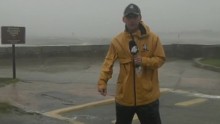
Though the storm hasn't made landfall, it left swaths of coastal Florida with downed trees and power lines.
Matthew
kicked up debris and street flooding in Daytona Beach late Friday
morning. Video recorded by journalist Robert Ray showed metallic,
foil-like debris and other small objects rolling down one of the streets
in the city.

Debris flies through the streets of Daytona Beach.
Florida
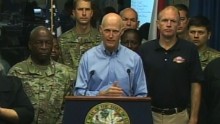
Govs. Rick Scott said officials are particularly concerned about
low-lying areas in and around Jacksonville, where there is potential for
significant flooding.
He said all
major roads and interstate highways were open as of late morning, and
no major road or traffic issues were reported. In some of the counties
that the storm has passed, it appeared that evacuations urged by local
officials worked, he said.
"While the storm is still on, don't go outside," Scott said.
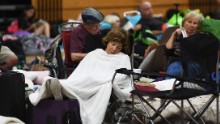
More than 22,000 people were in shelters statewide, he said.

Obama: Hurricane still dangerous 01:17
Major
southern Florida population centers such as Miami and West Palm Beach
appeared to have avoided the worst of the storm, as the dangerous
eyewall stayed about 100 miles off the coast.

Georgia, South Carolina and North Carolina
As
northeastern Florida braced for impact, coastal communities in Georgia,
South Carolina and North Carolina also were on notice. The storm's
center could be near or over the coasts of Georgia and South Carolina on
Saturday, the hurricane center said.
Georgia:
•
Glynn County officials wrote on Facebook that "Conditions have
deteriorated to a point that persons remaining in (the area near
Brunswick) are advised to shelter in place for the remainder of the
storm."
• Maj. Tommy Tillman of the Chatham County Sheriff's Office said the road to Tybee Island is closed.
• In Savannah, Mayor Eddie DeLoach warned those who stay that they'd be on their own.
•
Gov. Nathan Deal has ordered evacuations for all counties east of
Interstate 95. Deal has activated 1,000 National Guard troops.
South Carolina
•
Four counties and one city in South Carolina will be under nighttime
curfews until further notice, said state Emergency Management Division
spokesman Derrec Becker. Dorchester, Beaufort, Jasper and Williamsburg
counties will be under curfew. Charleston's curfew starts at midnight.
The curfews end each morning, at different times.
•
Gov. Nikki Haley warned residents who didn't evacuate to go to a
shelter. A major storm surge of 8 feet or more is approaching low-lying
areas in the state, including Charleston.
•
Although 310,000 people have evacuated the area, Haley says that's not
enough. Officials in some areas are going door to door, urging people to
leave. Police in Pawleys Island asked residents who decided to stay in
spite of the evacuation orders to sign a waiver and list their next of kin, according to CNN affiliate WBTW.


How to prepare for a hurricane 01:00
North Carolina
•
Gov. Pat McCrory said the forecast had change, to North Carolina's
detriment. "What we feared is now happening in North Carolina. The
(hurricane forecast) model has changed dramatically," he said. "The
immediate concern is life-threatening rain and water (from storm
surge)."


See Hurricane Matthew churn from space 00:45
•
Officials are concerned that eastern areas -- like Fayetteville, home
to a large Army base -- that were recently flooded will see more rain
from Matthew.


No comments:
Post a Comment