B-52 bombers to take on ISIS - CNNPolitics.com - cnn.com
B-52 bombers to take on ISIS
21 photos: In the U.S. Air Force fleet
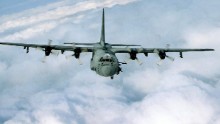
AC-130 gunships – The
AC-130H Spectre and the AC-130U Spooky gunships are designed for close
air support, air interdiction and force protection. Armaments on the
Spectre include 40mm and 105mm cannons. The Spooky adds a 25mm Gatling
gun.
Hide Caption
11 of 21

21 photos: In the U.S. Air Force fleet
C-130 Hercules transport – First
delivered to the Air Force in 1956, the C-130 remains one of the
service's most important airlift platforms. More than 140 are still in
active units, with more than 180 in the National Guard and a hundred
more in the Reserve. The C-130 is powered by four turboprop engines.
Hide Caption
12 of 21
21 photos: In the U.S. Air Force fleet
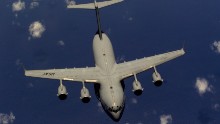
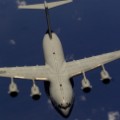
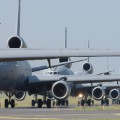
C-17 Globemaster transport – The
four-engine jet joined the Air Force fleet in 1993 with a primary
mission of troop and cargo transport. Each plane can carry up to 102
troops or 170,900 pounds of cargo. The Air Force has 187 C-17s on active
duty, 12 in the Air National Guard and 14 in the Reserve.
Hide Caption
13 of 21
21 photos: In the U.S. Air Force fleet
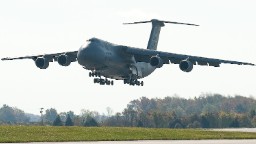
C-5 Galaxy transport – The
C-5, with a wingspan of 222 feet, a length of 247 feet and a height of
65 feet, is the largest plane in the Air Force inventory and one of the
largest aircraft in the world. The first versions of the four-engine jet
joined the force in 1970. The Air Force expects to have 52 versions of
the latest model, the C-5M, in the fleet by 2017.
Hide Caption
14 of 21
21 photos: In the U.S. Air Force fleet
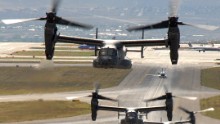
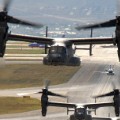
CV-22 Osprey – The
Osprey is a tiltrotor aircraft that combines vertical takeoff, hover
and landing qualities of a helicopter with the normal flight
characteristics of a turboprop aircraft, according to the Air Force. It
is used to move troops in and out of operations as well as resupply
units in the field. The Air Force has 33 Ospreys in inventory.
Hide Caption
15 of 21
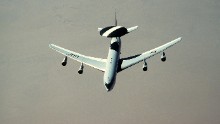
21 photos: In the U.S. Air Force fleet
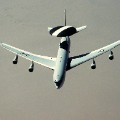
E-3 Sentry AWACS – AWACS
stands for airborne warning and control system. This four-engine jet,
based on a Boeing 707 platform, monitors and manages battle space with
its huge rotating radar dome. The planes have a flight crew of four
supporting 13 to 19 specialists and controllers giving direction to
units around the battle space. The Air Force has 32 E-3s in inventory.
Hide Caption
16 of 21
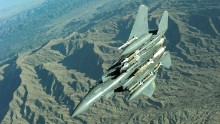
21 photos: In the U.S. Air Force fleet
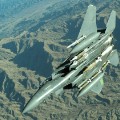
F-15E Strike Eagle – The
Strike Eagle is a version of the air superiority fighter adapted to
perform ground-strike missions. With a crew of two, the twin-jet can
carry and deploy most weapons in the Air Force inventory and operate in
any weather. The F-15E was first delivered in 1988. The Air Force lists
219 in its fleet.
Hide Caption
17 of 21
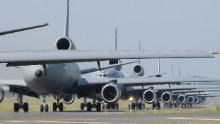
21 photos: In the U.S. Air Force fleet
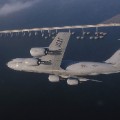
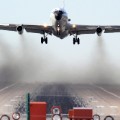
KC-10 Extender – Based
on the DC-10 passenger jet, the triple-engine KC-10 is a gas station in
the sky with the ability to carry 75 people and 170,000 pounds of
cargo. In its six tanks, the KC-10 can carry up to 356,000 pounds of
fuel and dispense it while airborne. The Air Force has 59 KC-10s on
active duty.
Hide Caption
18 of 21
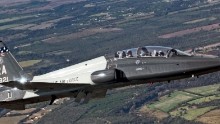
21 photos: In the U.S. Air Force fleet
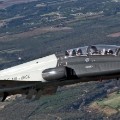
T-38 Talon – The
twin-engine jet trainer, used by the Air Force to prepare pilots for
the F-15E Strike Eagle, F-15C Eagle, F-16 Fighting Falcon, B-1B Lancer,
A-10 Thunderbolt and F-22 Raptor, first flew in 1959. Almost 550 are in
the active force.
Hide Caption
19 of 21
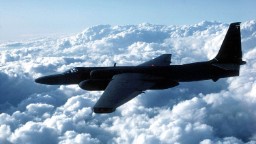
21 photos: In the U.S. Air Force fleet
U-2 – The
single-engine, single-pilot U-2 is used for high-altitude
reconnaissance and surveillance. Flying at altitudes around 70,000 feet,
pilots must wear pressure suits like those worn by astronauts. The
first U-2 was flown in 1955. The planes were used on missions over the
Soviet Union during the Cold War, flying too high to be reached by any
adversary. The Air Force has 33 U-2s in its active inventory.
Hide Caption
20 of 21
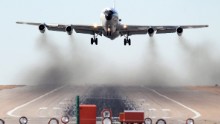
21 photos: In the U.S. Air Force fleet
WC-135 Constant Phoenix – The
four-engine WC-135 is used to fly through airspace to detect the
residue of nuclear blasts. "The aircraft is equipped with external
flow-through devices to collect particulates on filter paper and a
compressor system for whole air samples collected in holding spheres,"
the Air Force says. It has two of these jets in the active force.
Hide Caption
21 of 21
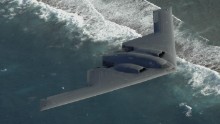
21 photos: In the U.S. Air Force fleet
B-2 Spirit bomber – The
four-engine B-2 heavy bomber has stealth properties that make it hard
to detect on radar. Flown by a crew of two, it has an unrefueled range
of 6,000 miles and can deliver both conventional and nuclear bombs.
Twenty B-2s are in the active inventory. They joined the fleet in 1997.
Hide Caption
1 of 21
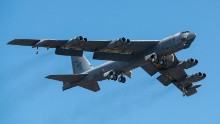
21 photos: In the U.S. Air Force fleet
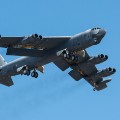
B-52 Stratofortress – The
first versions of this long-range heavy bomber flew in 1954. A total of
744 were built, the last of those in 1962. The Air Force maintains 58
B-52s in the active force and 18 in the Reserve. A single B-52 can carry
70,000 pounds of mixed munitions, including bombs, missiles and mines.
The eight-engine jets have a range of 8,800 miles.
Hide Caption
2 of 21
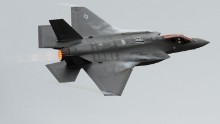
21 photos: In the U.S. Air Force fleet
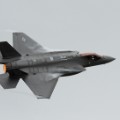
F-35A Lightning – The
single-engine F-35A is the Air Force's eventual replacement for the
F-16 and the A-10. The supersonic jets, which will be able to conduct
air-to-air and air-to-ground attacks, are just beginning to enter the
Air Force fleet.
Hide Caption
3 of 21

21 photos: In the U.S. Air Force fleet
B-1B Lancer bomber – The
four-engine jet can fly at 900 mph and carry the largest payload of
bombs and missiles in the Air Force inventory. The Air Force has 62
B-1Bs in the fleet.
Hide Caption
4 of 21
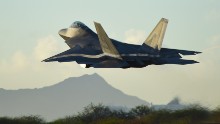
21 photos: In the U.S. Air Force fleet
F-22 Raptor – The
twin-engine F-22 stealth fighter, flown by a single pilot and armed
with a 20mm cannon, heat-seeking missiles, radar-guided missiles and
radar-guided bombs, can perform both air-to-air and air-to-ground
missions. The service has 183 of the Raptors, which went operational in
2005.
Hide Caption
5 of 21
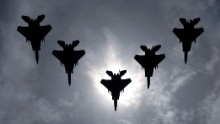
21 photos: In the U.S. Air Force fleet
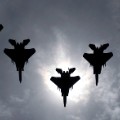
F-15 Eagle – The
F-15 Eagle, the Air Force's main air superiority fighter, became
operational in 1975. With a crew of one or two, depending on the model,
the twin-engine jets are armed with a 20mm cannon along with Sidewinder
or AMRAAM missiles. The Air Force lists 249 F-15 Eagles in its
inventory.
Hide Caption
6 of 21
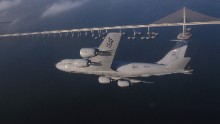
21 photos: In the U.S. Air Force fleet
KC-135 Stratotanker – The
four-engine KC-135 joined the Air Force fleet in 1956 as both a tanker
and cargo jet. It can carry up to 200,000 pounds of fuel and 83,000
pounds of cargo and passengers in a deck above the refueling system.
More than 400 of the KC-135s are flown by active, Air Guard and Reserve
units.
Hide Caption
7 of 21
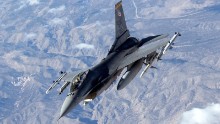
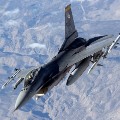
21 photos: In the U.S. Air Force fleet
F-16 Fighting Falcon – The
single-engine jet is a mainstay of the Air Force combat fleet. It can
perform both air-to-air and air-to-ground missions with its 20mm cannon
and ability to carry missiles and bombs on external pods. More than
1,000 F-16s are in the Air Force inventory.
Hide Caption
8 of 21
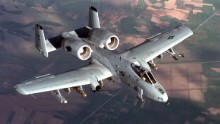
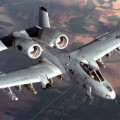
21 photos: In the U.S. Air Force fleet
A-10 Thunderbolt – The
A-10 Thunderbolt jets, nicknamed "Warthogs," are specially designed for
close air support of ground forces. Key to their armaments is a 30mm
Gatling gun. The pilot is protected from ground fire by titanium armor,
and the plane's fuel cells are self-sealing in case of puncture.
Hide Caption
9 of 21
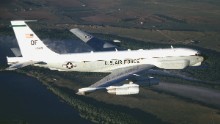
21 photos: In the U.S. Air Force fleet
The
RC-135U Combat Sent, based at Offutt Air Force Base, Nebraska, provides
strategic electronic reconnaissance information to the president,
secretary of defense, Department of Defense leaders and theater
commanders.
Hide Caption
10 of 21
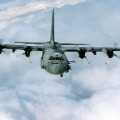
21 photos: In the U.S. Air Force fleet
AC-130 gunships – The
AC-130H Spectre and the AC-130U Spooky gunships are designed for close
air support, air interdiction and force protection. Armaments on the
Spectre include 40mm and 105mm cannons. The Spooky adds a 25mm Gatling
gun.
Hide Caption
11 of 21
21 photos: In the U.S. Air Force fleet
C-130 Hercules transport – First
delivered to the Air Force in 1956, the C-130 remains one of the
service's most important airlift platforms. More than 140 are still in
active units, with more than 180 in the National Guard and a hundred
more in the Reserve. The C-130 is powered by four turboprop engines.
Hide Caption
12 of 21
21 photos: In the U.S. Air Force fleet
C-17 Globemaster transport – The
four-engine jet joined the Air Force fleet in 1993 with a primary
mission of troop and cargo transport. Each plane can carry up to 102
troops or 170,900 pounds of cargo. The Air Force has 187 C-17s on active
duty, 12 in the Air National Guard and 14 in the Reserve.
Hide Caption
13 of 21
21 photos: In the U.S. Air Force fleet
C-5 Galaxy transport – The
C-5, with a wingspan of 222 feet, a length of 247 feet and a height of
65 feet, is the largest plane in the Air Force inventory and one of the
largest aircraft in the world. The first versions of the four-engine jet
joined the force in 1970. The Air Force expects to have 52 versions of
the latest model, the C-5M, in the fleet by 2017.
Hide Caption
14 of 21
21 photos: In the U.S. Air Force fleet
CV-22 Osprey – The
Osprey is a tiltrotor aircraft that combines vertical takeoff, hover
and landing qualities of a helicopter with the normal flight
characteristics of a turboprop aircraft, according to the Air Force. It
is used to move troops in and out of operations as well as resupply
units in the field. The Air Force has 33 Ospreys in inventory.
Hide Caption
15 of 21
21 photos: In the U.S. Air Force fleet
E-3 Sentry AWACS – AWACS
stands for airborne warning and control system. This four-engine jet,
based on a Boeing 707 platform, monitors and manages battle space with
its huge rotating radar dome. The planes have a flight crew of four
supporting 13 to 19 specialists and controllers giving direction to
units around the battle space. The Air Force has 32 E-3s in inventory.
Hide Caption
16 of 21
21 photos: In the U.S. Air Force fleet
F-15E Strike Eagle – The
Strike Eagle is a version of the air superiority fighter adapted to
perform ground-strike missions. With a crew of two, the twin-jet can
carry and deploy most weapons in the Air Force inventory and operate in
any weather. The F-15E was first delivered in 1988. The Air Force lists
219 in its fleet.
Hide Caption
17 of 21
21 photos: In the U.S. Air Force fleet
KC-10 Extender – Based
on the DC-10 passenger jet, the triple-engine KC-10 is a gas station in
the sky with the ability to carry 75 people and 170,000 pounds of
cargo. In its six tanks, the KC-10 can carry up to 356,000 pounds of
fuel and dispense it while airborne. The Air Force has 59 KC-10s on
active duty.
Hide Caption
18 of 21
21 photos: In the U.S. Air Force fleet
T-38 Talon – The
twin-engine jet trainer, used by the Air Force to prepare pilots for
the F-15E Strike Eagle, F-15C Eagle, F-16 Fighting Falcon, B-1B Lancer,
A-10 Thunderbolt and F-22 Raptor, first flew in 1959. Almost 550 are in
the active force.
Hide Caption
19 of 21
21 photos: In the U.S. Air Force fleet
U-2 – The
single-engine, single-pilot U-2 is used for high-altitude
reconnaissance and surveillance. Flying at altitudes around 70,000 feet,
pilots must wear pressure suits like those worn by astronauts. The
first U-2 was flown in 1955. The planes were used on missions over the
Soviet Union during the Cold War, flying too high to be reached by any
adversary. The Air Force has 33 U-2s in its active inventory.
Hide Caption
20 of 21
21 photos: In the U.S. Air Force fleet
WC-135 Constant Phoenix – The
four-engine WC-135 is used to fly through airspace to detect the
residue of nuclear blasts. "The aircraft is equipped with external
flow-through devices to collect particulates on filter paper and a
compressor system for whole air samples collected in holding spheres,"
the Air Force says. It has two of these jets in the active force.
Hide Caption
21 of 21
21 photos: In the U.S. Air Force fleet
B-2 Spirit bomber – The
four-engine B-2 heavy bomber has stealth properties that make it hard
to detect on radar. Flown by a crew of two, it has an unrefueled range
of 6,000 miles and can deliver both conventional and nuclear bombs.
Twenty B-2s are in the active inventory. They joined the fleet in 1997.
Hide Caption
1 of 21
21 photos: In the U.S. Air Force fleet
B-52 Stratofortress – The
first versions of this long-range heavy bomber flew in 1954. A total of
744 were built, the last of those in 1962. The Air Force maintains 58
B-52s in the active force and 18 in the Reserve. A single B-52 can carry
70,000 pounds of mixed munitions, including bombs, missiles and mines.
The eight-engine jets have a range of 8,800 miles.
Hide Caption
2 of 21
21 photos: In the U.S. Air Force fleet
F-35A Lightning – The
single-engine F-35A is the Air Force's eventual replacement for the
F-16 and the A-10. The supersonic jets, which will be able to conduct
air-to-air and air-to-ground attacks, are just beginning to enter the
Air Force fleet.
Hide Caption
3 of 21
21 photos: In the U.S. Air Force fleet
B-1B Lancer bomber – The
four-engine jet can fly at 900 mph and carry the largest payload of
bombs and missiles in the Air Force inventory. The Air Force has 62
B-1Bs in the fleet.
Hide Caption
4 of 21
21 photos: In the U.S. Air Force fleet
F-22 Raptor – The
twin-engine F-22 stealth fighter, flown by a single pilot and armed
with a 20mm cannon, heat-seeking missiles, radar-guided missiles and
radar-guided bombs, can perform both air-to-air and air-to-ground
missions. The service has 183 of the Raptors, which went operational in
2005.
Hide Caption
5 of 21
21 photos: In the U.S. Air Force fleet
F-15 Eagle – The
F-15 Eagle, the Air Force's main air superiority fighter, became
operational in 1975. With a crew of one or two, depending on the model,
the twin-engine jets are armed with a 20mm cannon along with Sidewinder
or AMRAAM missiles. The Air Force lists 249 F-15 Eagles in its
inventory.
Hide Caption
6 of 21
21 photos: In the U.S. Air Force fleet
KC-135 Stratotanker – The
four-engine KC-135 joined the Air Force fleet in 1956 as both a tanker
and cargo jet. It can carry up to 200,000 pounds of fuel and 83,000
pounds of cargo and passengers in a deck above the refueling system.
More than 400 of the KC-135s are flown by active, Air Guard and Reserve
units.
Hide Caption
7 of 21
21 photos: In the U.S. Air Force fleet
F-16 Fighting Falcon – The
single-engine jet is a mainstay of the Air Force combat fleet. It can
perform both air-to-air and air-to-ground missions with its 20mm cannon
and ability to carry missiles and bombs on external pods. More than
1,000 F-16s are in the Air Force inventory.
Hide Caption
8 of 21
21 photos: In the U.S. Air Force fleet
A-10 Thunderbolt – The
A-10 Thunderbolt jets, nicknamed "Warthogs," are specially designed for
close air support of ground forces. Key to their armaments is a 30mm
Gatling gun. The pilot is protected from ground fire by titanium armor,
and the plane's fuel cells are self-sealing in case of puncture.
Hide Caption
9 of 21
21 photos: In the U.S. Air Force fleet
The
RC-135U Combat Sent, based at Offutt Air Force Base, Nebraska, provides
strategic electronic reconnaissance information to the president,
secretary of defense, Department of Defense leaders and theater
commanders.
Hide Caption
10 of 21
21 photos: In the U.S. Air Force fleet
AC-130 gunships – The
AC-130H Spectre and the AC-130U Spooky gunships are designed for close
air support, air interdiction and force protection. Armaments on the
Spectre include 40mm and 105mm cannons. The Spooky adds a 25mm Gatling
gun.
Hide Caption
11 of 21





Story highlights
- The air campaign against ISIS is "taking a toll on our aircraft," according to an Air Force official
- The B-52 deployment is still awaiting final approval
Washington (CNN)American B-52 bombers are "ready and able" to strike ISIS targets in Iraq and Syria, a top Air Force official confirmed Monday.
The
air campaign against ISIS is "taking a toll on our aircraft, our
readiness and our airmen" but the "venerable B-52 ... remains ready and
able to meet combatant commander requirements," Secretary of the Air
Force Deborah Lee James said during a Pentagon press briefing.
The
bombers would deploy in April to take part in the air campaign against
ISIS, according to Air Force Gen. Hawk Carlisle, commander of Air Combat
Command, who announced the deployment while speaking at the Air Warfare
Symposium 2016 in Orlando, Florida, in February.
The
B-52 Stratofortress aircraft would replace the B-1 Lancer bombers that
were withdrawn from the Middle East in January in order to undergo
"modernization and maintenance," James said.
According to James, the deployment is still awaiting final approval.
The
185,000-pound B-52 is one of the oldest active aircraft in the U.S. Air
Force, having first entered service in the 1950s during the height of
the Cold War. They were originally designed to serve as long-range,
high-altitude intercontinental nuclear bombers that could strike deep
into the Soviet Union.
The newest B-52
entered service in 1962 and the 159-foot plane became a Cold War icon,
featuring prominently in the 1964 film "Dr. Strangelove."
The
planes have been modified heavily since the end of the Cold War and
have been upgraded with precision-guided missiles, electronics and
high-tech sensors. The plane can carry up to 70,000 pounds of bombs,
mines and missiles, according to the Air Force's official fact sheet.
The
Air Force said the B-52s were responsible for dropping 40% of all
munitions during Operation Desert Storm. The B-52s also saw action in
Iraq and Afghanistan throughout the 2000s.
Prior
to their January withdrawal, the B-1 bombers had flown 490 sorties
against ISIS during their six-month deployment, according to a release
from the 28th Bomb Wing out of Ellsworth Air Force Base in South Dakota.


No comments:
Post a Comment